Rotating Tires Every Eight Weeks to Prevent Flat Spots on Stored Performance Vehicles
You should rotate your performance tires every eight weeks during storage to prevent flat spots. High-performance tires have stiffer sidewalls-up to 30% stiffer than standard-and use low-hysteresis rubber that resists rebound under static load. Without rotation, sustained pressure deforms the contact patch, causing permanent flat spots in 4–6 weeks. Rotating redistributes stress, preserving roundness and elasticity. Maintain 32–36 psi and store at 60–75°F with 50–60% humidity. Lift the vehicle on jack stands before rotating front-to-rear. Consistent rotation intervals also reduce rim oxidation and maintain bead seal integrity. Proper technique guarantees long-term tire health and performance reliability. There’s more to optimizing storage conditions for peak tire longevity.
Notable Insights
- Rotate tires every eight weeks to prevent flat spots caused by sustained static load on high-performance rubber compounds.
- Lift the vehicle with jack stands before rotating to eliminate tire load and avoid tread distortion.
- Use a front-to-rear rotation pattern without crossing sides to maintain alignment and balance.
- Inspect tread depth, pressure, and sidewall condition during rotation to detect early signs of damage or wear.
- Store tires in 50–60% humidity and 60–75°F to preserve compound integrity and reduce flat-spot risk.
Why Performance Tires Develop Flat Spots in Storage
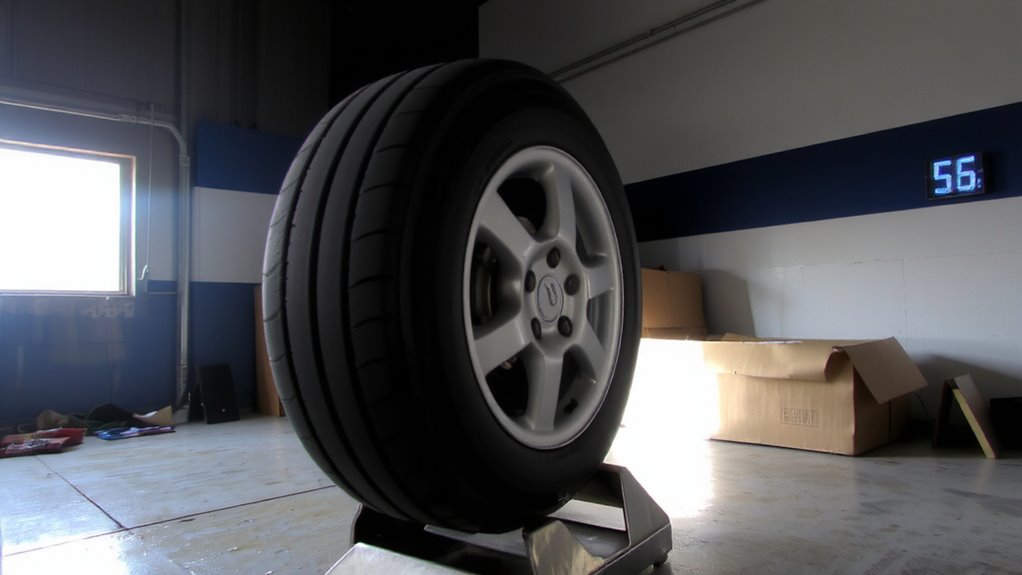
While your performance tires may seem durable, they’re especially prone to flat spots during storage due to their stiff sidewall construction and specialized rubber compounds. Tire chemistry plays a critical role-these tires use high-silica, low-hysteresis compounds for grip and low rolling resistance, but they harden faster when idle. Without regular movement, the rubber deforms at the contact patch, causing permanent flat spots. Storage humidity accelerates this; levels below 50% dry out the compounds, while above 70% promote ozone cracking. Ideal conditions are 50–60% humidity and 60–75°F. Stiff sidewalls, often 20–30% stiffer than standard tires, resist flexing and trap stress in one area. Even a few weeks of static load can result in noticeable vibration. You can’t reverse the damage once it sets. Prevention hinges on material science and environment control, not just usage patterns.
How Tire Rotation Prevents Flat Spots Every Eight Weeks
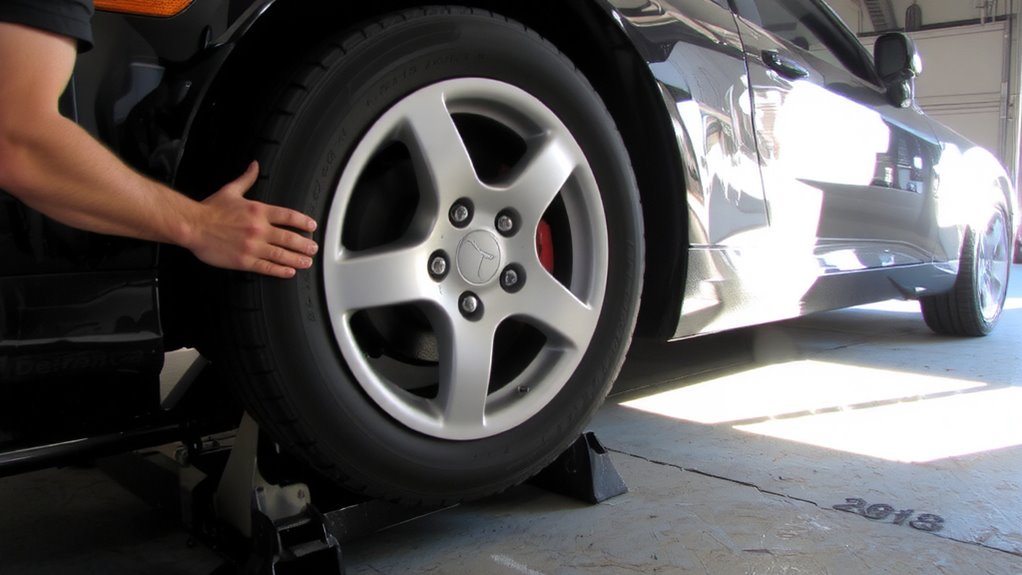
Rotating your tires every eight weeks is one of the most effective ways to prevent flat spots, especially when the vehicle isn’t in regular use. Regular rotation redistributes pressure points, minimizing sustained deformation in the tire’s contact patch. Performance tires, with stiffer sidewalls and specialized tread patterns, are prone to permanent shape loss when stationary. By rotating them, you disrupt continuous load stress on the same segment of rubber. This action slows tire compound aging, preserving elasticity and resistance to hardening. It also reduces rim oxidation effects by ensuring consistent contact between the bead and wheel, maintaining an airtight seal. Uneven oxidation can lead to air leaks and pressure loss over time. Rotating prevents localized degradation, supporting uniform load distribution. Do it every 56 days-consistently-to extend tire life, maintain performance specs, and avoid flat-spotting, even during prolonged storage. For optimal safety, especially when traction is compromised, consider placing the best tires on the rear to help prevent oversteer and loss of control.
When to Rotate Tires During Long-Term Storage
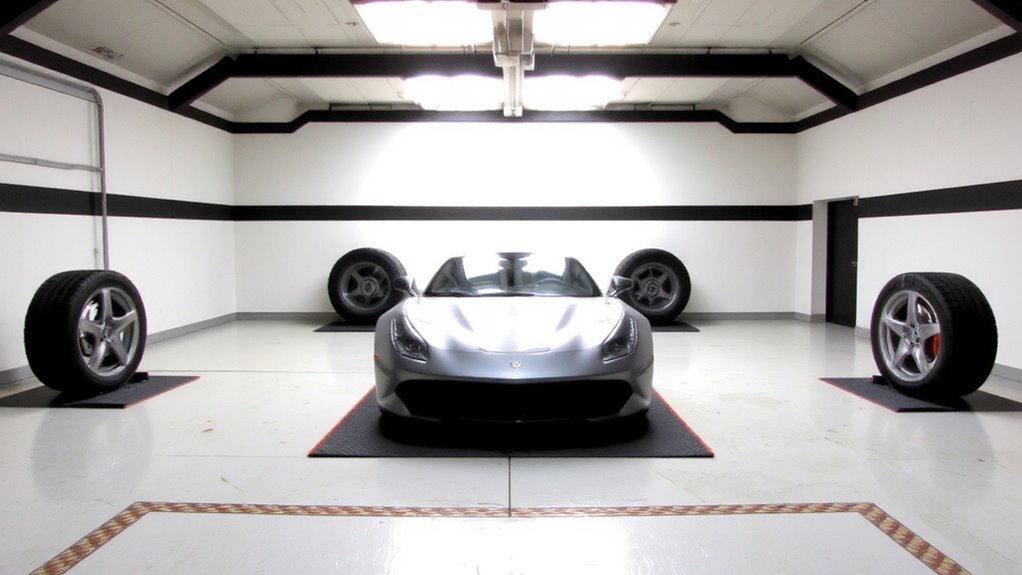
If your vehicle sits idle for weeks at a time, rotating the tires during long-term storage helps prevent flat spots caused by sustained weight on the same contact patch. You should rotate them every eight weeks, or sooner if storage temperature fluctuates often. Extreme cold or heat affects rubber compounds, increasing stiffness or softness unevenly. This impacts tire balancing over time, even when the car isn’t driven. Consistent rotation redistributes stress and maintains roundness. Always check inflation pressure before rotating-underinflated tires develop flat spots faster. Consider using tire cradles to reduce deformation.
| Storage Duration | Rotation Recommended? |
|---|---|
| < 4 weeks | No |
| 4–7 weeks | Yes |
| 8+ weeks | Yes-critical |
| Fluctuating temp | Yes-rotate early |
| After rebalancing | Include in schedule |
How to Rotate Tires on a Stored Performance Vehicle
How do you protect high-performance tires when your car sits for months? You rotate them every eight weeks to prevent flat spots. Lift the vehicle with jack stands, ensuring the tires are off the ground. Rotate each tire in a front-to-rear pattern, swapping axle positions without crossing sides. This maintains balanced wear and supports proper tire alignment. Never drive the car without first checking brake calibration-stationary periods can cause pad sticking or fluid segregation. Use alignment specs from the manufacturer, usually within ±0.1 degrees camber and toe tolerances, to verify positioning after rotation. Rotate tires at rest, not in motion, so tread distortion doesn’t affect calibration. Maintain consistent rotation intervals and always support the vehicle on level ground. This routine preserves structural integrity, minimizes deformation, and prolongs tire life during long-term storage.
Inspect Tread, Pressure, and Sidewall During Rotation
Tire health starts with a keen eye and the right tools. During rotation, inspect tread wear using a depth gauge-anything below 2/32” means it’s time for replacement. Uneven tread wear may signal misalignment or improper inflation. Check pressure cold, using a calibrated gauge: performance tires typically need 32–36 psi, but confirm via the doorjamb spec. Underinflation accelerates center wear; overinflation wears the edges. Examine sidewalls closely. Sidewplain cracking appears as small fissures, especially near the tread edge or wheel lip. Even hairline cracks compromise structural integrity and invite moisture ingress. Avoid ozone-heavy environments to slow cracking. Use a flashlight at a 45-degree angle to reveal subtle deformities. Never ignore bulges or deep cuts-they’re failure points. Proper inspection between rotations prevents sudden failures. Stay proactive: caught early, issues like tread wear or sidewall cracking extend tire service life and keep your stored performance vehicle safe and road-ready.
Alternate Ways to Protect Tires Without Rotation
A performance vehicle stored for long periods demands more than routine maintenance to preserve tire integrity. Proper tire inflation is critical; underinflated tires deform more under static load, increasing flat spot risk. Inflate tires to the manufacturer’s recommended PSI-typically 32–36 PSI for most performance models-to maintain structural stability. Using vehicle jack stands correctly redistributes the car’s weight off the tires, eliminating load-induced flat spots. Position jack stands under reinforced frame points, not suspension components, to guarantee safety and effectiveness. This method mimics how aircraft tires are stored, preventing surface deformation during inactivity. While tire inflation supports shape retention, jack stands provide the most reliable protection during extended storage. Together, they offer a practical alternative to rotation when moving the vehicle isn’t feasible.
Common Mistakes That Cause Flat Spots in Storage
While storing your performance vehicle seems straightforward, overlooking a few key details can lead to persistent flat spots despite low mileage. You might think overinflating tires prevents flat spots, but overinflation damage actually reduces sidewall flexibility, increasing stiffness and risk of permanent deformation. Maintain the manufacturer’s recommended PSI-usually 32–35-for ideal load distribution. Storing on uneven or damp surfaces invites chemical exposure from oils, solvents, or garage floor contaminants, degrading rubber compounds. Use a non-porous, clean mat or plywood base to isolate tires. Avoid vinyl covers that trap moisture and accelerate deterioration. Tires in contact with lawn care products or brake fluid suffer accelerated oxidation. You should inspect rubber monthly for cracking or hardening. Even with low mileage, static load combined with poor conditions creates flat spots within 4–6 weeks. Rotate every eight weeks, or use axle stands to relieve tire pressure entirely. For optimal long-term performance, consider equipping your vehicle with high-quality best all-season tires that resist deformation and maintain structural integrity during storage.
On a final note
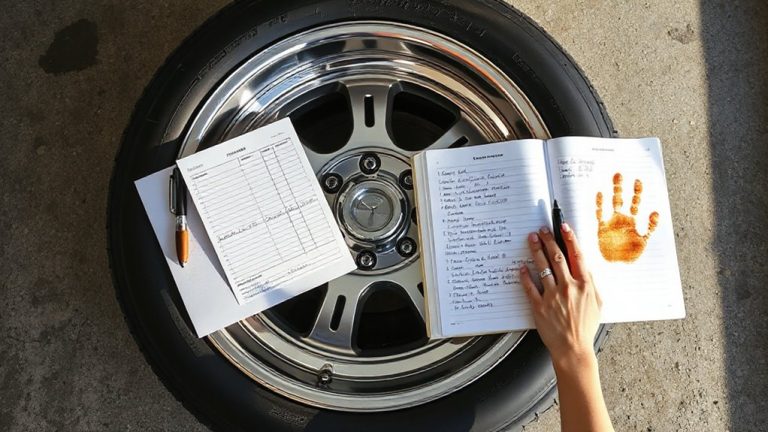
You should rotate tires every eight weeks to prevent flat spots on stored performance vehicles. This interval balances material creep resistance and load distribution. Performance tires, especially ultra-high-performance (UHP) compounds with stiffer sidewalls, remain susceptible to deformation under static loads. Rotating redistributes compression forces, minimizing localized distortion. Use a lift to confirm 32–36 psi, inspect for tread wear or cracking, and log each service.