How to Safely Start and Run Your Vehicle During Long-Term Storage
Check your battery’s voltage-start only if it reads at least 12.4 volts. Clean any corrosion from terminals with a baking soda solution and wire brush. Start the engine every 2–3 weeks and let it idle until the temperature gauge reaches the midpoint, indicating normal operating range (195–220°F). This guarantees proper oil circulation and fuel vaporization. Drive for at least 15 minutes to recharge the battery fully. Monitor for smoke, unusual noises, or warning lights-these signal underlying issues. Inspect fluid levels and tire pressure regularly. A consistent routine prevents long-term damage and keeps systems functional.
Notable Insights
- Inspect battery terminals for corrosion and ensure voltage is at least 12.4 volts before starting.
- Use fuel stabilizer or drain old fuel to prevent varnish buildup in injectors or carburetors.
- Start the engine every 2–3 weeks and let it idle until it reaches normal operating temperature.
- Check oil, coolant, brake fluid, and tire pressure to ensure all are at recommended levels.
- Monitor for smoke, unusual noises, or warning lights during startup and use an OBD2 scanner if needed.
Start Your Stored Car Safely
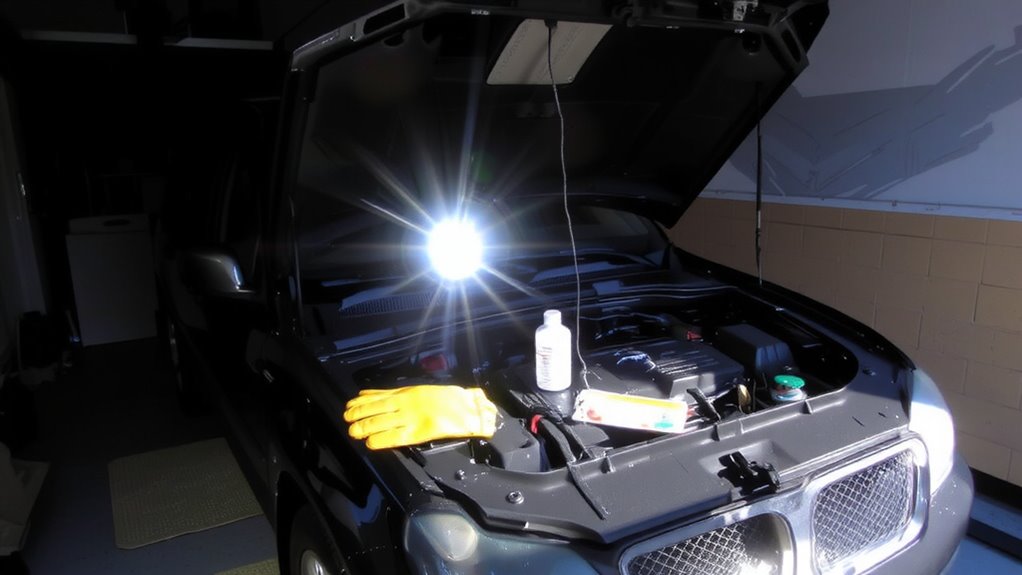
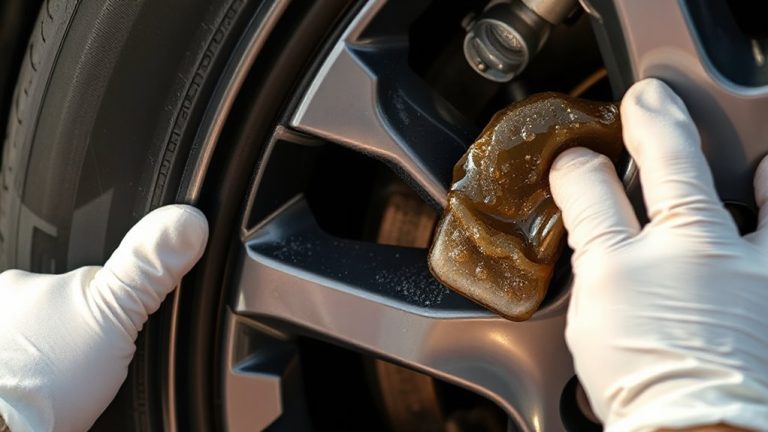
While your car sits idle during long-term storage, critical systems like the battery, engine oil, and fuel can degrade, making a safe startup essential. Battery corrosion builds up on terminals over time, reducing conductivity and preventing proper voltage delivery. Inspect the terminals; clean any white, ashy residue with a wire brush and baking soda solution. Confirm the battery holds at least 12.4 volts using a multimeter-below that, recharge or replace it. Old fuel loses fuel stability, forming varnish that clogs injectors. If untreated for over six months, drain or use a fuel stabilizer additive at a 1:3200 ratio. Make certain tire pressure meets the door-jamb sticker spec, typically 32–35 psi. Check engine oil level and condition; dark, sludgy oil indicates contamination. Verify all fluids are at recommended levels before attempting ignition. For more stubborn corrosion, consider using a dedicated battery terminal cleaner product designed to dissolve buildup efficiently.
Warm Up the Engine Fully Before Driving
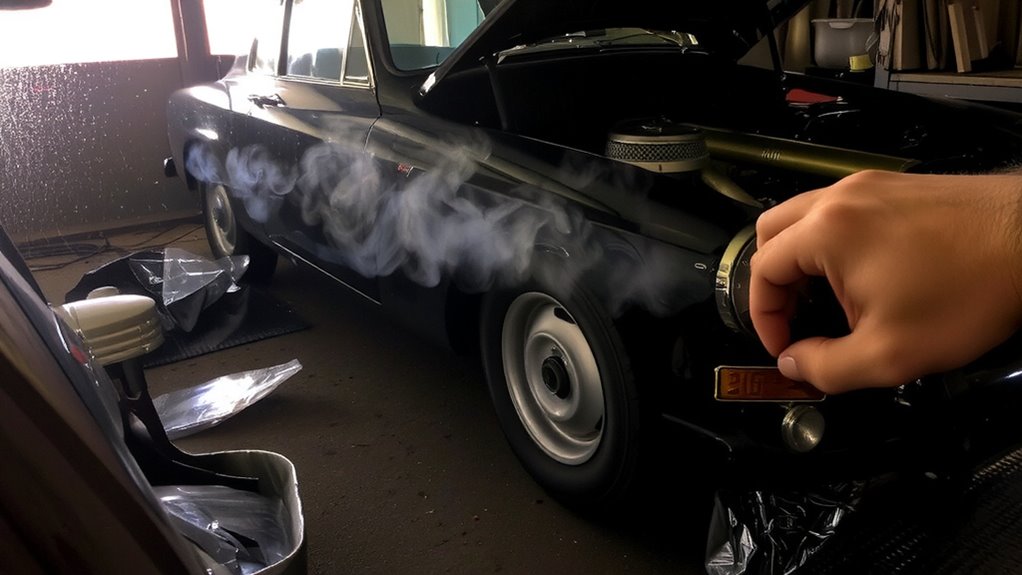
Once the engine turns over, let it idle to allow internal components to reach ideal operating temperature. Cold oil is thicker and flows poorly, reducing lubrication efficiency. Most manufacturers recommend reaching an engine temperature of at least 195°F (90°C) before driving under load. Modern vehicles warm up faster under light operation, but idling guarantees even thermal expansion of pistons, cylinders, and bearing clearances. Running the engine at low RPMs prevents thermal shock. Proper engine temperature stabilizes fuel vaporization, enhancing fuel efficiency by up to 12% compared to cold operation. Sensors like the coolant temperature sensor rely on accurate readings to adjust air-fuel ratios. Skipping warm-up can cause incomplete combustion, increased emissions, and cylinder wall wear. Let the temperature gauge stabilize near the midpoint before driving. This guarantees maximum protection and performance without stressing internal components.
Drive at Least 15 Minutes to Charge the Battery
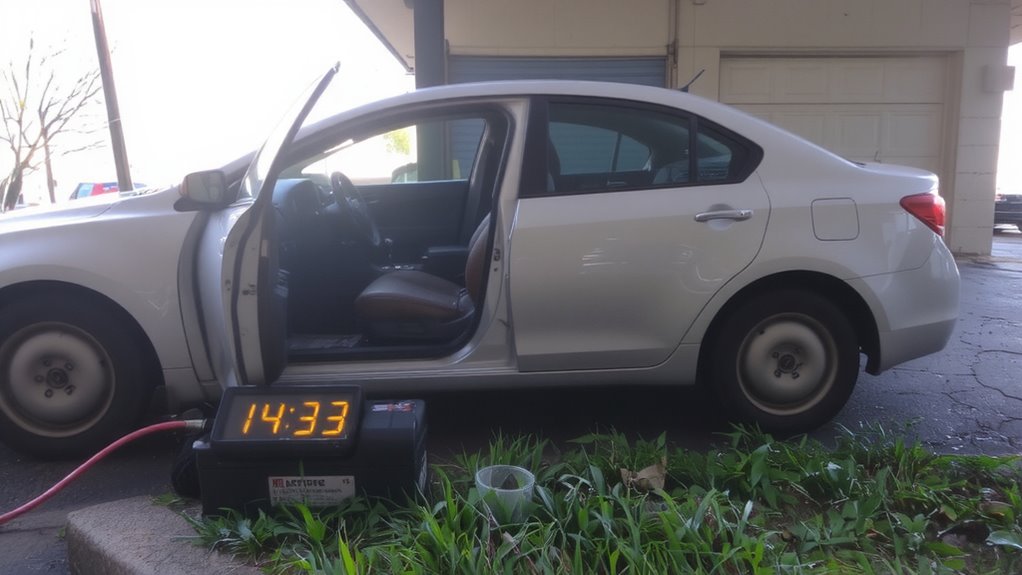
At least 15 minutes of continuous driving is essential to effectively recharge your vehicle’s battery after long-term storage. The alternator requires sustained engine operation to restore depleted charge, especially if the vehicle sat unused for weeks. Short trips or idling won’t suffice-alternator output peaks between 2,000 and 3,000 RPM, typical during highway driving. A full 15-minute drive at this range replenishes 80–90% of a standard 12V lead-acid battery’s capacity. Consistent charging supports long-term battery health by preventing sulfation, which degrades performance. Maintaining proper charge levels also enhances engine longevity, reducing strain during startup. Without adequate voltage, the starter motor struggles, increasing wear. For best results, drive at moderate speeds without excessive electrical loads. This guarantees the alternator prioritizes battery charging. Regular, sufficient drives preserve both battery health and overall system reliability.
Watch for Smoke, Noise, or Warning Lights
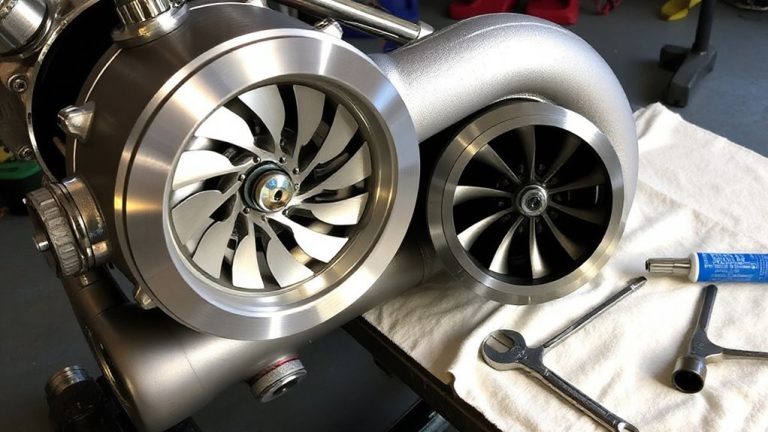
What should you do if something seems off the moment you start your vehicle after long-term storage? Stop the engine immediately. Investigate any smoke, unusual noise, or warning lights to prevent damage. These signs may indicate serious problems like electrical issues or fuel leaks. Smoke could stem from oil or debris on the exhaust manifold. Hissing or knocking noises might point to vacuum leaks or ignition timing faults. Always inspect under the hood first. Replacing worn components such as the intake manifold gaskets can prevent vacuum leaks and maintain optimal engine performance.
| Symptom | Likely Cause | Immediate Action |
|---|---|---|
| Smoke on start | Oil residue, fuel leaks | Turn off engine, inspect under hood |
| Clicking noise | Electrical issues, weak solenoid | Test battery and starter circuit |
| Check Engine Light | Sensor faults, fuel leaks | Use OBD2 scanner for codes |
| Burning smell | Wiring overload, fluids on hot parts | Shut down and check wiring harness |
Check Tires and Fluids After Each Run
After confirming your engine runs cleanly without smoke, noise, or warning indicators, shift focus to components under sustained stress during operation-specifically your tires and fluids. Check tire pressure when cold, using a calibrated gauge. Standard pressure is typically 32–35 psi, but refer to your door jamb sticker for exact values-underinflation causes excessive wear and heat buildup. Inspect tread for cracks or flat spots from prolonged storage. Then, verify fluid levels: engine oil, coolant, brake fluid, and transmission fluid. Use the dipsticks and sight glasses as designed. Oil should be at the “full” mark; coolant must reach the reservoir’s cold-fill line. Low fluid levels impair lubrication and cooling, risking internal damage. Top off only with manufacturer-specified types. Document readings to track consumption or leaks. These checks guarantee operational integrity and extend component life during storage cycles. Consider upgrading to high-performance tires if routinely driven hard, as Best Dodge Challenger Tires offer improved grip, durability, and handling.
How Often to Start a Car in Storage?
How often should you start a car in storage? Start your vehicle every 2 to 3 weeks for at least 10 minutes. This interval supports proper battery maintenance by allowing the alternator to recharge the battery fully. A dormant battery can lose charge in as little as 14 days, especially in colder climates. Running the engine also circulates oil and stabilizes internal components. For fuel stability, guarantee you added a fuel stabilizer before storage-without it, gasoline degrades in 30 to 90 days, forming varnish that clogs injectors and carburetors. Letting the engine reach operating temperature (195–220°F) helps burn off moisture and prevents condensation in the oil and exhaust. Avoid frequent short cranks, as they strain the starter and don’t sufficiently charge the battery. Prioritize consistent run-time over frequency to maintain engine health and prevent long-term damage.
On a final note
Start your stored vehicle monthly to prevent battery drain and fluid stagnation. Run the engine until it reaches normal operating temperature-typically 195°F-for at least 15 minutes. This cycle fully charges the 12-volt battery and guarantees oil circulates through all engine components. Watch for exhaust smoke or dashboard warnings-signs of seal failure or electrical issues. Check tire pressure, coolant levels, and brake fluid every time you run the car.