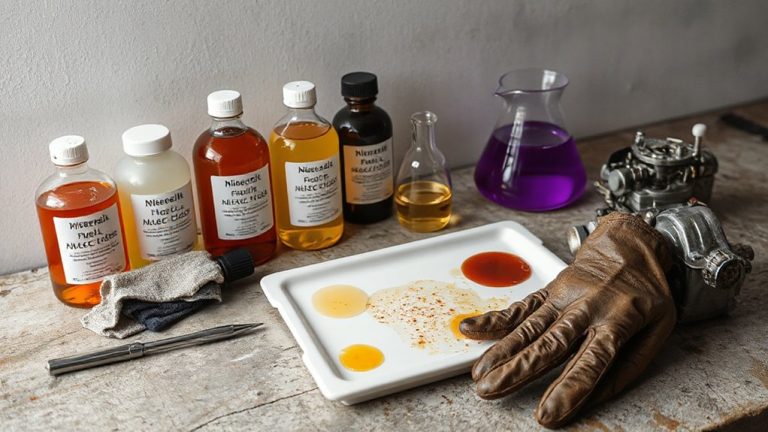
A Guide to Choosing the Right Metal Polish for Rust Removal and Surface Protection
Choose a metal polish tailored to your alloy to safely remove rust and prevent future corrosion. Avoid steel wool or acidic polishes on soft or reactive metals like aluminum and copper. Use citric acid-based formulas on brass to prevent pitting. Opt for pastes with fine abrasives like aluminum oxide for heavy rust; creams work well on light corrosion. Pick polishes with benzotriazole for long-term protection-this ingredient forms a 0.1 to 0.3 micron barrier that blocks moisture and oxygen. Select products with a pH between 3.5 and 5.0 and chelating agents such as oxalic acid for effective, safe cleaning. Apply in small sections using circular motions, then wipe clean with a microfiber cloth. Reapply every 3–6 months to maintain defense. The right polish balances cut strength, chemical protection, and surface compatibility-and there’s more to optimizing its use than just the formula you pick.
Notable Insights
- Match the polish to the metal type to prevent damage, avoiding steel wool on soft metals like aluminum and copper.
- Choose polishes with rust-inhibiting ingredients like benzotriazole for long-term protection against moisture and oxygen.
- Select paste polishes for heavy rust, creams for light abrasion, and liquids for large or crevice-filled surfaces.
- Use polishes with fine abrasives such as aluminum oxide and chelating agents like oxalic acid for effective rust removal.
- Apply polish in small sections with overlapping circular motions, then wipe residue promptly for even, protective results.
Match Your Metal Type to the Right Rust-Removal Polish
When tackling rust on metal surfaces, the type of metal matters most. You must check metal compatibility before applying any polish. Using the wrong product can damage softer metals like aluminum or copper. For example, steel wool may strip delicate surfaces, while acidic polishes corrode reactive metals. Always confirm if the polish is labeled for your specific metal type. Surface finish also affects your choice. Polishes for brushed finishes preserve texture, while those for polished finishes enhance shine without scratching. A 0.5-micron abrasive is ideal for removing light rust without harming the base. Avoid ammonia-based formulas on brass-they can cause pitting. Instead, use citric acid-based polishes for safe, effective results. Matching polish to metal guarantees peak performance. You’ll achieve cleaner rust removal and maintain the original surface integrity.
Choose a Polish That Prevents Rust Long After Use
A good polish doesn’t just remove rust-it keeps it from coming back. Look for formulas with rust inhibition chemistry that actively block moisture and oxygen, the two main causes of corrosion. These polishes often contain benzotriazole or similar inhibitors that bond at the molecular level to metal surfaces. After cleaning, they leave behind a thin, invisible protective coating-typically 0.1 to 0.3 microns thick-that resists water, salt, and humidity. This barrier can extend metal life by months or even years, especially in harsh environments. Unlike basic polishes that offer only shine, rust-inhibiting formulas are engineered for longevity. They perform best on iron, steel, and chrome but work across multiple metals. For maximum protection, reapply every 3–6 months depending on exposure. Choose products labeled specifically for long-term rust inhibition and durable protective coating performance.
Compare Pastes, Creams, and Liquids for Rust Removal
While each type of polish has its strengths, your choice between paste, cream, and liquid formulas directly impacts rust removal efficiency and ease of application. Pastes offer the highest abrasive strength, making them ideal for heavy rust; their thick consistency allows targeted treatment without running. You’ll see faster results on pitted or tarnished surfaces, though application speed is slower due to required rubbing effort. Creams balance mild abrasives with spreadability, providing moderate rust removal with smoother, quicker application. They’re best for frequent maintenance on chrome or polished steel. Liquids have the lowest abrasive strength but the fastest application speed-perfect for large, lightly corroded areas. They penetrate crevices well but require multiple applications for stubborn rust. Choose pastes for heavy buildup, creams for routine care, and liquids for quick coverage. Each form serves a distinct role in effective rust management. For aluminum wheels, selecting the right polish can prevent corrosion and enhance shine, with best polish for aluminum wheels offering optimal results.
Apply Metal Polish Effectively to Remove Corrosion
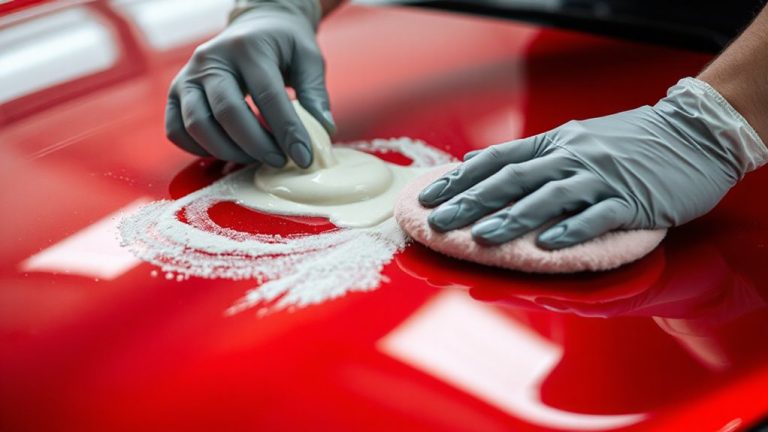
Consistency is key-match your polish application method to the formula type for maximum corrosion removal. Begin with thorough surface preparation: clean the metal using a degreaser, then dry completely to expose all corroded areas. For heavy rust, lightly abrade with 400-grit sandpaper to open the surface. Use a soft cloth or foam applicator pad to apply paste polishes in small, circular motions, applying moderate pressure-this increases friction and heat, activating abrasive compounds. Creams require less pressure and spread more evenly over large areas. Maintain a consistent application technique: overlap each stroke by 50% to avoid missed spots. Work in sections no larger than 6 x 6 inches to prevent drying. Wipe off residue with a lint-free microfiber cloth after 30–60 seconds. Reassess the surface and repeat if needed.
Pick a High-Quality Rust-Removal Polish by These Criteria
Quality matters when selecting a rust-removal polish-your choice directly impacts corrosion clearance and surface preservation. You need a product with balanced abrasive strength, typically between 5 and 8 on the Mohs scale, to lift rust without damaging base metal. Polishes using fine aluminum oxide or cerium oxide particles offer controlled cutting action. The chemical composition is equally critical; look for chelating agents like oxalic or phosphoric acid, which bind to iron oxide and loosen rust at a molecular level. Avoid polishes with excessive acid concentration-above 15%-as they can etch metal. A pH between 3.5 and 5.0 guarantees effective cleaning with minimal risk. High-quality formulations combine these elements in stable emulsions, enabling even application and consistent results. Always verify compatibility with your metal type-steel, brass, or chrome-since abrasive strength and chemical composition must match substrate hardness and reactivity.
Keep Metal Protected With Regular Polish Maintenance
Because metal surfaces degrade over time when exposed to moisture and pollutants, regular polishing isn’t just about shine-it’s a critical part of corrosion prevention. You should polish metal every 3–6 months, depending on environmental exposure. A consistent schedule reduces oxidation buildup, minimizing the need for aggressive rust removers later. This routine enhances cost efficiency by extending the lifespan of metal components up to 50%. It also lowers environmental impact by reducing material waste and the need for replacements. Polishes with corrosion inhibitors, like benzotriazole for copper or zinc-rich formulas for steel, form protective molecular layers up to 0.5 microns thick. These barriers resist salt spray and humidity. Over time, maintenance polishing decreases energy and chemical use in restoration. You maintain surface integrity, guarantee peak performance, and support sustainable practices-all while keeping metals in peak condition.
On a final note
You must match the polish to your metal type for effective rust removal and lasting protection. Use aluminum oxide–based pastes for ferrous metals; they remove corrosion without damaging substrates. For non-ferrous metals, employ zinc-rich creams that inhibit oxidation. Apply with a microfiber cloth using circular motions at 1,500–2,000 RPM for uniform finish. Reapply every 90 days to maintain a hydrophobic barrier. Quality polishes contain UV stabilizers and achieve a 4–6 micron protective layer.