How to Upgrade Your Fuel Pump for Higher Horsepower Applications
You need a high-flow fuel pump when upgrading horsepower because stock units can’t supply enough fuel. Most support only 250–300 whp, while performance engines demand 250–400+ LPH. Calculate flow needs using (HP × BSFC) ÷ injector specs, then add a 20% safety margin. Choose a pump like the Walbro 450 LPH for 700–800 hp, guarantee 13.5+ volts via a 4-gauge power wire, and verify boost reference compatibility. Proper installation prevents cavitation and guarantees stable delivery. There’s more to evaluate for long-term reliability and peak performance.
Notable Insights
- Upgrade to a high-flow fuel pump that exceeds your engine’s horsepower demands by 10–15% for safety and reliability.
- Calculate fuel flow needs using horsepower, BSFC, and injector specs, adding a 20–30% safety margin to prevent starvation.
- Ensure the pump supports required fuel pressure, especially under boost, maintaining 43–60 psi for forced-induction applications.
- Use a dedicated 4-gauge power wire and clean chassis ground to deliver 13.5+ volts and prevent voltage drop.
- Flush the fuel tank and replace filters to prevent contamination, which can restrict flow and damage high-performance pumps.
Why High-Horsepower Engines Need a Fuel Pump Upgrade
While your stock fuel pump may suffice for factory power levels, it quickly becomes a bottleneck when you’re pushing into high-horsepower territory. Your modified engine demands more fuel, and the factory unit can’t keep up. Insufficient fuel pressure leads to lean conditions, risking engine damage. A high-flow fuel pump maintains proper fuel pressure across a wide rpm range, ensuring consistent delivery. You’ll need sustained pressure-typically 43–60 psi for forced-induction setups-to match increased injector pulse widths. Modern performance pumps flow 250–400+ liters per hour, far exceeding stock units at 190 lph. This capacity supports power levels beyond 600 wheel horsepower. Proper fuel pressure is also critical during aggressive engine tuning. Without adequate supply, tuning hits limits, causing knock or hesitation. Upgrading isn’t optional-it’s essential for safety and peak output. A performance pump gives tuners headroom, ensuring precise air-fuel ratios under load.
Calculate Your Engine’s Fuel Flow Needs
You’ll need to calculate your engine’s fuel flow requirements to select the right high-performance fuel pump. Start by determining your engine’s horsepower goal-this directly affects fuel demand. Fuel pumps must deliver sufficient flow rate, measured in gallons per hour (GPH) or liters per hour (LPH), to match the engine’s needs. As horsepower increases, so does the required fuel volume. You’ll also need to account for fuel pressure, given in pounds per square inch (PSI), which impacts how efficiently fuel reaches the injectors. Higher horsepower engines often require increased fuel pressure to maintain proper air-fuel ratios. Use the formula: (HP × BSFC) ÷ (number of injectors × injector flow rate) to estimate needed flow. BSFC (brake-specific fuel consumption) typically ranges from 0.50 to 0.60 for forced-induction engines. Always include a 20–30% safety margin to prevent fuel starvation under load.
Choose the Right High-Flow Fuel Pump for Your Power Level
A high-flow fuel pump must match your engine’s power output to maintain reliable performance. If your setup makes 500 horsepower, you’ll need a pump with a flow rating of at least 250 liters per hour at your required fuel pressure. Exceeding 650 horsepower? Look for 350+ LPH capacity. Most aftermarket pumps operate at 43.5 psi base fuel pressure, but forced induction systems demand higher flow at increased pressure. Use your calculated fuel needs to select a pump that exceeds them by 10–15% for safety. A Walbro 450 LPH or DeatschWerks 325 works well for 700–800 hp naturally aspirated engines. These pumps maintain consistent flow under high electrical loads. Always verify voltage supply-low voltage reduces flow rating. Choosing the right pump guarantees your engine gets fuel when it needs it-no guessing, no leanouts, just power.
Optimize Your Pump for Boost or Nitrous
How does your fuel pump respond when boost spikes or nitrous kicks in? Without proper boost compatibility and nitrous responsiveness, your pump can’t keep up, starving the engine of fuel when you need it most. Modern high-pressure demands require pumps designed for spike-load conditions. A pump rated for 1:1 fuel pressure rise under boost guarantees consistent delivery. For nitrous, look for instant on-demand flow response to match sudden air density increases.
| Feature | Benefit |
|---|---|
| 1:1 Boost Reference | Matches rising manifold pressure |
| High-flow bypass | Prevents cavitation under load |
| Wide voltage range | Stable output with fluctuating loads |
| Instant response time | Critical for nitrous responsiveness |
| Boost compatibility tested | Verified up to 30 psi |
You need reliability, not guesswork. Choose a pump engineered for both scenarios.
Install Your Upgraded Fuel Pump
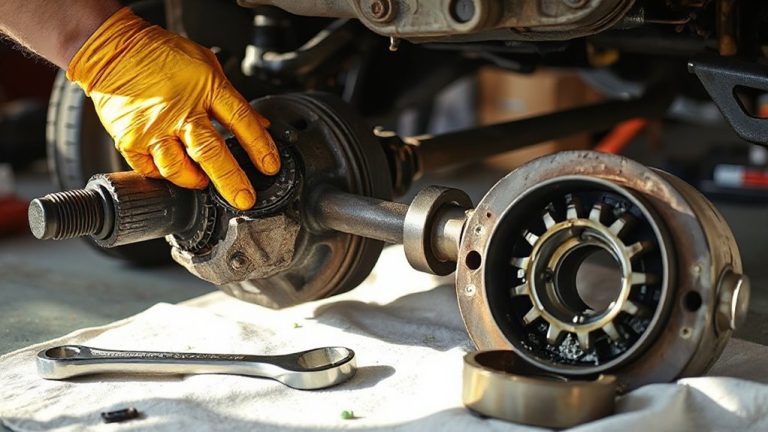
Selecting a fuel pump built for boost and nitrous is only half the battle-proper installation guarantees it delivers as promised. Mount the pump securely in the fuel tank or designated external location, ensuring clear fuel flow. Use high-pressure EFI hoses rated for at least 100 psi to maintain correct fuel pressure under load. Connect the return line properly so the regulator can adjust pressure accurately-typically 43.5 psi at idle for a forced-induction setup. Pay close attention to electrical wiring; use a relay and dedicated power supply from the battery with 10-gauge wire to prevent voltage drop. An inadequate circuit starves the pump, reducing fuel pressure and flow. Ground the pump to a clean, bare metal surface to avoid resistance. Verify all connections are tight and sealed. Test operation before full assembly.
Avoid These Common Fuel System Mistakes
Why do some high-performance builds still run lean despite upgrading the fuel pump? You might overlook fuel contamination. Debris or moisture in the tank clogs filters and damages pump internals, reducing flow efficiency. Always flush the tank and replace filters when upgrading. Contaminated fuel degrades performance, even with a high-flow pump. Electrical grounding is another common issue. A poor ground increases resistance, lowering voltage to the pump. Most high-output pumps need a solid 13.5+ volts to deliver rated GPH. Use a dedicated 4-gauge power wire and bolt the ground directly to clean, bare metal on the chassis. Don’t rely on factory grounding points-they corrode. Verify with a multimeter. Inadequate grounding causes low fuel pressure, leading to lean conditions under load. These mistakes undermine even the best pump upgrades. Fix them early.
On a final note
You need a fuel pump that matches your engine’s horsepower. A 500-horsepower naturally aspirated V8 requires at least 75 gallons per hour at 43 psi. Larger pumps like the DeatschWerks 325 lph support up to 800 horsepower on E85. Always verify flow rate, voltage draw, and compatibility with your fuel type. An undersized pump starves the engine. Think of it like breathing-no airflow, no power. Upgrade wisely.