How to Use a Brake Caliper Hanger to Prevent Hose Damage During Pad Replacement
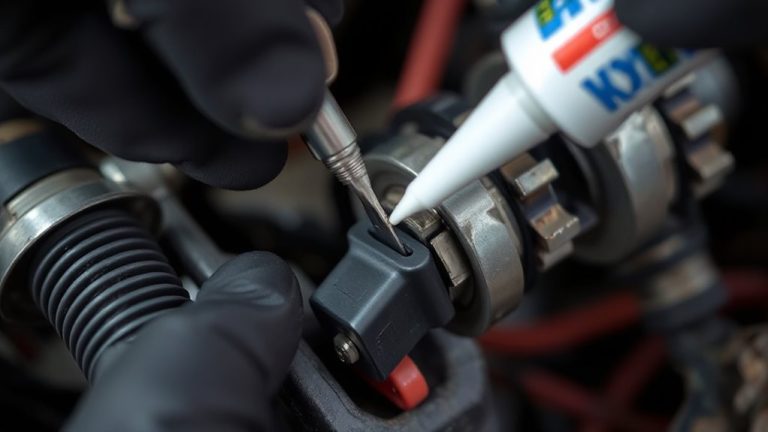
Always use a brake caliper hanger during pad replacement to protect the flexible hose. Never suspend the caliper by the hose-it’s not rated for tensile loads and can develop microfractures from bends under 1 inch. Instead, attach a rigid steel hanger rated for at least 25 lbs to a solid suspension point. Position the caliper 2 to 3 inches above the knuckle, maintaining factory alignment. Proper support prevents leaks, contamination, and premature failure. Choosing the correct hanger guarantees long-term reliability and system integrity.
Notable Insights
- Always use a calibrated caliper hanger to suspend the caliper, never hang it from the brake hose.
- Choose a vehicle-specific hanger that securely fits the caliper mounting pin and supports up to 50 lbs.
- Attach the hanger to a solid suspension point to maintain proper height and prevent hose strain.
- Ensure the brake hose remains slack-free but without tension, keeping it within its bend radius.
- Use a hook-style steel hanger rated for at least 25 lbs to safely support the caliper during pad replacement.
Prevent Brake Hose Damage With a Caliper Hanger
When removing a brake caliper for rotor or pad service, hanging it properly prevents damage to the brake hose. You must support the caliper to avoid stressing the flexible brake line. A brake caliper hanger lifts the caliper to a safe height-typically 2 to 3 inches above the knuckle-eliminating tension. This maintains hose integrity and reduces the risk of brake fluid contamination from debris entering an open system. Never let the caliper dangle. Excessive suspension travel can force fluid backward, increasing pressure and possibly causing leaks. Proper hanging also simplifies caliper piston retraction. Using a C-clamp or piston tool, you compress the piston smoothly without resistance from the brake line. A secure hanger guarantees the caliper stays aligned, preventing binding or uneven wear during reinstallation. Always use a hanger rated for at least 25 pounds to maintain stability under all conditions.
How Hanging Calipers Ruins Brake Hoses
While proper caliper support is essential, incorrect hanging methods can do more harm than good. You risk severe caliper stress by suspending the caliper from the brake hose, which wasn’t designed to bear weight. The flex hose, typically rated for 1,500–3,000 psi internal pressure, isn’t built to handle tensile loads. When you let the caliper dangle, it creates hose kinking, restricting fluid flow and weakening internal braiding. Even slight bends beyond the hose’s 1-inch minimum bend radius can cause microfractures. Over time, this leads to leaks or sudden failure. Standard rubber hoses tolerate limited articulation-usually 30–45 degrees of movement-while metal-braided versions offer slightly more but still fail under suspension. Without a dedicated hanger, you compromise both safety and component lifespan. Proper support prevents deformation and maintains system integrity during pad replacement.
Pick the Right Caliper Hanger for Your Car
Choosing the right caliper hanger isn’t just about convenience-it’s about protecting your brake system. You need proper caliper compatibility to prevent misalignment and stress on the brake hose. Universal hangers may fit loosely, but vehicle-specific models guarantee secure fitment. Check manufacturer charts for make, model, and brake configuration. Most hangers accept caliper pins between 7mm and 12mm in diameter. The hanger installation must position the caliper just below the knuckle without straining the hose. Rigid steel hangers withstand up to 50 lbs of tension-far more than a caliper weighs. Flexible bungee types risk sway and hose contact. Use zinc-coated or stainless steel tools to resist corrosion. A correct hanger keeps the assembly stable, maintains fluid integrity, and avoids costly damage. Precision matters-don’t improvise.
How to Remove Brake Pads Without Damaging the Hose
Secure your brake caliper in place using the correct hanger before you touch the brake pads-this step keeps tension off the hose during removal. Proper caliper support prevents the brake hose from bearing the weight of the dangling caliper, which can cause cracks or fittings to loosen. During brake pad removal, always suspend the caliper at the same height as its mounted position. Use a hook-style hanger rated for at least 25 pounds to guarantee secure support. Avoid letting the caliper hang by the hose or flexible line-this risks internal damage, even if no leaks appear immediately. A steel hanger with a 3/8-inch threaded end fits most OEM brackets. Maintain factory alignment to protect hydraulic connections. Correct setup guarantees safe, efficient service without compromising brake integrity.
Use a Caliper Hanger to Prevent Leaks and Misalignment
If you skip using a caliper hanger during brake service, you’re risking costly damage to one of the most critical parts of your braking system. Hanging the caliper properly prevents stress on the brake hose, which can cause brake fluid leaks. Even small leaks compromise pressure in the hydraulic system, reducing stopping power. A caliper hanger supports the caliper at the correct height, maintaining proper caliper alignment with the rotor. Misalignment leads to uneven pad wear and reduced braking efficiency. Most hangers fit caliper ears with a 10mm threaded bolt and include rubber padding to prevent metal-on-metal contact. Use a hanger rated for at least 25 lbs to guarantee stability. Proper suspension prevents torsional strain on the hose and fitting connections, preserving seal integrity. Without it, you risk fluid loss and premature component wear. Always use a hanger designed for your vehicle’s caliper configuration to guarantee secure, safe positioning during service.
Mistakes to Avoid When Using a Brake Caliper Hanger
While it might seem convenient to improvise, never hang a brake caliper from the brake hose-even briefly. That causes caliper stress and risks internal hose damage. Always use a proper caliper hanger designed for your vehicle’s brake system. Improper positioning can misalign the caliper, leading to uneven pad wear or binding. Make certain the hanger securely attaches to a solid suspension point, typically rated for at least 50 lbs of tensile strength. Position the caliper so it hangs parallel to the knuckle, avoiding angular strain. Most OEM hangers are engineered to fit specific mounts, like the L-shaped bracket near the strut. Using zip ties or wire creates instability and increases stress. A correctly hung caliper maintains safe separation, preserving brake function. Always verify the hanger’s fit before stepping away.
When to Inspect or Replace Brake Hoses
A brake hose inspection should be part of every routine brake service, especially when removing calipers with a hanger. You should check for visible cracks, bulges, or soft spots along the hose length. Brake hose aging occurs over time, typically after 5 to 7 years, even if the hose looks fine externally. Internal lining deterioration can restrict fluid flow or cause spongy pedal feel. Hose material degradation accelerates with heat cycles and exposure to road chemicals. Reinforced rubber hoses may delaminate, while braided stainless types resist abrasion but can fatigue at crimp points. Replace hoses showing stiffness, swelling, or corrosion at fittings. Use only DOT-compliant hoses rated for at least 1,500 psi operating pressure. Always bleed the system post-replacement. Inspecting during pad changes catches issues early, preventing failure. Applying brake caliper grease before reinstalling the caliper helps prevent seizing of guide pins and ensures smooth operation.
On a final note
Always support the brake caliper with a proper hanger during pad replacement. Unsecured calipers stress the brake hose, risking cracks or fluid leaks. Caliper hangers distribute weight evenly, preserving hose integrity. Use a hanger compatible with your vehicle’s mounting points-most fit 3/8-inch or 10mm bolts. This simple step prevents costly damage, guarantees alignment, and maintains brake performance. Inspect hoses regularly for wear or bulging.