How to Use Ethanol-Free Gas and Additives to Preserve Your Car’s Fuel System
Use ethanol-free gas to prevent moisture absorption and phase separation, which degrade fuel systems over time. It reduces corrosion and gum formation by up to 70% over six months. Choose 91–93 octane fuel with low Reid Vapor Pressure (RVP) to avoid vapor lock. Add a stabilizer with radical scavengers at 1 oz per 2.5 gallons before storage. Combine with PEA-based additives (800–1,200 ppm) to clean injectors and protect pumps. Even ethanol-free fuel degrades, so proper treatment guarantees peak performance for up to three years-there’s more to optimizing long-term fuel health.
Notable Insights
- Use ethanol-free gas to prevent moisture absorption and phase separation in stored fuel.
- Choose 91–93 octane ethanol-free fuel with low Reid Vapor Pressure to reduce vapor lock.
- Add fuel stabilizer with radical scavengers when storing ethanol-free gas beyond 30 days.
- Use PEA-based additives (800–1,200 ppm) to clean injectors and prevent carbon buildup.
- Add lubricity and corrosion inhibitors to protect fuel systems, even with ethanol-free gasoline.
Why Ethanol Damages Classic and Stored Vehicles
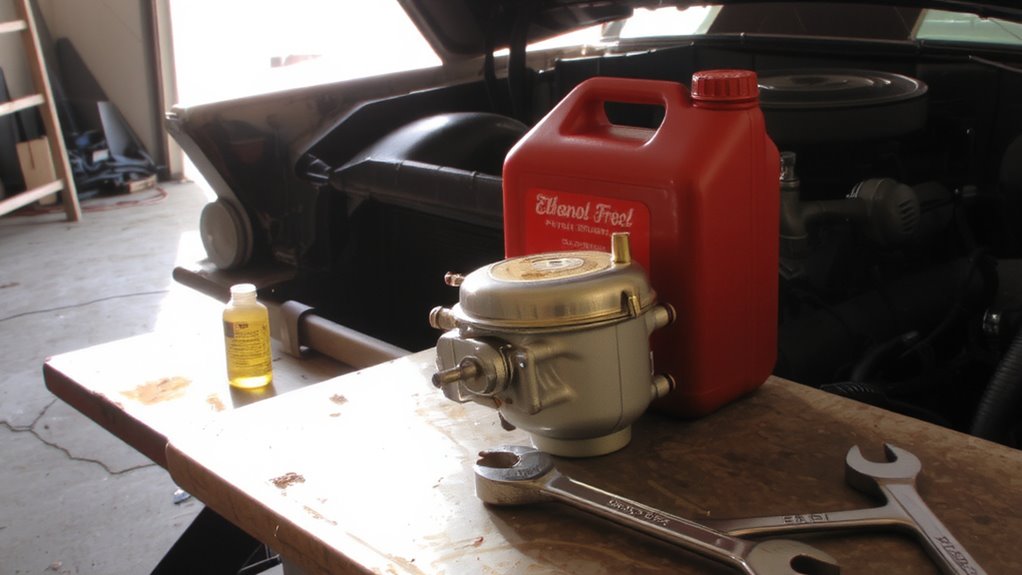
Why are older fuels causing so many problems for classic car owners? Ethanol in modern gasoline attracts moisture, leading to phase separation that corrodes fuel systems. You face fuel oxidation when ethanol-laced gas breaks down, forming acidic byproducts that degrade aluminum and zinc components. This process accelerates in stored vehicles with low fuel turnover. Material degradation occurs as ethanol attacks rubber, plastic, and fiberglass parts-especially in carburetors and fuel lines. Ethanol can swell or crack hoses made before 2000, which weren’t designed for oxygenated fuels. Tanks sealed for months see vapor pressure imbalances, promoting condensation. Unlike modern cars, classics lack sealed fuel systems and ethanol-resistant materials. Oxidation starts within 30 days, reducing octane and forming varnish. You risk clogged jets, damaged floats, and costly repairs. Ethanol’s solvent effect strips contaminants, clogging filters. Your vintage engine wasn’t built for this chemical assault.
How Ethanol-Free Gas Protects Your Fuel System
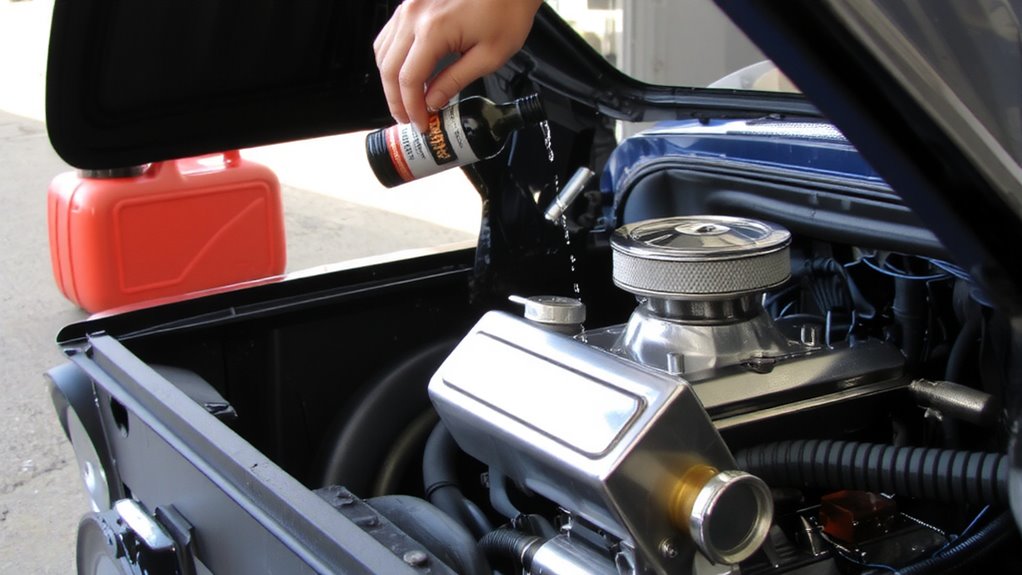
While modern fuels compromise vintage components, ethanol-free gas eliminates the root cause of degradation in classic fuel systems. You get maximum fuel purity-no ethanol means no water absorption, reducing the risk of phase separation by up to 98% in stored fuel. Standard gasoline with 10% ethanol (E10) attracts moisture, promoting corrosion in steel tanks and degrading rubber and plastic parts over time. Ethanol-free gas prevents that damage outright. Maintaining system longevity is critical, and using ethanol-free fuel reduces varnish and gum formation by eliminating oxygenate breakdown byproducts. Your carburetor jets, fuel lines, and pumps stay cleaner, with studies showing up to 70% less deposit accumulation over six months. With zero ethanol, vapor pressure remains stable, minimizing vapor lock in high-temperature conditions. You preserve factory-spec performance and material compatibility, especially in engines built before 1980. This is fuel purity that directly translates to extended system longevity and reduced maintenance.
Choose the Right Ethanol-Free Fuel for Your Car
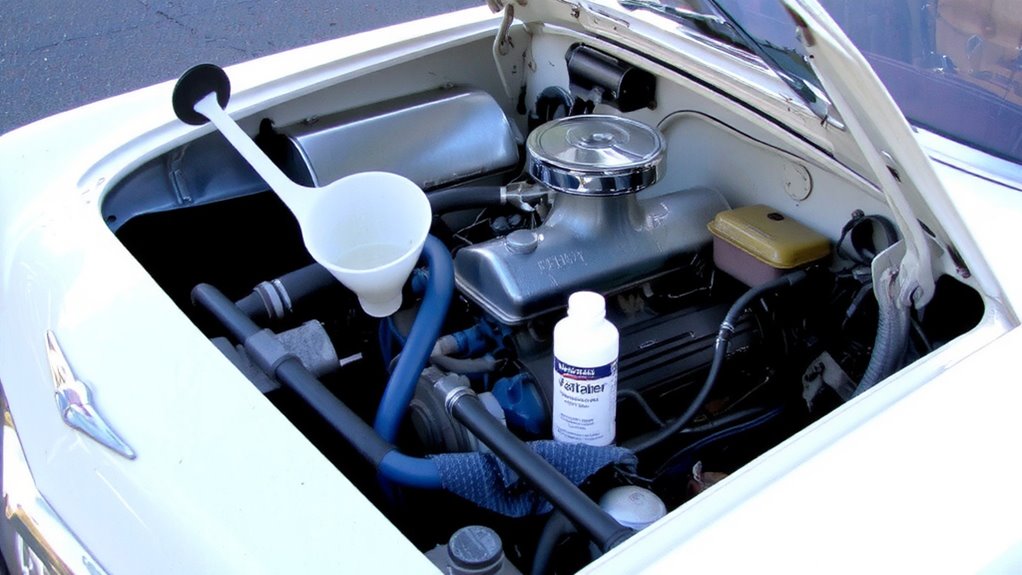
You’ve seen how ethanol-free gas safeguards your fuel system from moisture, corrosion, and deposits-now it’s time to select the right formulation for your vehicle. Fuel compatibility is critical; not all engines are designed for ethanol-free gasoline. Check your owner’s manual or manufacturer specs to confirm suitability. Most modern cars handle ethanol blends, but classic cars, small engines, and marine motors thrive on pure gasoline. Ethanol-free fuel typically comes as 91 or 93 octane, enhancing engine performance by providing consistent combustion and reducing knock. Higher octane ratings stabilize ignition timing, especially under load or high temperatures. Verify the pump label for Reid Vapor Pressure (RVP) and BTU content-lower RVP prevents vapor lock, while higher BTU improves energy output. Always choose certified non-ethanol fuel from reputable stations to guarantee purity and avoid contamination that could compromise performance.
Use the Best Additives for Ethanol-Free Gas
When running ethanol-free gas, adding the right fuel treatment guarantees peak engine efficiency and long-term protection. You should choose additives containing PEA (polyetheramine) detergents, which clean injectors and intake valves at a molecular level. These detergents maintain ideal fuel efficiency by preventing carbon buildup that restricts airflow and disrupts spray patterns. A high-quality additive, like those with 800–1,200 ppm PEA, improves engine performance by ensuring precise fuel atomization and combustion. Some treatments include lubricity enhancers that protect high-pressure fuel pumps-especially critical in modern GDI engines. Others add corrosion inhibitors to guard against moisture damage, even in ethanol-free environments. Always follow the manufacturer’s dosage-typically 1 oz per 10–15 gallons. Overuse provides no added benefit and may cause residue. Used correctly, premium additives extend engine life, sustain horsepower, and preserve fuel efficiency with measurable results over time. For optimal results, consider using one of the best petrol additives known for their advanced cleaning and protective properties.
Stabilize Ethanol-Free Gas for Long-Term Storage
Even though ethanol-free gasoline resists degradation better than ethanol-blended fuels, it still breaks down over time due to oxidation and moisture exposure. You must address fuel oxidation and moisture absorption to keep stored gas viable. Over just 30–60 days, fuel oxidation forms gums and varnishes that impair combustion. Moisture absorption accelerates this process, even in sealed containers, because of temperature fluctuations. For long-term storage beyond three months, you need a fuel stabilizer. Add stabilizer at a rate of 1 ounce per 2.5 gallons of gas before filling the tank or container. The best products use radical scavengers and metal deactivators to slow oxidation. They also contain demulsifiers to separate water, reducing corrosion risk. Always store in approved, tightly sealed containers at 60–80°F. Keep fuel out of direct sunlight to minimize thermal cycling. Proper treatment nearly doubles shelf life-up to 3 years-preserving performance and engine compatibility.
Stop Rust and Gunk in Fuel Lines and Injectors
While ethanol-free gas reduces the risk of moisture-related damage, it won’t prevent rust and gunk buildup in fuel lines and injectors over time-especially in engines that sit idle. Fuel oxidation still occurs, forming varnish and acidic byproducts that degrade internal components. These deposits restrict fuel flow and impair injector spray patterns, reducing efficiency. Even small amounts of moisture accumulation from condensation can trigger corrosion in steel fuel lines and injectors. You need a targeted additive with detergents and metal deactivators. Use a product containing 200–400 ppm of corrosion inhibitors and polyetheramine (PEA) detergents. These chemicals dissolve varnish and form a protective layer on metal surfaces. Treat every tank or stored fuel supply every three months. The right additive cuts deposit formation by up to 90%, maintaining ideal flow and combustion. Prevention beats repair.
Tune Carbureted Engines for Ethanol-Free Gas
Why does your carbureted engine run rough after switching to ethanol-free gas? Because ethanol-free fuel burns hotter and leans the fuel mixture, disrupting the air intake balance your carburetor was calibrated for. You need to readjust for proper combustion. Start by checking your idle mixture screws-turn slowly until engine RPM peaks. Then, assess the main jets: ethanol-free gas often requires richer jetting, typically 2–4 sizes larger. Recheck the air intake seal-any leaks skew fuel mixture readings. Use a vacuum gauge for precision tuning: aim for steady 18–22 in-Hg at idle. For optimal performance, consider using a high-quality carburetor cleaner to remove deposits that can interfere with fuel flow and throttle response.
| Setting | Adjustment | Target Value |
|---|---|---|
| Idle RPM | Adjust throttle stop | 650–750 RPM |
| Fuel Mixture | Idle mixture screw | 1.5–2 turns out |
| Main Jet | Replace size | +2 to +4 numbers |
| Float Level | Measure & bend tab | Per manual (e.g., 7/16″) |
| Vacuum | Check at idle | 18–22 in-Hg steady |
On a final note
You protect your fuel system by using ethanol-free gas with 90+ octane and adding a stabilizer like PRI-G at 1:2000 ratio. It prevents phase separation, reduces oxidation, and inhibits rust in steel fuel lines. For carbureted engines, adjust idle mixture screws-ethanol-free fuel’s stoichiometric ratio is 14.7:1. Use a filter with 10-micron rating. Store fuel up to 3 years with proper stabilization. This preserves injector flow rates and prevents varnish in carburetor jets.