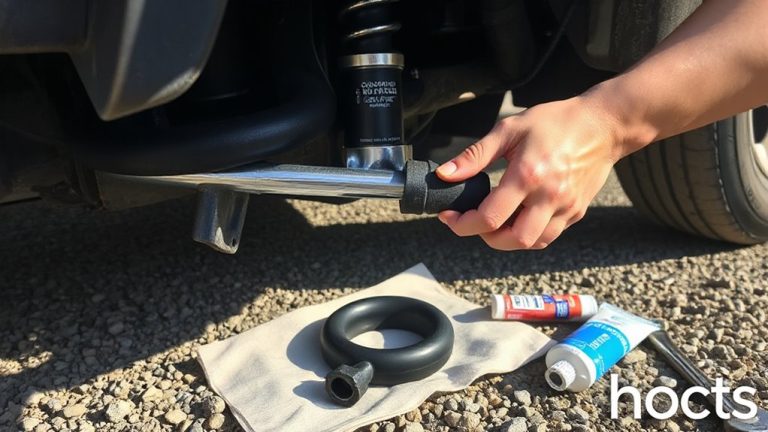
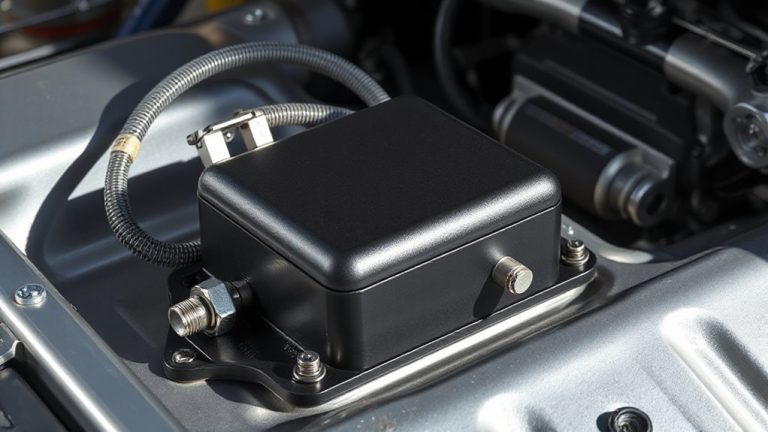
Inspecting and Replacing Fuel Filters Before Putting Cars Into Hibernation Mode
You should inspect your fuel filter before storing your car to prevent starting issues and engine damage. A clogged filter restricts fuel flow, dropping pressure below 35 psi or flow under 0.5 gallons per minute. Look for dark sediment, cloudiness, or rust-colored tints in the filter housing. Swollen seals or a filter past 30,000 miles means replacement is urgent. Use an ethanol-resistant, 10-micron synthetic filter matched to your fuel type. Correct flow direction-arrow toward the engine-ensures proper function. Overlooking this step risks contamination when you restart. Ensuring ideal fuel system health now improves long-term reliability and engine performance later.
Notable Insights
- Inspect the fuel filter for discoloration, sediment, or moisture before storage to prevent contamination-related engine issues.
- Replace the fuel filter if flow drops below 0.5 GPM or pressure falls under 35 psi to ensure reliable restart after storage.
- Use an ethanol-resistant filter for gasoline engines with E10/E15 fuel to withstand degraded fuel and moisture during hibernation.
- Install a 10-micron synthetic media filter for superior debris and water protection in long-term vehicle storage.
- Always relieve fuel pressure and confirm correct filter orientation (arrow toward engine) during replacement for safety and performance.
Why You Must Check Your Fuel Filter Before Storage
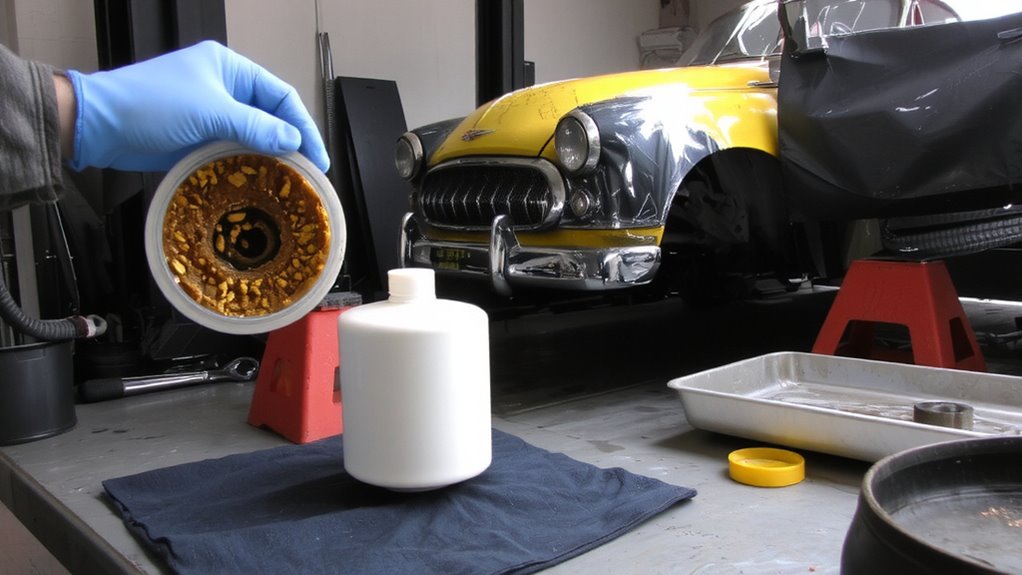
While it might seem minor compared to other prep steps, neglecting your fuel filter before long-term storage can lead to serious engine issues down the line. Your fuel filter traps debris and prevents fuel contamination, but over time it becomes saturated. Once the engine stops running, residual fuel degrades and attracts moisture. This leads to storage condensation inside the fuel system, especially in varying temperatures. Without proper filtration, condensed water mixes with fuel, promoting microbial growth and corrosion. Most modern vehicles use pleated cellulose or synthetic media filters with a 5–10-micron rating, effective for trapping fine particles. But when moisture bypasses a compromised filter, injectors and pumps suffer. A clogged or wet filter reduces fuel flow, causing hard starts or misfires upon restart. Replacing the filter pre-storage guarantees clean, dry fuel delivery. It’s a simple, low-cost step that protects high-pressure fuel systems and maintains engine integrity over months of inactivity.
How to Spot a Clogged or Moist Fuel Filter
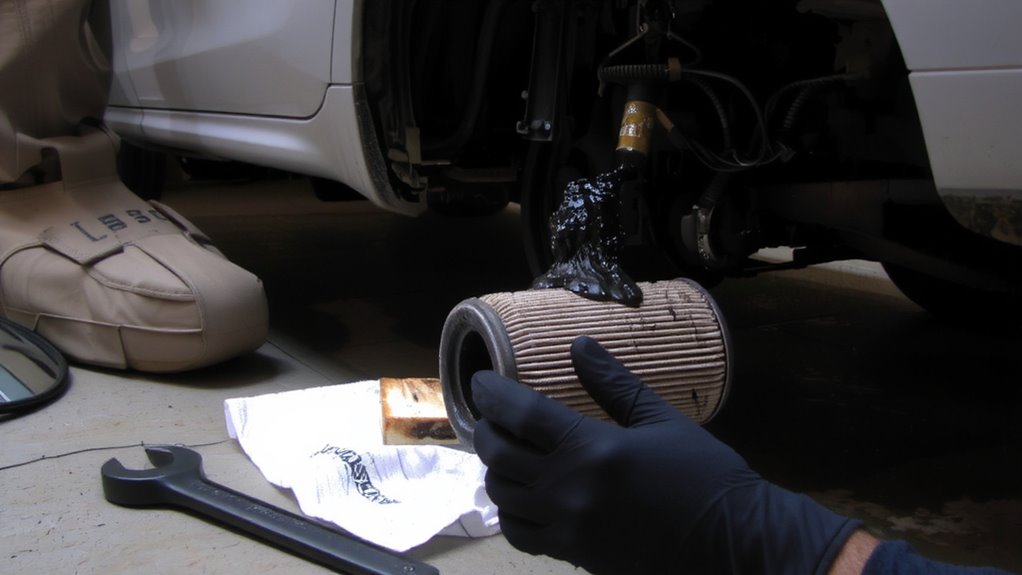
How can you tell if your fuel filter is already failing before storage? Look for visible filter discoloration, which often signals internal damage or exposure to moisture. A healthy filter should appear clean, with a translucent or light beige housing. Dark sediment, cloudiness, or rust-colored tints indicate fuel contamination from water or debris. Clogged filters restrict fuel flow, reducing pressure at the rail-most systems operate at 35–65 psi; a drop below 30 psi suggests blockage. Moisture in the filter promotes microbial growth, degrading fuel quality and corroding internal components. Check for swollen seals or soft housing, signs of prolonged exposure to contaminated fuel. Use a fuel test kit to confirm water presence. Early detection prevents injector damage and guarantees reliable restart after storage.
7 Signs You Need a New Fuel Filter Now
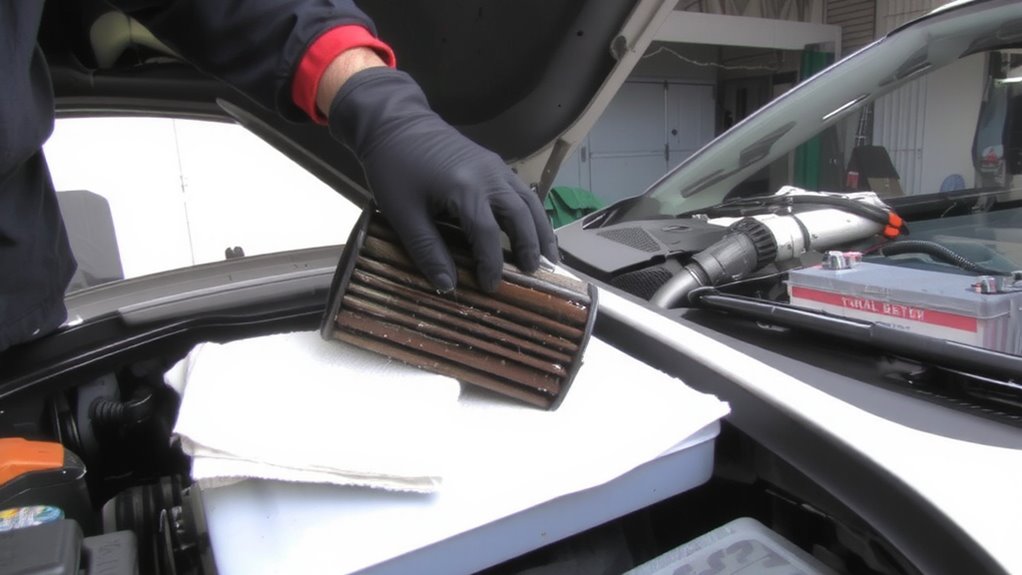
Why wait for engine trouble when prevention is this straightforward? You risk fuel contamination every time you refill, especially if gasoline sits for months during hibernation. Modern fuel filters capture particles as small as 10 microns, protecting sensitive fuel injectors. When clogging worsens, flow drops below 0.5 gallons per minute at idle, causing engine stalling under load. You’ll notice rough idling or hesitation during acceleration-signs your filter can’t maintain 45–60 psi fuel pressure. Manufacturers typically recommend replacement every 30,000 miles; exceeding that increases failure risk. Dark, sludgy residue inside the filter element confirms contamination. If you’ve driven through areas with poor fuel quality or moisture in the tank, replacement is urgent. A blocked filter won’t clear itself. Ignoring symptoms risks damaging the fuel pump, which can cost over $500 to replace. Replace the filter now-before hibernation seals in the damage.
Replace Your Fuel Filter at Home (Step-by-Step)
A quality fuel filter replacement takes less than an hour and costs around $25–$50, saving you a $200+ service fee. Begin by relieving fuel pressure-disconnect the battery and locate the fuel pump fuse; run the engine until it stalls. This prevents fuel spray during filter removal. Locate your fuel filter-it’s usually along the fuel line near the tank or frame rail. Use a fuel line disconnect tool to release hoses cleanly. Install the new filter, ensuring correct flow direction-arrow marks indicate fuel flow toward the engine. Reconnect lines tightly to avoid leaks. Refit the fuse, reconnect the battery, then turn the key to “on” without starting-this builds fuel pressure before ignition. Listen for the fuel pump hum. A standard filter lifespan is 20,000–40,000 miles; never extend beyond manufacturer limits. You’ve just improved efficiency and reliability.
Pick the Right Fuel Filter for Long-Term Storage
Choosing the right fuel filter for long-term vehicle storage isn’t just about fit-it’s about protection. You need a filter compatible with your fuel type, whether gasoline, diesel, or ethanol-blend. Using the wrong filter can lead to clogging or system damage. For gasoline engines, choose a filter rated for ethanol resistance if E10 or E15 is present. Diesel engines require water-separating filters to handle microbial growth during storage. Consider storage duration: longer periods demand higher filtration efficiency. Filters with 10-micron ratings trap more debris than 30-micron versions, reducing contamination risks. Synthetic media filters outperform cellulose, especially over months of inactivity. Always check OEM specs-flow rates and pressure tolerances must match your system. A mismatched filter can collapse or restrict fuel flow. Quality seals prevent drying and cracking. Pick a filter designed for long-term stability, not just short-term performance.
Protect Your Fuel System During Storage
While your car sits idle, fuel degradation and moisture buildup can silently damage critical components, so taking proactive steps now prevents costly repairs later. Fill the tank to minimize condensation, which contributes to system corrosion. Add a fuel stabilizer designed for ethanol blends to slow oxidation and reduce fuel contamination. Run the engine for 10 minutes to circulate the treated fuel through the entire system. Use a filter with a minimum 10-micron rating to catch debris and water before storage. Make certain the filter housing is sealed properly-check the O-ring for cracks or compression. A compromised seal allows air and moisture ingress, accelerating degradation. Modern fuel systems operate at 40–65 psi; maintaining pressure integrity preserves injector function. Periodic inspection every three months assures early detection of clogs or contamination. Protecting your fuel system during storage is essential for reliable restart and long-term component health. For 6.7L Cummins engines, consider upgrading to a high-efficiency fuel filter rated for 67 Cummins.
On a final note
You must inspect your fuel filter before hibernation to prevent degradation. Ethanol in modern fuel absorbs moisture, risking corrosion and clogging. Replace paper-element filters every 30,000 miles or before storage. Use ethanol-compatible filters with 5–10 micron ratings for maximum protection. Install a filter rated for gasoline or E85, depending on your fuel. Proper filtration maintains injector performance and prevents system damage during long-term storage.