Ensuring Compatibility Between Lowering Springs and Factory Anti-Sway Bar Geometry
Lowering your car shifts sway bar angles, reducing its effectiveness by 30–40% and increasing stress on components. Factory bushings wear faster due to binding from misalignment. Quality lowering springs preserve control arm angles and minimize droop, maintaining proper sway bar preload. Use OEM-spec lubricants and inspect bushings regularly. For drops over 2 inches, adjustable end links restore correct geometry. Maintain at least 1/4 inch clearance between the bar and chassis. You’ll soon discover how precise tuning sustains performance without compromise.
Notable Insights
- Lowering springs should maintain factory control arm angles to preserve sway bar alignment and function.
- Use application-specific lowering springs that match original suspension geometry to prevent sway bar binding.
- Sway bar effectiveness drops 30–40% when lowered; select springs that minimize droop and angle changes.
- Install adjustable end links if lowering more than 2 inches to restore proper sway bar preload and articulation.
- Verify clearance between sway bar, chassis, and exhaust after lowering to prevent contact during suspension travel.
Watch For Sway Bar Noise and Wear on a Lowered Car
A lowered car can expose the anti-sway bar system to increased stress, leading to potential noise and premature wear. You’ll often hear clunking or squeaking during cornering or over bumps-signs of inadequate sway bar lubrication or failing bushings. Factory bushing material, typically rubber, compresses and rebounds under load, but lowering reduces suspension travel, forcing the sway bar to operate outside its design angle. This increases friction at mounting points. Polyurethane bushings offer stiffer performance but require precise sway bar lubrication to prevent binding. Without proper lubrication, metal-on-metal contact accelerates wear. Inspect bushings regularly for cracks, tearing, or hardening. Misalignment stresses end links, risking failure. Use OEM-specified lubricants compatible with your bushing material. Aftermarket kits often include upgraded bushings and serviceable hardware. Address noise early-ignoring it risks component fatigue and compromised handling precision.
Understand How Lowering Springs Break Sway Bar Alignment
You’re not just changing ride height when you install lowering springs-geometry shifts occur in multiple suspension systems, including the anti-sway bar. Lowering reduces the angle at which the sway bar operates, causing excessive sway bar droop. This misalignment forces the end links to operate at improper angles, increasing stress. Spring compression alters the resting position of the control arms, which shifts the sway bar’s mounting points. The result? Premature wear, binding, and reduced lateral stability.
| Condition | Factory Ride Height (deg) | Lowered Ride Height (deg) |
|---|---|---|
| Sway Bar Angle | 5–7 | 12–18 |
| End Link Angle | 8° | 22° |
| Sway Bar Droop | Minimal | 15–25 mm |
| Effective Stiffness | 100% | 60–70% |
| Bushing Pre-load | Balanced | Uneven |
See How Ride Height Changes Sway Bar Geometry
Why does lowering your car affect handling so dramatically? Lowering alters the anti-sway bar’s attachment angles, reducing its effective leverage and diminishing roll resistance. As ride height drops, the sway bar links may no longer sit perpendicular to the control arms, causing bind during suspension travel. This restricts wheel movement and compromises grip. You’ll also see increased camber change across the suspension arc, especially in the front, where negative camber spikes during compression. This leads to uneven tire wear and reduced cornering traction. The reduced ride height shortens the available suspension travel, limiting compliance over bumps and increasing the likelihood of bottoming. Even a 1.5-inch drop can shift the sway bar’s neutral position by 15–20 degrees, drastically altering its function. These changes degrade balance and responsiveness.
Choose Lowering Springs That Maintain Sway Bar Function
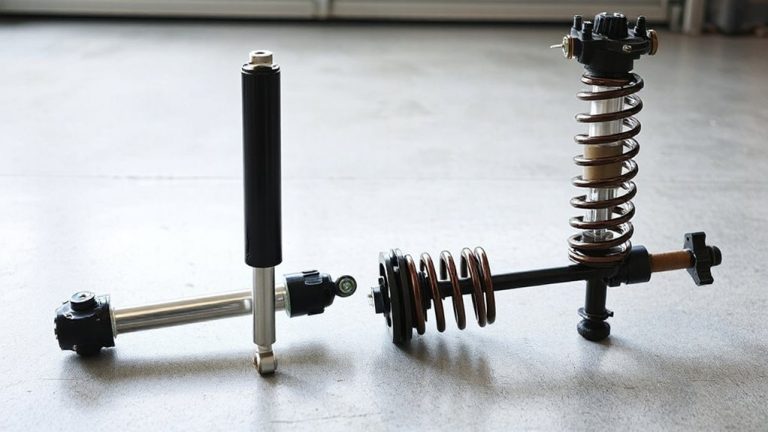
Lowering your car changes more than just stance-it directly impacts how the anti-sway bar functions. When you install lowering springs, the reduced ride height alters the suspension’s resting position, which affects sway bar preload. Proper preload guarantees the bar engages correctly during cornering, maintaining balanced handling. If the springs shift the control arm angle too much, the sway bar can bind or lose effectiveness. You need springs designed with precise spring seat alignment to keep suspension components in their ideal factory-specified angles. This alignment preserves the bar’s neutral position, preventing premature tension or slack. Quality lowering springs account for this geometry, often using progressive wind designs and application-specific spring rates. They maintain correct leverage ratios and arm travel, guaranteeing the sway bar works as intended. Choose performance-oriented brands that engineer springs to match your vehicle’s original anti-sway bar tuning.
Know When to Switch to Adjustable End Links
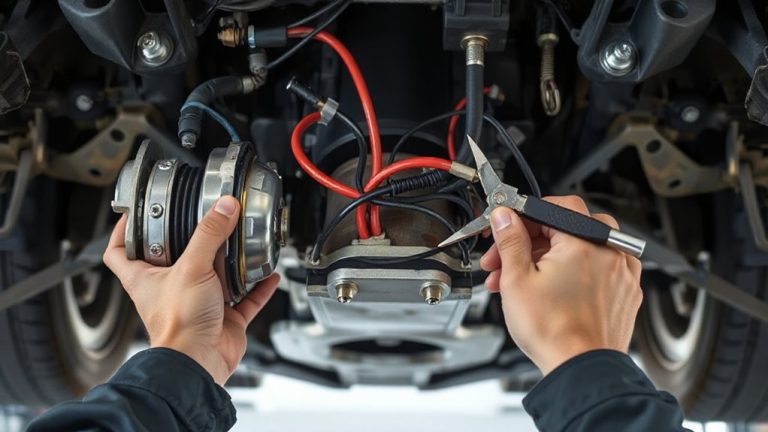
How much does your sway bar really move when the suspension cycles through its range? It depends on ride height and suspension articulation. Lowering springs change that range, often leaving factory end links too short or too long. That’s where end link adjustment comes in. Without proper length, your sway bar can preload or lose effectiveness. You need flexibility to match your new geometry.
| Ride Height Drop | Suggested End Link Adjustment | Articulation Impact |
|---|---|---|
| 0–1 inch | None required | Minimal |
| 1–2 inches | Slight adjustment | Moderate |
| 2–3 inches | Adjustable recommended | Significant |
| 3+ inches | Adjustable required | High |
Adjustable end links let you fine-tune connection length. They maintain correct sway bar positioning under load. You preserve handling balance. This is critical for consistent response. You shouldn’t rely on stock parts beyond their design limits. Match your modifications with proper hardware.
Measure Clearance to Prevent Sway Bar Binding
Your sway bar needs room to move freely, and altering ride height affects everything around it. You must measure clearance at full compression to prevent sway bar binding. Insufficient clearance restricts suspension travel, causing the bar to preload or contact chassis components. Check the gap between the sway bar and inner control arms, subframe, and exhaust-minimum 1/4 inch is required under maximum load. Reduced ride height also impacts tire clearance, especially during cornering or over bumps. When tires rise into the fender well, limited suspension travel can force the sway bar into contact zones it wouldn’t reach at stock height. Binding introduces false feedback, reduces handling accuracy, and may accelerate bushing wear. Use a tape measure or feeler gauge to verify space at ride height and throughout the suspension’s full range. Always verify clearance with the vehicle at rest and compressed.
Balance Handling and Clearance on a Lowered Car
Though lowering your car improves aesthetics and reduces center of gravity, it also alters suspension geometry and weight distribution, requiring careful balance between handling performance and mechanical clearance. You’ll likely notice increased negative camber, which can hurt tire wear if not corrected. Proper camber adjustment restores ideal tire contact under cornering loads. Most lowered setups benefit from adjustable control arms or camber kits, typically allowing ±1.5° correction. Without it, inside shoulder wear accelerates, especially on front tires. Also, check for steering linkage and strut clearance-reduced travel can cause binding. Maintain at least 1 inch of bump travel to prevent harsh bottoming. Balanced spring rates and sway bar function depend on preserved motion ratios. Misalignment leads to understeer or snap oversteer. Guarantee your alignment specs include updated camber, caster, and toe-each critical for even tire wear and neutral handling.
On a final note
You must prioritize sway bar geometry when installing lowering springs. Dropping ride height alters suspension angles, misaligning factory end links. Misalignment causes binding, premature wear, or clunking noise. Correct end link angle guarantees smooth articulation. Use adjustable end links if drop exceeds 1.5 inches. Measure sway bar-to-control arm clearance-maintain minimum 1/2 inch. Proper alignment preserves handling balance and suspension life. Treat it like engine timing: precise, critical, non-negotiable.