The Importance of Matching Suspension Components for Consistent Ride
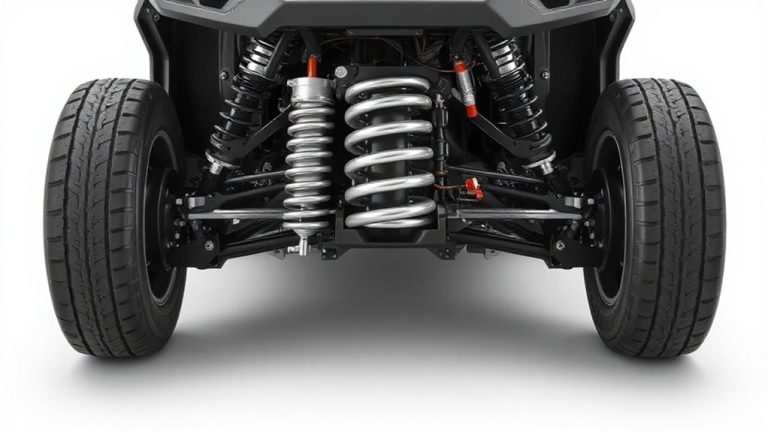
You need matched shocks and springs to maintain control and ride consistency. A 2,500-lb-rated shock paired with a spring of equal rate (lbs/in) guarantees proper damping and load handling. Mismatched parts cause harsh rebounds, reduced tire contact, and increased body roll. Response times under 20 milliseconds improve feedback and braking. Align spring rate, damping force, and stroke-like pairing a 2.5-inch shock with compatible spring travel. Imbalanced front and rear rates lead to understeer or oversteer. Keep components from the same suspension line for engineered harmony. The full picture reveals how precision tuning affects every drive.
Notable Insights
- Matched shocks and springs ensure balanced handling by aligning damping force, spring rate, and load capacity.
- Mismatched components increase body roll, reduce tire contact, and degrade control during aggressive driving.
- Properly paired suspension parts maintain response times under 20 milliseconds for improved road feedback and braking.
- Front and rear suspension must be balanced to prevent understeer, oversteer, and uneven tire wear.
- Misaligned or incompatible struts accelerate wear and compromise stability due to poor geometry and runout tolerance.
Why Matched Suspension Components Matter
While your vehicle’s suspension may seem like a collection of separate parts, each component must work in sync to deliver peak performance-especially when you’re pushing limits on rough terrain or during aggressive driving. Matched shocks and springs are critical for balanced handling and durability. If your springs have a high load capacity but your shocks can’t keep up, response time suffers. This mismatch causes delayed damping, increasing body roll and reducing control. Properly paired components guarantee force absorption is immediate and predictable. For example, a shock rated for 2,500 lbs load capacity must match a spring with equivalent rate (lbs/in) to maintain alignment and tire contact. When response time drops below 20 milliseconds, road feedback is sharper and braking distance shorter. Mismatched parts increase wear and compromise safety. You need harmonized suspension dynamics-where spring rate, damping force, and load capacity align-for consistent performance. It’s not just comfort-it’s control.
How Mismatched Shocks and Springs Ruin Ride Quality
If your shocks and springs aren’t properly matched, ride quality deteriorates quickly-no matter how smooth the road or advanced the suspension design. Mismatched components create harsh rebound, where the shock can’t control spring return quickly enough, sending jolts into the cabin. You’ll feel every bump sharply because damping rates don’t align. Uneven damping occurs when shocks are too weak or too stiff for spring rates, causing one wheel to react differently than its counterpart. This imbalance reduces tire contact, lowering grip and stability. A 2.5-inch stroke shock paired with a high-rate coil spring will bottom out early, while a soft spring with a heavy damping shock over-controls motion, killing compliance. For ideal performance, spring rate (measured in lb/in) and shock valving (in kg/mm/sec) must be engineered together. You need coherence, not compromise. Choosing the right expert picks ensures compatibility and optimal ride tuning.
Are Your Struts Throwing Off Your Suspension Balance?
Why does your car still feel unbalanced even after upgrading the shocks and springs? The culprit might be your struts. Poor strut alignment can disrupt suspension geometry, leading to uneven handling and accelerated component wear. Even high-quality shocks and springs can’t compensate for struts that are misaligned or worn. Over time, component wear in the strut assembly-such as in the mount or bushings-reduces responsiveness and throws off weight distribution. A reliable jump starter for semi-trucks can prevent strain on vehicle systems during cold starts, which may indirectly affect suspension performance over time.
| Component | Wear Indicator | Alignment Tolerance |
|---|---|---|
| Strut Mount | Cracking, noise | ±1.5° camber |
| Lower Control Arm | Play in ball joint | ±2.0° toe |
| Spring Seat | Misalignment signs | No lateral shift |
| Strut Shaft | Scoring or bending | <0.5mm runout |
| Camber Plate | Looseness | ±1.0° adjustable |
Ensure proper strut alignment and inspect for component wear regularly to maintain balance.
Balance Front and Rear Suspension for Even Handling
Your suspension works as a complete system, not just front or rear alone-how each end behaves affects the other. Uneven tuning between ends disrupts load distribution, leading to unpredictable handling. For maximum cornering stability, front and rear springs should compress at balanced rates. Mismatched spring rates-like 300 lb/in front and 150 lb/in rear-cause understeer or oversteer. Shock valving must also align; firm front shocks with soft rear units shift weight too abruptly. Ideal setups maintain a 60/40 front-to-rear damping balance for most front-engine vehicles. Adjusting anti-roll bar stiffness helps fine-tune response, but only when spring and shock pairing is matched. Even ride height matters: a 1-inch front lift without rear adjustment alters suspension geometry, reducing control. Balanced components guarantee the chassis remains level during maneuvers, preserving tire contact and responsiveness. You’ll get predictable handling only when both ends work as a unified system. Top-tier manufacturers like Bilstein offer performance-tuned kits designed to ensure harmonious front-to-rear suspension integration.
7 Signs Your Suspension Components Don’t Work Together
How does your car behave when hitting a mid-corner bump? If it dives unexpectedly or snaps sideways, your suspension components likely don’t work together. Mismatched springs, shocks, or sway bars disrupt harmony, leading to poor steering response. You’ll notice delayed turn-in or vagueness through quick changes, reducing control. Uneven tire wear appears quickly-often on the inside edges-indicating improper camber alignment from conflicting front and rear dynamics. Your car may understeer on entry and oversteer on exit, a sign of imbalanced roll stiffness. Without matched damping rates, energy isn’t dissipated evenly, causing one end to react too fast or too slow. This imbalance increases stopping distances and reduces cornering grip. Consistent handling demands synchronized valving, spring rates, and geometry. Mismatched parts compromise safety and tire life.
Upgrading One Part? Keep Your Suspension Matched
Though upgrading a single suspension component might seem like a quick fix, doing so without considering system balance risks degrading overall performance. Maintaining upgrade compatibility guarantees your vehicle handles consistently. Component synergy is essential-mismatched parts can lead to uneven load distribution, accelerated wear, or compromised safety.
| Component | Recommended Match |
|---|---|
| Shocks | Same brand/series as struts |
| Springs | Match spring rate to shock valving |
| Sway bars | Compatible with bushing hardness |
| Control arms | Pair with aligned compliance |
| Strut mounts | Match damping characteristics |
Ignoring these links disrupts tuning intent. A high-performance shock paired with a stock spring won’t reach its potential. The system works as a unit-alter one piece, and the whole balance shifts. Upgrade smart: prioritize matched sets to preserve ride quality, responsiveness, and longevity across all driving conditions.
Stick to the Same Suspension Line for Reliable Performance
When it comes to achieving consistent handling and long-term reliability, sticking with components from the same suspension line isn’t just convenient-it’s a technical necessity. Manufacturers design each line with precise component synergy, guaranteeing peak system integration. You can’t mix dampers from one brand with springs from another without risking imbalance. Each part is tuned to work within a specific range of motion, load, and frequency response. For example, coilovers and struts in the same line share matching valving, spring rates, and mounting geometry. This alignment guarantees predictable handling under cornering loads up to 1.2G. Using mismatched parts disrupts load transfer and reduces control. Always verify compatibility through OEM specifications or manufacturer charts. When you stick to one line, you get repeatable performance, longer service life, and accurate response. It’s not just assembly-it’s engineered system integration.
On a final note
Your suspension performs best when components are matched. Mismatched shocks and springs disrupt damping rates and spring frequencies, reducing control. Factory setups pair 550 lb/in front coils with tuned strut valving for balanced response. Mixing brands or specs alters ride dynamics. A cohesive system maintains 60/40 front-rear weight distribution under braking. Always replace struts and springs in pairs. Use the same manufacturer’s line to preserve design intent and guarantee consistent performance.