Why Professional Powder Coating Outlasts DIY Spray Paint Jobs
You get longer-lasting results with professional powder coating because it forms a 3 to 5 mil thick, cross-linked polymer layer that resists wear far better than spray paint’s 1–2 mil film. Electrostatic application guarantees even coverage and strong adhesion, while curing at 350–400°F creates a durable thermoset bond. It withstands UV rays, scratching, and rust much longer. You’ll discover how material selection and prep work further boost performance.
Notable Insights
- Powder coating forms a 3 to 5 mil thick, cross-linked polymer layer, offering far greater durability than spray paint’s 1–2 mil film.
- Electrostatic application ensures even, consistent coverage with strong adhesion, eliminating runs and uneven coats common in DIY spraying.
- High-temperature curing creates a chemically bonded thermoset finish, unlike spray paint’s surface-level physical drying.
- Powder coatings resist UV fading, chipping, and rust significantly better, maintaining appearance and protection for 15–20 years outdoors.
- Professional surface prep, including abrasive blasting and cleaning, enhances bonding and extends coating life by up to 50%.
Why Powder Coating Outlasts Spray Paint
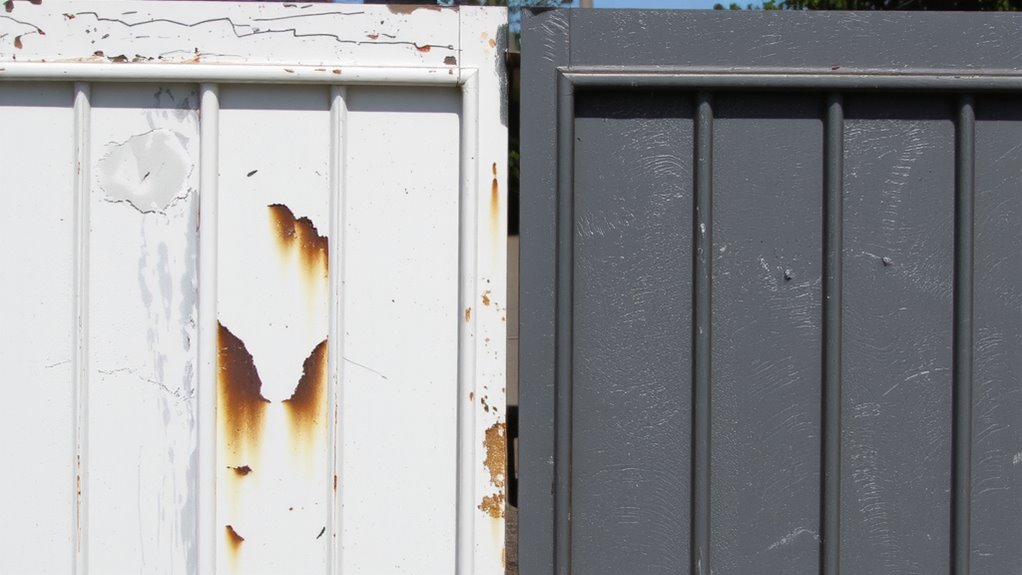
A powder-coated finish stands up to wear far better than spray paint, and the reason comes down to chemistry and application. You’re dealing with a thermoset polymer’s chemical composition-epoxy, polyester, or urethane-applied electrostatically and cured under heat. This creates a cross-linked, durable film 3 to 5 mils thick, resisting chipping, UV fading, and corrosion. Spray paint typically forms a weaker, 1- to 2-mil coating prone to peeling. Powder coating emits no VOCs during curing, giving it a lower environmental impact than solvent-based sprays. The process captures overspray for reuse, reducing waste. Compared to liquid paint’s shorter lifespan-often 3 to 5 years outdoors-powder coating lasts 15 to 20 years with minimal degradation. You get superior hardness, typically 60–80 on the pencil hardness scale. That means less scratching, better color retention, and long-term structural integrity, even under industrial conditions.
How Electrostatic Charge Ensures Stronger Adhesion
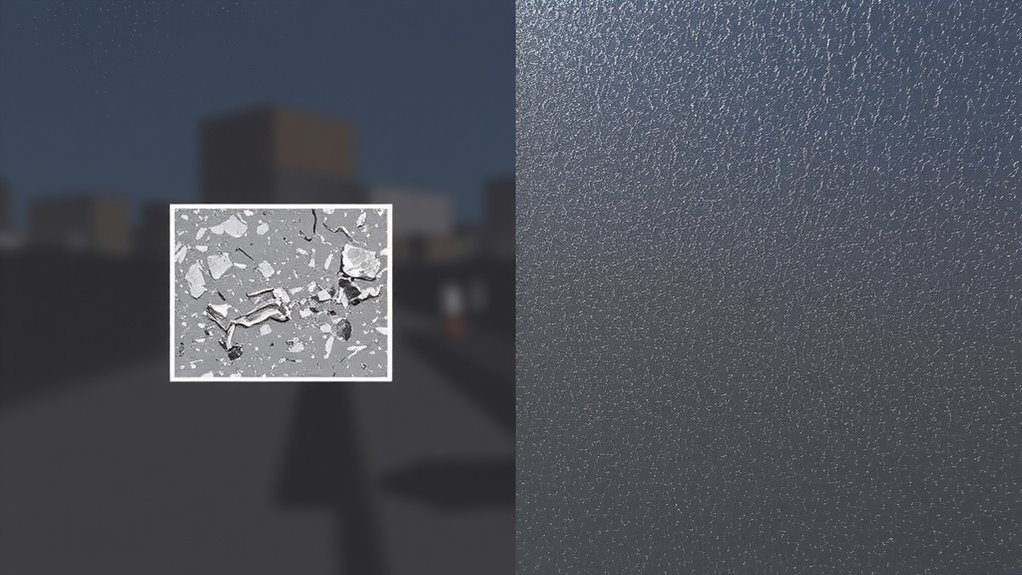
When the powder coating process starts, you’re not just spraying paint-you’re using physics to bond material to metal. The powder particles are given a negative charge as they exit the spray gun, while the metal part is grounded, creating electrostatic attraction. This pull guarantees even coverage, even on complex shapes and edges. Unlike spray paint, which relies on solvents and wet adhesion, powder sticks instantly due to this charge. The result? Consistent particle bonding across the entire surface. You get fewer runs, less overspray, and minimal wasted material. Electrostatic attraction holds the powder firmly in place until curing, preventing shifts or clumping. This charged adhesion process allows for precise film thickness-typically 2 to 4 mils-guaranteeing durability without buildup. With uniform particle bonding, weak spots are reduced, setting the foundation for a long-lasting, resilient coating.
How Heat Curing Strengthens the Coating
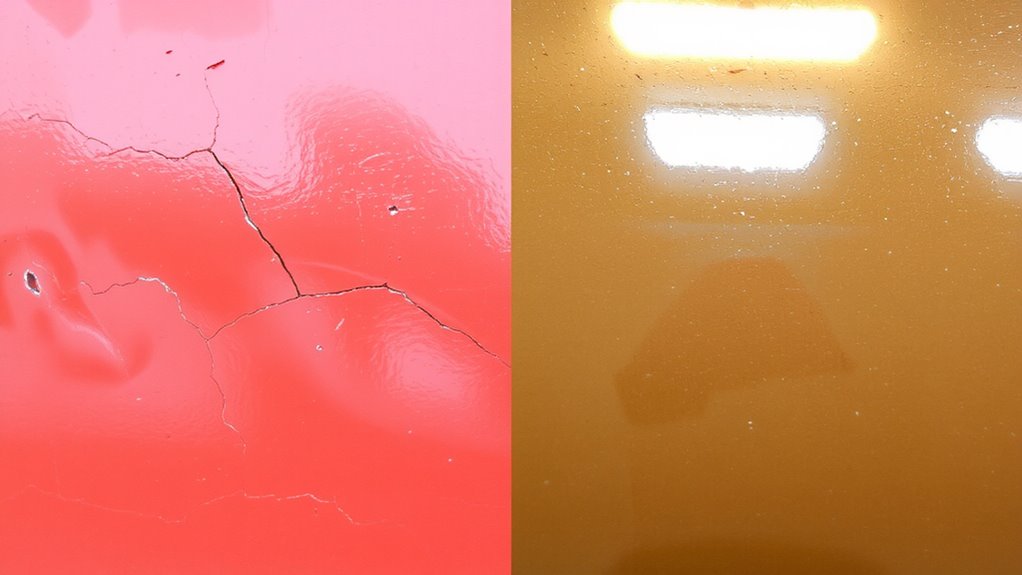
After the powder sticks to the metal through electrostatic attraction, heat takes over to lock everything in place. You’ll cure the coated part in an oven at 350–400°F for 10–20 minutes. This heat triggers polymer crosslinking, where resin molecules form strong chemical bonds, creating a uniform, durable network. Thermal stabilization follows, guaranteeing the coating resists deformation under temperature shifts. Unlike spray paint, which merely dries, powder coating undergoes this transformative reaction, enhancing hardness and cohesion.
| Property | Powder Coating | Spray Paint |
|---|---|---|
| Cure Temp | 350–400°F | Ambient |
| Reaction Type | Polymer crosslinking | Solvent evaporation |
| Structural Change | Thermoset formation | No chemical change |
This process guarantees long-term integrity through molecular reinforcement, not just surface adhesion.
Superior UV, Scratch, And Rust Resistance
Many powder-coated finishes last years longer than spray paint under harsh outdoor conditions-typically 15 to 20 years versus 3 to 5-thanks to superior resistance to UV, scratches, and corrosion. You get lasting protection because powder coatings form a cross-linked polymer barrier during curing. This dense layer withstands prolonged weather exposure without fading, chalking, or peeling. UV radiation breaks down conventional paints, but powder’s formulation resists photodegradation. It also offers exceptional scratch resistance-typically rated above 6H on the pencil hardness scale-making it ideal for high-wear surfaces. The coating’s thickness averages 3–5 mils, providing a durable shield against abrasion and impact. You’ll also benefit from strong chemical resistance, repelling solvents, acids, and road salts that degrade spray paint. Unlike porous solvent-based finishes, powder coatings don’t absorb moisture, preventing rust at the metal interface. This combination guarantees reliable performance in extreme environments.
Top DIY Spray Paint Mistakes That Fail Fast
That long-lasting protection from powder coating means your project stays intact under extreme conditions, but most DIY spray paint jobs don’t come close. You often apply too little or too much paint, causing uneven coverage that exposes metal to corrosion. Spray distance matters-hold the can closer than 10 inches, and you risk runs; farther than 16, and the mist spreads too thin. Most users miss the ideal 12–14 inch range, compromising adhesion and film thickness. Overspray waste exceeds 50% without proper technique or shielding, increasing cost and environmental impact. You’re also likely skipping surface prep like sanding or degreasing, which reduces bonding strength. Without a controlled curing process, solvents evaporate too quickly, weakening the finish. These flaws accelerate chipping, fading, and rust formation. Unlike powder coating’s uniform 3–5 mil thickness, DIY spray paint rarely achieves consistent build, failing well before its fifth year under UV or abrasion stress.
Why Touch-Ups Reveal Spray Paint’s Limits
Ever tried fixing a chipped spray-painted surface only to make it look worse? You’re not alone. Spray paint touch-ups struggle with color matching, even with the same can. Oxidation and weathering alter the original finish, making new paint appear noticeably different. Achieving seamless surface blending is nearly impossible with aerosol application. Spray paint dries fast, limiting your ability to feather the edges. This results in visible ridges or overlapping marks. Unlike uniform electrostatic deposition in powder coating, handheld spray relies on manual control, which introduces inconsistency. Film thickness varies, affecting both appearance and protection. Most touch-up jobs create weak points where moisture and rust enter. Without proper prep-abrasion, degreasing, and curing-the repair won’t bond properly. You end up with a patchwork look that degrades faster than the original. True durability demands more than quick fixes.
Choosing The Right Powder Coating For Maximum Durability
The best way to guarantee long-term durability in powder coating starts with selecting the right resin type for your application. Epoxy offers excellent corrosion resistance but limited UV stability, making it ideal for indoor use. Polyester resins provide superior weatherability, with gloss retention above 85% after 1,000 hours of QUV testing, perfect for outdoor environments. Polyurethane coatings deliver abrasion resistance and a high-end finish, often used in automotive applications. Your material selection directly impacts performance-matching resin chemistry to environmental exposure is critical. Surface preparation is equally essential; anchor profiles of 2.5 to 4.0 mils achieved through abrasive blasting secure mechanical adhesion. Proper cleaning removes oils and contaminants, preventing adhesion failure. A well-prepared surface increases coating lifespan by up to 50%. Combine correct material selection with meticulous surface preparation, and you create a bonded finish that resists chipping, fading, and corrosion far longer than any spray paint.
On a final note
You get longer protection with powder coating because it bonds at a molecular level. Electrostatic application guarantees even coverage, eliminating thin spots common in spray paint. The 350–400°F curing process creates cross-linked polymers, increasing hardness to 2–3 times that of solvent-based paints. UV resistance exceeds 2,000 hours in ASTM G154 testing. Salt spray performance reaches 1,000+ hours, far outperforming typical spray paint.