Preventing Interior Fading: How to Shield Car Upholstery From Sun Damage
Sunlight damages your car’s interior by exposing materials to UV radiation and heat over 180°F, breaking down polymers in vinyl and plastic. Use a windshield sunshade with aluminized polyester to block 99% of UV rays and reduce cabin temps by up to 30°F. Park in shade or use a multi-layer, UV-resistant car cover with 3–5 mm padding. Apply window tint blocking 99% of UV and SPF 50+ treatments. Clean and condition surfaces every 3–6 months. More protection strategies follow.
Notable Insights
- Use windshield sunshades with reflective layers to block 90–99% of UV rays and reduce cabin temperatures by up to 30°F.
- Install window tinting that blocks up to 99% of UV radiation and offers long-term protection with professional application.
- Apply UV-blocking treatments and sealants to dashboards and upholstery to prevent fading and material degradation.
- Park in shaded areas or use multi-layer, UV-resistant car covers to shield interiors from direct sunlight.
- Choose car covers with reflective materials and breathable fabrics to reduce heat buildup and prevent moisture damage.
Why Sunlight Damages Car Interiors
While sunlight may seem harmless, it’s actually the main cause of interior fading in your vehicle. Prolonged UV exposure triggers material degradation in dashboards, seats, and trim. UV rays break down polymers in plastics and vinyl, causing them to become brittle and crack. This chemical breakdown is irreversible and accelerates with temperature. Interior surfaces can reach over 180°F (82°C) on sunny days, intensifying damage. Color oxidation occurs when pigments in upholstery and panels react with oxygen under UV light, leading to dull, faded surfaces. Red and black materials show oxidation most visibly. UV-A rays, which penetrate glass, are primarily responsible. They compromise material integrity at a molecular level, not just discoloring surfaces. Without protection, repeated exposure leads to permanent cosmetic and structural decline. Preventing this requires blocking UV rays before they enter the cabin.
Use Windshield Sunshades for Instant UV Protection
When parked under direct sunlight, your car’s interior begins soaking up UV radiation the moment you step out, but a high-quality windshield sunshade cuts that exposure nearly in full. These shades typically block 90–99% of UV rays, using reflective metallic layers to perform effective heat reflection. Most measure 58 x 28 inches, fitting standard windshields with accordion-fold designs for quick deployment. The reflective surface, often made of aluminized polyester, bounces solar energy away, reducing cabin temperatures by up to 30°F. You also get significant glare reduction, which protects your eyes upon reentry. Shades weigh 1–2 pounds and collapse into compact circles under 12 inches. Independent lab tests confirm they reduce UV transmission to below 1%. For consistent protection, choose one with a durable, tear-resistant core and thermal resistance up to 230°F. Top-rated sunshades consistently outperform standard models in heat and UV rejection tests.
Park in Shade or Use a Car Cover
If you want to minimize UV damage over extended periods, parking in shaded areas or using a car cover offers consistent protection. Shade reduces direct sun exposure, slowing upholstery fading and dashboard cracking. When shade isn’t available, a quality car cover acts as a physical UV barrier. Look for covers with reflective materials like aluminumized polyester, which reflect up to 80% of solar radiation. These materials markedly reduce interior temperatures by enhancing thermal insulation. Multi-layer covers with 3–5 mm padding provide superior heat resistance and durability. Secure-fit designs with elastic hems or straps prevent wind damage. Polypropylene and polyester-spandex blends offer breathability, preventing moisture buildup. Covers with UV-resistant coatings last longer, maintaining reflectivity after repeated exposure. For best results, choose covers with SAE-rated SPF protection above 50. This combination of shade, thermal insulation, and reflective materials preserves your car’s interior condition efficiently. A best car cover for sun and rain will combine all these protective features while also offering reliable defense against moisture and environmental debris.
Tint Windows to Block Harmful Rays
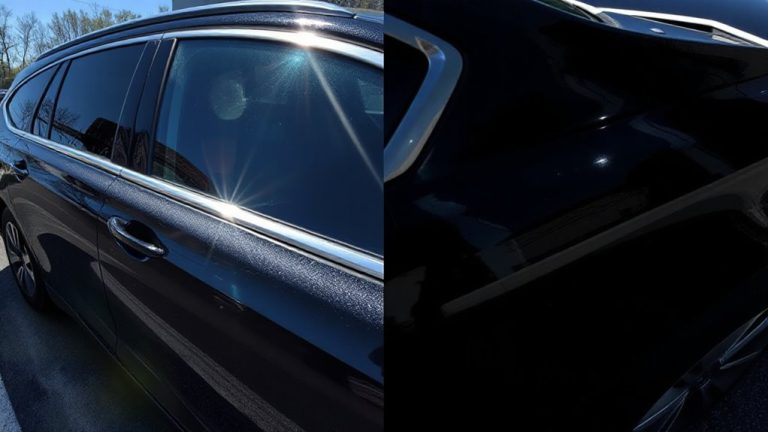
Parking in shade or using a car cover helps, but tinting your windows takes UV protection further by blocking harmful rays at the source. Applying a high-quality window film stops up to 99% of UV rays, preventing sun damage to your car’s interior. Most films block infrared radiation too, reducing cabin heat by up to 60%. Below shows how different tints perform:
| Tint Level | UV Rejection (%) | Heat Rejection (%) | Privacy Benefits |
|---|---|---|---|
| 5% (Limo) | 99 | 60 | Maximum |
| 20% | 98 | 55 | High |
| 35% | 97 | 45 | Moderate |
| 50% | 96 | 35 | Slight |
Window film installation is precise and best done professionally. Look for films with scratch-resistant coatings and manufacturer warranties. A properly installed film lasts over 10 years. You also gain privacy benefits-darker tints limit outside visibility. For optimal results, consider the best tint for front windshields based on UV and heat rejection performance.
Protect Surfaces With UV-Blocking Treatments
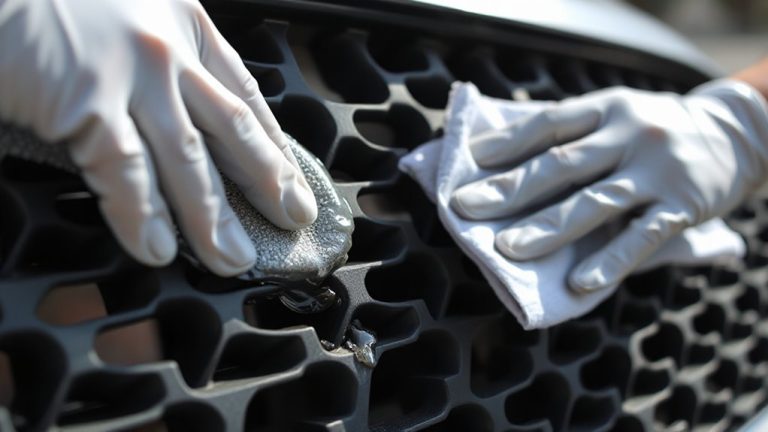
Although tinted windows reduce incoming UV radiation, applying UV-blocking treatments directly to interior surfaces adds a critical layer of defense against long-term sun damage. You should use UV coatings on dashboards, door panels, and consoles to block up to 99% of UVA and UVB rays. These specialized coatings form an invisible barrier that resists degradation from solar exposure. Surface sealants, typically silicone- or acrylic-based, enhance protection by sealing pores in vinyl and leather, preventing UV penetration and oxidation. Most high-quality sealants provide protection for 3–6 months under daily sun exposure. Apply treatments evenly with a microfiber applicator, allowing 15–20 minutes to cure. Reapplication is necessary to maintain efficacy. Together, UV coatings and surface sealants markedly reduce fading, embrittlement, and discoloration. They’re essential for preserving material integrity and resale value.
Clean and Condition to Prevent Cracking
Regular cleaning and conditioning do more than keep surfaces looking new-they actively prevent cracking by maintaining material flexibility. Dirt and UV exposure degrade fibers, making leather hydration and fabric preservation essential. Clean monthly with pH-balanced solutions to avoid residue buildup. Condition every 3 months to replenish oils lost to sunlight and friction. Neglect leads to microfractures, especially in high-stress areas like seat creases.
| Material | Conditioning Frequency |
|---|---|
| Leather | Every 3 months |
| Vinyl | Every 4 months |
| Fabric | Every 6 months |
| Suede | As needed |
| Synthetic | Every 5 months |
Use products with 2–5% lanolin for ideal leather hydration. For fabric preservation, apply silicon-free protectants to resist UV degradation without altering texture. Conditioning restores elongation capacity-critical for resisting stress-induced cracking. A well-maintained interior retains up to 90% of original tensile strength, compared to 40% in untreated surfaces exposed to daily sun.
On a final note
You can effectively prevent interior fading with consistent UV protection. Sunshades block up to 99% of UV radiation when placed correctly on windshields. Window tinting, especially ceramic film, rejects 95% of infrared rays and reduces interior temperatures by up to 60°F. UV-protectant treatments with SPF 30+ shield vinyl and leather. Regular conditioning prevents microfractures. Parking in shade or using a reflective car cover adds critical defense.