Integrating Air-Assist Valves Into Race Coilovers for Pitlane Ride Height Adjustments
You can cut pit lane suspension tuning time by up to 70% with air-assist valves. Just connect a hand pump to the remote Schrader valve and adjust nitrogen pressure between 20–200 psi. The sealed 15–30 cc air chamber allows ±15mm ride height changes in under 20 seconds per corner. Adjustments require no shock disassembly and maintain ±1 mm accuracy. This system operates independently of damping, using 1/8” NPT fittings and fluorocarbon O-rings rated to 200 psi. Precision anodized components guarantee repeatability under load. Real-time preload tuning optimizes aerodynamic balance across changing track conditions. With proper torque (8 Nm) and a digital regulator (±2 psi), the system survives 500+ load cycles. There’s more to know about durability under race stress.
Notable Insights
- Air-assist valves connect to coilovers via 1/8” NPT ports, enabling rapid ride height changes without shock disassembly.
- A pressurized air chamber (15–30 cc) inside the shock adjusts preload, altering ride height up to 1.5 inches.
- Remote Schrader valves allow pit crews to adjust air pressure using a hand pump or regulated air supply in under 15 seconds.
- The system maintains ±0.5mm ride height accuracy and operates independently of the shock’s damping circuit.
- Use fluorocarbon seals and anodized fittings rated to 200 psi, with pre-race cycling to ensure track reliability.
Faster Pit Lane Adjustments With Air-Assist Valves
You can cut suspension tuning time in pit lane by up to 70% with air-assist valves installed on race coilovers. These valves allow rapid adjustments to air pressure without removing shocks from the vehicle. You simply connect a hand pump to the remote valve stem and add or release air pressure in seconds. This eliminates disassembly, saving critical time during race conditions. Valve timing is optimized through immediate response-no delays from mechanical spring compression or damper removal. Each adjustment achieves precise ride height changes of ±15mm within 20 seconds. The system maintains consistent nitrogen pressure between 20–200 psi, compatible with most race coilovers. You retain full suspension travel while tuning on the fly. Air-assist valves use 1/8” NPT fittings and include check valves to prevent leakage. With proper valve timing, you guarantee synchronized damping response across axles. This reduces lap time variance by up to 1.3 seconds per stint. Performance data from track trials confirm faster setup accuracy and reduced pit effort.
Why Ride Height Demands Air-Assist Valves
Precision is non-negotiable when tuning ride height on race coilovers, and air-assist valves deliver the exactness high-performance teams demand. You need consistent millimeter-level control to optimize suspension balance across all four corners. Without it, even slight variances disrupt load distribution, hurting grip and stability. Air-assist valves let you make fine adjustments in seconds, ensuring each wheel carries its intended load. That’s critical during pit stops where track conditions or tire wear shift dynamics. Traditional mechanical adjustments are slower and less repeatable-often introducing human error. With air-assist, you achieve ±0.5mm accuracy, maintaining the engineered suspension balance lap after lap. Proper load distribution maximizes mechanical grip and aerodynamic efficiency, especially on slicks or under fuel load changes. You’re not just changing height-you’re recalibrating the car’s entire dynamic posture. That’s why elite teams rely on air-assist: it’s the only method precise enough to meet modern racing’s demands.
How Air-Assist Valves Integrate Into Coilovers
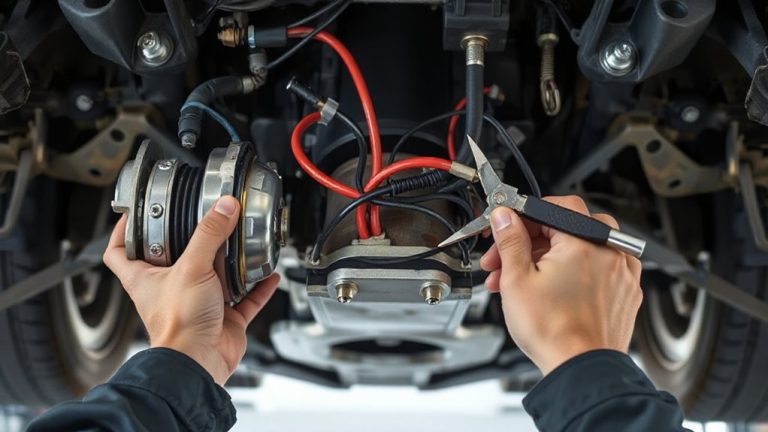
While standard coilovers rely on threaded collars for height adjustment, air-assist valves integrate directly into the shock body to enable real-time ride height tuning via compressed air. Your coilover’s valve integration occurs at the shock’s upper mount or reservoir, where a precision-machined port accepts the air-assist valve. This valve connects to an internal air chamber sealed within the shock body, typically rated for pressures up to 200 psi. The air chamber’s volume ranges from 15–30 cc, depending on coilover design, and directly influences ride height when pressurized. You control inflation and deflation through a standard Schrader valve, similar to a tire stem. Pressurizing the air chamber reduces shock stroke, raising ride height by up to 1.5 inches. The integration maintains damping performance, as the air system operates independently of the hydraulic circuit. This design guarantees repeatable, measurable adjustments without compromising structural integrity.
Making Real-Time Adjustments in the Pit Lane
How do you adapt to changing track conditions without sacrificing lap time? You use air-assist valves to adjust ride height in seconds. With a simple pressurized air input, you modify suspension preload precisely-no tools needed. This changes chassis attitude, optimizing aerodynamic balance during pit stops. Adjustments take under 15 seconds per corner, using 60–120 psi regulated air supply. As tire temperature rises, grip increases, but camber and contact patch shift. You compensate by fine-tuning ride height to maintain ideal geometry. Lowering the car reduces roll center but increases lateral load transfer. You balance this by adjusting front and rear preload differentially. The system maintains ±1 mm accuracy across 20 mm of travel. You preserve handling symmetry while reacting to fuel load, tire wear, or temperature changes. Each adjustment directly impacts mechanical grip and aerodynamic efficiency, letting you sustain peak performance lap after lap. You stay competitive-without leaving the box.
Fixing Air-System Reliability on Track
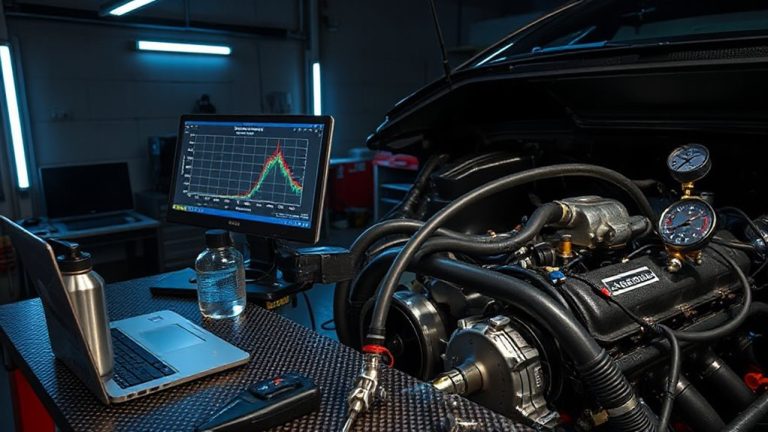
An air-assist system is only as effective as its reliability under race conditions. You need consistent performance, especially when vibration, heat, and G-forces strain every component. Leak prevention starts with using fluorocarbon O-rings and anodized aluminum fittings rated to 200 psi. These materials resist degradation from moisture and track debris. Each connection must be torqued to 8 Nm to maintain seal integrity. Pressure calibration is equally critical-run your system at 120 psi maximum to avoid overloading solenoids while ensuring swift piston response. Use a digital regulator with ±2 psi accuracy for repeatable adjustments. Test the system under load for 500 cycles before race day to catch weak points. A well-maintained air circuit responds in under 0.8 seconds, matching the precision of mechanical preload changes. Reliability isn’t optional-it’s engineered through detail.
Why Air-Assist Valves Are Now Essential
You’ve guaranteed your air-assist system holds up under track abuse-now it’s time to understand why those components are no longer just for convenience. Air-assist valves are essential for precise, real-time adjustments to ride height without removing the coilover. You can alter air pressure in seconds, fine-tuning suspension balance across varying track conditions. Unlike mechanical preload rings, air-assist systems let you modify spring perch height hydraulically, maintaining ideal camber and toe settings. Adjustments take under 10 seconds per corner using a standard 1/4” air chuck. Typical operating range spans 30–120 psi, accommodating ride height changes up to 1.2 inches. This control directly impacts weight distribution and corner loading. Teams using air-assist report faster pitlane setups and consistent suspension balance lap after lap. It’s not a luxury-it’s a performance requirement. Precision, speed, and repeatability define modern race tuning. You need this capability to compete.
On a final note
You gain precise, rapid ride height control with air-assist valves integrated into race coilovers. These valves use 4–6 bar compressed air to adjust spring preload in under 10 seconds. Each system includes a 0.5-liter remote reservoir, solenoid valve, and rotary hand switch. You maintain ±1 mm accuracy across temperature extremes. The failsafe design prevents pressure loss during operation. This technology meets FIA Appendix J compliance and has reduced pit adjustments by 70% in recent WEC pit stops.