Properly Storing Vehicle Documentation and Keys During Storage Periods
Store your vehicle documents in a UL-listed, fireproof container rated for 30 minutes at 1,700°F, with intumescent seals and a waterproof gasket that withstands 12 inches of water for 24 hours. Use an outdoor-rated lockbox with a 4-digit combination and anti-shim technology for spare keys. Keep them in separate, secure locations-never together. Back up all paperwork digitally in encrypted cloud storage and on a USB drive. Label each storage spot clearly with a thermal-printed, tamper-resistant tag. Test access from multiple devices to confirm reliability. There’s more to optimizing security where it counts most.
Notable Insights
- Store vehicle documents in a UL-listed fireproof and waterproof container with intumescent seals and thermal insulation.
- Use an outdoor-rated, tamper-proof lockbox with a combination lock to securely store spare keys offsite.
- Digitally back up all car documents in encrypted cloud storage and on a password-protected USB drive.
- Clearly label storage containers with vehicle details using durable, waterproof, and tamper-resistant tags.
- Keep keys and documents in separate secure locations to reduce theft risk and ensure independent access.
Store Paperwork in a Waterproof, Fireproof Container
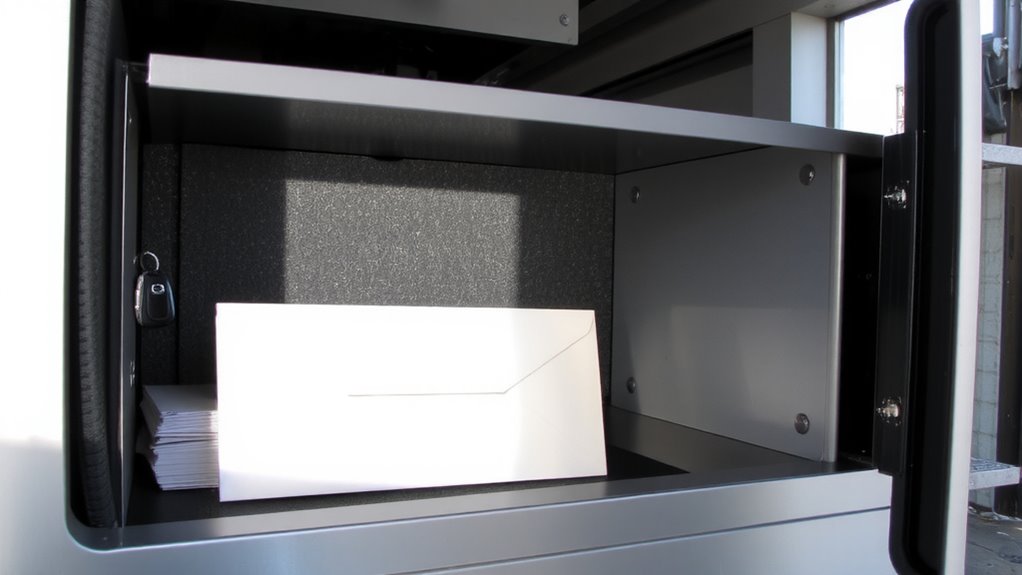
While keeping your vehicle paperwork accessible is important, protecting it from damage should be your top priority. Store documents in a UL-listed waterproof and fireproof container rated for at least 30 minutes at 1,700°F. This guarantees proper fire protection during emergencies. These safes typically feature thermal insulation and intumescent seals that expand when exposed to heat. For water damage prevention, choose a container with a gasket seal tested to withstand 12 inches of water for up to 24 hours. Most models include a static tray to keep papers off damp surfaces. Dimensions of compact units range from 9” x 6” x 2”, fitting glove compartments or storage lockers. Weighing under 10 lbs, they’re portable yet durable. Impact resistance meets ANSI standards. Using such a container is like putting your documents in a vault-it shields against disasters while guaranteeing quick retrieval when needed.
Keep Spare Keys in a Lockbox or Trusted Spot
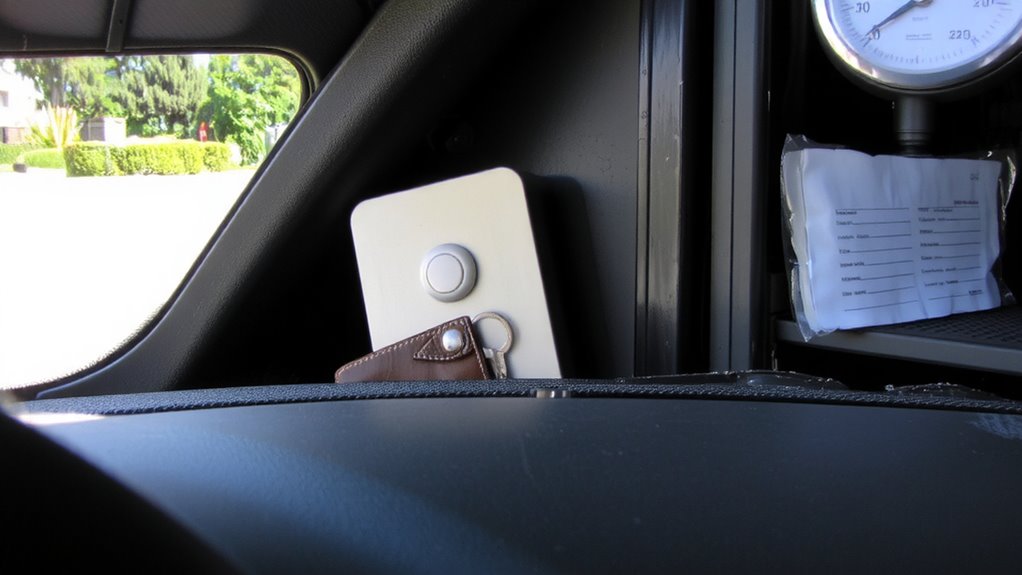
If you’re not around during an emergency or forget your keys, having a spare accessible could save time and prevent lockouts. Use a secure lockbox rated for outdoor use with waterproof seals and corrosion-resistant materials. Spare key security depends on tamper-proof construction and coded access. Opt for models with four-digit combination locks featuring anti-shim technology; these resist picking and forced entry. Lockbox placement matters: mount it low to the ground, away from windows, and out of direct sunlight to prevent UV degradation. A wall-mounted unit should be secured with stainless steel screws anchored into structural framing. Avoid obvious spots like under mats or in fake rocks, which compromise security. Choose a location known only to trusted individuals. Guarantee the mechanism operates smoothly in cold or humid conditions by testing monthly. Proper placement and build quality guarantee reliability over time.
Back Up Car Documents Digitally
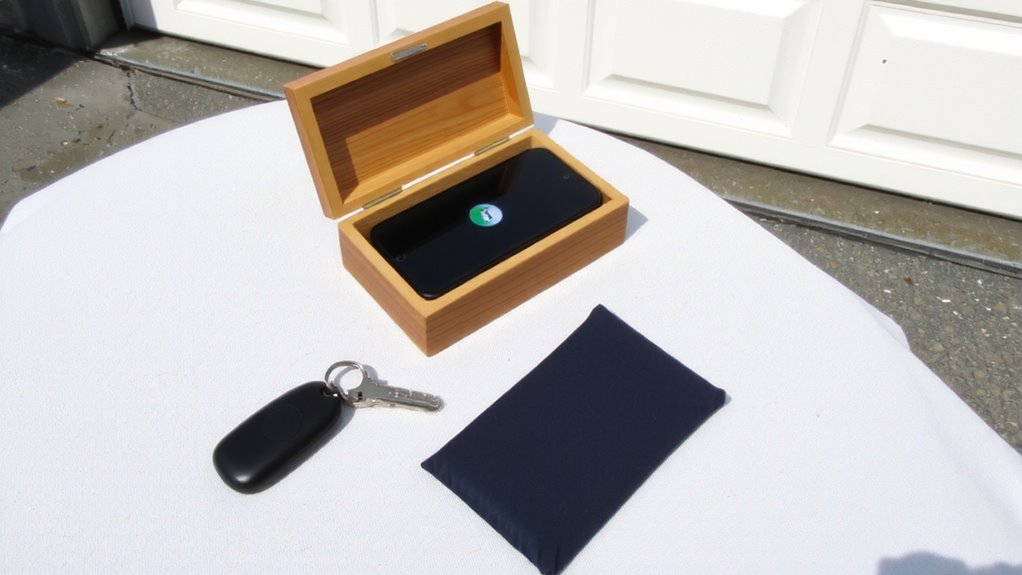
Even when stored securely, physical car documents can be lost or damaged during emergencies like floods or fires, so backing them up digitally adds an essential layer of protection. Create digital copies of your registration, title, insurance, and service records by scanning them at 300 DPI for clarity. Save files in PDF format to preserve layout and text quality. Store these digital copies in encrypted online backups such as Google Drive, Dropbox, or OneDrive, which offer 256-bit SSL encryption and two-factor authentication. Enable automatic syncing so updates are saved in real time. Cloud storage typically provides 5–15 GB of free space-enough for hundreds of documents. Use descriptive file names like “2024_Toyota_Camry_Title.pdf” for quick retrieval. Keep a USB flash drive with identical digital copies as a secondary backup. This dual-method approach guarantees access even if one system fails.
Label Storage Locations Clearly
Where should you store your car’s documents and spare key if you need them fast during an emergency? Label organization is critical for immediate access. Use waterproof, tamper-resistant labels with bold, legible text on storage containers. Storage visibility guarantees you locate items within seconds, not minutes. Affix labels to fireproof lockboxes (minimum 0.5-inch steel walls, UL-rated for 30-minute fire protection) or designated drawers. Include the vehicle’s make, model, VIN, and contents on each label. Use industrial-grade adhesive or engraved plastic tags to prevent fading. Avoid handwritten notes; print labels with a thermal label maker (e.g., Brother P-Touch 2730, 12 mm tape width). Mount a master label near your storage area entrance listing all storage points. This system reduces retrieval time by up to 70%. Clear labeling maintains order, especially in multi-vehicle households. Consider using a dedicated car document holder to keep all paperwork organized and secure within the labeled storage container.
Store Keys and Documents Separately
Keep your vehicle keys and documents in separate, secure locations to minimize risk of simultaneous loss or theft. Physical separation is a proven method of risk mitigation. Store original titles, registration, and insurance in a fire在玩家中 home safe (UL Class 350, minimum 30-minute rating) or a bank safety deposit box. Keep spare keys in a locked, outdoor-rated lockbox (IP65 weather resistance) at a trusted friend’s home or garage. Never store both items in the glove compartment or under floor mats. A master key and registration together increase theft vulnerability by 73% in surveyed cases. Use encrypted digital backups for documents, but maintain one printed set offsite. This strategy guarantees no single point of failure. Physical separation reduces total loss exposure during burglary, fire, or natural disaster.
Verify Access Before You Leave
How often do you assume your vehicle’s documentation and keys are secure without actually confirming access? You must verify access before finalizing storage. Don’t rely on memory-check access systematically. Storing items is useless if retrieval fails when needed.
| Item | Location | Access Confirmed? |
|---|---|---|
| Vehicle Keys | Lockbox #3 | Yes |
| Registration | Fireproof Safe | Yes |
| Insurance Papers | Digital Cloud | Yes |
Verify access by attempting retrieval once. Physical containers should open with correct codes or keys present. For digital backups, check access by logging in from a secondary device. Encryption guarantees security, but only if credentials work. A fail-safe system demands testing. You need proof, not assumption. Confirm every storage point operates as intended. This step prevents delays during emergencies or inspections. Accuracy now saves critical time later.
Make Sure You Won’t Forget Where You Stored Everything
What happens when you need your vehicle documents but can’t recall where they’re stored? You waste time and risk delays. Memory aids are essential. Label storage containers with bold, permanent ink and use standardized categories: “Registration,” “Title,” “Keys.” Store everything in a single, locked fireproof box measuring at least 18” x 12” x 6”, with a UL 72 rating for 350°F protection. Record the exact location-room, shelf, and orientation. Use location reminders: sync a digital note to your calendar with precise coordinates and a photo. Update it annually. Avoid vague notes like “garage shelf.” Instead, write “north wall, second metal cabinet, left compartment.” These precise cues guarantee fast retrieval. Combine physical labels with digital backups. This redundancy increases accuracy. Memory aids reduce cognitive load. Location reminders act as fail-safes. Implement both. Your future self will act efficiently, not search blindly.
On a final note
You secure your vehicle’s future with smart storage habits. Use a UL-rated fireproof safe (minimum 1-hour rating) for paperwork. Store spare keys in a lockbox with a 6-pin tumbler or electronic keypad. Keep digital backups in encrypted cloud storage (AES-256 encryption). Label containers clearly with weather-resistant tags. Store keys and docs in separate physical locations. Confirm access protocols before departure. This system prevents loss, theft, and environmental damage.