Solvent Pop in Factory Paint: Spot 0.5–2mm Craters & Bubbling
You’re seeing solvent pop when tiny craters, 0.5 to 2 mm wide, form on flat areas like doors or hoods after factory curing. These appear as the paint skin seals too fast, trapping solvents that expand at 250–300°F. Unlike fisheyes or blisters, they’re shallow with sharp edges. Thick coats above 3.0 mils or wrong conditions-over 85°F, below 30% humidity-cause it. Left unrepaired, moisture enters, risking corrosion under the 120–180 micron factory finish. There’s more to how timing and technique affect long-term integrity.
Notable Insights
- Solvent pop occurs when trapped solvents create bubbles under paint during high-temperature curing in factory ovens.
- It typically appears as 0.5–2 mm craters on large flat surfaces like doors, hoods, and roofs.
- Unlike fisheyes or orange peel, solvent pop has defined edges and forms randomly due to curing conditions.
- Causes include fast surface skinning, thick paint layers, low humidity, and insufficient flash time between coats.
- Unrepaired solvent pop can lead to moisture ingress and long-term corrosion if not properly sanded and repainted.
What Is Solvent Pop in Factory Paint?
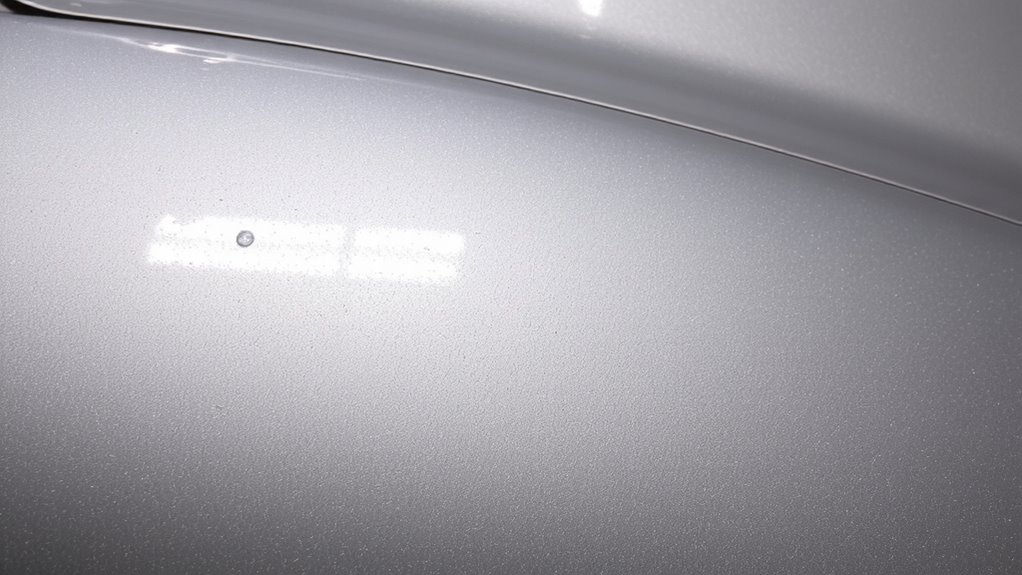
Solvent pop starts with trapped solvent. You see it when volatile compounds in factory paint don’t fully escape during the drying process. As the paint cures under heat, usually in ovens reaching 250–300°F, pressure builds beneath the surface layer. This trapped gas attempts to escape, forming tiny bubbles. A chemical reaction isn’t involved-this is purely physical, driven by vapor pressure and film formation. If the paint’s surface skins over too quickly, solvents can’t evaporate cleanly. The drying process must balance speed and ventilation to prevent defects. Factory lines use precise airflow control, typically 100–150 feet per minute, and multi-stage curing to minimize risk. Even slight deviations in temperature or humidity-say, above 60% RH-can trigger solvent pop. It’s a flaw in application dynamics, not formulation. You’ll detect it post-cure as sub-1mm ruptures or pinpoints, often with a cratered edge.
Where Does Solvent Pop Usually Appear on a Car?
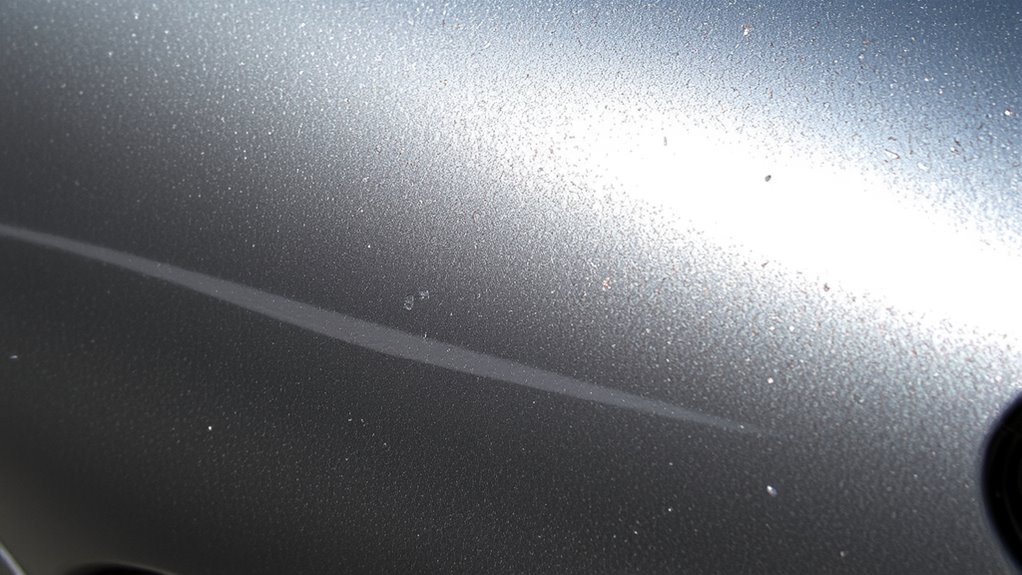
You’ll most often spot these tiny ruptures on large, flat body panels like doors, hoods, and roof surfaces. These areas trap heat during curing, slowing solvent evaporation and increasing pressure under the paint film. Door seams are common trouble spots-improper sealing or rushed drying can leave residual solvents that later escape, forming micro-blisters. Wheel arches also see frequent occurrences due to layered coatings and exposure to trapped moisture and heat from brake components. The combination of thick paint application and poor ventilation in these zones creates ideal conditions for solvent entrapment. Defects typically measure 0.5 to 2 millimeters in diameter and appear shortly after paint curing. Surface irregularities disrupt finish uniformity and compromise long-term durability. Inspecting under controlled lighting reveals scattered pinholes or crater-like depressions. Addressing these issues early helps maintain factory-level integrity and prevents accelerated coating degradation.
How Is Solvent Pop Different From Other Paint Defects?
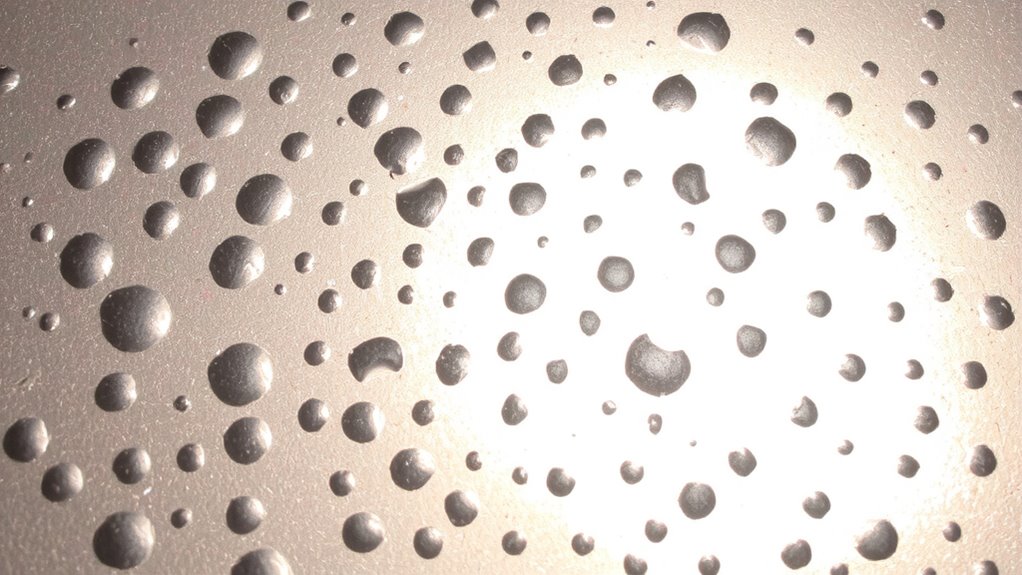
Why do some paint imperfections appear as tiny craters while others look like raised blisters? Solvent pop shows up as small, round craters with defined edges, unlike blisters from moisture or improper sealing. You’ll notice these defects after the paint cures, often resembling pinholes. Their formation ties directly to paint thickness and application temperature. If the outer layer skins over too fast-due to high paint thickness or low application temperature-solvents get trapped underneath. As they later escape, they rupture the surface, creating pops. Other defects, like fisheyes, stem from contamination, while orange peel results from poor atomization. Solvent pop is unique because it’s time-delayed and temperature-sensitive. It typically measures 0.5 to 2 mm in diameter and appears randomly, not in patterns. Knowing this helps you distinguish it from curing or adhesion issues seen in other paint flaws.
Why Do Solvents Get Trapped in Fresh Paint?
When paint dries too quickly on the surface, solvents can’t escape in time and become trapped beneath the curing film. You force this issue when ambient temperature exceeds 85°F or humidity drops below 30%, accelerating surface drying. Solvent evaporation relies on balanced environmental conditions-typically 70–75°F and 50% humidity-for ideal release. If the top layer skins over too fast, solvents remain locked below. This disrupts the curing process, weakening film integrity. Paints with high solvent content, like two-part urethanes, are especially prone. Film build above 3.0 mils exacerbates the problem by increasing the diffusion path solvents must travel. Proper flash times between coats-usually 10–15 minutes-allow gradual solvent evaporation. Without them, you risk microbubbles that expand during bake cycles. Trapped solvents later escape, creating solvent pop. Controlling application parameters prevents it.
Can You Repair Solvent Pop, or Must You Replace the Panel?
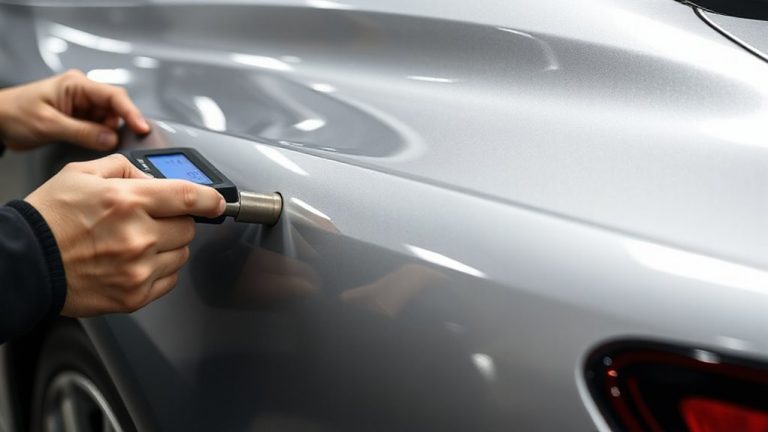
Solvent pop doesn’t automatically mean panel replacement-repair is often possible depending on severity and location. If the defect is shallow and isolated, proper paint thickness allows for effective repair without compromising structural or aesthetic integrity. You can sand the affected area flat, then re-prime and repaint using standard refinishing techniques. Repair methods include spot sanding with 600–1000 grit paper, followed by blending and respraying with a low-VOC clear coat. Critical to success is maintaining OEM-matched paint thickness-typically 120–180 microns across primer, base, and clear layers. Deep or widespread solvent pop may extend beyond surface correction, requiring panel removal or replacement. Always assess from multiple angles under direct fluorescent lighting. Early detection improves outcome. Most light cases respond well to refinishing when handled promptly and correctly.
Will Solvent Pop Lead to Rust or Paint Failure?
While solvent pop itself doesn’t immediately cause rust, it can lead to long-term paint failure if left unaddressed. Each bubble breaches the paint’s protective layer, creating a pathway for moisture ingress. Once water penetrates the substrate, corrosion onset becomes likely-especially in humid or salty environments. Surface rust can develop within weeks under untreated defects.
| Risk Factor | Impact Level |
|---|---|
| Moisture ingress | High – compromises adhesion and accelerates degradation |
| Corrosion onset | Moderate to high – depends on climate and metal treatment |
| Coating durability | Low – factory coatings perform best when intact |
You must repair solvent pops promptly using proper sealing techniques. Ignoring them undermines the factory finish’s integrity. Left unchecked, small defects expand, inviting widespread paint delamination and structural corrosion. Preventative correction guarantees long-term panel performance and resale value.
On a final note
You now recognize solvent pop as small, circular ruptures caused by trapped solvents in factory paint. These bubbles form when paint cures too quickly, sealing in volatiles that later expand. Unlike scratches or stone chips, solvent pop originates beneath the surface. It commonly appears on horizontal panels like hoods and roofs. Left untreated, it may lead to corrosion. Repair often requires professional sanding, sealing, and clear coat rebalancing to match OEM specifications.