Step-by-Step Process for Evaluating Paint Depth on Used Luxury Vehicles
You start by measuring paint depth with a digital gauge accurate to ±3%, using electromagnetic induction for steel or eddy current for aluminum panels. Factory finishes on luxury vehicles typically range from 80 to 120 microns, with clear coat adding 30–40. Check the hood, doors, roof, and fenders evenly, noting deviations over 20 microns. Consistent readings confirm original paint; spikes above 180 suggest overspray or filler. Patterns of variation reveal hidden repairs. Next, learn how panel comparisons expose mismatched repainting.
Notable Insights
- Use a digital paint depth gauge with electromagnetic or eddy current sensors for accurate readings on steel or aluminum panels.
- Measure paint thickness on OEM-labeled panels like the hood, roof, doors, and fenders to establish a baseline factory reading.
- Compare readings to the standard factory range of 80–120 microns, accounting for a 30–40 micron clear coat layer.
- Identify inconsistencies exceeding ±20 microns between panels, which may indicate prior repainting, filler use, or hidden repairs.
- Flag areas with readings above 180 microns as potential overspray or poor refinishing, especially if isolated or in non-impact zones.
Know Why Paint Depth Matters
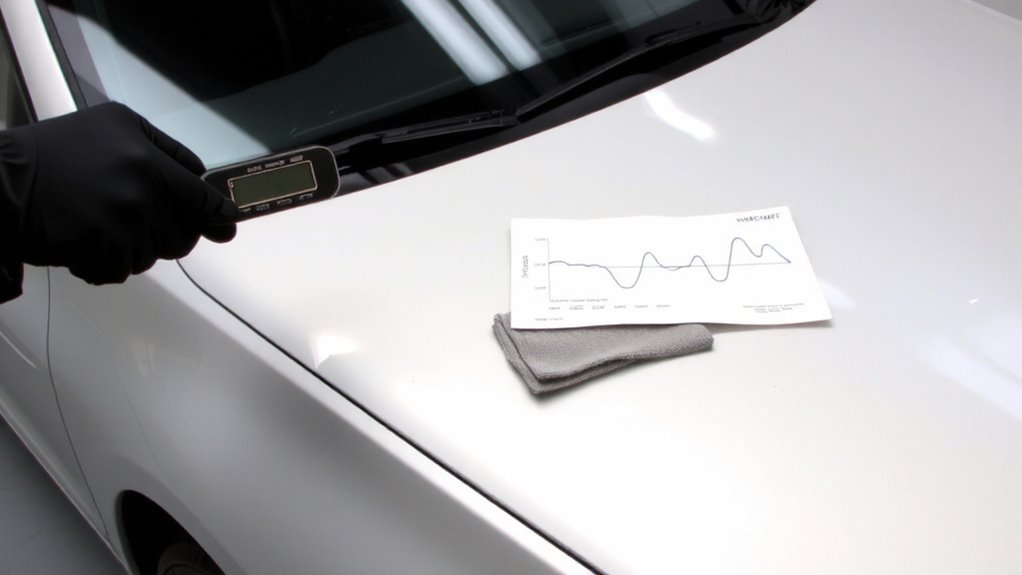
Paint depth isn’t just a number-it’s a direct indicator of a luxury vehicle’s finish integrity. You rely on paint depth measurements to assess paint quality and detect previous repairs. Factory finishes on luxury vehicles typically range from 80 to 150 microns, depending on the manufacturer and model. Deviations outside this range suggest overspray, repainting, or improper refinishing. Consistent readings across panels confirm finish authenticity, while uneven thickness indicates potential damage or non-OEM repairs. High-end finishes often include clear coat layers making up 30–40 microns of total depth. If the clear coat is too thin, it compromises gloss retention and UV protection. You need precise data-not guesses-to verify originality. Low readings mean prior polishing; high ones suggest filler or touch-ups. Measuring accurately protects you from hidden flaws and guarantees confidence in the vehicle’s cosmetic and structural history.
Pick the Right Paint Depth Gauge
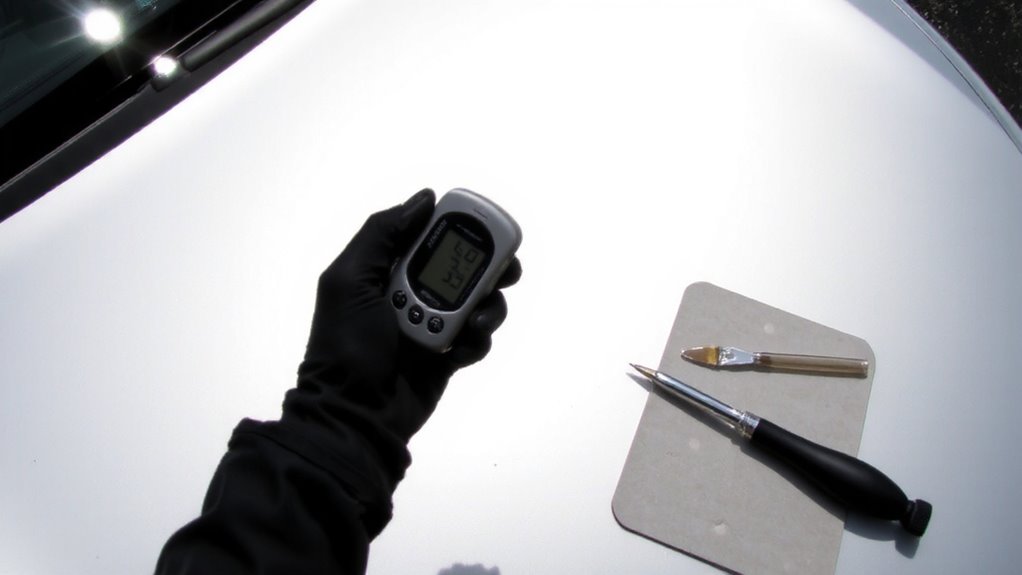
You can’t assess a luxury vehicle’s finish with guess efforts-accurate paint depth readings start with the right tool. Choose a digital paint depth gauge with high gauge accuracy, ideally within ±3% of the actual thickness. Look for models that measure in microns (μm) and mils, offering dual-range functionality-typically 0–2000 μm for standard use. Electromagnetic induction gauges work best on steel panels common in luxury vehicles, while eddy current sensors are ideal for aluminum bodies. Consistent gauge accuracy guarantees you detect prior repairs or repainting. Prioritize brand reliability-established manufacturers like DeFelsko, Elcometer, and PosiTector deliver durable, calibrated instruments. Avoid cheap knockoffs with unverified readings. A reliable gauge typically costs $200–$500 but pays for itself in trustworthy data. Waterproof models with data-logging features enhance field usability. Your evaluation is only as strong as the tool in your hand.
Measure Paint on Key Luxury Car Panels
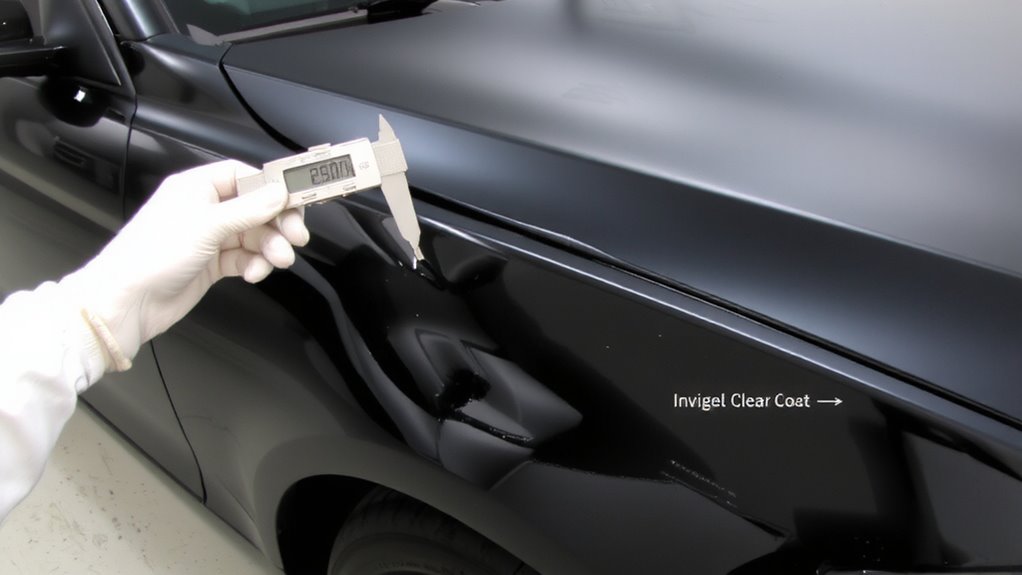
Start by measuring the paint on OEM-labeled panels-these factory panels typically have consistent coatings and serve as your baseline. Use your gauge to record thickness at multiple points on the hood, roof, and trunk lid. Factory paint usually ranges from 80 to 120 microns on luxury vehicles. Compare these numbers across matching panels to assess panel variance. Significant differences-over 15–20 microns-suggest possible repaints or replacements. Check for surface anomalies like uneven textures, orange peel, or overspray near seams. These imperfections may indicate poor refinishing. Measure door skins, fenders, and quarter panels next, always using the same pressure and angle. Keep the gauge flat and clean between reads to avoid false results. Consistency matters: even small deviations across symmetrical areas can reveal past damage. Record every value-you’ll need this data to interpret what your paint depth readings mean later.
What Your Paint Depth Readings Mean
Why do some readings stand out while others blend in? Your paint thickness values reveal the true story behind a luxury vehicle’s surface finish. Factory-standard paint thickness typically ranges from 80–150 microns, depending on the brand and panel material. Deviations suggest prior work or non-OEM finishes. A smooth, consistent surface finish reflects precision manufacturing-any outlier breaks that standard.
| Reading (microns) | Interpretation |
|---|---|
| 70–90 | Thin; may lack protection |
| 90–140 | Ideal factory range |
| 140–180 | Possibly repainted |
| 180+ | Heavy overspray or repair |
You rely on these numbers to verify authenticity. High readings can mask flaws, while low values risk premature wear. Consistency across panels confirms original surface finish integrity.
Find Repairs Using Inconsistent Readings
When surface flaws aren’t visible to the eye, inconsistent paint depth readings expose hidden repairs. You’ll detect surface anomalies by scanning multiple points across a panel. Factory paint on luxury vehicles typically measures 100–140 microns; deviations beyond ±20 microns indicate potential issues. Spot readings over 180 microns suggest overspray from improper refinishing. Differences between adjacent areas-even if within spec-signal possible hidden damage. Use a digital paint thickness gauge with dual-function (ferrous and non-ferrous) sensors for accuracy. Calibration on a known bare metal surface guarantees reliable results. Focus on seams, edges, and underbody trim where repairs are commonly concealed. Inconsistent values, especially in non-impact zones, point to prior repaints. These inconsistencies may reveal poor panel replacement or mismatched blending. Consistency across measurements matters more than individual numbers. Trust the tool: it sees what your eyes can’t.
Compare Paint Depth Across Panels
A consistent paint depth across body panels is a hallmark of original, undamaged factory finish. You should expect uniform paint thickness readings-typically between 80 and 150 microns-on factory-applied finishes. Compare measurements across similar panels, like both front fenders or both doors, to assess panel symmetry. Luxury vehicles often exhibit tight tolerances, usually within ±5 microns across corresponding panels. Significant deviations-more than 15 microns-suggest prior repainting or panel replacement. Use a digital coating gauge with at least 1-micron resolution for accuracy. Take multiple readings per panel, avoiding edges and curves. Consistency in paint thickness supports structural integrity and authenticity. Panel symmetry isn’t just visual-it’s measurable. Disparities can reveal hidden damage or poor repairs that compromise value and finish quality. Always document readings for comparison and verification.
On a final note
You now have a reliable method for evaluating paint depth on used luxury vehicles. Use a digital paint thickness gauge with ±1.5% accuracy to measure in microns. Focus on high-impact zones like fenders and doors. Factory paint typically reads 90–140 μm; deviations over 180 μm suggest filler or repainting. Consistent readings confirm original panels. Inconsistencies reveal prior repairs. Always compare adjacent areas to detect mismatches. This precision guarantees informed purchasing decisions.