Scheduled Inspections for Suspension Components Before 30,000 Miles
You should get your first suspension inspection by 15,000 miles or 18 months, especially if you drive on rough roads. Mechanics check ball joints for more than 0.05 inches of play, test shocks for leaks and rebound control, and measure bushing deflection beyond 3mm. Premature wear from potholes or debris can degrade struts, control arms, and sway bar links. Catching issues early keeps alignment in spec and prevents uneven tire wear. There’s more to know about how each component fails over time.
Notable Insights
- Inspect suspension at 15,000 miles or 18 months to catch early wear from rough roads or impacts.
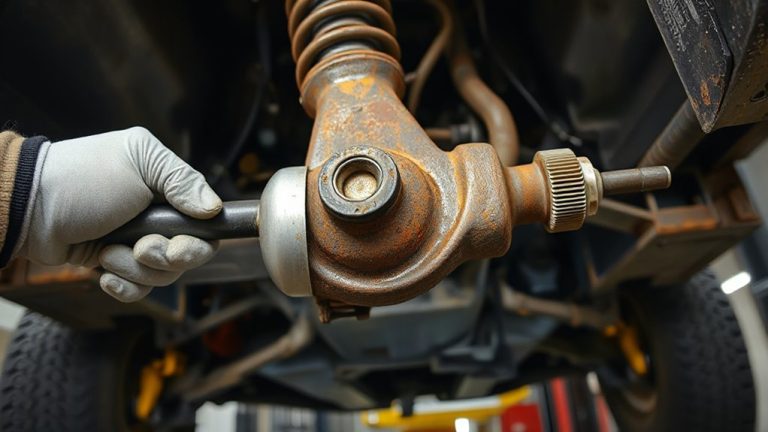
- Check ball joints for play exceeding 0.05 inches, indicating internal damage and potential failure.
- Examine shock absorbers for leaks and perform a bounce test to assess damping efficiency.
- Evaluate control arm bushings for cracks or deflection over 3mm, especially on rough terrain.
- Verify alignment and inspect strut bearings if steering feels stiff or noisy when turning.
Is Your Suspension Failing Before 30K Miles?
Could your suspension be nearing failure well before hitting 30,000 miles? Yes, especially if you frequently drive on rough terrain or neglect scheduled inspections. Ball joint failure is a real risk-most OEM ball joints are rated for 75,000 miles, but impacts from potholes or curbs can cause premature wear. Inspect for play exceeding 0.05 inches, a clear indicator of internal damage. Shock absorber leakage isn’t normal; even minor seepage suggests seal degradation. A shock losing hydraulic fluid dampens poorly, reducing tire contact by up to 30% on uneven surfaces. Factory service intervals often skip early checks, but proactive inspection at 25,000 miles catches issues like worn bushings or leaking dampers. Detecting ball joint failure or shock absorber leakage early prevents loss of control and extends component life. Routine checks save repair costs and guarantee safety.
What Are the First Signs of Suspension Trouble?
You’re likely already aware that suspension components can fail before 30,000 miles under harsh conditions, but recognizing the early warning signs helps prevent sudden failure. A bumpy ride is one of the first indicators-your vehicle feels jittery over minor road imperfections, and vibrations transfer through the steering wheel. This usually points to worn shocks or struts, which should dampen oscillations using hydraulic fluid flow through metered valves. Uneven tires are another sign; irregular tread wear patterns, like cupping or feathering, indicate poor wheel alignment from failing suspension links. These components maintain precise geometry-typically within ±0.5 degrees of camber and toe specs. When bushings degrade or control arms shift, consistent contact patch pressure drops. That reduces grip and increases stopping distances by up to 15% on wet surfaces. Upgrading to high-performance best shocks for a smooth ride can significantly improve comfort and vehicle control under these conditions. Early detection means safer handling and lower repair costs.
Which Suspension Parts Wear Out Fastest?
Shocks and struts typically wear out fastest in most suspension systems, especially when driving on rough roads or carrying heavy loads. You’ll often notice vibrations or reduced ride control by 50,000 miles, though some wear earlier. Strut bearings, located at the top of MacPherson struts, wear down over time, causing steering resistance or audible groaning when turning. These bearings support axial and radial loads while allowing smooth rotational movement-typically rated for 75,000 cycles but degrade faster under heavy cornering. Control arm bushings, usually made of rubber or polyurethane, also fail relatively early. They dampen vibrations and maintain alignment, but rubber types compress and crack within 60,000 miles. Polyurethane versions last longer but transmit more road noise. Both components directly affect handling and tire wear, so inspecting them before 30,000 miles guarantees early detection and prevents further damage.
How Bad Roads Damage Your Suspension
When roads are riddled with potholes, cracks, or uneven surfaces, your suspension system endures repeated shock loads that exceed design limits. Each pothole impact delivers sudden forces up to 10 times normal operating levels, stressing control arms, bushings, and ball joints. These abrupt jolts can deform metal components and accelerate wear in rubber mounts. Driving on unpaved or poorly maintained roads leads to gravel degradation, where abrasive particles infiltrate joints and seals. This causes scoring on shock absorber rods and premature failure of strut cartridges. Continuous exposure reduces damping efficiency by up to 30% over 15,000 miles. Bearings and sway bar links also suffer micro-movements, increasing play beyond acceptable tolerances. Uneven loading from rough terrain misaligns suspension geometry, promoting uneven tire wear. Over time, cumulative damage compromises handling, braking, and ride stability. Even minor misalignments of 0.5 degrees affect tracking. Protect your system-understand how terrain degrades performance. Upgrading to high-performance shocks for 2002 Chevy Silverado 1500 can significantly improve durability and ride quality under harsh conditions.
When Should You Get Your First Suspension Check?
Why wait for clunks and shudders before checking what keeps your ride stable? You should get your first suspension check at 15,000 miles or 18 months, whichever comes first. Early inspection prevents premature wear and guarantees peak handling. At this interval, technicians evaluate shock absorber damping efficiency, typically rated for 50,000 miles but prone to degradation under harsh conditions. Poor tire alignment often stems from minor suspension misalignment, causing uneven tread wear and reducing tire life by up to 30%. You’ll notice delayed steering response if bushings or struts are compromised. A slight delay-just 0.2 seconds-can affect emergency maneuvering. Catching issues early maintains factory specifications for camber, caster, and toe angles. This preserves tire alignment and sharp steering response. Don’t wait for symptoms. Proactive checks guarantee safety, performance, and component longevity. Top-performing 4x4s often rely on Top Shock Absorber Brands for optimal off-road stability and durability.
What Do Mechanics Inspect in a Suspension Check?
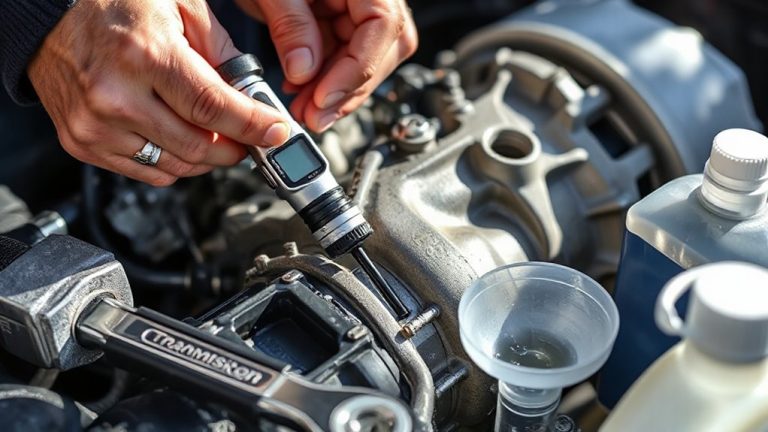
A suspension check zeroes in on critical components that maintain wheel alignment, ride comfort, and handling precision. You’ll want to know every part is functioning within factory tolerances. Mechanics assess ball joint wear by measuring play in the joint-more than 0.050 inches of movement typically signals replacement. They check both upper and lower ball joints under load using a pry bar and gauge. Shock absorber performance is evaluated through visual inspection for leaks and resistance testing; a worn shock often shows oil seepage or fails bounce tests-more than one rebound after pressing down indicates degradation. Technicians also examine control arm bushings, strut mounts, and sway bar links. Each component must secure proper tire contact and chassis stability. Findings outside OEM specs are flagged immediately.
How Early Suspension Checks Save Money and Keep You Safe
Catching suspension issues early keeps your repair costs down and your vehicle safer on the road. Early detection of worn shocks or struts-typically showing wear by 30,000 miles-prevents damage to tires, steering components, and brakes. Most manufacturers recommend suspension inspections every 15,000 miles as a key prevention method. A failing strut can reduce braking efficiency by up to 20% on rough surfaces, increasing stopping distance. You’ll also maintain better control during emergency maneuvers. Technicians measure suspension travel, inspect bushings with 3mm+ deflection limits, and check for fluid leaks in dampers. Catching a minor alignment shift early-just 0.5 degrees off-can extend tire life by 10,000 miles. These prevention methods improve handling and safety. Early detection isn’t just smart maintenance-it’s a cost-effective strategy with measurable performance benefits.
On a final note
Your suspension can degrade before 30,000 miles, especially on rough roads. Mechanics check struts, control arms, bushings, and ball joints for wear. Typical failure signs include uneven tire wear, nose-diving on braking, and drifting. Early inspections catch issues like 0.5+ mm bushing deformation or 2+ mm ball joint play. Catching problems early prevents costly repairs. A $120 inspection may save $1,200 in damage. Safety and performance depend on timely maintenance.