Training Staff on Immediate Response Protocols for Antifreeze Leakage
You must spot antifreeze leaks fast using sight and smell-look for bright green, orange, or pink puddles with a fluorescent sheen and detect the sweet odor at 10 ppm. Contain spills immediately with polypropylene barriers or PVC/nitrile berms rated for 1,000+ lbs/sq ft. Use only glycol-safe absorbents like polypropylene pads; avoid cellulose. Clean with 10% detergent solution. Store waste in UN-rated drums; report within 15 minutes. More critical details follow.
Notable Insights
- Recognize antifreeze leaks quickly by identifying bright fluorescent colors and sweet odor.
- Contain spills immediately using polypropylene barriers or chemical-resistant spill berms.
- Wear nitrile gloves, goggles, and chemical-resistant footwear during cleanup operations.
- Use polypropylene absorbents, never cellulose, to safely clean glycol-based fluids.
- Report spills within 15 minutes and document response with photos and Form EHS-205.
Spot Antifreeze Spills Fast by Sight and Smell
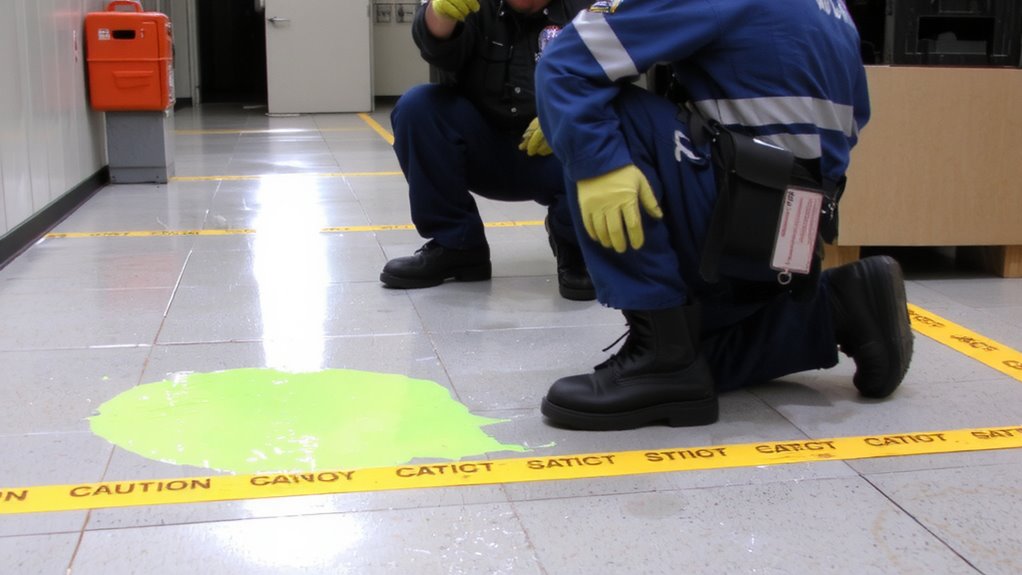
While most garage fluids blend into the background, antifreeze stands out when spilled-both visually and by odor. You’ll spot it fast through visual cues: it’s typically bright green, orange, or pink, with a fluorescent hue under work lights. Spills often appear slick and oily but retain a watery consistency, forming distinct puddles rather than soaking in. Ethylene glycol-based antifreeze, the most common type, has a sweet, pungent smell-detectable even at low concentrations. This odor detection capability is critical; humans can smell it at levels as low as 10 parts per million. Coolant usually has a pH between 8.5 and 10.5 and a freezing point of -34°C (-30°F) in a 50/50 mix with water. Recognizing these traits early means faster, safer response. You don’t need tools-just eyes and nose.
Stop the Spread: Contain Leaks Immediately
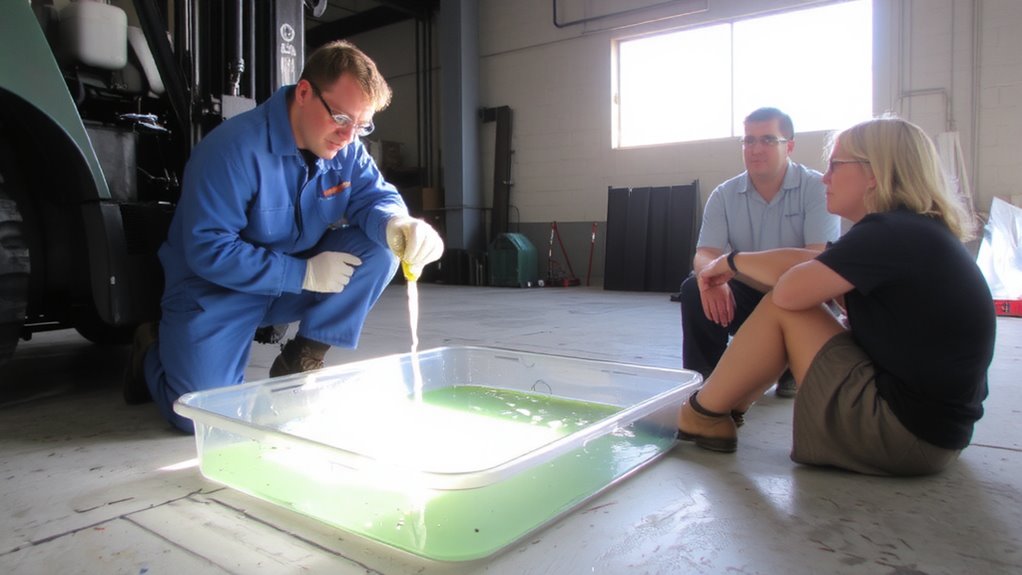
One of the most effective ways to minimize environmental and safety risks during an antifreeze spill is immediate containment. You must act fast to prevent fluid from reaching drains, soil, or water sources. Deploy absorbent barriers around the spill’s perimeter to trap liquid and limit migration. These barriers typically consist of polypropylene materials that attract glycol-based fluids while repelling water. For larger volumes, use spill berms-durable, raised-edge mats made of chemical-resistant PVC or nitrile rubber. They form a dam-like enclosure, containing leaks up to 2 inches deep. Standard berms range from 24″ x 24″ to 60″ x 60″ and support loads over 1,000 lbs per square foot. Position them around leaking equipment or under drip points before transfer operations. Spill berms paired with absorbent barriers reduce runoff by 90% compared to uncontrolled spills. Both are reusable after proper decontamination and drying.
Clean up Safely With the Right Materials
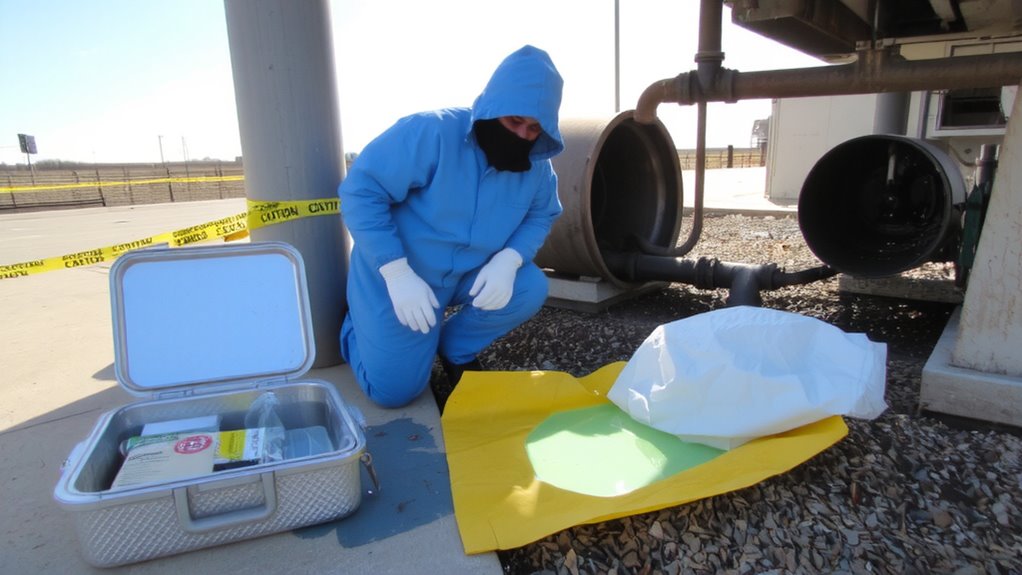
Because improper cleanup can leave hazardous residues and compromise safety, you need to use materials specifically designed for glycol-based fluids. Always wear appropriate personal protective equipment, including nitrile gloves, safety goggles, and chemical-resistant footwear. Begin by applying absorbent materials like spill socks or granular absorbents rated for polar solvents-these can hold up to 15 times their weight in fluid. Use a polypropylene-based absorbent pad to wipe hard surfaces; these are non-abrasive and minimize static discharge. Avoid cellulose-based products-they degrade in glycol and leave residue. For large spills, deploy hydrophobic but glycol-attractive absorbents with a 3,000-mL capacity per 12-inch sock. Guarantee full containment coverage before cleanup. Work systematically from the spill’s edge inward to prevent spread. Clean surfaces with a 10% detergent-water solution only after absorbent materials have fully collected the fluid. Never use compressed air or water sprays during cleanup-they aerosolize contaminants.
Dispose of Contaminated Waste Legally
Your cleanup isn’t complete until contaminated waste is disposed of according to environmental regulations. Improper disposal risks fines and environmental harm. You must perform accurate waste classification to determine if the antifreeze residue is hazardous. This step relies on chemical analysis and flashpoint testing-anything below 140°F (60°C) typically qualifies as hazardous. Once classified, you’re required to maintain regulatory compliance by using only approved containers: UN-rated, leak-proof drums labeled with waste codes and generation dates. Transport must be conducted by licensed hazardous waste haulers with manifest tracking. Store waste onsite no longer than 90 days. Use secondary containment with 110% capacity for spills. Treat non-hazardous antifreeze the same when mixed with oil or solvents-it must be handled as hazardous. Regulatory compliance isn’t optional-it’s enforced by federal and state agencies.
Report the Spill and Document Your Response
Why wait to report a spill when immediate action defines regulatory compliance? You must initiate incident reporting the moment a leak is confirmed. Notify supervisors and environmental officers within 15 minutes-this timeline is non-negotiable for OSHA and EPA adherence. Your verbal alert kicks off the official response chain, but it’s not enough. You’re required to complete written incident reporting using Form EHS-205 within one hour. Simultaneously, begin response documentation: record the spill volume, exact location (GPS coordinates if outdoor), antifreeze type (ethylene glycol or propylene glycol), and containment methods applied. Include timestamps for each action-these logs are legally binding. Photograph the site before, during, and after cleanup. Store all files in the centralized digital ledger for audit readiness. Proper response documentation proves due diligence and reduces liability. No exceptions.
On a final note
You must act fast when antifreeze leaks occur. Immediate containment prevents soil and water contamination. Use impermeable absorbents like polypropylene pads rated for glycol-based fluids-each pad absorbs up to 0.5 gallons. Seal waste in UN-rated containers marked “hazardous.” Report spills per EPA 40 CFR 112 within 24 hours. Document response times, materials used, and disposal certificates. Your protocol adherence limits liability and environmental harm.