Understanding Car Audio Preamp Voltage and Its Impact on System Performance
Your head unit sends a 2–5 volt AC preamp signal to your amplifier, carrying the audio before power boosting. This low-level signal must stay strong to avoid noise and distortion. Most head units output 2–4 volts RMS, with 4 volts offering better clarity and headroom. A weak signal forces your amp to overwork, raising the noise floor and harming detail. Match this voltage to your amp’s input sensitivity and maintain a 10:1 impedance ratio for ideal transfer. Proper voltage preserves dynamics and minimizes hiss-getting it right guarantees cleaner highs, tighter bass, and a more accurate soundstage. Next steps reveal how to measure and fix mismatches with ease.
Notable Insights
- Preamp voltage is a low-level signal (2–5V AC) from the head unit that drives the amplifier without distortion.
- Proper preamp voltage preserves audio clarity by maintaining signal integrity and minimizing noise interference.
- Weak preamp signals increase amplifier gain demand, raising distortion and audible hiss in quiet passages.
- Most head units output 2–4V RMS, with 4V being ideal for high-performance systems and external amplifiers.
- Matching head unit preamp voltage to amp sensitivity and impedance prevents signal loss and optimizes sound quality.
What Is Preamp Voltage in Car Audio?
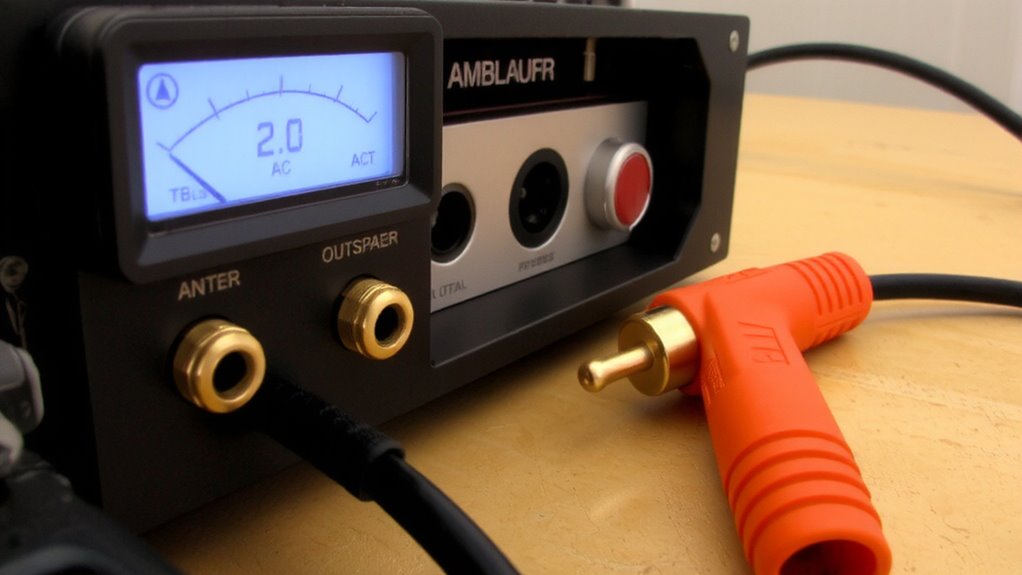
While you’re tuning your car’s audio system, understanding preamp voltage is essential for achieving ideal signal transfer between components. Preamp voltage refers to the low-level audio signal, typically 2–5 volts AC, sent from a head unit to an amplifier. This voltage level guarantees signal integrity by minimizing distortion during transmission. A stable preamp voltage maintains clarity, preserving the original waveform. If the voltage is too low, the signal can drop close to the noise floor, increasing audible hiss or static. Proper impedance matching-usually 400–600 ohms-between devices prevents signal loss. Think of it like water pressure in a hose: too little, and the flow sputters; too much, and the line risks damage. Preamp voltage sits in a sweet spot, balancing headroom and cleanliness. It’s measured with an AC voltmeter at the RCA output. Maintaining ideal voltage guarantees your system performs as designed.
Why Preamp Voltage Affects Your Sound Quality
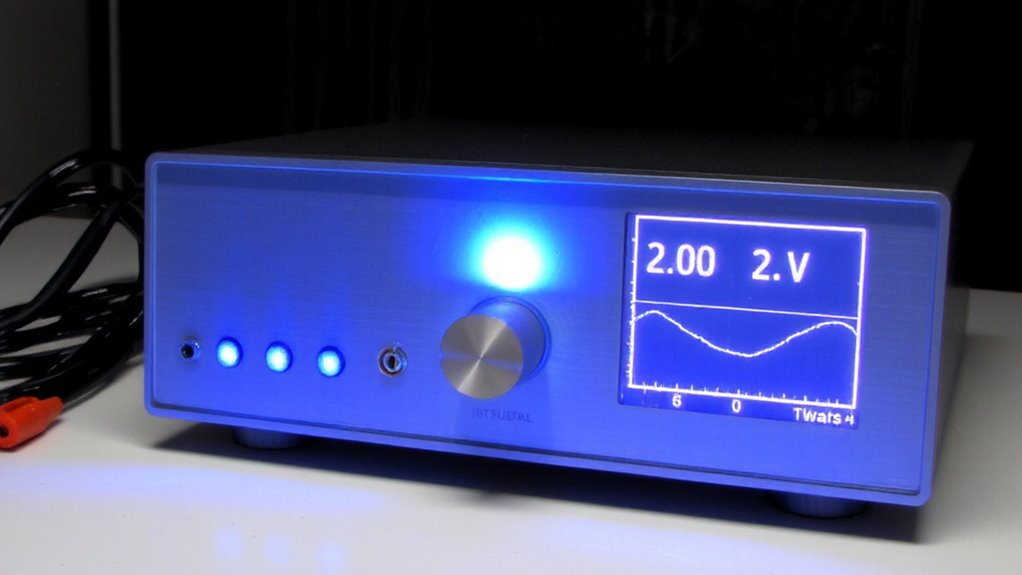
Because preamp voltage determines the strength of the audio signal before it reaches your amplifier, it directly shapes your system’s clarity and dynamic range. A higher preamp voltage preserves signal integrity by delivering a robust source signal, minimizing degradation from interference. Weak preamp voltage forces your amplifier to boost low-level signals, increasing the chance of distortion. It also raises the noise floor, making background hiss more noticeable during quiet passages. Maintaining strong signal integrity guarantees accurate audio reproduction across all frequencies. When the noise floor is low, subtle details in music remain audible. You’ll hear cleaner highs, tighter bass, and more defined mids. Think of it like turning up a dim photo-too much boost reveals grain. Ideal preamp voltage avoids this by giving your amp a clean, strong signal. Ultimately, it’s not just volume-it’s fidelity. Your system performs best when the foundation is solid.
Common Preamp Voltage Levels in Head Units
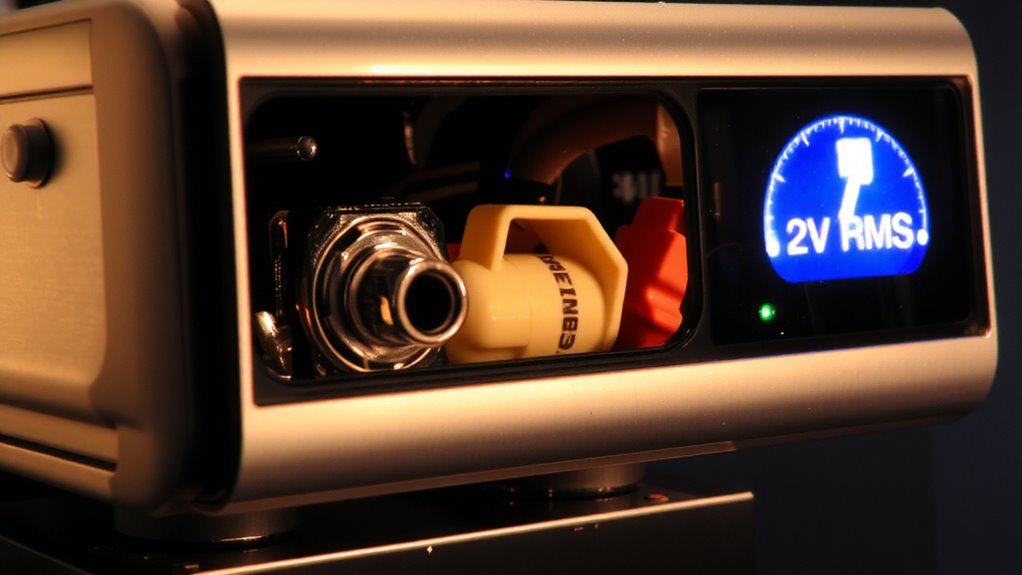
Most factory and aftermarket head units output preamp signals between 2 and 4 volts RMS, with 4 volts being the standard for higher-end models. Your head unit’s line output voltage determines the signal strength sent to your amplifier. A 2-volt signal is common in basic factory systems, often leading to increased noise when amplifiers require higher input. Premium head units typically deliver 4 volts RMS, maximizing headroom and reducing distortion. This higher signal strength drives amplifiers more efficiently, improving dynamic range and clarity. You’ll often see 4-volt outputs in units with dedicated external amplifiers in mind. Always verify your unit’s line output specification to guarantee peak compatibility. Though voltage varies, maintaining a clean, strong signal minimizes the need for excessive gain on the amp. Think of it like water pressure: more voltage means better flow with less effort, resulting in cleaner audio reproduction.
Match Your Head Unit to Your Amplifier’s Input
How do you guarantee your amplifier performs at its best? Match your head unit to your amplifier’s input. Signal matching ensures the preamp voltage from your head unit aligns with your amp’s sensitivity, usually between 2V and 5V. If levels don’t match, you’ll get weak output or clipping. Most modern head units output 4V maximum, which suits amplifiers with similar input sensitivity. Impedance balancing also matters-the head unit’s output impedance should be much lower than the amplifier’s input impedance, ideally by a factor of 10. For example, a 50-ohm head unit output works well with a 500-ohm amp input. This minimizes signal loss and preserves audio integrity. Proper signal matching and impedance balancing prevent performance issues and extend component life. You’ll achieve cleaner gain staging, maximum headroom, and accurate sound reproduction across your system.
Fixing Hiss and Distortion From Voltage Mismatch
Mismatched preamp voltage often shows up as hiss or distortion, even in high-quality audio systems. Your head unit’s preamp output must align with your amplifier’s input sensitivity, typically 2V to 8V. A mismatch forces the amp to overamplify noise. Start by measuring your head unit’s output with a multimeter at maximum volume-many deliver only 2V–4V. If your amp expects 5V+, this gap introduces signal interference. Use line output converters (LOCs) or preamp adapters to match levels. Also, check for ground loops-these cause persistent hiss when multiple devices ground to different chassis points. Keep RCA cables away from power wires to reduce interference. Proper shielding and twisted-pair cables help reject noise. Guarantee gains are set correctly after voltage adjustment. These steps restore clean, distortion-free audio.
On a final note
You now understand preamp voltage’s role in car audio performance. It directly impacts signal integrity and system headroom. Most head units output 2V to 4V RMS, with 4V offering better noise rejection. Match this to your amp’s input sensitivity, typically 200mV–4V, to prevent distortion. A mismatch causes hiss or clipping. Proper voltage alignment guarantees clean, dynamic sound. Think of it like aligning gears-precision matters for smooth operation.