Using Anti-Corrosion Sprays on Brake Calipers Before Winter
You should apply anti-corrosion sprays to brake calipers before winter to prevent rust from salt and moisture. These sprays form a hydrophobic, wax-based barrier that resists temperatures up to 500°F and stays effective for up to 200 hours in salt spray tests. They displace water, penetrate microscopic pores, and remain flexible during thermal cycling. For best results, clean calipers thoroughly and apply two thin coats, waiting 15 minutes between layers. Maximum protection happens when applied in October or November, just before freezing conditions begin. Specific product formulations with fluoropolymers offer stable performance from -40°F to 350°F. You’ll find precise application techniques and top-performing product recommendations that guarantee maximum defense against winter corrosion.
Notable Insights
- Apply anti-corrosion sprays before winter to protect brake calipers from salt-induced rust and moisture buildup.
- Clean caliper surfaces thoroughly with a wire brush and brake-safe cleaner prior to spray application.
- Use wax-based or fluoropolymer-enhanced sprays that resist water wash-off and withstand temperatures up to 500°F.
- Spray from 6–8 inches away, ensuring full coverage, especially in recessed areas, for uniform protection.
- Ideal application is in November after October cleaning, with two thin coats and 15 minutes curing between layers.
Why Winter Ruins Brake Calipers
While cold temperatures alone don’t directly destroy brake calipers, winter’s real danger lies in the combination of moisture, road salt, and thermal cycling. Road salt accelerates corrosion by lowering the freezing point of water, allowing corrosive brine to cling to metal surfaces. You face consistent moisture buildup in brake assemblies due to snow, slush, and condensation. This trapped moisture reacts with iron in calipers, forming rust. Thermal cycling-repeated heating during braking and cooling when idle-stresses metal, widening microscopic cracks where corrosion starts. Caliper pistons and guide pins are especially vulnerable. Corrosion pits can exceed 0.002 inches in depth after one winter season in high-salt regions, compromising sealing surfaces. Even minor pitting increases friction and reduces braking efficiency. Combined, road salt and persistent moisture buildup create an aggressive electrochemical environment. This leads to seized calipers, uneven pad wear, and costly repairs-issues preventable with proper seasonal protection.
How Anti-Corrosion Spray Protects Your Brakes
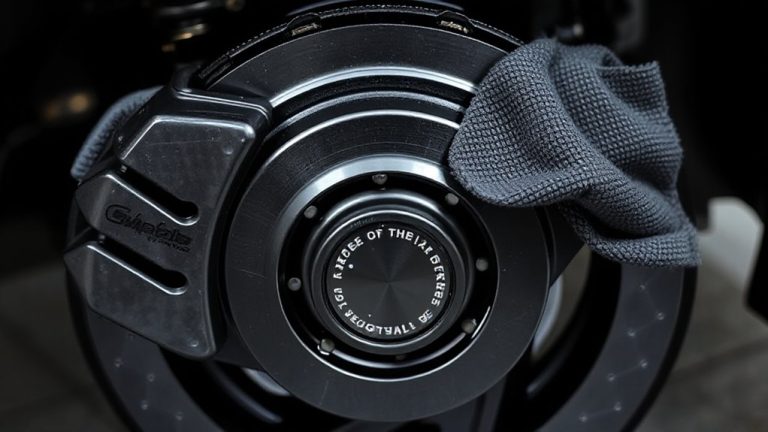
When applied correctly, anti-corrosion sprays form a durable, hydrophobic barrier that shields brake calipers from moisture and road salt. This protective barrier resists temperatures up to 500°F, maintaining integrity under extreme braking heat. The chemical composition typically includes wax-based solvents or synthetic polymers that bond tightly to metal surfaces. These compounds displace water on contact, preventing electrolysis and oxidation. Once dry, the coating remains flexible, reducing cracking from vibration or thermal expansion. Most sprays offer protection for up to six months under normal winter conditions. The hydrophobic nature causes water to bead and roll off, minimizing exposure time. Unlike grease, this film doesn’t attract dust or grime. Proper coverage includes all metal surfaces of the caliper, piston area, and mounting brackets. You must apply it cleanly-overspray on rotors or pads compromises braking performance.
When to Apply Anti-Corrosion Spray Before Winter
Why wait until frost forms to protect your brakes? Proper application timing guarantees maximum protection. Apply anti-corrosion spray during seasonal preparation, ideally before temperatures drop below freezing. This proactive step prevents moisture buildup and rust formation on brake calipers.
| Month | Avg. Temp (°F) | Action Item |
|---|---|---|
| September | 60–75 | Inspect calipers |
| October | 45–60 | Clean surfaces thoroughly |
| November | 32–45 | Apply spray, full coverage |
| December | Below 32 | Recheck protection layer |
Delaying reduces effectiveness. Moisture and road salts accelerate corrosion. Early application allows the spray to bond properly with metal surfaces. Think of it like sealing grout-do it before exposure, not after damage occurs. Seasonal preparation isn’t optional; it’s essential maintenance.
How to Apply Anti-Corrosion Spray to Brake Calipers
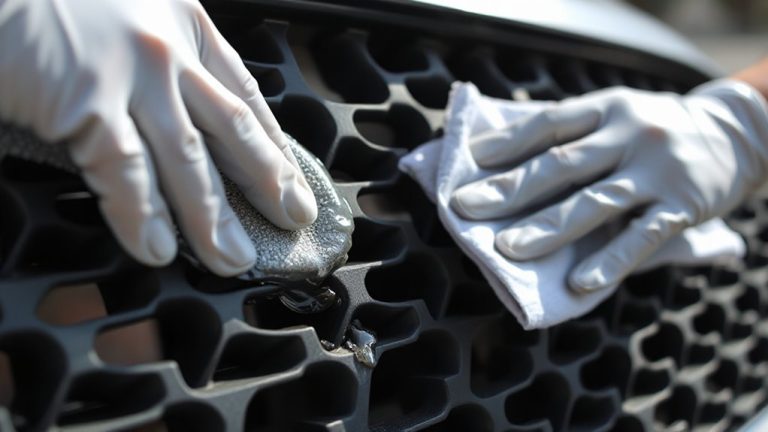
Though corrosion protection depends on proper application, most drivers overlook key steps that compromise long-term effectiveness. Begin with thorough surface cleaning-remove brake dust, grease, and debris using a wire brush and brake-safe cleaner. Let the caliper dry completely before spraying. Hold the anti-corrosion spray 6–8 inches from the surface to guarantee even coverage. Spray slowly, angling the nozzle to reach recessed areas without oversaturating. Focus on metal parts, avoiding rubber seals and brake pads. A uniform 1–2 mil dry film thickness provides maximum protection. Don’t forget the backside and mounting points-common corrosion zones. Work in a well-ventilated space with ambient temperatures above 50°F (10°C) for proper adhesion. Recheck coverage under bright light to spot thin or missed spots. Proper technique extends caliper life by up to 40% in salt-heavy winter conditions.
Best Anti-Corrosion Sprays for Brake Calipers
You’ve cleaned and prepped your brake calipers properly-now the right anti-corrosion spray makes all the difference in long-term protection. Products like CRC Heavy Duty Corrosion Inhibitor and ACF-50 Auto use wax-based formulations that bond to metal, resisting water wash-off up to 200 hours in salt spray tests. These sprays penetrate microscopic pores, creating a barrier that guarantees caliper finish protection against rust and road grime. They’re engineered for brake pad compatibility, meaning they won’t degrade rubber seals or silicone boots. Unlike silicone sprays, which can migrate and attract dust, fluoropolymer-enhanced options stay in place, maintaining performance between -40°F and 350°F. Apply two thin coats, allowing 15 minutes between layers for proper curing. Proper selection guarantees reliable corrosion resistance without compromising braking function or surface integrity.
On a final note
You protect your calipers by applying anti-corrosion spray before winter. It forms a hydrophobic barrier up to 0.1 mm thick, resisting salt penetration and moisture. Products like CRC Brake Caliper Coating withstand temperatures from -40°C to 200°C. The spray dries in 20 minutes and lasts six months under normal conditions. Apply it evenly after cleaning with brake-safe degreaser. Reapplication may be needed in high-humidity areas.