Visual Indicators of Oxidized Manual Transmission Oil Leading to Increased Friction Losses
Your transmission oil has oxidized if it’s dark brown or black, resembling espresso, due to prolonged heat exposure above 260°F. You’ll see sludge clogging passages or varnish on metal surfaces, reducing cooling efficiency by up to 30%. Foam indicates air contamination from worn seals, cutting lubricity. A burnt smell signals acid formation, raising TAN over 0.5 mg KOH/g. These changes increase friction losses by 35% from higher viscosity and additive depletion-understanding the full breakdown reveals how severity escalates over time.
Notable Insights
- Dark red or brown oil indicates oxidation, reducing flow efficiency and increasing friction losses.
- Foam in the oil, caused by worn seals, diminishes lubricity and promotes metal-to-metal contact.
- Sludge buildup clogs passages, impairing oil circulation and accelerating component wear.
- Varnish deposits on metal surfaces signal additive depletion and increase shift-related friction.
- Burnt smell from overheated oil correlates with higher acidity and rising coefficient of friction.
What Oxidized Manual Transmission Oil Looks Like
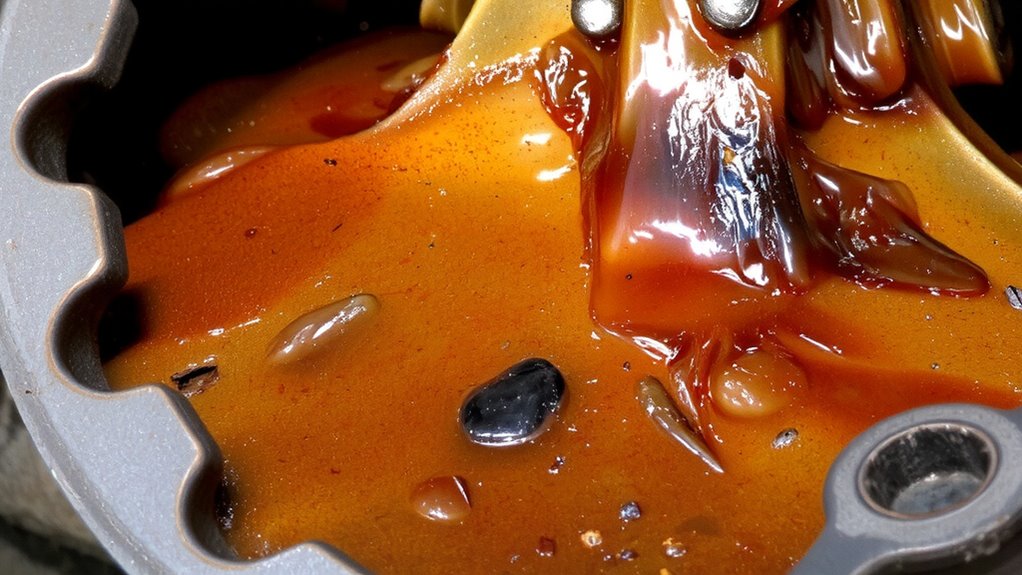
Color tells the story. You’ll notice oxidized manual transmission oil darkens markedly, but not as dark as in severe oxidation. The initial amber hue shifts toward deep red or brown, signaling early degradation. Foam formation becomes evident when air mixes with oil due to agitation, often caused by worn seals or overfilling. Persistent foam reduces lubricity and impairs heat dissipation. You’ll also observe metal discoloration on accessible components-copper or brass synchronizers may appear tarnished or corroded, a sign of acidic byproducts attacking soft metals. These changes occur at the molecular level when heat and oxygen break down additives. Oil viscosity increases slightly, typically from 7.5 cSt to over 9.0 cSt at 100°C, affecting flow. Metal discoloration and foam formation together suggest compromised performance. You’re seeing chemical breakdown in real time-act before wear accelerates.
Dark Oil? It’s a Sign of Oxidation
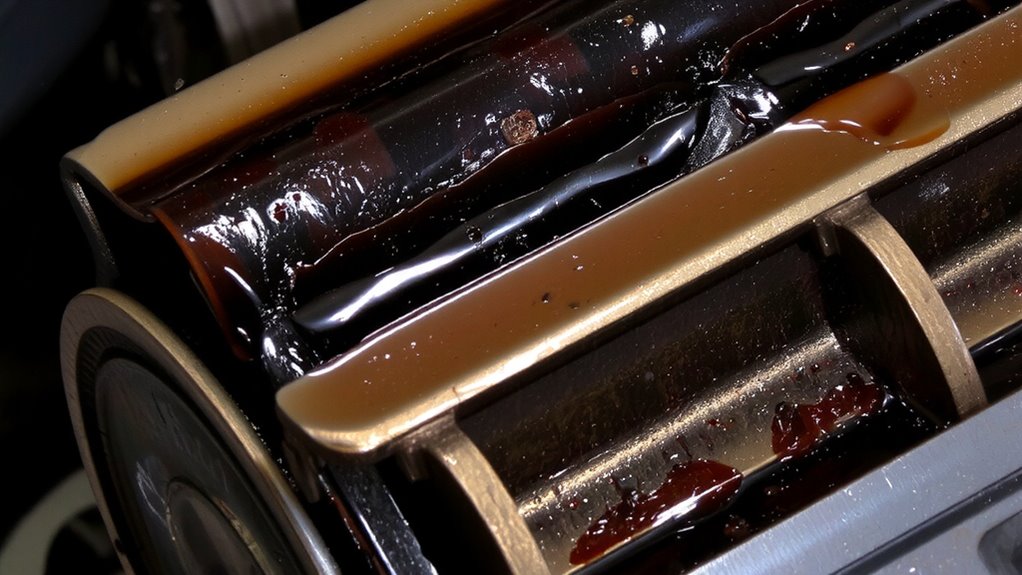
Why does your transmission fluid look like espresso? Dark oil isn’t just aged-it’s oxidized. When transmission oil oxidizes, it forms acidic byproducts that accelerate metal fatigue in gears and bearings. You’re seeing the result of prolonged heat exposure, often above 260°F, breaking down base oil molecules. This darkening correlates directly with increased viscosity, reducing flow efficiency by up to 30%. Poor lubrication leads to elevated friction, which raises operating temperatures further, creating a destructive cycle. Oxidized oil loses its ability to form a durable lubricant film, exposing metal surfaces to direct contact. That’s when gear pitting starts-microscopic fractures on tooth surfaces grow into visible craters, degrading performance. These pits act as stress concentrators, worsening metal fatigue over time. Dark oil isn’t just a visual cue-it’s evidence of chemical degradation compromising your transmission’s mechanical integrity.
Sludge and Varnish? Your Oil Is Breaking Down
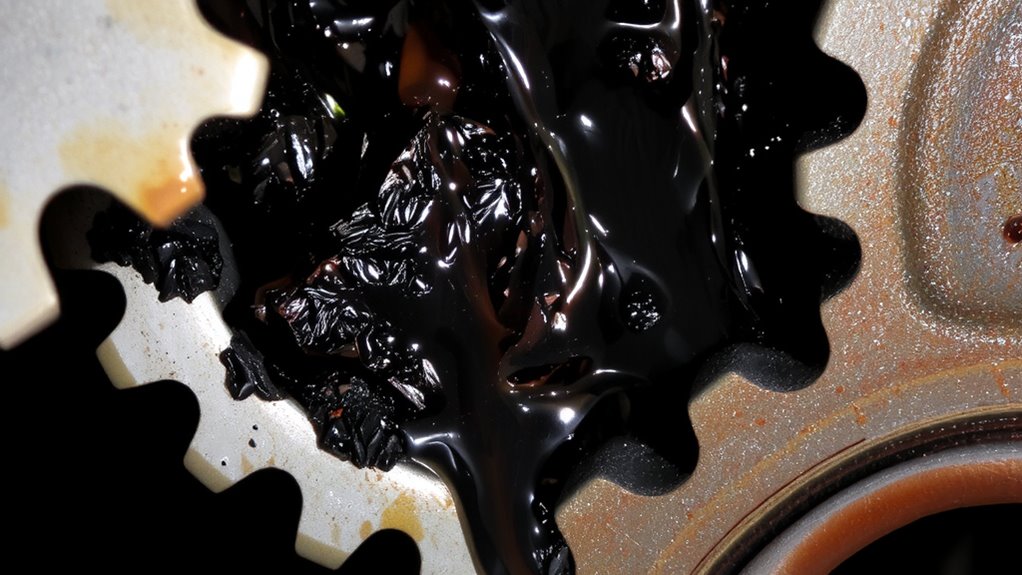
While you might not see it at first, sludge and varnish are dead giveaways that your transmission oil is breaking down. These deposits form due to chemical changes within the oil, triggered by prolonged exposure to high operating temperatures. Thermal degradation alters the oil’s molecular structure, reducing its lubricity and increasing viscosity. Sludge appears as thick, dark clumps that clog oil passages, restricting flow to critical components like synchronizers and bearings. Varnish, a sticky yellow-brown residue, coats metal surfaces, impairing heat transfer and increasing friction. Both byproducts result from oxidation and additive depletion, accelerating wear. In manual transmissions, even 1 millimeter of sludge buildup can reduce cooling efficiency by up to 30%. These deposits signal advanced oil breakdown, compromising shift precision and component longevity. Ignoring them raises the risk of gear wear and transmission failure. Regular fluid inspection helps detect these signs early, maintaining peak performance.
Burnt Smell? The Oil Has Oxidized
That pungent, acrid odor you notice when checking your transmission fluid isn’t just unpleasant-it’s a clear signal the oil has oxidized. The burnt smell is unmistakable, often compared to overheated toast or scorched metal. It indicates a chemical breakdown has occurred under sustained high temperatures, typically above 175°F (79°C), where oxygen reacts with base oils and additives. Oxidation degrades the oil’s molecular structure, forming acidic byproducts and volatile compounds that alter its volatility. You’ll detect this long before lab results confirm it-oxidation increases total acid number (TAN) by 0.5 mg KOH/g or more. The scent emerges when volatile aldehydes and ketones are released during thermal stress. This chemical breakdown reduces lubricity and film strength, but the odor itself is an early, reliable field indicator. You don’t need sophisticated tools to recognize it. That burnt smell means the oil’s service life is compromised and immediate replacement is necessary to avoid mechanical issues.
How Oxidation Increases Friction and Wear
Friction rises when oxidation alters your transmission oil’s chemistry. Oxidation breaks down base oil molecules, increasing oil viscosity beyond ideal flow ratings. Thicker oil resists movement through gear teeth and bearings, reducing efficiency and elevating operating temperatures. As viscosity climbs, hydrodynamic lubrication fails, allowing metal-to-metal contact. This directly accelerates wear. Simultaneously, oxidation causes additive depletion-anti-wear agents like ZDDP and detergents lose effectiveness. Without these, microscopic asperities on gear surfaces weld and tear, increasing pitting and scuffing. Tests show oxidized oil can increase friction losses by up to 35%, measured in coefficient of friction (µ) from 0.08 to 0.11 in controlled bench tests. Oxidized sludge also clogs oil passages, starving critical components. You’re left with higher drag, poor heat dissipation, and progressive wear. Prevention hinges on monitoring fluid condition before these changes compromise performance.
When to Check Your Transmission Oil
When should you check your transmission oil? You should inspect it every 30,000 miles under normal conditions. If your transmission age exceeds seven years, or if you’ve never changed the fluid, check it now. Frequent stop-and-go driving, towing, or spirited driving-examples of aggressive driving habits-require inspections every 15,000 miles. Older transmissions are prone to sludge and oxidation. Check fluid levels and condition when the engine is warm and idling in neutral. Use the dipstick if equipped; some manual transmissions require a fill plug check. Dark brown or black oil suggests degradation. Milky fluid indicates coolant contamination. Proper maintenance intervals prevent increased friction losses. Your driving habits directly affect fluid breakdown rate. Ignoring checks accelerates wear. Prevent costly repairs with timely inspections.
What to Do If Your Oil Is Oxidized
If you’ve found your transmission oil dark brown or black during a routine check, oxidation has likely taken place, especially in vehicles with high mileage or irregular maintenance. An immediate oil change is required to prevent increased friction losses and bearing wear. Prolonged use of oxidized fluid leads to sludge buildup, reducing heat dissipation and lubrication efficiency. Complete fluid replacement with manufacturer-specified gear oil restores performance. Use API GL-4 or GL-5 rated oil, depending on your transmission type.
| Step | Action | Purpose |
|---|---|---|
| 1 | Drain old oil completely | Remove contaminants and oxidized residue |
| 2 | Inspect magnetic drain plug | Check for metal particles indicating wear |
| 3 | Refill with fresh oil | Restore viscosity and lubricity |
| 4 | Record mileage | Track next oil change interval |
Always perform an oil change every 30,000–60,000 miles to prevent oxidation-related damage.
On a final note
Your transmission oil should remain amber to light brown; darkening indicates oxidation. Oxidized oil forms sludge and varnish, increasing viscosity beyond spec-often exceeding 150 cSt at 40°C. This degraded fluid fails to lubricate, raising friction losses by up to 40%. Metal-on-metal contact accelerates wear. Check oil every 30,000 miles. If it smells burnt or shows sediment, replace it immediately with manufacturer-specified fluid.