When to Replace Brake Rotors Based on Thickness Measurements and Manufacturer Specs
Replace your brake rotors when thickness hits or drops below the factory-stamped “MIN THK” spec, usually in millimeters on the rotor hub. Use a calibrated micrometer to measure at multiple points-uneven wear or variation over 0.001 inches signals danger. Thin rotors warp easily, reduce stopping power, and risk cracking under stress. Resurfacing isn’t safe at or below minimum thickness due to insufficient material. Proper rotor mass guarantees heat dissipation and brake pad function. There’s more to know about spotting early wear and maintaining peak braking performance.
Notable Insights
- Replace brake rotors when thickness reaches or falls below the manufacturer’s stamped “MIN THK” value.
- Measure rotor thickness with a calibrated micrometer at multiple points to detect wear and warping.
- A thickness variation exceeding 0.001 inches indicates warping and requires rotor replacement.
- Never resurface rotors at or below minimum thickness due to insufficient material and safety risks.
- Worn rotors cause brake vibration, longer stopping distances, and increased risk of cracking or failure.
What Brake Rotor Thickness Means for Your Safety
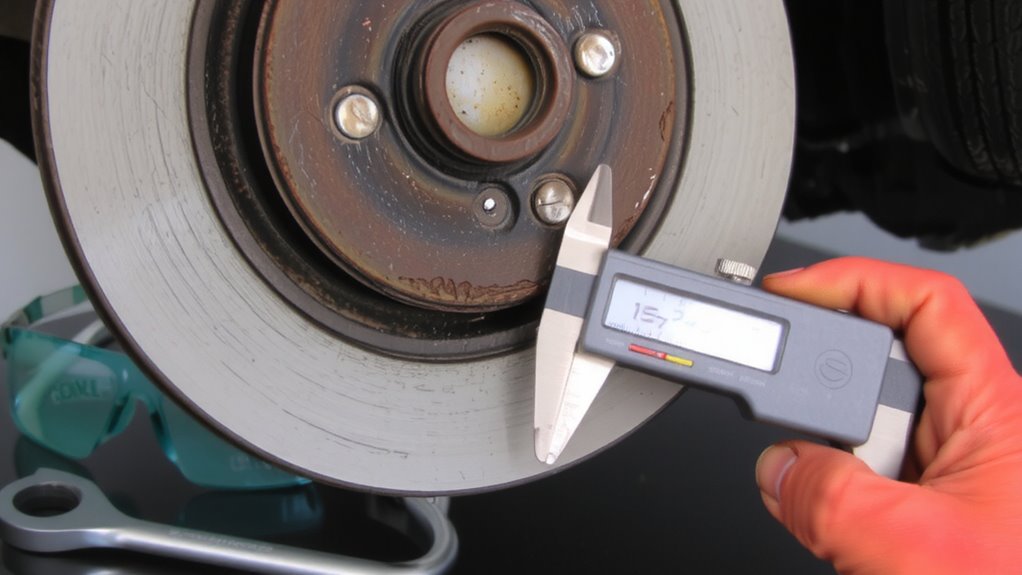
Your brake rotor’s thickness directly affects how well your vehicle stops. Thinner rotors have less mass to absorb and transfer heat, reducing heat dissipation efficiency. This increases the risk of brake rotor warping under repeated high-temperature conditions. Warping causes vibration during braking and reduces stopping power. Most manufacturers specify a minimum thickness, typically stamped on the rotor’s casting. Operating below this threshold compromises structural integrity and safety. Adequate rotor thickness guarantees proper clamping force from the calipers and consistent contact with the brake pads. Thin rotors can’t dissipate heat effectively, leading to faster pad wear and higher brake fluid temperatures. Excessive heat may boil the fluid, causing brake fade. Maintaining sufficient thickness preserves performance under stress, like mountain driving or towing. Safety depends on this margin-never exceed the wear limit. Thickness isn’t just about pad life-it’s critical for control and reliability when you need it most. Upgrading to high-performance brake pads and rotors can enhance stopping power and durability under demanding conditions.
Measure Brake Rotor Thickness With a Micrometer
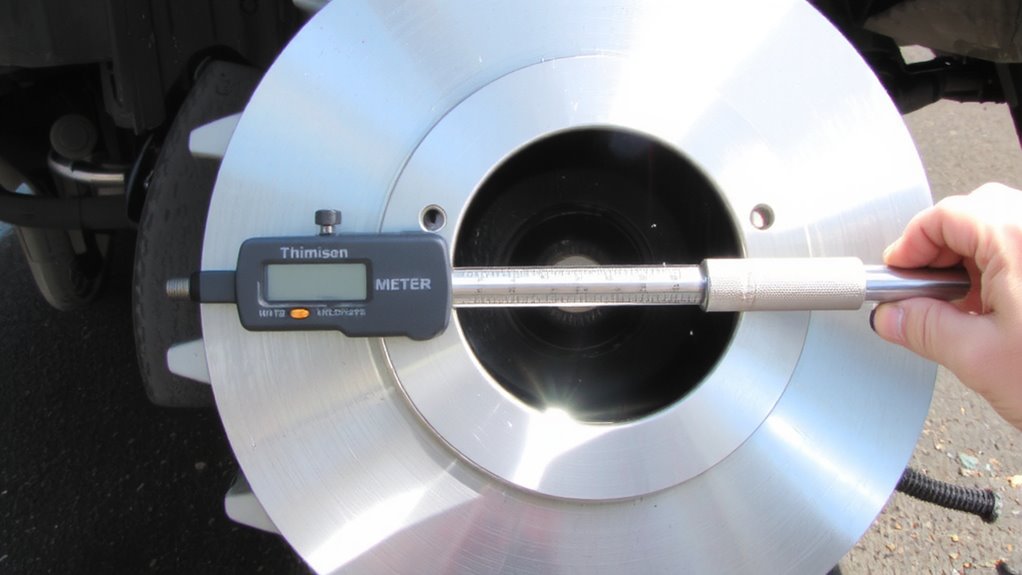
Brake rotor📘 thickness directly impacts stopping performance and safety, so knowing how to measure it accurately matters. Use a calibrated micrometer designed for brake rotors-it’s the only tool precise enough for this job. Clean the rotor surface first to remove debris and brake dust. Measure at multiple points across the face, especially where wear looks uneven. You’re checking for both thickness loss and rotor warping, which can cause pulsation during braking. A variation of more than 0.001 inches indicates warping and demands replacement. Adequate thickness also guarantees proper heat dissipation during stops; thin rotors overheat quickly, reducing braking efficiency and increasing fade. Always follow a consistent measurement pattern to guarantee accuracy. Record each value to compare across rotors. Proper measurement helps maintain performance, prevents premature pad wear, and guarantees your braking system works as designed under real-world conditions. For reliable options that meet strict thickness and durability standards, consider Raybestos rotors.
Find the Minimum Thickness Spec on Your Rotor
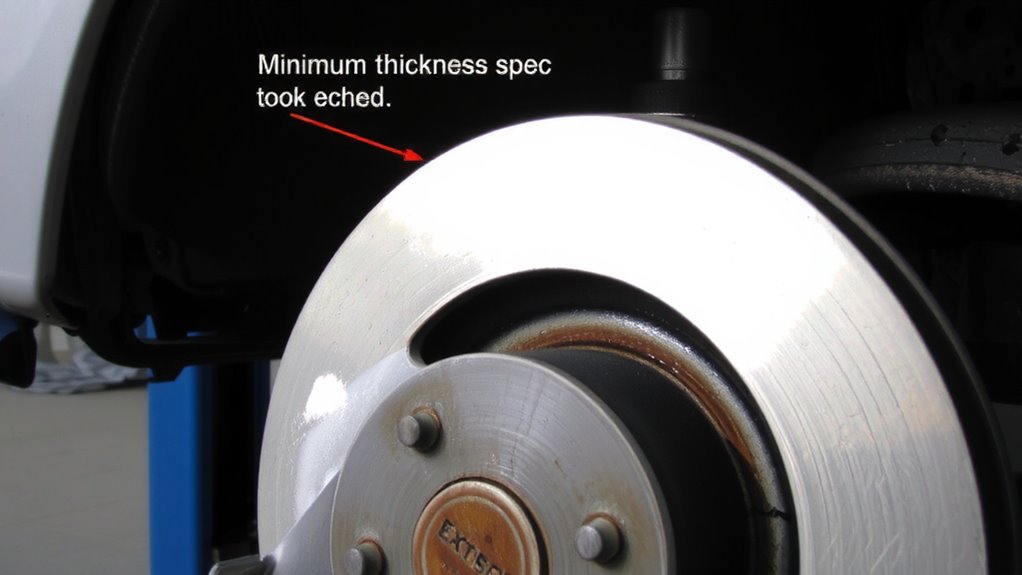
Look for the minimum thickness specification stamped on the rotor itself-usually on the hub or edge-it’s your definitive guide for safety and performance. This number, often labeled “MIN THK” or “discard thickness,” is critical for maintaining proper brake function. You’ll typically see it in millimeters, like 20.0 mm or 3.5 mm, depending on the rotor. Never rely on estimates-this spec guarantees brake pad compatibility and consistent rotor surface finish. The correct thickness maintains ideal heat dissipation and friction mating. If the rotor wears below this mark, stress fractures or warping become likely. Even if your current measurement is above discard thickness now, tracking this spec helps plan future replacements. Always reference this factory-stamped value instead of generic charts. It accounts for your specific rotor design, guaranteeing precision. Matching this spec preserves braking efficiency and avoids premature pad wear. For reliable performance, consider upgrading to one of the top brake rotor picks recommended for durability and stopping power.
Replace Rotors at or Below the Discard Thickness
One clear rule governs rotor service life: replace them when wear reaches or falls below the discard thickness marked by the manufacturer. This minimum dimension, usually stamped on the rotor’s edge, guarantees structural integrity under braking stress. Once your rotor measures at or below this threshold, continued use risks cracking, warping, or complete failure. The brake pad material can’t dissipate heat effectively on thin rotors, increasing stopping distances. Proper rotor surface finish-typically 30 to 60 microinches RA-is also compromised, reducing pad contact and braking performance. Even if the rotor appears smooth, insufficient mass can’t handle thermal loads. Replacing rotors at discard thickness maintains safety and brake system efficiency. Do not resurface rotors at or below minimum thickness-there’s not enough metal left. Always pair new rotors with new brake pads for best performance.
Warning Signs Your Brake Rotors Are Too Thin
A whisper-thin rotor can’t stop your car-nor keep you safe. You’ll notice brake vibration under light to moderate braking, especially at highway speeds. This pulsation stems from uneven thickness, often below the manufacturer’s minimum discard thickness-typically 0.090 to 0.125 inches for most passenger vehicles. As rotors wear thin, they develop runout, causing the caliper to pulse and creating a shuddering brake pedal. Noise concerns also arise; thin rotors warp more easily, leading to squealing, grinding, or metallic screeching during stops. These sounds signal insufficient mass to dissipate heat, increasing hot spots and stress fractures. You may also feel reduced bite and longer stopping distances. Rotors approaching or at minimum specs lose structural integrity and thermal capacity. Don’t ignore these cues. Measuring thickness with a micrometer confirms wear. Address both brake vibration and noise concerns before performance dangerously degrades.
Danger: Risks of Driving on Worn Brake Rotor Thickness
What happens when your brake rotors wear past their safe limit? You risk catastrophic brake failure. When rotors fall below the manufacturer’s minimum thickness-typically stamped on the rotor hub (e.g., “Min TH 22.0 mm”)-they can’t dissipate heat effectively. This leads to brake fade, where repeated braking reduces stopping power as overheated pads lose friction. Thin rotors are also prone to rotor warping from thermal stress, causing pulsation in the brake pedal and uneven pad wear. Warped rotors compromise contact surface, reducing clamping efficiency by up to 30%. Structural integrity weakens, increasing the chance of cracking or shattering under load. Driving beyond safe wear limits endangers not only your vehicle but also others on the road. Always measure rotor thickness with a micrometer during inspections. Replace them when they reach or near the minimum spec-no exceptions.
How Often to Check Brake Rotor Thickness
Brake rotor thickness directly affects your ability to stop safely, so regular checks are non-negotiable. You should inspect rotor thickness every 10,000 to 15,000 miles, or with each oil change if you have aggressive driving habits. Heavy braking, frequent stop-and-go traffic, and towing increase heat and friction, accelerating both brake pad wear and rotor thinning. Most manufacturers specify a minimum thickness-usually stamped on the rotor-ranging from 0.8 to 1.0 inches, depending on the vehicle. Measure using a micrometer at multiple points to detect uneven wear. If thickness approaches the discard specification, replacement is mandatory. Ignoring this risks brake fade, pulsation, and failure. Your driving habits directly influence inspection frequency; city drivers need more frequent checks than highway commuters. Consistent monitoring prevents costly damage and maintains stopping performance.
On a final note
You must replace brake rotors at or below the discard thickness stamped on the rotor. This measurement, usually between 2.0 and 3.5 mm depending on the model, guarantees safe heat dissipation and braking force. Worn rotors reduce stopping power and increase fade under load. Measure thickness with a micrometer at multiple points. If variation exceeds 0.05 mm or minimum specs are met, replace them immediately.