Why Avoiding Abrasive Towels Is Key to Long-Term Coating Clarity
You can’t maintain coating clarity with abrasive towels-they leave micro-scratches over 3 microns, far exceeding the 0.5-micron safety threshold. These scratches accumulate irreversibly, scattering light and dulling your finish like a cracked mirror. Even gentle wiping drags grit across the surface. High-quality microfiber with 300–400 GSM and 80/20 polyester-polyamide blends prevents marring. Soft, bound edges and split fibers lift water without scratching. There’s a proven method to dry safely every time.
Notable Insights
- Abrasive towels cause microscopic scratches that degrade protective coatings over time.
- Fibers coarser than 0.5 microns pose a high risk to coated surfaces.
- Repeated use of low-quality towels leads to irreversible swirl marks and hazing.
- High-GSM microfiber towels (300–400 g/m²) minimize swirl risk and preserve clarity.
- Proper drying technique with soft-edge, split-fiber microfiber prevents micro-marring.
Why Abrasive Towels Ruin Your Coating Over Time
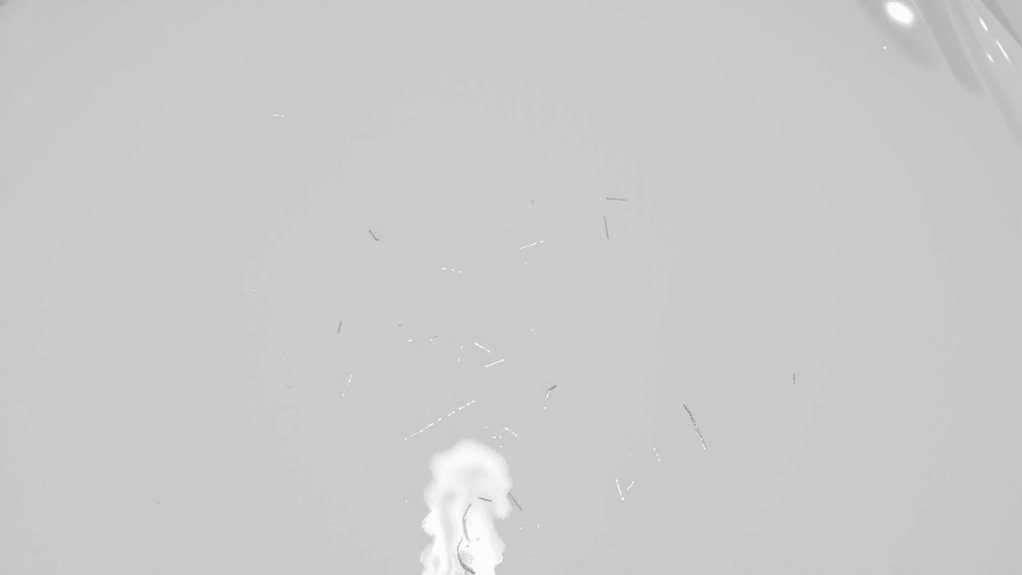
While they might seem effective at removing water spots or drying quickly, abrasive towels gradually degrade your vehicle’s protective coating by creating microscopic surface scratches. These scratches compromise the coating’s integrity, leading to permanent surface degradation. Towels made with abrasive fibers-like cotton terry or low-grade synthetics-have rough filament structures that exceed 3 microns in coarseness, far above the 0.5-micron threshold safe for coated surfaces. Repeated use increases scratch accumulation, reducing gloss and clarity over time. Unlike engineered finishing materials, abrasive fibers lack controlled texture and load-dispersing properties. Each drying pass adds fine marring, which diffuses light and diminishes the reflective quality of the coating. Over months, this wear becomes visible as hazing, especially under direct light. Surface degradation from improper drying isn’t immediate but is irreversible. You’re not just wiping water-you’re abrading a nanoscale protective layer designed to last years. Choose wisely. Upgrading to high-quality microfiber towels ensures superior scratch resistance and long-term coating preservation.
How Microfiber Weave and Density Impact Swirl Risk
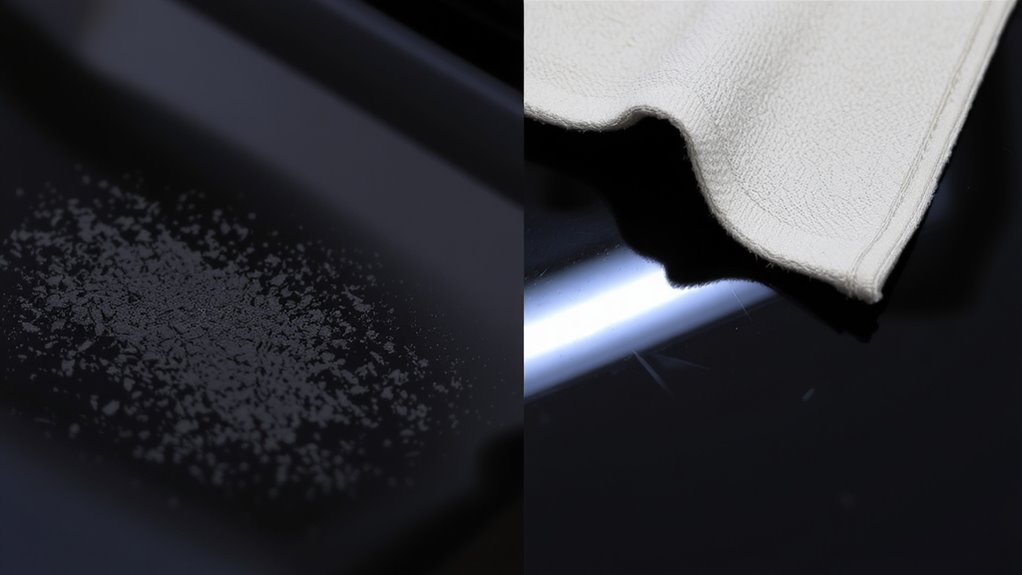
You can’t afford to overlook the role of microfiber construction when protecting coated surfaces. Fiber composition and weave pattern directly influence your risk of introducing swirl marks. High-quality microfiber uses split fibers-typically 80% polyester and 20% polyamide-to increase softness and absorbency. A denser weave pattern, measured in GSM (grams per square meter), enhances scratch resistance. Lower-density towels (under 300 GSM) may feel thin and trap contaminants, increasing abrasion risk. Choosing a top-rated microfiber towel kit ensures you get tested combinations of GSM and fiber quality designed for coated finishes.
| GSM | Risk Level |
|---|---|
| <250 | High |
| 250–350 | Moderate |
| 350–400 | Low |
| 400–500 | Very Low |
| >500 | Minimal |
Optimal towels exceed 350 GSM with a plush, tightly woven structure. This reduces surface contact pressure and distributes friction evenly. Always verify fiber composition and weave pattern before use-your coating’s clarity depends on it.
Why Swirl Marks Ruin Your Car’s Shine
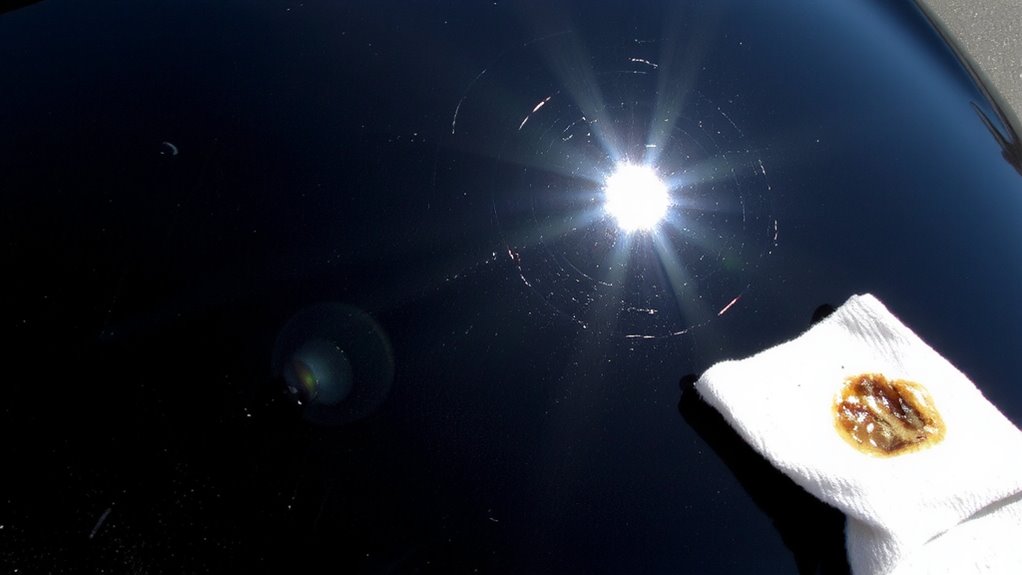
What good is a flawless coating if the surface reflects light like a cracked mirror? Swirl marks disrupt smooth light reflection, scattering it unevenly and dulling your car’s finish. These hairline scratches, from improper drying or wiping, create visible swirl formation across the paint. Even microscopic grooves alter how light travels across the surface, turning what should be a deep, glossy mirror into a hazy, fractured appearance. Each mark acts like a tiny prism, refracting light instead of reflecting it cleanly. Over time, cumulative swirls degrade coating clarity, making protection less effective. High-quality coatings are engineered for maximum refractive index, but they can’t mask physical surface defects. Maintaining that flawless look means preventing damage during aftercare. A single incorrect towel swipe can compromise months of work. Prevent swirl formation by eliminating abrasive contact. Protect your finish-shine depends on it.
Choose a Towel That Protects, Not Scratches
A high-quality microfiber towel is essential for preserving coating clarity and preventing surface defects. Towel texture directly impacts scratch resistance-opt for a plush, uniform weave with no raised loops or rough edges. A towel’s material composition should be 80% polyester and 20% polyamide, providing superior softness and absorbency while minimizing abrasion. These fibers are split during manufacturing, increasing surface area for better water pickup without dragging grit across the surface. Use only towels labeled as scratch-free, with a weight of 300–400 g/m² for ideal density. Lighter towels thin out quickly and risk exposing coarser backing layers. The edge stitching must be soft, bound, or ultrasonically cut to prevent micro-marring. Even minor friction from poor material composition can degrade coating integrity over time. Choose wisely-your towel isn’t just drying; it’s protecting a precision-engineered surface. For optimal results, select best microfiber towels that meet these exacting standards for car care.
How to Dry Your Car Without Harming the Coating
Drying technique is just as critical as the towel itself when preserving coating clarity. Avoid air drying and drip drying-both invite water spots and mineral deposits that etch into the coating. Instead, use a dedicated drying aid with a flat weave, 70/30 polyester-polyamide blend, and at least 2,400 GSM for maximum absorbency.
| What You Do | How It Feels |
|---|---|
| Air drying | Frustration as spots form |
| Drip drying | Helplessness watching streaks grow |
| Using dirty towels | Regret after scratching appears |
| Proper drying | Satisfaction of a flawless finish |
| Using the right technique | Pride in lasting clarity |
Apply even pressure with a 16” x 24” microfiber towel, folding frequently. Channel water off the surface-don’t drag it. Capillary action pulls liquid into the fibers without contact friction. This method preserves hydrophobic properties and extends coating life.
When to Retire Your Drying Towel
How long can you really trust that microfiber towel to protect your coating? Not forever. Most high-quality drying towels last 30–50 washes before fiber degradation accelerates. After that, they start scratching. You’ll notice reduced absorbency, frayed edges, or stiff patches-clear signs it’s time to retire the towel. Your drying frequency directly impacts lifespan; weekly use demands replacement every 6–12 months. Improper towel storage also accelerates wear. Never store damp towels-moisture breeds mildew and weakens fibers. Keep them clean, dry, and in a sealed container away from dust. Look for towels labeled 750gsm or higher with split fiber counts above 200,000 strands per square inch. Once fibers delaminate or grit gets trapped in the weave, even gentle use risks marring. When in doubt, swap it out. A worn towel costs less than a damaged coating.
Maintain Your Coating With Safe Drying Habits
Clarity starts where water ends. Your drying technique directly impacts coating longevity and visual fidelity. Use only ultra-soft, 70/30 polyester-rayon microfiber towels with less than 200 GSM to prevent marring. Apply minimal pressure-let capillary action draw water into the fabric. Never drag or twist; instead, use straight-line passes to reduce shear forces on the coating surface. Towel hygiene is non-negotiable. Wash after every 3–5 uses at 30°C with a non-conditioning detergent to prevent residue buildup. Avoid fabric softeners-they degrade absorbency and leave behind silicones that cloud coatings. Store clean towels in sealed, dry containers to limit airborne contamination. Contaminated or poorly maintained towels introduce fine scratches, scattering light and reducing gloss by up to 15%. A disciplined drying technique guarantees optical precision and preserves hydrophobic performance for over a year.
On a final note
You protect your coating by choosing the right drying towel. Use only 100% polyester microfiber with a 70/30 or 80/20 blend and a minimum weight of 400 g/m². Low pile height (≤1.2 mm) and tightly woven structures reduce friction. Abrasive materials cause micro-scratches that scatter light, degrading gloss. Replace towels when they lose softness or show wear. Maintain clarity with clean, dedicated, machine-washed towels-every cycle matters.