Why Moisture Barriers Should Be Installed Beneath Stored Vehicles
You need a moisture barrier under your stored vehicle because concrete constantly releases humidity, creating a damp environment that fuels rust and mold. Without protection, steel corrodes up to 0.005 inches per year. A 6-mil reinforced polyethylene tarp or epoxy-coated floor blocks 95% of vapor transmission. Barriers with 0.1 perm ratings limit moisture while allowing controlled breathability. Proper installation prevents wicking into brake lines and bearings. Learn how to choose and position the right barrier for long-term protection.
Notable Insights
- Moisture barriers prevent rust by blocking humidity from concrete floors that accelerates metal corrosion.
- They reduce condensation buildup under vehicles, minimizing mold growth and structural damage.
- Epoxy coatings and polyethylene barriers block up to 95% of moisture vapor transmission.
- Proper barriers with ventilation gaps lower relative humidity by up to 40% beneath stored vehicles.
- Reinforced vapor retardants protect porous components like brake lines and fuel systems from moisture wicking.
How Moisture Ruins Stored Vehicles
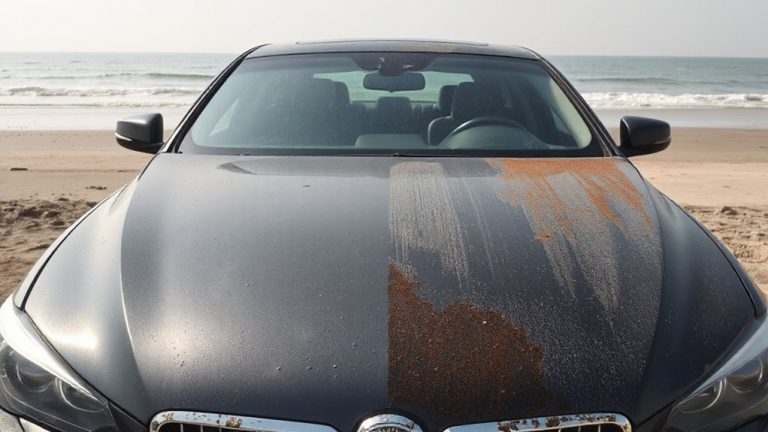
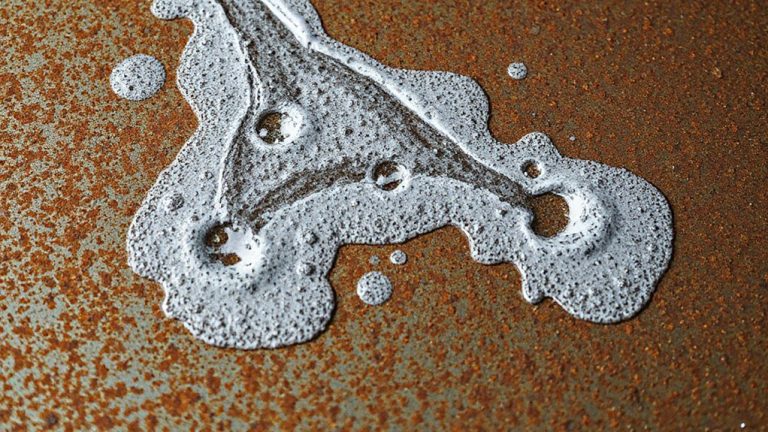
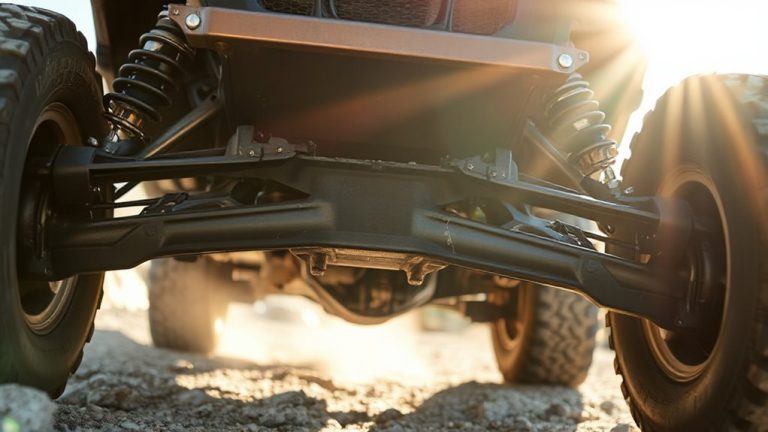
While you might think your vehicle is safe sitting in a garage or storage unit, hidden moisture can still wreak havoc over time. Condensation buildup occurs when temperature fluctuations cause warm air to meet cold surfaces beneath your vehicle. This creates a damp environment where corrosion starts within days. Humidity exposure-even at levels below 50%-can accelerate metal fatigue and degrade rubber seals. Moisture wicks into porous materials like brake lines, wheel bearings, and fuel system components, promoting internal oxidation. Without a barrier, concrete floors absorb ambient humidity and release it slowly, maintaining a wet microclimate. Steel parts corrode at 0.005 inches per year under constant damp conditions. Electronics succumb to short circuits from invisible moisture intrusion. Tires develop dry rot and internal delamination. Upholstery harbors mold spores in relative humidity above 40%. Protecting against these threats requires intercepting moisture at the source. Prevention starts below the chassis.
Best Moisture Barrier Types for Vehicle Storage
Think of your garage floor as a sponge-it’s likely absorbing and releasing moisture daily, even if it looks dry. You need effective moisture barriers to protect stored vehicles. Epoxy coatings form a durable, impermeable layer that bonds chemically with concrete, typically 2–5 mils thick, blocking moisture vapor transmission up to 95%. However, they crack under structural shifting, compromising protection. For long-term defense, use polyethylene vapor retardants with a perm rating below 0.1-this meets ASTM E1745 standards for moisture resistance. A 10-mil reinforced sheet offers puncture resistance and spans cracks effectively. Place it directly on clean, leveled concrete, overlapping seams by 6 inches and sealing with waterproof tape. Unlike epoxy, vapor retardants don’t adhere but float beneath the vehicle, requiring no curing. They’re reusable and less sensitive to surface prep, making them ideal for storage where reliability and ease matter most.
How Moisture Barriers Prevent Rust and Mold
Since moisture is the primary catalyst for both rust and mold, blocking its path is essential when storing vehicles long-term. You need a barrier that stops capillary action from ground moisture while allowing trapped humidity to escape. High-quality moisture barriers use materials with controlled material breathability-typically 0.1 to 0.3 perms-to limit vapor transmission without sealing in dampness. Without ventilation gaps, condensation accumulates, creating a microclimate ripe for corrosion. Proper barriers maintain airflow along the substrate with integrated dimples or mesh spacers, elevating the material 1–2 mm above the floor. These gaps promote passive convection, reducing relative humidity beneath the vehicle by up to 40%. Polyethylene sheets thicker than 10 mil resist punctures and reduce vapor drive markedly. Together, ventilation gaps and balanced material breathability disrupt the moisture cycle, preventing the electrochemical reactions that cause rust and the organic growth that leads to mold.
Step-By-Step: Install a Barrier Under Your Vehicle
How do you guarantee your vehicle stays protected from ground moisture during long-term storage? Start with proper surface preparation: clear all debris, dirt, and vegetation from the storage area, and make certain the ground is level and dry. This step prevents punctures and ensures peak contact between the barrier and surface. Use a 6-mil reinforced polyethylene tarp, at least 10 feet by 12 feet, to fully extend beyond your vehicle’s footprint. Position the tarp smoothly underneath, minimizing wrinkles that can trap moisture. Barrier securing is critical-anchor the edges with sandbags, bricks, or landscaping staples every 2 to 3 feet to prevent wind uplift and shifting. Overlap seams by 12 inches if using multiple sheets. This creates a continuous vapor-resistant layer, reducing humidity exposure by up to 80% and greatly slowing corrosion.
Mistakes People Make When Sealing Against Moisture
One common error-underestimating the importance of material thickness-leads to premature barrier failure. You need at least 6-mil polyethylene to resist tears and punctures from debris or vehicle weight. Thinner sheets compromise integrity, allowing moisture intrusion. Improper ventilation is another issue; trapping damp air beneath the barrier promotes condensation, accelerating corrosion. You must allow airflow around the vehicle’s undercarriage to reduce humidity buildup. Excessive sealing worsens this problem-completely enclosing the vehicle without vapor escape routes creates a sealed microclimate ideal for mold and rust. Use breathable vent caps or leave small perimeter gaps when anchoring the barrier. Never tape or weld seams permanently unless using a rated vapor-retardant membrane. For best performance, combine 10-mil reinforced poly with ground anchors spaced every 4 feet. Monitor humidity levels monthly during storage with a digital hygrometer.
On a final note
You need a moisture barrier under your stored vehicle. It stops ground moisture from causing rust and mold. Use a 6-mil polyethylene sheet, at least 10 feet by 20 feet, to fully cover the storage area. This impermeable layer blocks 99% of vapor transfer. Seal seams with waterproof tape rated for polyethylene. Elevate the vehicle on plywood to prevent condensation pooling. A proper barrier extends lifespan and maintains resale value.