Why Backup Lights Must Meet Minimum Lumen Standards for Safety
You need backup lights with at least 200 lumens to guarantee safe reversing in low-light conditions. Lights below this threshold reduce visibility to under five meters, creating dangerous blind spots. A proper 120-degree beam pattern and 4000K–5000K color temperature enhance contrast and depth perception. Inadequate lumen output delays reaction time by up to 0.5 seconds, increasing collision risk. Standards like SAE J599 exist to guarantee performance-knowing more reveals how to choose the best setup.
Notable Insights
- Backup lights must emit at least 200 lumens to ensure adequate visibility in low-light conditions.
- Insufficient lumen output creates blind spots, increasing the risk of collisions with obstacles.
- Proper lumen levels reduce driver reaction time by improving object recognition behind the vehicle.
- Lights within 4000K–5000K color temperature enhance contrast and depth perception for safer reversing.
- Meeting regional lumen standards ensures compliance with safety regulations and consistent performance.
Backup Light Lumen Requirements Explained
Many backup lights on the market today deliver between 100 and 300 lumens, but not all meet the minimum standards for effective visibility. You need at least 200 lumens for reliable performance in low-light conditions. Lumens alone don’t guarantee clarity-beam pattern is critical. A wide beam pattern illuminates the entire rear area, reducing shadow zones. You want a 110- to 130-degree spread for ideal coverage. Light diffusion also affects visibility. Poor diffusion creates hotspots, leaving dark edges. High-quality lenses use textured polycarbonate to scatter light evenly. This mimics daylight diffusion, improving object recognition. Look for lights with uniform glow across 15 feet. Effective lights combine adequate lumens, precise beam pattern, and controlled light diffusion. Standards like SAE J599 specify these requirements. Meeting them guarantees you see obstacles clearly. Choose lights tested to these benchmarks. Your safety depends on consistent, predictable illumination every time you shift into reverse.
Why Low Lumens Increase Reversing Accident Risk
When your backup lights emit fewer than 200 lumens, the dim output severely limits how much of your surroundings you can actually see. Poor illumination reduces visibility to less than five meters directly behind your vehicle, creating critical blind spots. Objects under 0.5 meters in height, like curbs or small animals, often vanish in the shadows. The human eye requires adequate light to detect motion and depth-lumen levels below standard delay visual processing. That lag leads to delayed reactions, increasing stopping distance by up to 1.5 meters at 8 km/h. Studies show drivers with substandard lights react 0.3 to 0.5 seconds slower on average. In tight spaces or low-light conditions, that delay is dangerous. Backup lights meeting the 200-lumen minimum guarantee sufficient brightness for hazard recognition. Proper lumen output enhances contrast and object clarity, directly reducing collision risk during reversal maneuvers. Upgrading to high-lumen LED options like those in top LED backup light reviews ensures long-term reliability and superior nighttime visibility.
How Lumens and Color Impact Backup Visibility
Though brightness matters most, the color temperature of your backup lights plays a critical role in how clearly you see behind your vehicle. You need lights around 4000K–5000K for ideal contrast and depth perception. Cooler tones improve object detection but can increase glare if not properly managed. Effective glare control prevents blinding reflections, especially on shiny surfaces or in wet conditions. Good light diffusion spreads illumination evenly across the rear area, reducing dark spots and hot zones. Poor diffusion creates uneven pools of light, compromising visibility. Lights with engineered optics deliver uniform 120-degree coverage up to 20 feet behind the vehicle. This guarantees regulatory-compliant visibility without overexposing nearby areas. You benefit from precise beam shaping that balances lumen output with color and spread. Together, proper lumens, color temperature, light diffusion, and glare control maximize functional visibility and safety during reversing maneuvers.
Global Backup Light Lumen Regulations
How do global standards guarantee your backup lights are bright enough to be safe, yet not so bright they blind others? They rely on precise lumen measurement harmonization to set minimum and maximum output limits. Without this alignment, manufacturers face regulatory compliance challenges across markets. Safety and visibility depend on consistency.
| Region | Lumen Range (Min–Max) |
|---|---|
| North America | 150–300 lm |
| European Union | 120–250 lm |
| Japan | 130–270 lm |
| Australia | 140–260 lm |
| China | 125–280 lm |
These values guarantee functional visibility while preventing glare. Standards vary slightly due to local regulations, but all aim to balance performance and safety. You must design with these ranges in mind to achieve global compatibility. Harmonization minimizes costly redesigns and streamlines certification. Meeting these benchmarks isn’t optional-it’s essential for market access and road safety.
How to Test Backup Light Lumen Output
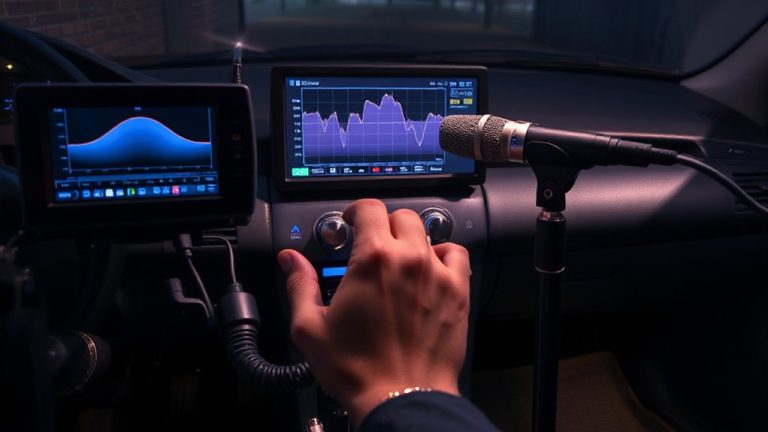
Why should you trust that your backup lights meet the required brightness? You need accurate lumen calibration and reliable output consistency. Use an integrating sphere or a calibrated photometer to measure total lumen output under standard conditions-12V input, ambient temperature of 25°C. Connect the light to a stable power supply and let it stabilize for 10 minutes. Record readings three times to verify output consistency. A variance exceeding 5% between tests indicates poor quality control. Lumen calibration must trace back to NIST standards for accuracy. Compare results to manufacturer claims-reputable brands specify output within ±10% tolerance. Testing guarantees compliance with global regulations and guarantees visibility. Don’t rely on visual checks; they’re subjective and misleading. Proper testing confirms performance, safety, and regulatory compliance-every time.
Boost Lumen Output: Switch to LED Backup Lights
Brightness matters when it comes to safety, and upgrading to LED backup lights is the most effective way to boost lumen output. Traditional halogen bulbs produce 150–300 lumens, but LEDs deliver 600–1,200+ lumens, guaranteeing better visibility. Unlike halogen, LEDs resist lumen degradation, maintaining over 90% brightness throughout their lifespan. With an average LED lifespan of 50,000 hours, they outlast halogen bulbs by up to tenfold. You’ll experience immediate performance gains and long-term reliability.
| Scenario | Halogen Light | LED Light |
|---|---|---|
| Night backing into driveway | Dim, uneven glow | Bright, uniform coverage |
| Sudden obstacle appearance | Delayed detection | Instant visibility |
LEDs consume less power while delivering superior output, reducing strain on your vehicle’s electrical system. Switching guarantees compliance with lumen standards and enhances nighttime safety.
On a final note
You must verify your backup lights meet minimum lumen standards-typically 150 to 200 lumens-for safe reversing. Low-output lights reduce visibility, increasing collision risk. LED backup lights deliver 300+ lumens, far exceeding halogen bulbs. Their 6000K color temperature enhances contrast in low-light conditions. Verify output with a calibrated lux meter at 1 meter. Compliance with FMVSS 108 or ECE R48 ensures safety and legality.