Why Piggyback Tuners Are Outdated for Vehicles With Direct Injection
Direct injection engines require precise fuel control at 2,000+ psi, something piggyback tuners can’t manage. They don’t reprogram the ECU-instead, they fake sensor signals, which disrupts real-time air-fuel calculations. This leads to unreliable fuel trims, lean conditions, and potential engine damage. Modern DI systems rely on exact O2, MAF, and knock feedback. Only flash tuning gives full access to fuel, spark, and boost parameters. You’ll see how proper tuning releases real performance safely.
Notable Insights
- Piggyback tuners can’t directly control high-pressure direct injection fuel systems operating above 2,000 psi.
- They rely on sensor signal manipulation, which disrupts precise air-fuel calculations in direct injection engines.
- Sensor lag and spoofing cause unstable fuel trims, increasing risks of lean conditions and engine damage.
- Factory ECUs often detect timing or signal mismatches, triggering error codes or safety modes.
- Flash tuning provides direct ECU access, enabling safer, more effective optimization of fuel, spark, and boost.
What Direct Injection Requires for Safe Tuning
While direct injection systems deliver fuel at extremely high pressures, they also demand precise control to avoid engine damage. You must manage fuel trims carefully, as modern DI engines rely on closed-loop feedback to adjust air-fuel ratios in real time. Even small deviations can cause lean conditions, increasing the risk of detonation. Direct injectors operate at 500 to over 3,000 psi, requiring exact fueling calculations that factory ECUs handle with millisecond precision. Ignition timing must be optimized in conjunction with fuel trims; incorrect timing can compound combustion instability. You can’t rely on generic adjustments-each engine responds differently to load, temperature, and fuel quality. Proper tuning requires live data monitoring, wideband O2 sensors, and precise control over both fuel delivery and spark events. Safety and performance depend on this level of accuracy.
Why Piggyback Tuners Fail on DI Engines
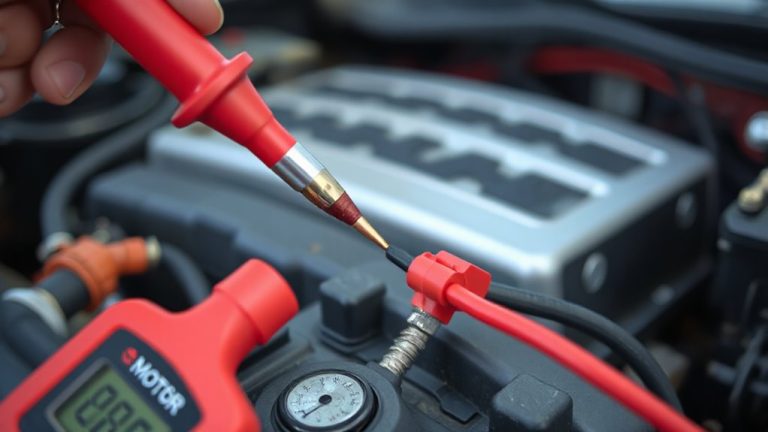
Piggyback tuners struggle with direct injection systems because they can’t directly control the high-pressure fuel delivery that DI engines demand. You rely on indirect adjustments, but DI systems operate at 2,000+ psi, requiring precise injector pulse management. Piggybacks modify sensor signals instead of fuel maps, introducing sensor lag. This delay distorts real-time air-fuel calculations, risking lean conditions. Fuel latency becomes critical under load-injectors must respond in milliseconds, yet piggybacks can’t reduce the time between signal and injection. Factory ECUs detect these timing mismatches, triggering error codes or safety modes. Unlike standalone systems, piggybacks lack access to direct injector calibration, cam timing, and turbo boost tables. You get compromised throttle response and inconsistent combustion. Think of it like trying to adjust a sprinter’s stride by editing their heart rate data-indirect and ineffective. For DI engines, precision demands direct control, not signal tricks.
The Danger of Fake Sensor Tweaks
Even if you’re tempted to tweak sensor inputs to fool the ECU, doing so on a direct injection system can backfire in seconds. Sensor fraud disrupts precise air-fuel calculations required for peak combustion. Direct injection engines rely on exact feedback from O2, MAF, and knock sensors to manage fuel trim and ignition timing. When you manipulate these signals, you’re engaging in signal spoofing-sending false data that the ECU can’t verify. This causes unstable fuel trims, often exceeding ±15%, leading to lean conditions or over-fueling. Misfires, detonation, or catastrophic engine damage can follow. Unlike older port-injected engines, DI systems operate at pressures up to 3,000 PSI and demand exact control. Spoofing a sensor might seem like a workaround, but it compromises the closed-loop system integrity. The result? Failed emissions tests, poor drivability, and potential long-term harm-all avoidable with accurate tuning methods.
Why Flash Tuning Is the Right Choice for DI Engines
Flash tuning gives you direct control over the ECU’s factory parameters, eliminating the risks tied to sensor manipulation. You’re not tricking sensors-you’re reshaping fuel maps, spark timing, and turbo boost for direct injection (DI) engines. This allows ideal calibration tailored to your vehicle’s design, maximizing efficiency and power. Unlike piggyback systems, flash tuning resets performance limits coded into the ECU, releasing headroom the factory restricted. You adjust lambda targets, injector pulse widths, and knock thresholds with precision, enabling accurate air-fuel ratios under high load. Modern flash tools access OEM-level software, preserving safety features while enhancing output. There’s no signal interference or delayed corrections. With full read/write capability, you maintain OEM diagnostics and adapt to modifications like high-flow fuel pumps. Flash tuning doesn’t guess-it calculates. You get complete, stable recalibration that scales with upgrades. It’s the reliable, engineered solution DI engines demand.
Real-World Gains With Full ECU Control
When you access full ECU control, real-world performance gains emerge in measurable ways. You’re not just adjusting fuel or timing-you’re optimizing every parameter the engine relies on. Modern direct injection engines respond best when the ECU recalibrates spark, boost, and fuel delivery together. This unified approach produces reliable power increases validated by dyno results. Unlike partial fixes, full control means no compromises in drivability or safety.
| Parameter | Stock (hp/lb-ft) | Tuned (hp/lb-ft) | Gain |
|---|---|---|---|
| Wheel HP | 250 | 305 | +55 |
| Torque | 260 | 310 | +50 |
| 0–60 mph | 6.1s | 5.3s | -0.8s |
| AFR @ WOT | 11.8:1 | 11.2:1 | Optimized |
| Ignition Timing | 12° BTDC | 15° BTDC | +3° |
These performance gains reflect actual dyno results from calibrated ECU tuning.
Why Piggyback Tuners Worked: And Why They Don’t Now
You’ve seen what full ECU control can do-measurable power gains, improved throttle response, and optimized air-fuel ratios achieved by rewriting the engine’s core programming. Piggyback tuners once worked by intercepting analog signals from sensors and altering them before they reached the ECU. They relied on mechanical feedback and simple voltage adjustments to trick the engine into delivering more power. This worked on older, less responsive systems with analog signals and throttle cables. But modern direct injection engines use precise digital communication and closed-loop control. They monitor real-time combustion events, adjusting fueling and timing with millisecond accuracy. Piggybacks can’t keep up. They lack access to internal ECU logic, risking lean conditions or detonation. Full ECU tuning changes fuel maps, boost curves, and ignition timing directly-delivering safer, more consistent gains. Analog signal manipulation is outdated. You need full control. That’s where real performance begins.
On a final note
Your DI engine demands precise fuel and timing control under high cylinder pressures. Piggyback tuners can’t access direct injector pulse width or high-pressure fuel pump strategies. They guess instead of measuring, risking lean conditions. Flash tuning rewrites the ECU’s calibration tables directly. You gain control over fuel trims, boost, and spark-down to 0.1-millisecond precision. Real gains start at 20–30 horsepower, with safer, more reliable performance.