Why Some Enthusiasts Prefer Powder-Coated Over Painted Black Wheels
You prefer powder-coated black wheels for their durable, long-term performance. The coating is baked at 350–400°F, forming a 3–5 mil fused layer that resists chipping, UV fade, and corrosion. It withstands 1,000+ hours of salt spray and impacts up to 165 in-lbs-far exceeding painted finishes. Chemically bonded and eco-friendly, it needs no solvents and barely any upkeep. This resilience reveals even greater advantages under real-world stress.
Notable Insights
- Powder coating forms a chemically bonded, 3–5 mil layer that resists chipping, fading, and corrosion better than painted finishes.
- It withstands extreme temperature swings and thermal cycling without blistering or peeling due to its molecular adhesion.
- Superior impact resistance up to 165 in-lbs makes it ideal for aggressive driving and rough terrain.
- Requires minimal maintenance, resisting brake dust, road salts, and cleaning agents without needing sealants or polishing.
- Eco-friendly application emits few VOCs, with nearly all overspray reclaimed, reducing waste by up to 98%.
Why Powder-Coated Black Wheels Last Longer
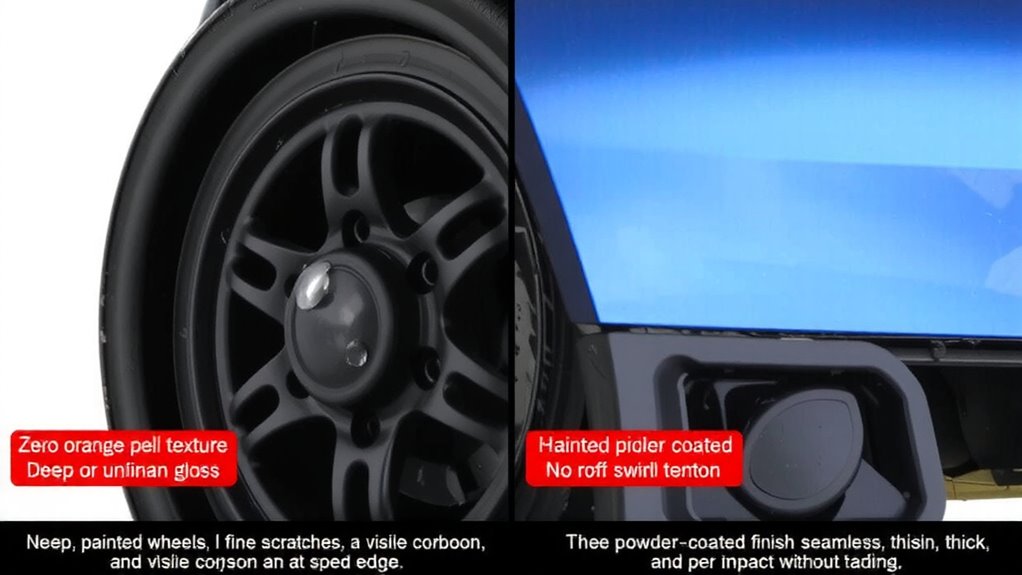
You’ll notice powder-coated black wheels hold up better over time because the coating isn’t just painted on-it’s baked onto the metal in a controlled oven process. This creates a uniform, resilient layer that fuses at the molecular level. Powder coating delivers superior chemical resistance, withstanding brake fluids, road salts, and solvents that erode painted finishes. It also offers exceptional thermal durability, maintaining integrity between -40°F and 400°F. Unlike paint, which can crack under temperature swings, powder coating resists expansion and contraction stress. The cured coating typically measures 3–5 mils thick, providing impact resistance and long-term adhesion. Without solvents, it doesn’t outgas or degrade under UV exposure. This means no blistering, chipping, or fading for years. The process yields a hard, textured surface that resists scratches better than traditional paint. You’re not just adding color-you’re adding a protective shell engineered to last.
How Powder Coating Outperforms Paint in Harsh Conditions
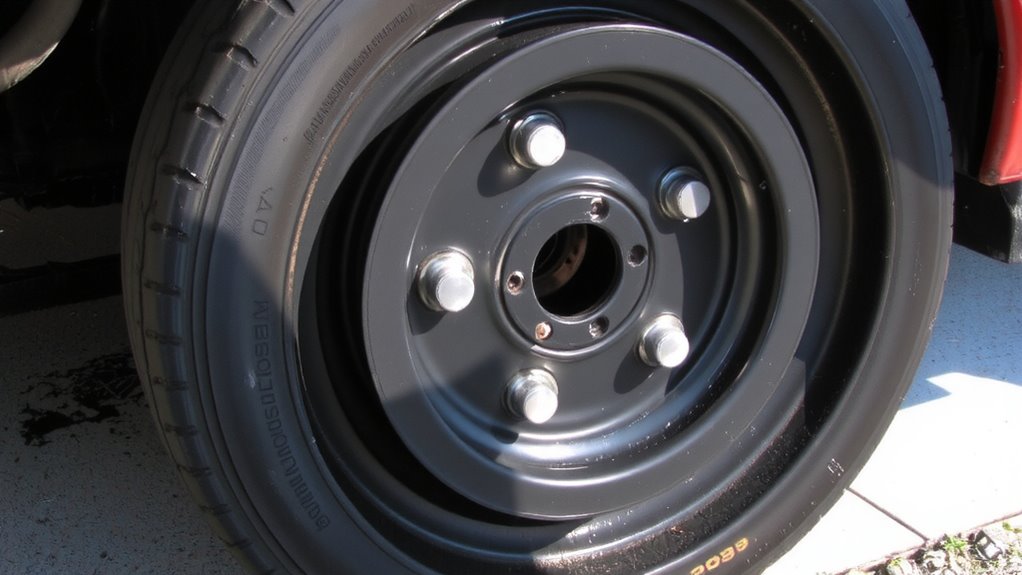
Powder coating maintains its integrity where painted finishes fail, especially when exposed to extreme environmental and mechanical stress. It offers superior chemical resistance, withstanding exposure to brake fluids, road salts, and acidic contaminants that quickly degrade painted surfaces. Testing shows powder-coated finishes resist corrosion for over 1,000 hours in salt spray tests, far exceeding most liquid paints. Its impact durability is equally impressive-powder coatings can endure impacts up to 165 in-lbs without chipping or cracking, compared to 50–80 in-lbs for typical paint. The electrostatic application and curing process create a thicker, cross-linked polymer layer, usually 3–5 mils (75–125 microns) thick. This uniform coverage eliminates thin spots common in liquid paint. Unlike paint, which remains a surface layer, powder coating chemically bonds to the metal, forming a barrier that resists peeling even under constant vibration and thermal cycling.
Why Powder-Coated Wheels Need Less Maintenance
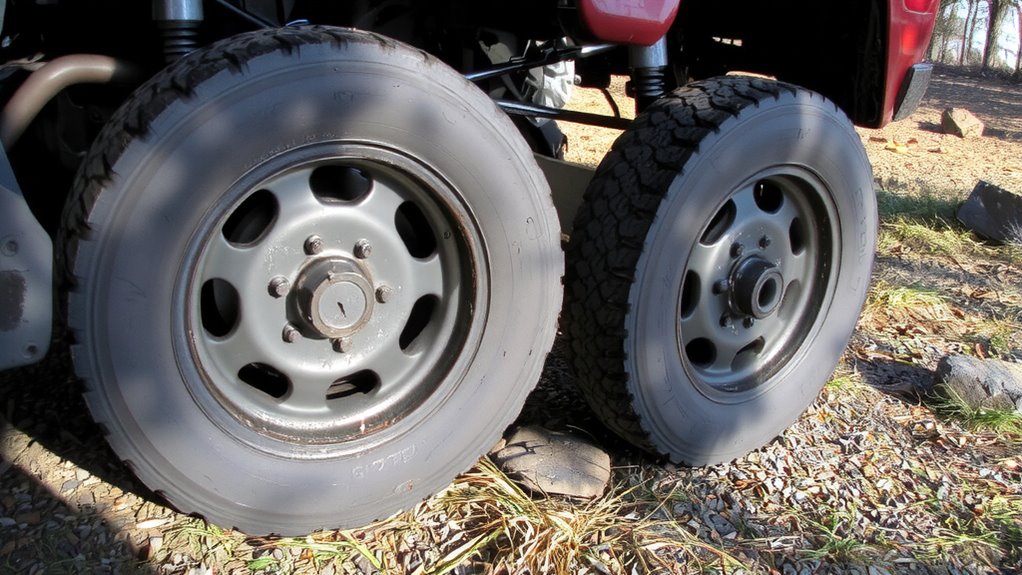
Because powder-coated wheels form a durable, chemically bonded finish, they resist wear and environmental damage far better than painted alternatives. You’ll benefit from superior surface durability, with coatings typically measuring 3–5 mils thick, compared to paint’s 1–2 mils. This added thickness enhances impact resistance and reduces chipping from road debris. Powder coating also offers excellent chemical resistance, standing up to brake dust, road salts, and cleaning agents without degrading. Unlike painted finishes that weaken when exposed to UV radiation, powder-coated surfaces maintain integrity for years. You won’t need frequent polishing or touch-ups. The cured polyester or epoxy layer resists oxidation and moisture penetration, preventing corrosion underneath. With no solvent-based breakdown, the finish stays consistent. You simply rinse off grime-no special sealants required. This resilience cuts cleaning time and extends service intervals. You get long-term protection with minimal effort.
Greener and Smoother: The Eco and Finish Advantages
Many modern wheel finishes still rely on solvent-heavy liquid paints, but powder coating delivers a cleaner alternative without sacrificing quality. You reduce environmental impact because powder coating emits negligible volatile organic compounds (VOCs). The dry powder is electrostatically applied, then cured under heat-typically at 350–400°F for 10–15 minutes. Overspray is reclaimed and reused, cutting waste by up to 98%. In contrast, liquid paints release harmful solvents and offer lower transfer efficiency. You also gain superior surface uniformity. The electrostatic process guarantees consistent film thickness, usually between 3 and 5 mils, across complex contours and edges. This eliminates runs, sags, or thin spots common in liquid paint. The result is a durable, smooth finish with excellent resistance to chipping, fading, and corrosion. You get both eco-efficiency and a high-tolerance finish engineered for performance.
Choose the Right Wheel Coating for Your Driving Style
Your driving habits determine the ideal wheel coating for your needs, regardless of its environmental footprint or surface perfection. If you drive aggressively or in harsh conditions, powder coating’s 3–5 mil thickness provides superior durability over paint’s 1–2 mil layer. It resists chipping, UV fading, and brake dust better, maintaining aesthetic appeal longer. For daily drivers, the cost comparison favors powder coating-it’s often 20–30% more upfront but lasts twice as long, reducing long-term maintenance. Painted finishes offer smoother gloss and richer depth, appealing to show-car owners prioritizing looks over resilience. However, minor scratches show more easily. Powder coating adheres through electrostatic application and cure temperatures near 400°F, creating a chemical bond paint can’t match. Choose based on your terrain, driving frequency, and tolerance for upkeep. Match performance to lifestyle, not just aesthetic appeal or cost comparison alone.
On a final note
You get superior durability with powder-coated black wheels. They resist chipping, UV fading, and brake dust better than painted finishes. A cured powder coat forms a 3–5 mil thick thermoset polymer layer, bonded via electrostatic application and oven curing at 350–400°F. This creates a uniform, abrasion-resistant surface that outlasts traditional paint. Choose powder coating for long-term performance, lower maintenance, and proven protection under real-world driving conditions.