Understanding Solvent Types and Their Applications in Removing Contaminants From Car Bodies Effectively
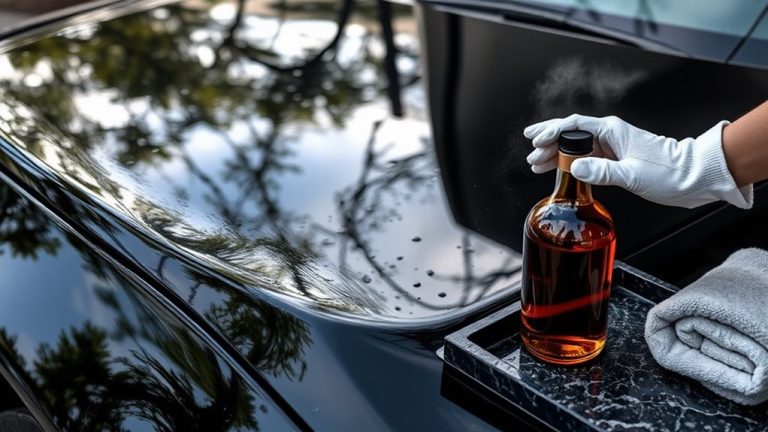
You need the right solvent to tackle car contaminants without harming surfaces. Non-polar solvents like aromatics or chlorinated types (KB >30) dissolve grime via “like dissolves like,” penetrating pores with surface tension under 30 dynes/cm. Use degreasers (pH 10–14) for heavy grease; citrus solvents with d-limonene break down sap and tar efficiently. Alcohols clean light oils fast, evaporating cleanly. Test first-some swell rubber. Matching solvent polarity to contaminant guarantees safe, effective results-there’s more to know about precision application.
Notable Insights
- Use non-polar solvents like aromatic hydrocarbons for tar and sap due to high KB values and molecular compatibility.
- Apply citrus-based solvents with d-limonene to dissolve tree sap and road tar safely and effectively without scrubbing.
- Choose alcohol-based solvents such as isopropyl alcohol for fast removal of fingerprints and light oils without residue.
- Opt for pH-neutral degreasers with chelating agents to remove road film while protecting painted and sensitive surfaces.
- Always test solvents on a small area first and limit contact time to prevent damage to trim, rubber, or clear coats.
How Solvents Fight Car Contaminants
While your car’s surface may look clean, microscopic contaminants like grease, tar, and industrial fallout cling to the paint, resisting regular washing. Solvents break down these stubborn residues through targeted chemical reactions that disrupt molecular bonds. Non-polar solvents dissolve non-polar contaminants, following the “like dissolves like” principle. This process reduces surface tension, allowing the cleaning solution to penetrate and lift grime from microscopic pores. You’ll find solvents with a low surface tension-typically below 30 dynes/cm-spread more evenly and infiltrate tighter spaces. Aromatic hydrocarbons and chlorinated solvents offer high solvency power, measured by a Kauri-butanol (KB) value over 30, making them effective on heavy deposits. Proper formulation guarantees the solvent evaporates completely, leaving no residue. Always use in well-ventilated areas due to volatility. These precise interactions guarantee contaminants are safely and efficiently removed without damaging paint.
When to Use Degreasers on Car Surfaces
When should you reach for a degreaser on your car? Use it when heavy oil, grease, or grime coats metal or engine surfaces. Degreasers are essential during surface preparation for detailing or repainting. They dissolve hydrophobic residues that water-based cleaners can’t handle. Most automotive degreasers have a pH between 10 and 14, making them highly alkaline and effective at breaking down fats and oils. Always check chemical compatibility with your car’s materials-especially aluminum, rubber, or painted surfaces-to avoid etching or swelling. Water-soluble degreasers rinse clean and reduce residue risks. For engine bays, apply at a 5:1 water ratio, let dwell for 3–5 minutes, then rinse. Use gloves and eye protection. Avoid prolonged contact with trim or plastic. Proper ventilation is required. Degreasers aren’t for weekly washes-they’re targeted solutions for severe contamination. Top performers include best automotive degreasers formulated for specific tasks like engine cleaning or deglossing before paint.
Use Alcohol-Based Solvents for Light Residue
Alcohol-based solvents are your go-to for cutting through light oils, fingerprints, and adhesive residue without damaging most automotive surfaces. Their fast evaporation rate guarantees they disappear quickly, reducing streak_intoing and residue. You’ll appreciate how surface compatibility makes them safe on glass, painted panels, and trim when used correctly. Always test in a small area first, especially on clear coats. Isopropyl alcohol (70–99%) works best-higher concentrations clean faster but may dry too quickly for even coverage.
| Solvent Type | Evaporation Rate (sec) | Surface Compatibility |
|---|---|---|
| Isopropyl Alcohol (70%) | 90 | Good on glass, paint, plastic |
| Isopropyl Alcohol (91%) | 60 | Excellent on glass, fair on aged paint |
| Ethanol (denatured) | 55 | Good on metal, limited on plastics |
| Methanol | 45 | Poor on most automotive finishes |
Why Citrus Solvents Work on Tree Sap and Tar
Because citrus solvents contain d-limonene, a natural compound extracted from orange peel oil, they excel at dissolving sticky contaminants like tree sap and road tar. Your success with these solvents hinges on their chemical composition. D-limonene is a terpene with high solvency power, specifically for non-polar substances. Tree sap and tar consist mostly of non-polar hydrocarbons. The molecular polarity of d-limonene closely matches these contaminants, allowing it to penetrate and break down their structure efficiently. This compatibility reduces surface tension and softens residue on contact. Unlike water-based solutions, citrus solvents won’t repel oily films. They work quickly, often within minutes, without aggressive scrubbing. You’ll notice less residue left behind compared to petroleum-based alternatives. Their biodegradability also makes them a safer option for you and the environment. Effectiveness isn’t luck-it’s science.
Choose the Right Solvent for Tar, Sap, and Road Film
How do you cut through stubborn tar, sap, and road film without damaging your vehicle’s finish? Choose a solvent with proven solvent compatibility for automotive surfaces. Tar and sap require solvents containing aromatic hydrocarbons or citrus-based terpenes with a solvency power (KB value) between 85–110. These dissolve resins and oils without aggressive reaction. Always verify surface damage risk by testing on inconspicuous areas first. Non-polar solvents like naphtha work fast but may swell rubber or plastic trim if left in contact over 30 seconds. For road film-composed of brake dust, metal particles, and grime-a pH-neutral solvent blend with chelating agents safely lifts contaminants. Apply with a microfiber cloth using circular motion at 2–3 psi pressure. Rinse within 2 minutes to prevent residue. Proper solvent selection balances efficacy and material safety, preserving clear coat integrity.
On a final note
You must select solvents based on contaminant chemistry and surface compatibility. Non-polar hydrocarbons dissolve grease efficiently but may damage some clear coats. Alcohol-based solvents, like isopropyl alcohol (70% concentration), evaporate quickly and remove light residues without residue. Citrus solvents, containing d-limonene, break down sap and tar through terpene action. Always verify material safety data sheets and test on inconspicuous areas first.