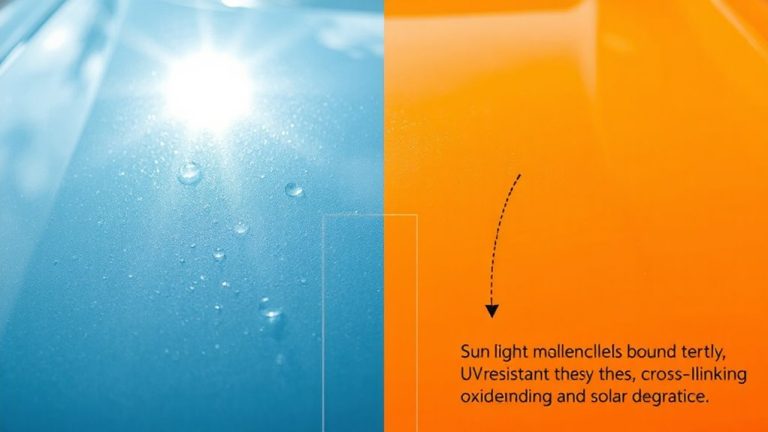
Exploring UV Damage Prevention Strategies Through Effective Clear Coat Applications
You rely on clear coats to block UV damage, but only proper selection and application prevent molecular breakdown. Aliphatic polyurethanes and acrylics with benzotriazole absorb UV below 380 nm, stopping photochemical degradation. Apply 2.0–2.5 mils dry film thickness in thin, even coats for full screening. Poor mixing or thickness below 1.5 mils cuts protection sharply. Use ASTM G154-compliant products-quality ones retain over 85% gloss after 2,000 hours. Reapply every 18–24 months under heavy exposure. Ceramic-infused variants last up to 5,000 hours. Longevity depends on environment, formulation, and consistent maintenance. The best results combine correct materials with precise execution. Factors like storage, curing, and surface prep play critical roles you’ll want to explore next.
Notable Insights
- Select UV-blocking clear coats with high concentrations of benzotriazole or HALS for effective absorption below 380 nm.
- Apply 2–3 thin layers to achieve a dry film thickness of 2.0–2.5 mils for optimal UV screening.
- Use aliphatic polyurethanes or acrylics with UV stabilizers to prevent yellowing and maintain gloss retention.
- Ensure proper storage and mixing of coatings to maintain chemical integrity and avoid premature degradation.
- Reapply every 18–24 months under heavy UV exposure to sustain protective performance and film thickness.
How UV Damage Breaks Down Surfaces (And How Clear Coat Stops It)
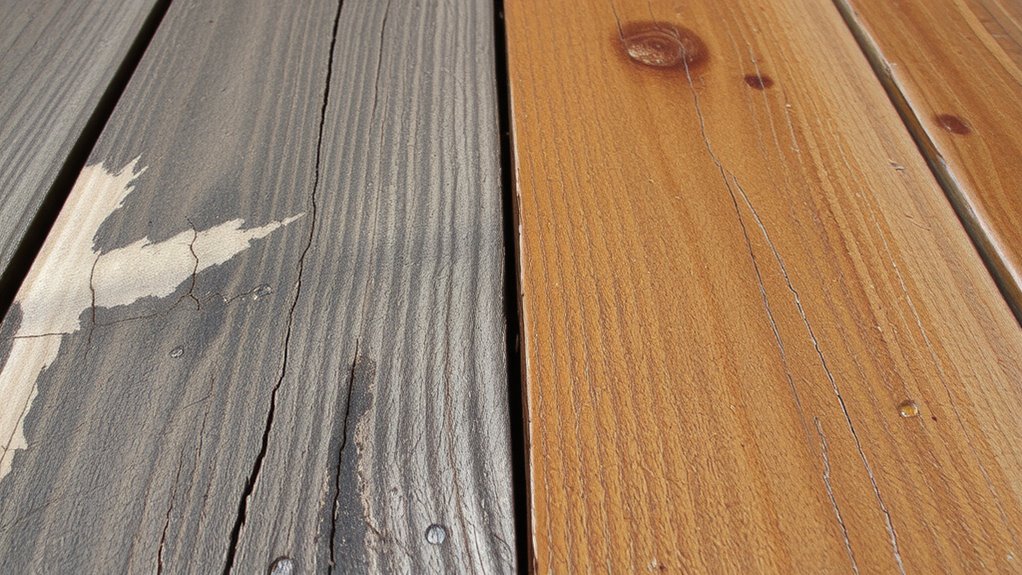
While sunlight might seem harmless, its ultraviolet (UV) rays can cause serious deterioration to exposed surfaces over time. You’re exposed to UV radiation daily, and so are unprotected materials. This exposure triggers molecular degradation, weakening bonds in polymers, resins, and pigments. The process begins with photochemical breakdown, where high-energy UV photons disrupt chemical structures. Without intervention, this leads to chalking, fading, cracking, or embrittlement. You’ll notice yellowing in clear finishes and loss of gloss on coated surfaces. These aren’t just cosmetic issues-they signal structural compromise. A quality clear coat acts as a sacrificial barrier, absorbing and scattering UV radiation before it reaches the substrate. Its UV stabilizers, like hindered amine light absorbers (HALS), interrupt free radical formation. This stops chain reactions that accelerate degradation. Properly applied, the coating maintains integrity for years, blocking over 98% of harmful UV rays. You’re not just preserving appearance-you’re preventing irreversible damage at the molecular level.
Best Clear Coats for UV Protection by Surface Type
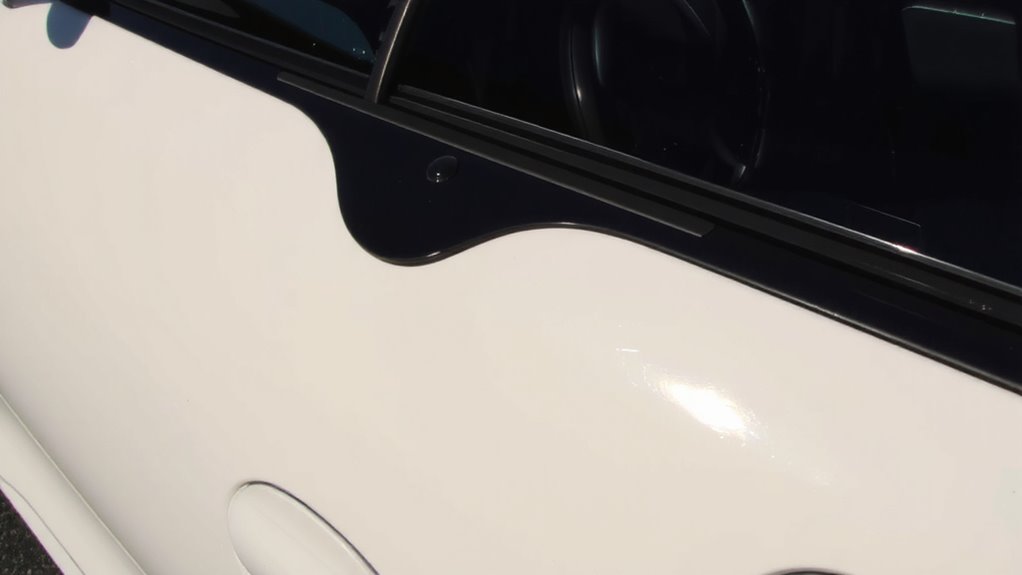
Several clear coats stand out for UV protection, but your best choice depends on the surface material and environmental exposure. For marine applications, polyurethane clear coats offer superior durability, resisting saltwater, UV radiation, and thermal expansion. They typically provide 8–10 mils dry film thickness and maintain gloss retention over 2,000 hours in xenon-arc testing. Polycarbonate surfaces benefit from acrylic-based clear coats with UV stabilizers, especially in plastic restoration projects. These coatings penetrate micro-cracks, restoring clarity while blocking 98% of UV rays below 400 nm. For automotive clear coats, ceramic-infused formulas enhance thermal reflectivity and hardness, achieving 4H pencil hardness ratings. Epoxy clear coats work well on metal but yellow under prolonged UV. Always match the resin system to the substrate-poor adhesion compromises UV defense. Proper surface prep guarantees maximum bond strength and long-term performance.
What to Look for in a UV-Blocking Clear Coat
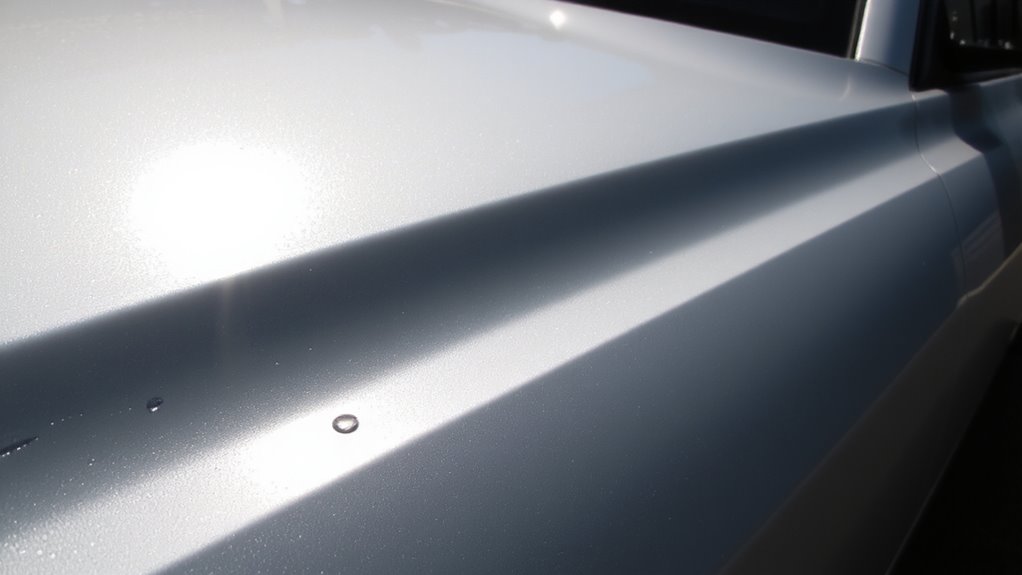
When choosing a clear coat for UV protection, start by checking its UV absorber concentration and spectral range. Look for products with benzotriazole or hindered amine light stabilizers (HALS) that absorb UV radiation below 380 nm. High-quality formulations deliver superior gloss retention, maintaining reflectivity above 85% after 2,000 hours of QUV testing. Yellowing resistance is critical-opt for aliphatic polyurethanes or acrylics, which resist chromatic shift (Δb < 1.5) under prolonged exposure. Check the coating’s thickness; most require a dry film thickness of 1.5–2.0 mils for full UV screening. A robust clear coat blocks over 98% of UVA and UVB rays. Avoid aromatics if clarity longevity matters. Verify ASTM G154 compliance for accelerated weathering performance. These specs guarantee long-term substrate protection, reduced chalking, and stable aesthetic appearance across diverse environmental conditions. Performance hinges on chemistry, application precision, and material compatibility.
How to Apply Clear Coat for UV Protection
Since proper application determines the effectiveness of UV protection, following a precise process is essential. Begin by applying the clear coat in a clean, dust-free environment. Use consistent spray techniques-maintain a distance of 6 to 8 inches from the surface and overlap each pass by 50% to guarantee even coverage. Uneven application can create thin spots vulnerable to UV degradation. Apply 2 to 3 thin layers rather than one thick coat. Each layer must cure before the next is applied. Drying times typically range from 15 to 30 minutes between coats, depending on humidity and temperature. Follow manufacturer specifications for best results. A full, properly dried film thickness of 2.0 to 2.5 mils provides maximum UV resistance. Avoid rapid drying with heat, as it can compromise film integrity. Proper technique guarantees durable, uniform protection against solar damage.
Mistakes That Weaken UV Protection
How could something as simple as a clear coat fail to protect against UV damage? Improper storage degrades resin integrity. Exposure to extreme temperatures or humidity causes premature curing or phase separation. You might not see it, but microscopic flaws reduce UV absorption by up to 40%. Expired products lose their stabilizers-specifically benzotriazole-based absorbers that degrade over 24 months. Once past the shelf life, effectiveness drops sharply. A study showed 60% less UV-B resistance in coatings applied six months past expiration. You’re risking long-term substrate damage. Poor mixing, too, creates uneven dispersion. Without uniform cross-linking, weak zones form. These fail under 200-hour QUV exposure tests. Don’t assume all clear coats perform equally. Verify batch numbers. Store at 20°C (68°F) in sealed containers. Check expiration dates-no exceptions. Your coating’s defense is only as strong as your discipline in handling it. Top-performing products often include advanced clear coat spray paints with stabilized resins specifically designed for prolonged UV resistance.
How to Maintain UV Protection Over Time
Why do some clear coats lose UV protection while others hold strong? The difference lies in reapplication frequency and environmental exposure. You must assess conditions your coating faces-UV intensity, temperature swings, and pollutants accelerate degradation. High-performance clear coats with UV absorbers like benzotriazoles typically last 2–3 years under moderate exposure. However, in high-sun climates or coastal areas with salt spray, protective efficacy drops 40% faster. You should reapply every 18–24 months under heavy exposure to maintain integrity. Nano-ceramic coatings offer extended durability, resisting breakdown up to 5,000 hours in QUV accelerated weathering tests. Track film thickness-when it erodes below 2 mils, shielding capacity diminishes. Regular inspections and scheduled maintenance guarantee consistent defense. Proper reapplication frequency isn’t optional-it’s a technical necessity for sustained UV resistance.
On a final note
You protect surfaces by blocking UV radiation with the right clear coat. A properly applied, high-performance clear coat contains UV stabilizers and absorbs 95% of UVB and 80% of UVA rays. Clear coats with acrylic or polyurethane bases offer 2–5 mils of film thickness per coat. This layer slows photodegradation. Reapply every 2–5 years, depending on sun exposure. Maintenance guarantees long-term protection.