How to Apply UV-Blocking Coating to Tinted Windows
Choose a UV-blocking coating labeled safe for dyed or metallic tints to guarantee compatibility. Verify it blocks 99% of UV-A and UV-B rays, with a refractive index between 1.48 and 1.52. Clean windows using an ammonia-free solution and microfiber cloth, then inspect under low-angle light. Apply the coating at 65°F–85°F, using even 2–3 psi pressure in overlapping passes. Allow 15 minutes of undisturbed drying. Ideal thickness is 5–7 microns. Further details reveal advanced steps for long-term clarity and protection.
Notable Insights
- Choose a UV-blocking coating compatible with dyed or metallic tints and verify it blocks at least 99% of UV-A and UV-B rays.
- Clean tinted windows thoroughly with an ammonia-free cleaner and lint-free cloth to ensure proper adhesion.
- Apply the coating using a microfiber pad in straight, overlapping passes at 65°F–85°F and under 50% humidity.
- Maintain 2–3 psi pressure to prevent film thinning and ensure even coverage for consistent UV protection.
- Allow the coating to dry undisturbed for at least 15 minutes and inspect for hazing or defects afterward.
Choose a UV-Blocking Coating for Tinted Glass
How do you guarantee your tinted windows offer maximum protection from solar damage? You select a UV-blocking coating specifically designed for tinted glass. Coating compatibility is critical-verify the product is labeled safe for use on dyed or metallic tints to avoid delamination or hazing. Choose a coating with at least 99% UV-A and UV-B rejection to maintain interior integrity and protect occupants. Application temperature matters: apply between 50°F and 90°F (10°C–32°C) for best adhesion and curing. Exceeding this range can cause premature drying or poor bonding. Use a sol-gel or ceramic-based formula for durability and optical clarity. These coatings typically have a refractive index within 1.48–1.52, matching glass to minimize glare. Always confirm spectral data from manufacturer reports. Proper selection secures long-term performance without compromising tint integrity.
Prep Tinted Windows for UV Coating
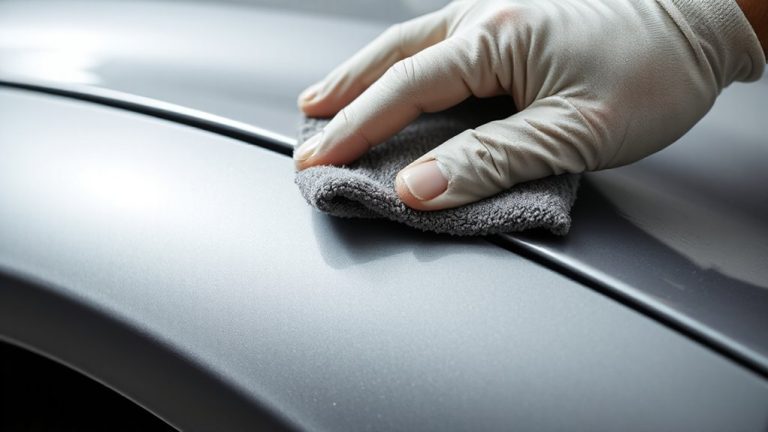
Before applying any UV-blocking coating, make sure your tinted windows are properly prepped to achieve best adhesion and performance. Start with thorough window cleaning using a lint-free microfiber cloth and an ammonia-free cleaner to avoid film degradation. Residue from improper cleaners can compromise coating bonding. Spray the solution evenly, then wipe in a circular motion to lift dust and oils. After cleaning, perform a detailed surface inspection. Check for scratches, lifting edges, or contaminants like wax or silicone. Even micro-scratches can trap air and reduce coating effectiveness. Use a bright flashlight at a low angle to reveal imperfections invisible under normal light. Repair damaged areas before proceeding. A clean, flawless surface guarantees maximum UV protection and coating longevity. Proper prep is essential-no coating performs well on a poorly maintained window. For best results, choose a high-quality window tint that complements your UV-blocking coating application.
Apply UV-Blocking Coating: No Bubbles, No Streaks
Once the surface is perfectly clean and free of defects, you’re ready to apply the UV-blocking coating with precision to prevent bubbles and streaks. Use a high-quality microfiber applicator pad to guarantee even spread and minimize turbulence in the liquid film. Maintain consistent application pressure-about 2 to 3 pounds per square inch-to avoid disturbing the coating’s surface tension, which helps it self-level. Apply the coating in straight, overlapping passes, working from top to bottom. Excessive pressure can thin the film unevenly, leading to streaks and reduced UV protection. Let the coating dry undisturbed for at least 15 minutes before touching or inspecting. Ideal application temperature is between 65°F and 85°F. Humidity levels below 50% help prevent hazing. A properly applied coating blocks up to 99% of UV rays and lasts up to three years.
Fix These 5 UV Coating Mistakes
You’ve applied the UV-blocking coating with care, guaranteeing proper pressure, temperature, and technique to achieve a flawless, high-performance finish. Yet, common mistakes still undermine results. First, ignoring material compatibility risks chemical reactions-always verify the coating’s formulation matches your window tint (e.g., polyurethane-based tints require solvent-free coatings). Second, poor application timing reduces adhesion; apply when surface temperature is between 60°F and 80°F, never in direct sunlight or high humidity. Third, skipping surface decontamination leads to delamination. Fourth, using excess pressure causes thinning and weak UV absorption. Fifth, uneven coverage creates microzones with reduced protection. Each error cuts effective lifespan by up to 40%. Correct these by following manufacturer specs precisely-coating thickness should measure 5–7 microns. Proper execution guarantees 99% UV rejection and long-term clarity.
Extend Protection: Care for UV-Coated Tinted Glass
How long can your UV-coated tinted glass maintain peak performance? With proper care, you can expect up to 5–7 years of effective UV protection. The longevity benefits depend on consistent maintenance frequency and correct cleaning methods. Clean the glass every 3–4 months using ammonia-free solutions to prevent coating degradation. Harsh chemicals or abrasive pads cause micro-scratches that reduce UV absorption efficiency. The coating’s spectral stability starts declining after repeated exposure to alkaline pollutants or acid rain if not rinsed promptly. Use distilled water for final rinsing to avoid mineral deposits. Avoid high-pressure sprays near edges to prevent moisture seepage under the film. Inspect annually for delamination or hazing, signs of reduced transmittance below 90% effectiveness. Proper upkeep guarantees sustained UV-A and UV-B blockage, maintaining both interior protection and coating integrity over time.
Why Tint Alone Isn’t Enough for UV Defense
While tinted windows reduce glare and add privacy, they don’t provide complete UV defense on their own. Tint blocks visible light but often allows up to 60% of UVA rays to pass through. These rays cause UV degradation, fading upholstery and damaging skin over time. Without added protection, your interior remains at risk.
Film adhesion varies by tint quality, affecting long-term performance. A UV-blocking coating enhances defense by filtering over 99% of UVA and UVB rays.
| Protection Feature | Tint Only | Tint + UV Coating |
|---|---|---|
| UV Ray Blockage | Up to 40% | Over 99% |
| Interior Fade Prevention | Limited | High Effectiveness |
| Film Adhesion Stability | Moderate | Enhanced by Coating |
UV-blocking coating is essential for full defense. It bonds with tint, improving film adhesion and extending service life under solar exposure.
On a final note
You’ve applied UV-blocking coating correctly when the film transmits less than 2% UV radiation. High-performance coatings block 99% of UVA and UVB rays, measured at wavelengths between 280–380 nm. A uniform layer, typically 1–2 microns thick, prevents degradation. Inspect under angled light to confirm no streaks. Proper adhesion guarantees durability for up to five years. Tint reduces glare; the coating stops photochemical damage. Together, they extend window life and interior protection.