Understanding Accident Immediate Response Protocols for Peace of Mind
You secure the scene first with a 30-second visual scan for hazards like fuel leaks or downed power lines, following OSHA and emergency response protocols. Call 911 immediately-dispatchers use GPS within 30–100 meters for fast response. Check responsiveness by tapping and asking, “Are you okay?” Unresponsive? Evaluate breathing and pulse in under 10 seconds. Control bleeding with sterile gauze, clean with saline, not peroxide. Use 4×4 inch pads in circular motions. Elevate limbs if injured. Place your vehicle 100 feet back on highways; use ASTM F1565 reflective markers in an inverted “V” visible from 600 feet at night to cut secondary collisions by up to 70%. Document with GPS-tagged photos accurate to 2 meters and standardized forms within 30 minutes. Suspect spinal injury? Minimize movement-wait for EMS. Keep the person warm and still while evaluating capillary refill and skin color. MPDS guides dispatchers to prioritize care based on symptom severity. There’s more to learn about each step’s critical role in effective response.
Notable Insights
- Ensure scene safety by scanning for hazards like fuel leaks or downed power lines before approaching.
- Call 911 immediately after confirming safety to enable fast emergency response and accurate location tracking.
- Check responsiveness and breathing, minimizing movement if head or neck injuries are suspected.
- Clean minor wounds with sterile water and cover with non-adherent dressings to prevent infection.
- Secure the area with reflective markers and document the incident promptly using GPS-tagged photos and reports.
Assess the Scene for Safety First
Before approaching the scene, always check for immediate dangers that could threaten your safety or others. Hazards like leaking fuel, downed power lines, or unstable vehicles pose serious risks. You must guarantee the environment is secure before assisting-your safety comes first. Failing to do so jeopardizes not only your well-being but also exposes you to personal liability. Bystanders who act recklessly may face legal obligations for worsening the situation. Law enforcement and OSHA guidelines emphasize scene safety as a foundational response step. You are required to assess risks using visual scans and environmental cues within 30 seconds. This rapid evaluation helps determine safe entry, much like a firefighter sizing up a blaze. Proper assessment fulfills your legal obligations and prevents unnecessary harm. Always use caution-not courage-when entering accident zones.
Call Emergency Services Immediately
Dial 911 without delay-the moment you’ve confirmed scene safety, contacting emergency services becomes your top priority. Emergency dispatch centers operate 24/7, using GPS to pinpoint your location within 30 to 100 meters, even if you’re unsure of the address. Provide clear, concise details: exact location, number of people involved, and type of incident. This guarantees an urgent response from trained EMS units, typically arriving within 6 to 12 minutes in urban areas. Dispatchers follow standardized protocols, like the Medical Priority Dispatch System (MPDS), to prioritize cases based on severity. Your call activates response triage-delay compromises care. Stay on the line; the dispatcher may guide you through initial steps. Reliable communication guarantees rapid deployment of police, fire, or medical teams. Every second counts: swift action enables life-saving interventions before responders arrive.
Check for Injuries and Responsiveness
Once the scene is secure and emergency services are notified, your next critical action is to assess the condition of anyone involved. Begin by checking for responsiveness-gently tap the person’s shoulder and ask, “Are you okay?” Use this step to determine mental status and possible spinal involvement. If unresponsive, check breathing and pulse within ten seconds. Note visible signs of injury severity, including bleeding, deformities, or burns. Prioritize life-threatening conditions first. Minimize movement to reduce risk of aggravation, especially with suspected head or neck trauma. Guarantee patient comfort by speaking calmly and maintaining a reassuring presence. Do not give food, water, or medication. Keep the individual warm and still. A high-cervical collar isn’t needed unless trained. Assess capillary refill and skin color to gauge circulation. Every second counts-your calm, methodical assessment directly impacts outcomes.
Administer Basic First Aid
You’ve secured the scene, called for help, and assessed the person’s condition-now it’s time to act based on what you found. Begin with wound cleaning using sterile saline or clean water at low pressure to remove debris and reduce infection risk. Avoid hydrogen peroxide, which can damage tissue. Use sterile gauze pads-2 x 2 inches for small wounds, 4 x 4 for larger areas-to gently clean in an outward circular motion. Apply antiseptic if available. For bandage application, use non-adherent dressings to cover the wound, then secure with adhesive bandages or roller gauze (1-inch width for fingers, 2-inch for arms or legs). Maintain a snug but non-constrictive fit. Elevate the injured limb if possible to minimize swelling. Keep the dressing dry and monitor for signs of infection, including redness or pus. Proper technique supports healing and prevents complications.
Secure the Area to Prevent Further Accidents
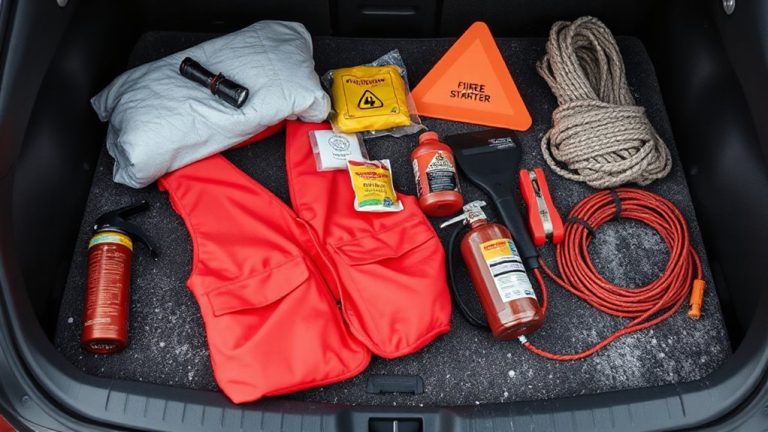
Think like a first responder-your immediate priority is to eliminate hazards that could cause additional injuries. Activate traffic control by positioning your vehicle at least 100 feet behind the scene on highways, or 50 feet on surface roads, to create a buffer zone. Use reflective hazard markers, such as triangular road flares or LED cones, which must meet ASTM F1565 standards for visibility. Place them in a wide inverted “V” pattern to guide approaching traffic safely around the area. Hazard markers should be visible from at least 600 feet at night. Deploy wind-resistant materials in high-traffic zones to prevent displacement. Effective traffic control reduces secondary collision risks by up to 70%. Always stand uphill and upwind when possible. Secure the perimeter quickly-your actions directly influence scene safety and emergency response efficiency. For optimal visibility and durability, consider using best reflective warning triangles that meet high-performance safety standards.
Document the Incident for Records
While securing the scene is critical, documenting the incident guarantees accountability and supports investigative accuracy. Begin by creating an incident report within 30 minutes of the event. Use standardized forms that include time, date, location, involved parties, and environmental conditions. Accurate incident reports reduce recall errors by up to 60%. Conduct evidence collection systematically: photograph all physical damage, debris patterns, and visible hazards. Maintain a chain of custody log for collected items such as broken parts or fluids. Use GPS-enabled devices to tag photo locations within two-meter precision. Store digital files in encrypted, timestamped folders compliant with ISO 27001 standards. Written entries must be in permanent ink, with no whiteouts. Each update requires initials and time stamps. Proper documentation secures forensic traceability and strengthens legal defensibility. Your thoroughness directly impacts investigation credibility.
Know When to Seek Medical Help
How quickly should you act when injuries appear minor? Immediately. Some symptoms aren’t obvious right away. Even if you feel fine, a head injury can worsen without warning. Always seek medical help if you experience dizziness, nausea, or confusion after impact. Loss of consciousness-even briefly-is a critical red flag. It suggests possible brain trauma and requires emergency evaluation within minutes. Delaying care increases risk of complications like intracranial bleeding. Medical professionals use CT scans to detect internal injuries not visible externally. These scans have a resolution of 0.5mm, allowing precise identification of abnormalities. Monitoring essential signs, including blood pressure and pupil response, helps assess neurological function. Do not rely on symptoms alone; some manifest hours later. Prompt assessment guarantees early intervention. When in doubt, get checked. Your brain can’t regenerate like other tissues. Protect it with immediate, informed action.
On a final note
You secure your safety first, then act decisively. Check surroundings using the S-A-F-E mnemonic: Smoke, Asphyxiation, Fuel, Electrics-each poses immediate hazards. Call emergency services using local access codes; in the U.S., dial 911 with GPS coordinates auto-transmitted on smartphones. Assess responsiveness via AVPU scale: Alert, Voice, Pain, Unresponsive. Apply direct pressure to bleeding wounds at 15–30 mmHg. Document using timestamped photos and witness details for insurance claims.