Winter Emergency Scenarios: How to Navigate Icy Conditions Safely
When you hit black ice, ease off the accelerator and avoid braking-sudden moves cause skids. Black ice forms when temps drop below freezing on wet-looking roads, cutting traction by up to 90%. Maintain steady speed and let your vehicle’s electronic stability control reduce skid risk by 35%. On walkways, apply calcium chloride at 20–40 lbs per 1,000 sq ft and use coir mats with a friction coefficient over 0.5. More solutions follow.
Notable Insights
- Recognize black ice by wet-looking roads in freezing temperatures and reduce speed steadily without sudden braking or steering.
- Apply calcium chloride ice melt and use coir traction mats to improve grip on icy walkways and reduce slip risk by up to 80%.
- Equip your vehicle with a winter emergency kit including warm clothing, a fleece-lined blanket, LED flares, and traction aids like sand or cat litter.
- If stranded in snow, run the engine only 10 minutes per hour, crack windows for ventilation, and use Mylar blankets to retain body heat.
- During a power outage, operate generators outdoors 20 feet from windows and use multimeters to confirm safe voltage before restoring circuits.
Drive Safely on Black Ice
When the temperature drops below freezing and roads appear wet but reflect no visible ice, you’re likely driving on black ice-a nearly transparent layer that bonds to pavement and drastically reduces traction. Your vehicle’s tire traction diminishes instantly, increasing stopping distances up to tenfold. Maintain steady speed; sudden maneuvers compromise brake control. If you strike black ice, ease off the accelerator but don’t brake. Slamming the brakes induces skidding, especially without ABS. Vehicles equipped with electronic stability control (ESC) regain grip faster-studies show a 35% reduction in loss-of-control incidents. Tires with tread depth below 4/32 inch perform poorly; winter-rated models like the Bridgestone Blizzak WS90 maintain flexibility at -20°C, improving contact. Black ice patches typically span 10–30 feet. Stay straight, avoid steering adjustments, and let momentum carry you through. Reaction time must be under 0.5 seconds to correct minor slides-delayed inputs worsen instability. Drive at reduced speeds in frost-prone zones, especially bridges and shaded areas.
Prevent Slips on Icy Walkways
Though ice may seem uniform, its surface friction varies considerably depending on temperature and composition, so relying on sight alone won’t protect you from slips. You must proactively improve footing. Apply ice melt containing calcium chloride or magnesium chloride, which work down to -25°F and remain effective longer than salt. Spread at 20–40 pounds per 1,000 square feet. Reapply every 24 hours during active freezing. For immediate safety, lay traction mats made of rubber or coir. These provide grip with a static coefficient of friction over 0.5 on ice. Standard mats measure 3’x5’ and support up to 1,000 pounds per square foot. Use them at entryways, stairs, and walkways. Position mats flat to prevent tripping. Replace if curled or displaced. Combined, traction mats and properly applied ice melt reduce slip risk by up to 80% compared to untreated surfaces. You need both for reliable winter safety.
Pack a Winter Car Emergency Kit
Every winter, at least one in five drivers experiences a roadside emergency due to snow, ice, or extreme cold. That’s why having a winter car emergency kit is essential. Store warm clothing like thermal gloves, a wool hat, and an insulated jacket rated to –15°F. Include a fleece-lined blanket (60 in × 80 in) for heat retention. Pack a signal device such as a LED flare with a 1-mile visibility range and 8-hour runtime. Add a whistle (100 dB) proven to carry farther than voice. Use an airtight container (minimum 10 L volume) to store contents. Include traction aids (rubberized sand or cat litter, 5 lb bag), a 12-volt jump starter (1000-amp peak), and an ice scraper with 18-inch metal blade. Kit assembly guarantees preparedness under OSHA-recommended cold exposure guidelines. Replace expired items annually. For reliable options, consider choosing from the best car emergency kits recommended for extreme weather conditions.
Stay Safe If Stranded in Snow
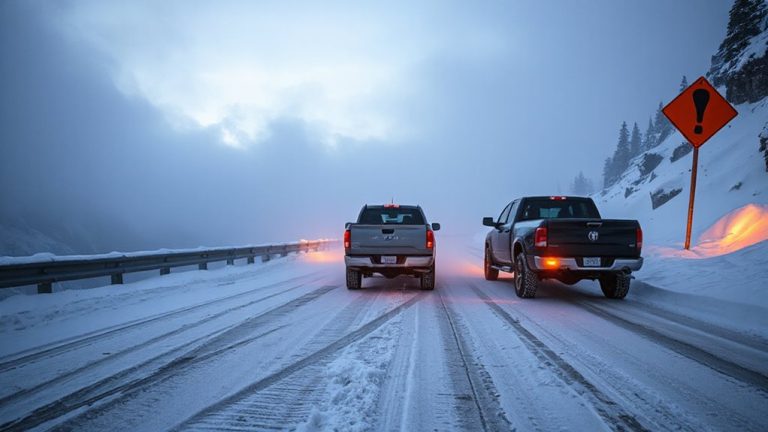
If your car becomes stuck in deep snow or you’re forced to stop due to blizzard conditions, staying safe means taking immediate, measured actions. Conserve fuel and avoid carbon monoxide poisoning by running the engine only 10 minutes per hour. Use emergency supplies wisely to maintain shelter warmth and signal for help. A well-equipped roadside emergency kit can provide critical tools and resources for surviving extended waits in freezing temperatures.
| Item | Purpose | Duration/Use |
|---|---|---|
| Mylar blanket | Reflects 90% body heat | Up to 48 hours |
| Hand warmers (air-activated) | Sustains 135°F for 10 hrs | 2 per person/day |
| LED flares | Visible up to 3 miles | 150-hour battery life |
Keep windows cracked to prevent moisture buildup. Wrap yourself tightly in layers, placing the Mylar blanket closest to your body to trap radiant heat. Avoid excessive movement to reduce sweat and heat loss. Ration food and water from your emergency supplies. Stay visible and conserve energy-rescue could take hours. Maintain shelter warmth without overexertion.
Handle a Home Power Outage
When the lights go out during a winter storm, your priority is maintaining heat and safety without relying on the grid. Keep flashlights, batteries, and warm clothing accessible. Use a portable generator only outdoors, 20 feet from windows and vents, to prevent carbon monoxide buildup. Prior to storm season, perform generator maintenance: check oil levels, replace spark plugs, and confirm fuel stability with stabilizer additives. Test output under load-most 5,000-watt models power refrigerators, furnaces, and lights. Conduct a circuit inspection to identify essential loads and avoid overloading. Turn off non-essential breakers; restart systems one at a time. Use a multimeter to verify voltage (120V standard) at outlets. Insulate pipes to prevent freezing. Monitor indoor temperature with a digital thermometer. A fully charged power bank supports phone use and LED lighting. Rely on battery-powered CO detectors. Never use stoves or ovens for heating. For extended outages, consider a lithium deep cycle battery to safely power critical devices without fuel dependency.
On a final note
You must stay prepared when facing winter emergencies. Black ice forms at temperatures between 28°F and 32°F, reducing tire traction instantly. Use winter-rated tires with at least 6mm tread depth for improved grip. Carry a 72-hour emergency kit containing 2000+ calorie food bars, Mylar blankets, and a NOAA weather radio. If stranded, run your engine 10 minutes per hour for heat. Install a 5,000-watt generator to maintain essential circuits during outages.