Best Adhesive Remover for Car That Leaves No Residue Behind
You need a residue-free adhesive remover that won’t damage your car’s finish. Goo Gone Automotive Cleaner (12 fl. oz) uses a no-drip spray gel that clings to vertical surfaces and breaks down tree sap, tar, and decals without leaving an oily film. 3M Adhesive Remover (12 oz) has low-VOC chemistry and delivers complete residue-free cleanup on cured paint and glass. These formulas evaporate fully, ensuring compatibility with waxes and sealants. Further options balance strength, safety, and application precision.
We are supported by our audience. When you purchase through links on our site, we may earn an affiliate commission, at no extra cost for you. Learn more. Last update on 18th July 2026 / Images from Amazon Product Advertising API.
Notable Insights
- Goo Gone Automotive Cleaner is ideal for cars, removing adhesives without leaving residue on paint, glass, or plastic.
- 3M Adhesive Remover leaves zero residue and is safe for use on cured paint, glass, and vinyl surfaces.
- Tidybond Adhesive Remover Spray dries clear and residue-free, making it perfect for detailers seeking clean results.
- Perco Glue Off provides residue-free cleanup after 5–10 minutes and includes tools for precise, mess-free application.
- SHIELDOM Adhesive Remover leaves no greasy film and comes with scratch-free tools for safe, clean removal.
Goo Gone Automotive Cleaner 12 Fl. Oz

If you need one adhesive remover that handles nearly every stubborn residue on your vehicle without risking damage, Goo Gone Automotive Cleaner is the best choice. This 12 fl. oz. spray gel delivers a no-drip formula that clings to vertical surfaces. It removes bumper stickers, decals, tree sap, bird droppings, gum, grease, tar, asphalt, brake dust, bugs, and even spray paint. Safe on metals, plastics, glass, rims, dashboards, auto upholstery, and car bodies, it preserves your vehicle’s finish. I apply it directly, let it sit briefly, then wipe clean-no scrubbing needed. It’s engineered for cars, boats, and RVs, maintaining appearance while lifting grime.
Best For: Drivers and vehicle owners seeking a safe, effective cleaner to remove tough automotive residues without damaging surfaces.
Pros:
- Removes a wide variety of stubborn residues including tree sap, bug splatter, grease, tar, and spray paint
- Safe for use on multiple surfaces like metal, plastic, glass, rims, and car interiors
- No-drip spray gel formula clings to vertical surfaces and requires minimal wiping
Cons:
- May require multiple applications for heavily set-in stains
- Strong chemical odor in poorly ventilated areas
- Not recommended for use on certain matte or specialty finishes without testing first
3M Adhesive Remover 12 oz (03618VOC20)

I rely on the 3M Adhesive Remover 12 oz (03618VOC20) when I need a fast-acting, paint-safe solution for removing stubborn residues in professional collision repair. This aerosol formula dissolves adhesive, tar, wax, and masking residue without harming cured paint. It’s non-abrasive and leaves zero residue, ensuring surfaces stay clean and ready for finishing. I use it safely on glass, vinyl, and most automotive paint systems. The low-VOC solvent blend meets strict environmental standards, with less than 20% VOC content. At 12 ounces, the can delivers precise, controlled application exactly where needed.
Best For: Professional auto body technicians and detailers who need a fast, paint-safe adhesive remover for use in collision repair and surface finishing.
Pros:
- Effectively removes adhesive, tar, wax, and masking residue without damaging cured paint, glass, or vinyl
- Non-abrasive and leaves no residue, ensuring a clean surface for refinishing
- Low-VOC formula (<20%) complies with environmental regulations and supports safer workspace conditions
Cons:
- Aerosol formulation may require careful handling in poorly ventilated areas
- Not recommended for use on uncured or freshly painted surfaces
- Limited to 12 oz per can, which may require frequent repurchasing in high-volume shops
Goo Gone Adhesive Remover Spray Gel 12 oz

Goo Gone Adhesive Remover Spray Gel 12 oz is the go-to solution for car owners who demand precision and reliability in adhesive cleanup. The thick citrus-based gel clings to vertical or uneven surfaces without dripping, delivering extended dwell time for dissolving stubborn residues like tree sap, tar, and old decals. I apply it directly to affected areas and let it penetrate for fast breakdown. It’s safe on glass, metal, plastics, and finished surfaces without damaging factory coatings. The non-residue formula means no sticky film is left behind. Cleanup is simple: wipe or gently scrape, then rinse. I use it in garages or on the go-indoors or out.
Best For: Car owners who need a reliable, no-drip adhesive remover for tough residues like tree sap, tar, and old decals on vehicles and hard surfaces.
Pros:
- Thick citrus-based gel clings to vertical and uneven surfaces without dripping
- Effectively dissolves stubborn adhesives including tree sap, tar, decals, and grease
- Safe for use on glass, metal, plastics, finished wood, and factory coatings without leaving residue
Cons:
- May require scrubbing or scraping for fully set-in or heavy residues
- Citrus scent, while natural, may be strong for sensitive users
- Not recommended for unsealed or porous surfaces due to potential staining risks
Adhesive Remover Spray 10.6 oz with Scraper

The Tidybond Adhesive Remover Spray 10.6 oz with Scraper is ideal for car owners and detailers who need a reliable, surface-safe solution for removing stubborn adhesive residues. I use it on metal, glass, plastic, and automotive paint without damage. Its fast-acting formula dissolves tape residue, labels, and gum on contact. The 300 ml spray bottle covers multiple jobs; it dries clear and leaves no residue. It’s non-harsh, low-odor, and safe indoors. The included non-scratch scraper lifts softened adhesive without scratching. Model TBAR01 (ASIN: B0G2C25NN8) weighs 14.9 oz. It’s not water-resistant.
Best For: Car owners and detailers who need a surface-safe, fast-acting solution to remove stubborn adhesive residues without damaging finishes.
Pros:
- Fast-acting formula dissolves tape residue, labels, and gum on contact
- Safe for use on metal, glass, plastic, automotive paint, and sealed wood without scratching
- Includes a non-scratch scraper for easy removal and no post-clean residue
Cons:
- Not water-resistant, limiting durability in wet environments
- Non-refillable single-use bottle may reduce long-term value
- Effectiveness may diminish on extremely old or thick adhesive buildup
Perco Glue Off Adhesive Remover & Scraper
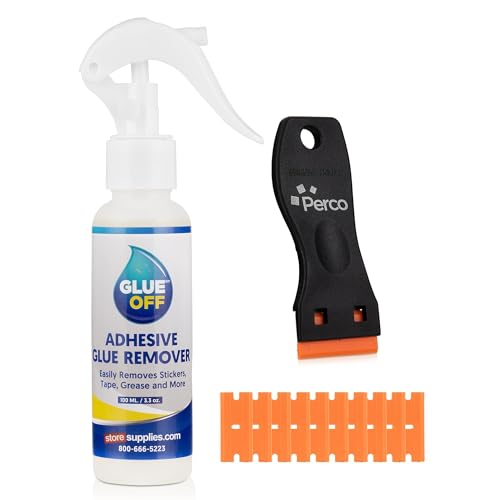
A compact powerhouse for detailers and DIYers committed to preserving finish integrity, Perco Glue Off Adhesive Remover & Scraper delivers targeted, residue-free cleanup without compromising surrounding surfaces. I rely on its 3.3 fl. oz bottle, precision nozzle, and included plastic scraper for controlled application and effective removal. It tackles tree sap, tar, glue, silicone caulk, and other stubborn residues. I apply it generously, let it soak 5–10 minutes, then wipe or scrape cleanly. It works safely on metal, painted surfaces, plastics, and finished wood. I avoid using it on rubber, leather, matte finishes, or porous materials. Its low odor and non-messy formula make it ideal for indoor and outdoor use-practical, precise, and efficient.
Best For: Detailers and DIYers seeking a precise, non-damaging adhesive remover for tough residues on non-porous, finished surfaces.
Pros:
- Effectively removes stubborn substances like tree sap, tar, glue, and silicone caulk
- Precision nozzle and included scraper enable controlled, targeted application
- Low odor and safe for use on a variety of indoor and outdoor surfaces
Cons:
- Not suitable for rubber, leather, matte finishes, or porous materials
- Requires 5–10 minutes of dwell time for optimal performance
- May damage delicate or unsealed surfaces if misapplied
Goo Gone Automotive Adhesive Remover 24 oz

If you tackle stubborn automotive messes like dried tree sap, tar, or leftover decal residue, this 24 oz spray gel becomes your go-to solution. I rely on Goo Gone Automotive Adhesive Remover because it dissolves bumper stickers, brake dust, gum, grease, and spray paint without damaging surfaces. Its no-drip formula sticks to vertical areas, cutting through grime on contact. It’s safe on metals, glass, plastics, bumpers, dashboards, and upholstery. I’ve used it on cars, motorcycles, RVs, boats, and golf carts with consistent results. The package includes a MicroFiber towel for residue-free buffing. It works quickly, requires minimal wiping, and leaves zero oily film-critical for paint prep or window clarity.
Best For: DIY car enthusiasts and detailers who need a reliable, surface-safe adhesive remover for tough automotive messes on vehicles like cars, motorcycles, RVs, and boats.
Pros:
- Effectively removes a wide range of residues including tree sap, tar, decals, grease, and spray paint
- No-drip spray gel formula adheres to vertical surfaces and requires minimal wiping
- Safe on multiple surfaces such as metal, glass, plastic, bumpers, dashboards, and upholstery
Cons:
- Strong chemical smell requires use in well-ventilated areas
- May require multiple applications on older, set-in stains
- Not recommended for use on painted surfaces without spot testing first
Goo Gone Original Liquid 8 Oz
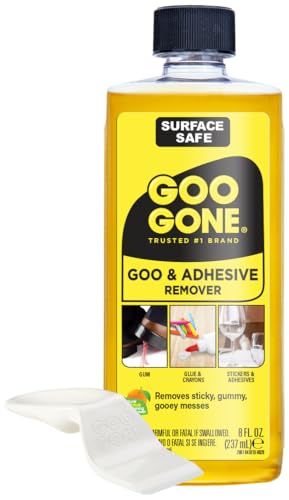
You’ll find Goo Gone Original Liquid 8 Oz especially effective when tackling stubborn automotive adhesives like leftover decal glue, tape residue, or tar buildup. I rely on its citrus-based formula to dissolve grime without harming paint, vinyl, or glass. The 8-ounce bottle is compact but potent, delivering precise application for small jobs. It removes crayon, marker, gum, and glue safely on multiple surfaces. Designed for household and auto use, it’s ideal for cleaning windowsills, trim, or wheels. I’ve seen it lift dried-on messes in minutes. It leaves no residue, ensuring a clean finish every time. Parents, collectors, and detailers trust it for label removal on glassware, vintage finds, or gifts.
Best For: Parents, collectors, and automotive detailers seeking a safe, effective solution for removing stubborn adhesives and household messes from various surfaces.
Pros:
- Effectively removes tough residues like glue, tar, crayon, and gum without damaging surfaces
- Citrus-based formula offers a pleasant scent and leaves no residue behind
- Versatile for use in households, automotive Detailing, and on vintage or delicate items
Cons:
- May require multiple applications for heavily set-in stains or adhesives
- Strong citrus scent may be overwhelming in poorly ventilated areas
- Not recommended for use on certain plastics or unfinished surfaces without testing first
Adhesive Remover Spray with Scraper & Blades

For drivers who demand precision and efficiency when tackling stubborn automotive adhesives, this adhesive remover spray with scraper and blades is the best choice. I rely on its 3.3 fl.oz water-based formula to dissolve labels, glue, wax, grease, tar, and silicone caulk in seconds. It penetrates deeply without harming glass, paint, bumpers, or carpets. The included 2-in-1 scraper has double-edged plastic blades-19 extras are provided-for controlled, safe removal. Its ergonomic handle offers stability on curved or flat surfaces. I’ve used it on tint residue and tree sap with complete lift. The system guarantees no leftover film. I stand by its performance.
Best For: Drivers and automotive enthusiasts who need a fast, safe, and effective solution for removing stubborn adhesives, residues, and stains from vehicles without damaging surfaces.
Pros:
- Quickly dissolves tough adhesives like labels, tree sap, tar, silicone caulk, and tint residue without damaging paint, glass, or carpets
- Includes a 2-in-1 scraper with 19 extra plastic blades for precise, controlled, and safe application on various surfaces
- Water-based, non-toxic formula ensures surface safety while delivering professional-grade performance
Cons:
- Smaller 3.3 fl.oz size may require frequent repurchasing for heavy or repeated use
- Plastic blades, while safe, may dull quickly on extremely tough residues compared to metal alternatives
- Limited effectiveness on long-cured epoxy or industrial adhesives beyond stated use cases
Goof Off Adhesive Gunk Remover 8 fl. oz

Goof Off Adhesive Gunk Remover 8 fl. oz. is my top pick for precision cleaning on automotive surfaces where stubborn adhesives resist ordinary solvents. I use it to remove stickers, labels, tape residue, car decals, bumper stickers, and dried glue. It works fast, penetrating gunk quickly for complete removal in one application. The formula is safe on metal, glass, brick, wood, concrete, automotive surfaces, and non-acrylic plastics. I apply it directly, wait a few minutes, then wipe clean with an absorbent cloth. It outperforms standard removers with stronger solvent action and no residue.
Best For: Automotive enthusiasts and detailers who need a powerful, fast-acting adhesive remover safe for use on a variety of surfaces.
Pros:
- Removes tough adhesives like bumper stickers, tape residue, and dried glue in one application
- Safe on metal, glass, wood, concrete, automotive finishes, and non-acrylic plastics
- Fast penetration and effective performance compared to ordinary adhesive removers
Cons:
- Strong solvent formula may require ventilation during use
- Not recommended for use on acrylic plastics or sensitive surfaces
- 8 fl. oz. size may require frequent reapplication for large-scale jobs
Adhesive Remover Spray with Tools

The SHIELDOM Adhesive Remover Spray with Tools stands out as the best choice for detailers and car owners who demand a complete, scratch-free solution for removing stubborn residues from sensitive automotive surfaces. I rely on its 3.4 oz (100 ml) precision spray nozzle for targeted application on glass, paint, and plastic. The formula dissolves glue, decals, and tape residue without greasy leftovers. It comes with a plastic razor scraper, spatula, and microfiber towel-tools I find essential for safe, efficient cleanup. Plastic scraper prevents scratches. Model ADHESIVE-REMOVER-BLACK weighs 3.88 oz. Product dimensions: 1.57 x 1.57 x 7.28 in. ASIN: B0D3PZTMS1. Made by SHIELDOM Global Corp. It’s residue-free and effective.
Best For: Detailers and car owners seeking a safe, scratch-free solution to remove stubborn adhesive residues from automotive surfaces like glass, paint, and plastic.
Pros:
- Effective formula dissolves glue, stickers, and tape residue without leaving greasy or sticky traces
- Comes with a full set of tools including a plastic scraper, spatula, and microfiber towel for immediate use
- Precision spray nozzle enables targeted application on sensitive surfaces without damage
Cons:
- Small 3.4 oz bottle size may require frequent repurchasing for heavy or repeated use
- Limited availability outside of online channels, primarily Amazon
- Recent market release (May 2024) means long-term performance data is still emerging
Factors to Consider When Choosing an Adhesive Remover for Car
You need to check surface compatibility first-some removers damage paint, rubber, or plastic. Look for a formula type that matches the adhesive, like citrus-based for light residues or solvent-based for tar and strong glues. Ease of application, dwell time, and residue matter too; quick-drying sprays work fast but may leave film, while gels stay put longer and wipe clean.
Surface Compatibility
A successful adhesive removal process starts with verifying surface compatibility to prevent costly damage to your vehicle. You must confirm the remover works safely on automotive paint, glass, plastics, and metal without harming factory finishes. Avoid applying standard solvents to rubber, leather, matte finishes, or unsealed wood-these porous or delicate surfaces can discolor or degrade. Choose a product specifically tested on cured paint systems to prevent etching or stripping clear coats. Always verify interior safety, guaranteeing the remover won’t damage dashboards, trim, or upholstery during use. Opt for non-abrasive, low-odor formulas engineered for sensitive automotive substrates. These solvents dissolve adhesives without swelling plastics or clouding surfaces. Think of it like using the right key for a lock-precision matters. Matching chemistry to material guarantees effective, residue-free cleanup without compromising your car’s finish integrity.
Formula Type
Picking the right formula type matters just as much as confirming surface compatibility-get it wrong, and even a safe chemical can underperform or create cleanup issues. Gel formulas cling to vertical surfaces without dripping, giving you extended dwell time to break down tough residues like bumper stickers or old decals. They’re ideal for precision work on trim or glass. Aerosol sprays cover large areas fast and evenly, but you’ll need to mask off nearby parts to control overspray. If you’re working indoors or in poorly ventilated spaces, choose low-VOC formulations-they reduce harmful emissions and meet environmental standards in many regions. Water-based solvents are milder, perfect for delicate paint or tinted windows, though they may require longer soak times. Always go for non-residue formulas; they leave surfaces clean and ready for waxing or sealing without extra wiping.
Ease Of Application
An effective adhesive remover simplifies the detailing process by combining user-friendly delivery with consistent performance across varied surfaces. You’ll want a spray gel formula-it clings to vertical panels without dripping, ensuring prolonged contact with stubborn residues. Aerosol sprays offer a fine, even mist, ideal for covering large sections like door panels or windshields quickly. A non-drip, thick consistency prevents runoff on curves and trim, giving you control around emblems or grilles. Use a trigger sprayer with an adjustable nozzle to target small spots like sticker remnants, reducing waste. The right product breaks down adhesive fast, so you won’t need aggressive scrubbing. Minimal physical effort means less risk of scratching paint. Precision application tools enhance accuracy, while stable formulas maintain effectiveness on overhead or angled areas. Choose delivery methods that match your repair scope and surface complexity.
Dwell Time Required
While some adhesives break down almost instantly, others demand patience-dwell time directly impacts how thoroughly a remover clears residue without damaging surfaces. You’ll need to wait 5–10 minutes for high-strength adhesives like bumper sticker glue or dried tar to fully break down. Gel formulas stick longer to vertical surfaces, requiring extended dwell times of up to 10 minutes due to slower penetration. Spray removers often work faster, dissolving adhesives in seconds, letting you wipe clean without scrubbing. Fast-acting solvents penetrate quickly, cutting through light residues in under 30 seconds. If you don’t allow sufficient dwell time, removal fails, forcing repeat applications and increasing surface risk. Always match dwell time to adhesive strength and product type-light-duty jobs need under a minute; heavy-duty tasks demand full 10-minute waits for maximum effectiveness.
Residue After Use
A good adhesive remover does its job without leaving behind a mess, but not all formulas are created equal when it comes to residue. Some leave a greasy film that demands extra cleanup with a degreaser. You’ll want to avoid those unless you’re prepared for added effort. Residue-free options are usually water-based or fully evaporating. They minimize post-cleaning, saving you time and steps. Solvents with citrus or petroleum distillates often leave traces if you don’t wipe thoroughly. Check the label-many automotive-specific removers promise no residue. That’s critical if you plan to wax, polish, or apply coatings later. Lingering film interferes with adhesion and finish. Extended dwell times worsen residue if non-volatile ingredients remain. Choose a formula designed to dissolve completely. Look for “no residue” claims backed by performance testing. It guarantees a clean surface with minimal follow-up.
Included Application Tools
When tackling stubborn adhesive residue on your vehicle, having the right tools built into the product can make all the difference. Many adhesive removers include precision nozzles or spray applicators that deliver accurate coverage to tight spaces like emblems or trim edges. Some kits come with non-abrasive plastic scrapers, specifically designed to protect factory paint and glass from scratches. Others bundle multiple tools-such as flexible spatulas, microfiber towels, and replaceable razor blades-for complete removal without surface damage. Ergonomic designs, like contoured handles or 2-in-1 scraper tools, improve grip and control during detailed work. These included tools eliminate the need for extra supplies, offering an all-in-one solution. Integrated application systems guarantee compatibility and peak performance with the remover formula. You’ll save time, reduce risk, and achieve cleaner results without relying on third-party accessories.
Frequently Asked Questions
Can I Use Adhesive Remover on Car Windows?
Yes, you can use adhesive remover on car windows, but you must choose the right product. Many removers contain solvents like toluene or acetone that can damage window tint or rubber seals. Use a citrus-based or isopropyl alcohol formula instead-they’re gentler. Always test on a small area first. Apply with a microfiber cloth, not sprayed directly. Wipe gently in circular motions to avoid scratches.
Is Adhesive Remover Safe for Vinyl-Wrapped Cars?
No, most adhesive removers aren’t safe for vinyl-wrapped cars. They often contain solvents like toluene or xylene that degrade vinyl’s protective layer. You risk discoloration, lifting, or permanent damage. Instead, use a vinyl-safe remover with citrus-based solvents or isopropyl alcohol (<10%). Apply with a microfiber cloth, let it sit for 30 seconds, then gently wipe. Always test on a hidden area first. Heat from a low-setting hair dryer also loosens adhesive without chemicals.
How Long Should I Wait Before Wiping off the Remover?
You should wait 30 to 60 seconds after applying the remover. This dwell time lets the solvent break down adhesive bonds without damaging the surface. Most automotive-grade removers use aliphatic hydrocarbons or citrus-based solvents that need brief contact for full effectiveness. Wipe too soon, and residue remains. Wipe too late, and the liquid dries, reducing effectiveness. Use a microfiber cloth with light pressure in circular motions. Always follow product instructions for ideal timing.
Can I Use These Products on Headlights?
Yes, you can use these products on headlights, but proceed with caution. Confirm the remover is safe for polycarbonate or acrylic surfaces, as most headlights use these materials. Apply a small amount to an inconspicuous area first. Avoid prolonged contact-limit exposure to under two minutes. Use a microfiber cloth to wipe clean immediately. Prolonged use may cloud or damage the lens.
Does Adhesive Remover Damage Rubber Seals or Trim?
Yes, adhesive remover can damage rubber seals or trim if it contains harsh solvents like toluene or xylene. These chemicals degrade elastomers over time, causing cracking or swelling. You should use a remover with a neutral pH and low solvent activity-like isopropyl alcohol-based formulas. Always test on a small area first. Apply sparingly with a microfiber cloth, and wipe clean immediately to avoid prolonged contact that compromises rubber integrity.