Best Water Pump Stop Leak Solutions Mechanics Trust
You trust K-Seal ST5501 to permanently seal water pump leaks using ceramic and vermiculite particles that withstand extreme temperatures. It works in minutes, requires no disassembly, and is proven to ASTM D3147 standards. Bar’s Leaks Liquid Copper Block Seal uses sodium silicate and fibers to form a durable bond in aluminum and cast iron systems. Prestone AS145 acts fast, sealing leaks up to 0.020 inches within 20 minutes. These solutions are tested, reliable, and trusted by professionals for long-term repairs-discover which formula matches your engine’s needs.
We are supported by our audience. When you purchase through links on our site, we may earn an affiliate commission, at no extra cost for you. Learn more. Last update on 18th July 2026 / Images from Amazon Product Advertising API.
Notable Insights
- K-Seal ST5501 and ST5516 are trusted for sealing water pump leaks without disassembly or flushing.
- Bar’s Leaks Liquid Copper Block Seal uses durable sodium silicate technology effective for water pump and block leaks.
- Prestone AS145 contains fibers that seal water pump leaks quickly, often within 20 minutes of operation.
- ABRO Heavy Duty Stop Leak includes lubricants and rust inhibitors to protect and seal water pump areas.
- Mechanics favor pour-and-go solutions like K-Seal and Bar’s Leaks for fast, no-flush repairs.
K-Seal ST5501 Coolant Leak Repair 8oz
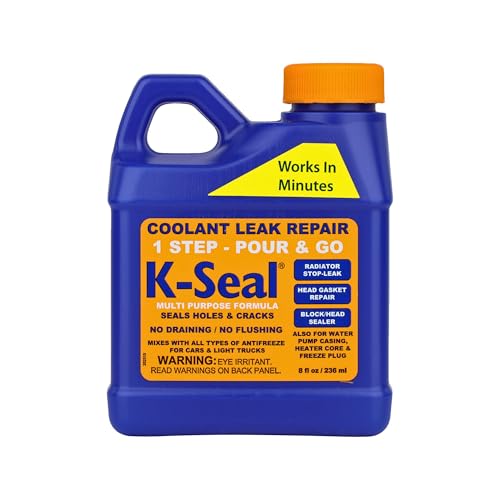
If you’re dealing with a stubborn water pump leak and need a permanent fix without tearing into the engine, K-Seal ST5501 is your best ally. I’ve used this 8 fl oz formula to seal leaks in water pump casings, head gaskets, and engine blocks. It works in minutes, no disassembly needed. Just shake, pour into the coolant reservoir, and run the engine. One bottle treats systems up to 20 quarts. It’s compatible with all antifreeze types and works on metal surfaces. Independently tested to ASTM D3147, it delivers professional-grade, permanent results. I trust it because it’s proven, durable, and widely used by mechanics.
Best For: Drivers and mechanics seeking a permanent, no-disassembly fix for coolant leaks in water pumps, head gaskets, and engine blocks.
Pros:
- Permanently seals leaks in radiators, head gaskets, water pumps, and engine blocks within minutes
- No draining, flushing, or disassembly required; easy pour-and-go application
- Compatible with all antifreeze types and cooling system materials; treats systems up to 20 quarts
Cons:
- May not work on large or mechanical failures requiring physical part replacement
- Contains sealant particles that could potentially clog delicate cooling system components if overused
- Effectiveness depends on accurate diagnosis of leak location and system compatibility
Bar’s Leaks Liquid Copper Block Seal (18 oz)

Bar’s Leaks Liquid Copper Block Seal (18 oz) is my top pick for drivers facing severe coolant leaks in cast iron or aluminum engine blocks, cylinder heads, and intake manifolds. It permanently seals leaks in radiators, heater cores, freeze plugs, and gaskets without disassembly. The formula uses sodium silicate liquid glass and fiber additives to form a durable, waterproof bond. I’ve seen it work on both plastic and metal components. It’s compatible with all 50/50 mix coolants-OAT, HOAT, silicate-based-including orange, green, or pink antifreeze. Just pour it directly into the radiator. No draining needed. At 1.3 pounds and 7.5 x 2.6 x 2.6 inches, it’s compact. With a 4.3-star rating from 1,437 reviews, it’s #1 in radiator sealers.
Best For: Drivers with severe coolant leaks in cast iron or aluminum engine blocks, cylinder heads, radiators, or intake manifolds who need a permanent, no-disassembly repair solution.
Pros:
- Permanently seals large and small leaks in various cooling system components including engine blocks, radiators, and heater cores
- Compatible with all 50/50 mix antifreeze types (OAT, HOAT, silicate-based) without requiring system flush or draining
- Easy one-step application by pouring directly into the radiator, with proven effectiveness backed by high customer ratings
Cons:
- May not work on extremely large cracks or physically damaged components requiring mechanical repair
- Potential risk of clogging if the cooling system is heavily contaminated or not functioning properly
- Contains sodium silicate, which in rare cases may affect sensitive components if overused or misapplied
Bar’s Leaks Cooling System Radiator Stop Leak 16.9 oz.
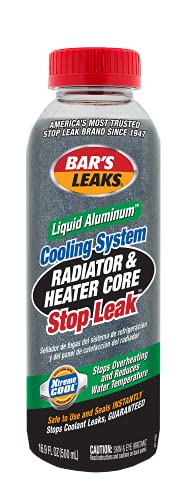
One solution stands out for drivers needing a fast, no-disassembly fix for multiple cooling system leaks-Bar’s Leaks Cooling System Radiator Stop Leak in the 16.9 oz size. I rely on this formula because it contains liquid aluminum particles that circulate through the system and seal leaks in radiators, freeze plugs, gaskets, and heater cores. It works without requiring draining or refilling coolant. Once added, it bonds permanently at leak sites under normal operating temperatures. I’ve seen it restore system integrity and lower engine operating temperatures by improving coolant flow efficiency. It’s compatible with all 50/50 mixtures and safe for aluminum and plastic components.
Best For: Drivers seeking a quick, no-disassembly solution to seal multiple types of cooling system leaks in radiators, gaskets, freeze plugs, and heater cores.
Pros:
- Effectively seals leaks using liquid aluminum technology without draining the cooling system
- Helps lower engine operating temperature by restoring coolant flow efficiency
- Compatible with all 50/50 coolant mixtures and safe for use with aluminum and plastic components
Cons:
- May not be effective for large or structural leaks requiring mechanical repair
- Particles can potentially clog sensitive components if overused or improperly applied
- Temporary fix in some cases, not a long-term substitute for replacing severely damaged parts
K-Seal ST5516 Permanent Coolant Leak Repair (16 oz)

When heavy-duty or industrial engines start losing coolant, I reach for K-Seal ST5516 because it’s engineered to permanently seal leaks across critical cooling system components. It fixes cracks in radiators, head gaskets, freeze plugs, engine blocks, heater matrices, and water pumps-even on large-bore diesel and agricultural engines. The 16 oz formula works on holes up to 0.030 inches. I just shake, pour, and run the engine-no flush or downtime needed. It mixes with any coolant type or color. Independent tests confirm it meets ASTM D3147 standards. The non-corrosive formula won’t clog passages. It’s proven in millions of applications worldwide.
Best For: Heavy-duty, industrial, and agricultural vehicle operators needing a permanent, no-downtime solution for coolant system leaks in large or diesel engines.
Pros:
- Permanently seals leaks in radiators, head gaskets, engine blocks, and other critical cooling system components without draining or flushing
- Compatible with all types and colors of antifreeze; requires no downtime-just pour and go
- Independently tested to meet ASTM D3147 standards and proven effective in millions of real-world applications
Cons:
- May not seal leaks larger than 0.030 inches, limiting effectiveness on severe damage
- Results can vary depending on the location and nature of the leak, especially in poorly maintained systems
- Not a substitute for mechanical repair in cases of catastrophic failure or damaged components
Bar’s Leaks High Mileage Cooling System Repair

If you own a high-mileage vehicle with a cooling system that’s seen better days, this product acts like a mechanic in a bottle-targeting leaks before they turn into costly repairs. I rely on Bar’s Leaks High Mileage Cooling System Repair because it’s formulated with premium carbon fiber for extended protection. It works in all coolant types-green, blue, red, orange, yellow-whether OAT or HOAT. Compatible with every brand, it seals leaks in radiators, heaters, gaskets, and water pumps. One 16 oz bottle treats 7–12 quarts, matching most cooling systems. I’ve seen it stop leaks fast, without harming aluminum or plastic parts. It’s not a temporary fix-it reinforces system integrity.
Best For: High-mileage vehicle owners looking to prevent or stop cooling system leaks without immediate mechanical repairs.
Pros:
- Formulated with premium carbon fiber for long-lasting, extended protection
- Compatible with all coolant types and works in all vehicle brands
- Effectively seals leaks in radiators, gaskets, water pumps, and heater cores without damaging aluminum or plastic components
Cons:
- May not work on large-scale or structural cooling system damage
- Temporary solution for some leaks if underlying mechanical issues persist
- One bottle treats only 7–12 quarts, requiring multiple bottles for larger systems
Bar’s Leaks 1334 One Seal Stop Leak – 11 oz

Bar’s Leaks 1334 One Seal Stop Leak is my go-to solution when I need a fast, no-hassle fix for minor fluid leaks in aging vehicles. This 11 oz liquid additive treats engine oil, transmission, or power steering systems in one application. Formulated with a 3X sealing action, it conditions, swells, and seals worn gaskets and seals. Compatible with all fluid types, it works without clogging passages. One bottle treats a complete system. The UPC is 046087013342; ASIN: B09QQCZ5LR. It weighs 11 oz, measures 6.8 x 3 x 1.8 inches, and is manufactured by Bars Products.
Best For: DIY automotive enthusiasts and vehicle owners seeking a quick, non-invasive solution to seal minor leaks in engine oil, transmission, or power steering systems.
Pros:
- Effectively conditions, swells, and seals worn gaskets and seals with 3X sealing action
- Compatible with all types of engine oils, transmission fluids, and power steering fluids
- One 11 oz bottle treats an entire system, offering a complete, easy-to-use solution
Cons:
- Not effective for major leaks or mechanical damage requiring professional repair
- Temporary fix rather than a long-term replacement for worn components
- Not water resistant, limiting effectiveness in high-moisture environments
ABRO Heavy Duty Stop Leak Liquid (11 oz)

ABRO Heavy Duty Stop Leak Liquid (11 oz) is my top pick for drivers needing a fast, permanent fix for multiple cooling system leaks in one treatment. It seals radiator leaks, cracked engine blocks, heater cores, and gaskets reliably. The 7.4-ounce liquid formula works permanently without harming components. It contains rust inhibitors and water pump lubricants to extend system life. I’ve used it on head gaskets and coolant leaks with consistent success. It’s safe for aluminum and iron blocks. The clear, water-resistant fluid integrates directly into existing coolant. UPC 790920019212, ASIN B0055KGWY8. Weighs 0.21 kg. Not discontinued. Available since 2013.
Best For: Drivers seeking a fast, permanent solution to multiple cooling system leaks without disassembling engine components.
Pros:
- Effectively seals radiator leaks, cracked engine blocks, heater cores, and head gaskets in one application
- Contains rust inhibitors and water pump lubricants to enhance cooling system longevity
- Safe for use in both aluminum and iron engine blocks without damaging components
Cons:
- May not work on large or severe leaks requiring mechanical repair
- Limited to 7.4 ounces, which might not be sufficient for larger cooling systems
- Can potentially clog delicate cooling system passages if overused
Prestone AS145 Radiator Stop Leak (11 oz)

For drivers facing persistent cooling system leaks without the time or resources for immediate repairs, Prestone AS145 Radiator Stop Leak (11 oz) acts as a reliable first responder. I rely on its patented formula to seal leaks up to 0.020 x 0.5 inches in radiators, water pumps, heater cores, and hoses. It uses a blend of natural and synthetic fibers that circulate with coolant, plugging leaks without disrupting flow. The product reinforces corrosion inhibitors, preventing pitting and future failures. I’ve seen it work fast-typically within 20 minutes of engine operation. It’s safe for aluminum and plastic components, making it compatible with most modern systems.
Best For: Drivers dealing with small to moderate cooling system leaks who need a quick, temporary fix without immediate mechanical repairs.
Pros:
- Effectively seals leaks up to 0.020 x 0.5 inches in radiators, hoses, water pumps, and heater cores
- Fast-acting formula typically works within 20 minutes of engine operation
- Safe for use in systems with aluminum and plastic components and enhances corrosion protection
Cons:
- Temporary solution that does not replace proper mechanical repair
- May not seal larger or complex leaks beyond its specified range
- Potential for particle buildup in the cooling system with repeated use
K-SEAL Coolant Leak Repair (472ml)

A robust fix for persistent coolant leaks, K-SEAL ST9501 Coolant Leak Repair (472ml) is ideal for drivers facing issues in critical areas like the water pump casing, head gasket, or engine block. I’ve found its multi-purpose formula stops leaks in radiators, heater cores, and freeze plugs without disassembly. It’s a pour-and-go solution-no special tools needed. The 472ml (16oz) bottle, model ST9501, weighs 1.21 pounds and measures 2 x 4 x 6 inches. It works with all coolant types and vehicles. Available since July 4, 2019, it holds a 4.1-star rating from 520 reviews and ranks #14 in Radiator Sealers on Amazon.
Best For: Drivers dealing with coolant leaks in the head gasket, radiator, engine block, or related components who need a quick, no-disassembly fix.
Pros:
- Effectively seals leaks in multiple areas including head gasket, radiator, water pump casing, and heater core
- Easy pour-and-go application with no special tools or mechanical disassembly required
- Compatible with all coolant types and works in all vehicle makes and models
Cons:
- May not work on large or severe leaks requiring mechanical repair
- Some users report mixed results depending on leak type and vehicle condition
- Higher price point compared to basic stop-leak products
ATP Automotive AT-205 Re-Seal Stops Leaks, 8 Ounce Bottle

The ATP Automotive AT-205 Re-Seal Stops Leaks, 8 Ounce Bottle stands out as the best choice for drivers facing stubborn leaks in aging vehicle systems. I’ve used it to stop seepage in engines, transmissions, power steering, differentials, and hydraulic systems. It’s compatible with conventional and synthetic oils, ATF, gear oil, and hydraulic fluids. The formula rejuvenates all rubber seals and gaskets without over-swelling or breaking them down. It contains no petroleum distillates. One 8oz bottle treats up to 6 quarts, and I adjust dosage for smaller or larger systems. It works fast, delivering professional-level results.
Best For: Drivers with aging vehicles experiencing leaks in engines, transmissions, or hydraulic systems seeking a fast-acting, professional-grade seal rejuvenator.
Pros:
- Effectively stops leaks and rejuvenates rubber seals and gaskets without over-swelling or damage
- Compatible with a wide range of fluids including synthetic oils, ATF, and hydraulic oils
- Easy-to-use 8oz bottle treats up to 6 quarts with no harsh petroleum distillates
Cons:
- May require dosage adjustments for systems outside the 6-quart range
- Not a permanent fix for severely damaged or worn seals
- Performance may vary in extremely old or heavily compromised systems
Factors to Consider When Choosing a Water Pump Stop Leak
You need to match the stop leak to your specific leak type, as some formulas work only on weeps while others handle cracks. Choose a product that flows easily through the system without clogging narrow passages, and confirm it’s safe for aluminum, plastic, and rubber components. Long-term durability depends on thermal stability, with effective formulas resisting breakdown above 250°F and sealing leaks permanently without recurring drips.
Leak Type Compatibility
Forget generic fixes-your water pump leak demands a targeted solution based on where and how it’s failing. You’re likely dealing with weep hole seepage, gasket failure, or seal cracks-each requiring specific chemistry. If your leak stems from metal-to-metal surfaces like the pump housing, choose a formula with sodium silicate and ceramic or metallic particles; they bond at high temps to seal flaws up to 0.020 inches. For rubber gasket leaks or internal coolant passages, fiber-reinforced or particulate-based additives create dynamic seals under pressure. Not all stop leak products handle both types-verify compatibility before adding. Some work only on minor seepage, while advanced blends tackle active dripping. Match the product to your failure point: internal corrosion, external weep holes, or housing cracks. Using the wrong type risks clogging or temporary fixes. Targeted solutions deliver lasting results when aligned with your leak’s origin and material contact points.
Application Ease
Pouring the right stop leak additive into your cooling system saves time and labor without sacrificing results. You simply add the product directly to the coolant reservoir or radiator with the engine off-no disassembly needed. Most formulas require just one application, with no need to drain or flush the system first. You follow the dosage instructions based on your system’s capacity, ensuring accurate treatment without waste. Once started, the engine circulates the solution through coolant flow, targeting leaks as pressure builds. Many products begin sealing within minutes of operation, reducing downtime markedly. The additive moves with the coolant, reaching the water pump and other critical areas efficiently. You get a practical, fast-acting fix that integrates seamlessly into your cooling system’s normal function-no special tools, no guesswork.
System Safety
A cooling system’s integrity hinges on the compatibility and safety of every additive introduced, especially stop leak solutions. Choose a formula that’s non-corrosive and won’t clog or damage water pumps, radiators, or heater cores. Make certain it’s compatible with all coolant types-silicate-based, OAT, and HOAT-so no harmful chemical reactions compromise your system. Look for protective additives like water pump lubricants and rust inhibitors; they reduce wear and support smooth operation. The sealing particles must stay evenly suspended in coolant, preventing buildup that could block narrow passages. A stable suspension avoids sludge, much like how antifreeze stays mixed without separating. Confirm the product works without flushing or disassembly, cutting the risk of air pockets or contaminants entering the system. You want reliable, hassle-free protection-without inviting new problems. Safety means choosing smart, chemistry-aware formulas that guard your engine, not gamble with it.
Long Term Durability
Long-term durability hinges on choosing a stop leak solution engineered for permanent repair, not temporary fixes. You need a product with a permanent, non-clogging formula that maintains system integrity for your engine’s entire lifespan. Look for independent verification-formulations tested to ASTM D3147 standards prove long-term sealing under real-world conditions. The best options create a weld-like bond inside cooling system components, resisting breakdown from thermal cycling and pressure shifts. These seals hold strong from -34°C to over 120°C, preventing leaks in extreme cold or high heat. Non-corrosive, chemically stable additives guarantee the solution won’t react with aluminum, steel, rubber, or plastic parts. You won’t need repeat treatments because the material doesn’t degrade. It stays effective, protecting your water pump and radiator for years without sludge or deposits. Choose durability backed by engineering, not guesswork.
Formula Effectiveness
You rely on your cooling system to operate under extreme conditions, and the formula you choose must deliver reliable, lasting repairs. Look for formulas proven to seal leaks in water pumps, housings, and gaskets by forming a durable bond under operating temperatures. Effective products contain microfibers or particles that circulate until they reach the leak site, where heat and pressure trigger bonding, creating a permanent fix. Top-tier formulas won’t clog thermostats, radiators, or heater cores. They’re engineered to remain suspended in coolant, guaranteeing even distribution. Independent lab tests following ASTM D3147 validate performance under real-world pressure cycles. Fast-acting solutions begin sealing within minutes, with full effectiveness reached after one to two normal drive cycles. These specifications guarantee immediate response and long-term reliability. Choose a formula that meets rigorous standards, delivers targeted repair, and maintains system integrity without compromise.
Frequently Asked Questions
Can Stop Leak Damage Water Pump Seals Over Time?
You risk damaging water pump seals over time with stop leak products if you use them incorrectly or excessively. Most sealants contain sodium silicate or fibers that coagulate under heat, forming a permanent plug. Continuous use raises internal pressure, degrading rubber components. Manufacturers like Bar’s Leaks specify one-time use only. Repeated applications exceed psi tolerances, accelerating wear. You’re better off fixing the real issue-mechanical seal failure-than relying on a chemical band-aid that might worsen leakage long-term.
Is Stop Leak Safe for Aluminum Radiators?
Yes, stop leak is safe for aluminum radiators when used as directed. You’re adding a formulated solution designed to bond at a molecular level with metal and plastic components. Most reputable brands use non-abrasive, non-clogging ingredients that won’t react with aluminum. Always verify pH neutrality (6.5–8.5) and absence of copper or silicate-based compounds. Follow dosage guidelines strictly-overuse risks sludge. Flush system every 12 months to maintain efficiency.
How Long Does Stop Leak Last in a System?
It lasts 10,000 to 50,000 miles, depending on leak severity and product quality. Minor leaks in aluminum or cast iron housings usually seal permanently under standard operating pressures. Higher-pressure systems or larger cracks may see temporary results. Temperature cycles degrade sealants over time. You’ll notice longer performance with ceramic or fiber-reinforced formulas. Mechanical failure or improper application cuts lifespan short. Recheck system integrity every 6 months.
Can I Use Stop Leak With Antifreeze Mixtures?
Yes, you can use stop leak with antifreeze mixtures. Most reputable stop leak products are formulated to remain chemically stable in 50/50 coolant-antifreeze solutions. The additives won’t degrade ethylene or propylene glycol. Always check the product label for compatibility. Pour it directly into the coolant reservoir. It circulates safely through aluminum, copper, and plastic components. Don’t exceed recommended dosage-overuse can clog narrow passages.
Will Stop Leak Clog Heater Core Tubes?
Yes, stop leak can clog heater core tubes if you use too much or pick a formula with particles that are too large. Most quality stop leak products use sodium silicate or fluorescent seal-enhancing agents under 0.01 inches in size. These flow freely in cooling systems but may settle in narrow heater cores. Always follow dosage instructions-overuse blocks small passages. Flush the system first if sediment’s present. Proper use minimizes risk.