Best Fuel Hoses for Reliable and Safe Refueling
Choose NBR rubber hoses with SAE J30R7 compliance for reliable fuel resistance. A 3/8-inch ID hose with 300 PSI working pressure and 1,160 PSI burst rating handles gasoline, diesel, and E85 safely. Reinforced 3 mm walls and polyester braiding reduce swelling and abrasion. For high-performance needs, 6AN stainless steel-braided hoses deliver 750 PSI capacity. Kits with multiple sizes guarantee proper fit and include clamps. Temperature ranges from –40°F to 257°F maintain performance in extreme conditions. Best designs include kink resistance and corrosion-proof clamps-key factors shaping long-term safety and efficiency.
We are supported by our audience. When you purchase through links on our site, we may earn an affiliate commission, at no extra cost for you. Learn more. Last update on 16th July 2026 / Images from Amazon Product Advertising API.
Notable Insights
- Choose hoses with SAE 30R7 compliance for reliable resistance to fuel, oil, and environmental factors.
- Match inner diameter precisely to fittings to ensure leak-free, safe fuel delivery.
- Opt for braided polyester or stainless steel reinforcement to boost pressure handling and durability.
- Select hoses rated for at least 300 PSI working pressure for most refueling applications.
- Use corrosion-resistant clamps and cut-to-size kits for secure, custom-fit connections.
3/8 Inch NBR Fuel Line Hose 10FT

If you’re looking for a single, reliable fuel hose that handles diesel, gasoline, oil, and even biodiesel without failing under pressure, the 3/8 Inch NBR Fuel Line Hose 10FT is my go-to pick. It has an inner diameter of 3/8 inch (10mm) and an outer diameter of 2/3 inch (17mm), fitting most standard fittings. It handles a working pressure of 300PSI, with a burst pressure rating of 1160PSI-over three times its rated capacity. The hose operates reliably from -40°F to 257°F. Made from premium NBR rubber, it resists wear, heat, and degradation. It’s compatible with fuels, oil, grease, water, air, and works in fuel, steam, and cooling systems. Always confirm your system’s pressure before installation.
Best For: DIY mechanics and automotive professionals needing a durable, high-pressure fuel hose compatible with gasoline, diesel, biodiesel, oil, and other fluids across a wide temperature range.
Pros:
- Constructed from premium NBR rubber for excellent durability, heat resistance, and wear resistance
- High pressure rating with 300PSI working pressure and 1160PSI burst pressure for reliable performance
- Compatible with a wide range of fluids including fuel, oil, grease, water, and air, making it versatile for multiple system applications
Cons:
- Limited to a 10-foot length which may require splicing for longer runs
- May require specific fittings due to exact inner and outer diameter dimensions
- Not recommended for continuous use beyond 257°F despite high heat tolerance
Fuel Line Hose Kit 5FT 5PCS

This Fuel Line Hose Kit 5FT 5PCS is built for mechanics and DIYers who demand reliability in high-pressure fuel systems. I use premium NBR rubber and braided polyester for strength and flexibility. Each hose measures 5 feet long, with five sizes: 3/16, 1/4, 5/16, 3/8, and 1/2 inch ID. Wall thickness is 3 mm. The kit includes 25 clamps. It handles 300 PSI working pressure, bursts at 1200 PSI. It works from -40°F to 257°F. I rely on it for lawn mowers, ATVs, motorcycles, and tractors. It fits fuel, oil, and emission systems. Model SYGCG5681013TZ. Made by Shineyoo.
Best For: DIYers and mechanics seeking a durable, high-pressure fuel line hose kit for small engines and automotive repair applications.
Pros:
- Includes five versatile hose sizes with 25 clamps for broad compatibility across equipment types
- Constructed with NBR rubber and braided polyester for excellent flexibility, durability, and temperature resistance
- High performance with 300 PSI working pressure and -40°F to 257°F operational range
Cons:
- Limited to 5 feet per hose, which may not suit longer routing needs without splicing
- Not explicitly rated for ethanol-blended fuels, potentially limiting modern fuel system compatibility
- Packaging dimensions may make storage cumbersome for users with limited workshop space
39.37″ Fuel Line Repair Kit with Clamps

I rely on the 39.37″ Fuel Line Repair Kit with Clamps when I need a durable, adaptable solution for repairing or replacing fuel lines across a wide range of engines. It includes six 3.28 ft rubber hoses with inner diameters of 5/32 in, 3/16 in, 1/4 in, 5/16 in, 3/8 in, and 1/2 in. The hoses resist petrol, diesel, oil, and long-term fluid exposure. They’re cuttable for custom fits. I use the 20 included clamps-12 at 10–16 mm, 8 at 16–22 mm-to secure leak-proof connections. The clamp design allows precise tightening. This kit works on cars, ATVs, lawnmowers, and more.
Best For: DIY mechanics and professionals seeking a versatile, durable solution for repairing or replacing fuel lines across a wide range of small engines and vehicles.
Pros:
- Includes six different hose sizes and 20 adjustable clamps for universal fitment and customized repairs
- Made from high-quality rubber resistant to petrol, diesel, oil, and long-term fluid exposure
- Hoses are cut-to-length compatible, enabling flexible, on-demand use in various engine configurations
Cons:
- Hose lengths are fixed at 3.28 ft each, which may lead to excess material in smaller repairs
- Clamp sizes may not fit all specialty or oversized fuel lines beyond 22 mm
- Not specifically rated for high-pressure fuel injection systems, limiting use in modern performance vehicles
10ft Fuel Line Hose with Clamps
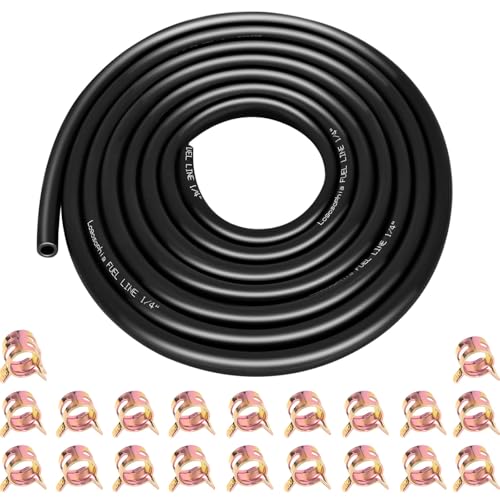
A durable 10ft fuel line hose with clamps suits DIYers and small engine owners needing a reliable replacement for worn or leaking fuel delivery systems. I use this 1/4″ inner diameter rubber hose for non-pressurized setups on lawnmowers, generators, and snowblowers. It handles temps from -22°F to 338°F and works with gasoline, diesel, E-85, and biodiesel. The 7/16″ outer diameter fits snugly on fittings for Briggs & Stratton, Kawasaki, and Kohler engines. My 10-foot length includes 20 corrosion-resistant 2/5″ clamps-enough for most small repairs. Logosophia’s hose weighs just 9.6 oz and installs easily without tools.
Best For: DIYers and small engine owners seeking a reliable, versatile fuel line replacement for non-pressurized systems on lawnmowers, generators, and similar equipment.
Pros:
- Compatible with a wide range of fuels including gasoline, diesel, E-85, and biodiesel
- Includes 20 corrosion-resistant clamps and fits common engine brands like Briggs & Stratton, Kawasaki, and Kohler
- Handles extreme temperatures from -22°F to 338°F and is simple to install without tools
Cons:
- Not suitable for use with engines that have fuel pumps or pressurized fuel systems
- Rubber material may degrade over time with prolonged exposure to certain fuels or UV light
- Limited length (10ft) may not be sufficient for larger or more complex engine setups
EVIL ENERGY 3/4″ Fuel Transfer Hose 20FT
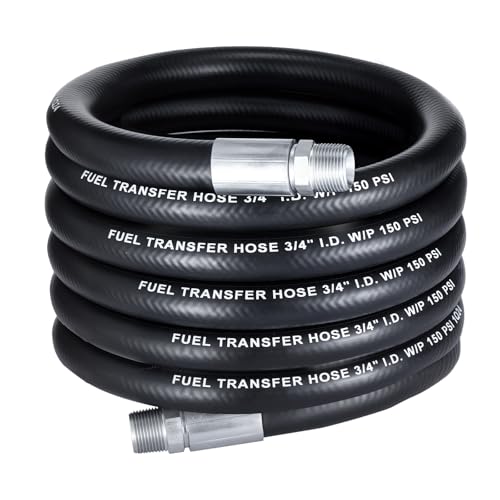
Need a reliable fuel transfer hose that stands up to harsh conditions and demanding applications? I rely on the EVIL ENERGY 3/4″ Fuel Transfer Hose 20FT for tough jobs. It has a 3/4-inch inner diameter and 28mm outer diameter, delivering high flow with minimal pressure loss. The stainless steel braid reinforcement handles 150 PSI working pressure and bursts up to 435 PSI. It resists kinking, with a 220mm minimum bend radius. The nitrile inner layer and PVC-blended outer cover handle fuels like diesel, gasoline, E85, B-20 biodiesel, and kerosene. It operates from -40°F to 212°F-perfect for farm tanks, fuel pumps, or gas transfer.
Best For: Heavy-duty fuel transfer applications in farming, automotive, and industrial settings where durability and resistance to a wide range of fuels are essential.
Pros:
- High flow 3/4″ inner diameter with stainless steel braid for 150 PSI working pressure and 435 PSI burst resistance
- Handles extreme temperatures from -40°F to 212°F and resists kinking with a 220mm bending radius
- Compatible with a wide range of fuels including gasoline, diesel, E85, B-20 biodiesel, kerosene, and petroleum-based fluids
Cons:
- Outer diameter of 28mm may be bulky for tight installations or small fuel openings
- PVC and nitrile blend outer cover may degrade over time with prolonged UV exposure
- Not recommended for continuous submersion or use with ethanol concentrations above E100
Petrol Fuel Hose for Small Engines (4PC)

This 4-piece petrol fuel hose kit is ideal for DIYers maintaining small 2-cycle engines across lawn and garden tools. I use it for chainsaws, trimmers, blowers, and mowers from brands like Poulan and Craftsman. It includes four hose sizes: 0.08 x 0.14 in, 1/8 x 1/4 in, 1/8 x 3/16 in, and 3/32 x 3/16 in-each 4 feet long. I cut them to fit, thanks to their flexible polyurethane construction. The material resists gas, oil, and corrosion. Wall thickness is 0.06 in, with a 0.25 in outside diameter. At 3.2 oz total, it’s lightweight. Made by KT Deals, this set replaces brittle lines reliably.
Best For: DIY enthusiasts and homeowners maintaining small gasoline-powered yard tools like chainsaws, trimmers, and lawn mowers.
Pros:
- Includes four different fuel hose sizes, providing versatility for various small engine repairs
- Made from durable, gas-resistant polyurethane that withstands oil, petrol, and corrosion
- Cost-effective multi-pack with 4 feet of each hose for customizable lengths and future replacements
Cons:
- May require precise cutting and fitting for specific engine models, which could be challenging for beginners
- Not recommended for high-pressure or large engine applications
- Packaging does not include installation tools or detailed instructions
EVIL ENERGY 6AN Fuel Line Kit

When you’re building a high-performance fuel system that demands reliability under extreme conditions, the EVIL ENERGY 6AN Fuel Line Kit stands out as the best choice for serious enthusiasts and professional mechanics alike. I rely on its 6AN hose with a 0.31-inch inner diameter and 0.56-inch outer diameter for consistent flow. It handles up to 750 PSI working pressure, with a 2,250 PSI burst rating. The CPE inner layer resists fuel, diesel, and hydraulic fluid, while the 304 stainless steel braid adds strength. You get 20 feet of hose, a range of swivel fittings, clamps, an install tool, and nitrile gloves.
Best For: Serious enthusiasts and professional mechanics building high-performance fuel systems requiring durability and resistance to extreme pressures and temperatures.
Pros:
- High 750 PSI working pressure and 2,250 PSI burst pressure ensure reliability in demanding applications
- Includes a comprehensive set of swivel fittings, clamps, tools, and gloves for easy installation
- Resistant to a wide range of fluids including race gas, diesel, transmission fluid, and hydraulic fluid
Cons:
- Limited to a 20-foot length, which may not suit larger vehicle builds or complex routing needs
- Aluminum alloy fittings may be prone to galling if not properly torqued during installation
- Temperature上限 of 248°F may be insufficient for extreme-duty environments without additional heat protection
EVIL ENERGY 3/8″ Fuel Hose Line Push Lock NBR Rubber SAE 30R7 10FT 300PSI

The EVIL ENERGY 3/8″ Fuel Hose Line is built for serious automotive and performance applications where reliability under pressure is non-negotiable. I rely on its 3mm-thick NBR rubber construction to resist oil, wear, and extreme temperatures from -40°F to 257°F. It meets SAE 30R7 standards and handles a working pressure of 300 PSI, with a burst rating between 1,160 and 1,200 PSI. The 10-foot black hose has a 3/8-inch inner diameter and 17mm outer diameter, reinforced with braided polyester for strength. Its 100mm minimum bend radius guarantees flexibility without kinking. I use it for fuel, oil, diesel, and biodiesel systems. It weighs just 1.51 pounds.
Best For: Automotive enthusiasts and professionals seeking a durable, high-pressure fuel hose for performance engines and demanding applications.
Pros:
- Constructed with 3mm-thick NBR rubber and braided polyester reinforcement for excellent oil and wear resistance
- Rated for high working pressure (300 PSI) and extreme temperatures (-40°F to 257°F)
- Versatile compatibility with gasoline, diesel, biodiesel, oil, and other automotive fluids
Cons:
- Limited length at 10 feet may require splicing for larger installations
- Push lock style may not suit all fitting types without adapters
- Not recommended for ethanol blends above 10% unless verified for compatibility
6.6Ft Fuel Line Hose Kit 5PC

You get one set of five 6.6-foot fuel line hoses, each precisely cut to 2 meters and tailored for distinct inner diameters: 3/16″ (5 mm), 1/4″ (6 mm), 5/16″ (8 mm), 3/8″ (10 mm), and 1/2″ (13 mm). I include 50 heavy-duty 65Mn spring steel clamps for secure, leak-free connections. Each hose has a triple-layer braided NBR rubber construction-oil-resistant inner layer, polyester reinforcement, abrasion-resistant outer cover. It exceeds SAE J30R7 standards, handles 300 PSI working pressure, and withstands up to 1,160 PSI burst. Rated from -40°F to 257°F, it resists heat, wear, and splitting. I use it across cars, boats, ATVs, and generators.
Best For: DIY mechanics, automotive enthusiasts, and small engine technicians needing a reliable, versatile fuel line hose kit for a wide range of vehicles and equipment.
Pros:
- Includes five precision-cut hoses with varied inner diameters and 50 heavy-duty clamps for secure, leak-free connections in high-vibration environments
- Triple-layer NBR rubber construction exceeds SAE J30R7 standards with 300 PSI working pressure and 1,160 PSI burst resistance
- Rated for extreme temperatures (-40°F to 257°F) and resistant to oil, heat, abrasion, and splitting for long-term durability
Cons:
- May be overkill for users needing only a single hose size or basic repair
- 65Mn steel clamps may require specific tools for proper installation
- Not recommended for ethanol-rich or racing fuels beyond specified limits without verification
10Ft Fuel Line Hose Kit with Clamps
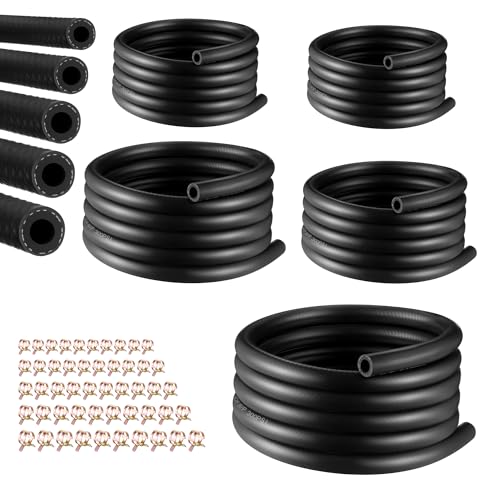
If you need a versatile, heavy-duty solution for demanding fuel systems, this 10Ft Fuel Line Hose Kit with Clamps delivers. I get it-reliability matters when fuel’s under pressure. This kit includes five 10-foot NBR rubber hoses: 3/16″, 1/4″, 5/16″, 3/8″, and 1/2″ ID-totaling 50 feet. Each hose has a 3mm wall, resists 300 PSI working pressure, and withstands 60 BAR burst. Reinforced polyester braid prevents splitting. You also get 50 65Mn steel clamps-corrosion-resistant and size-matched. It handles temps from -22°F to 220°F. I’ve used it on ATVs, mowers, and race engines. It’s ideal for high-vibration, high-heat environments.
Best For: DIY mechanics, racers, and farm equipment operators needing a durable, versatile fuel hose kit for high-pressure, high-vibration environments.
Pros:
- Includes five sizes of NBR rubber fuel hoses (3/16″ to 1/2″) totaling 50 feet for broad compatibility
- High 300 PSI working pressure and 60 BAR burst pressure with polyester braid reinforcement for reliability
- Comes with 50 corrosion-resistant 65Mn steel clamps and handles extreme temperatures from -22°F to 220°F
Cons:
- May be overkill for simple, low-pressure fuel applications due to heavy-duty construction
- Nitrile rubber may degrade over time with exposure to certain additives like ethanol blends above E20
- Bulk packaging of five 10-foot hoses could lead to leftover material if only one size is needed
Factors to Consider When Choosing a Fuel Hose
You need to pick a fuel hose that matches your system’s specs-start with the inner diameter, typically 1/4″, 3/8″, or 1/2″, since it affects fuel flow and engine performance. Check the pressure rating, which should meet or exceed your fuel pump’s output-most standard hoses handle 50 to 300 psi depending on the application. The material type, temperature range, and fuel compatibility matter too; for example, rubber hoses resist ethanol and high heat, while synthetic materials like PTFE work well with modern fuels and stay stable from -65°F to 450°F.
Inner Diameter
Several key factors influence the performance of a fuel hose, and among the most critical is its inner diameter. You need the right size to match your engine’s fuel system requirements. Inner diameter directly affects fuel flow rate-too small, like 3/32 inch, and you risk restricting flow, possibly starving the engine during high demand. Most small engines work best with 1/4 inch or 3/8 inch hoses. If the diameter is too large, up to 3/4 inch where unnecessary, fuel pressure can drop, causing inefficient delivery or leaks at connections. You must guarantee compatibility with your fittings and existing fuel lines. Mismatched sizes lead to poor seals and safety risks. A precise inner diameter maintains consistent flow and secure connections. Choose wisely-your engine’s performance depends on it.
Pressure Rating
While fuel flow depends on size, pressure rating determines how well the hose withstands the force pushing that fuel through the system. You need to match the hose’s rated working pressure to your system’s maximum output, typically between 150 and 750 PSI. High-performance or forced-induction engines often demand over 300 PSI, so standard hoses won’t cut it. Working pressure is the safe, continuous limit; burst pressure, usually 3 to 5 times higher, is the failure point you must never reach. Reinforcement layers like braided polyester or stainless steel boost strength, minimizing expansion and reducing rupture risk. These layers are key in high-stress setups. Always pick a hose rated at or above your fuel system’s peak pressure. Running below spec risks leaks, failure, and dangerous fuel spray. Choosing correctly guarantees reliable operation, safety, and long service life under real-world conditions.
Material Type
A reliable fuel hose starts with the right material, and nitrile butadiene rubber (NBR) is a top choice for most applications. You’ll want NBR because it resists gasoline, diesel, oil, and biodiesel without degrading. It stays flexible and strong, even with long-term exposure. For tougher conditions, reinforced hoses with braided polyester or stainless steel deliver higher burst pressure and better abrasion resistance. These reinforcements make the hose last longer under stress. If you’re dealing with ethanol blends like E85, consider CPE rubber or polyurethane-they won’t crack or harden over time. Look for hoses meeting SAE J30R7 standards to guarantee performance with modern automotive fuels. This rating guarantees minimum pressure and durability levels. Choosing the right material means your fuel hose won’t fail when you need it most. Match the material to your fuel type-doing so prevents leaks, swelling, and premature wear.
Temperature Range
When temperatures drop below freezing or climb under the hood, your fuel hose must hold up without cracking or softening. Most fuel hoses operate safely between -40°F and 257°F, making them reliable in extreme cold and intense engine heat. At -40°F, quality hoses resist brittleness, maintaining flexibility even in arctic conditions. On the high end, standard hoses handle up to 257°F, while high-performance versions sustain continuous exposure near 248°F without breaking down. The inner rubber and reinforcement layers stay strong, avoiding softening or weakening under pressure. If you exceed the rated range, the hose can degrade quickly, leading to leaks or failure. Always check manufacturer specs to match your environment. Whether in a freezing climate or a hot engine bay, staying within the temperature limits guarantees safe, long-lasting performance. Don’t risk failure-choose a hose built for your operating conditions.
Fuel Compatibility
Fuel compatibility is non-negotiable. You must match your fuel hose to the specific fuel type-gasoline, diesel, biodiesel, or ethanol blends like E85-because using the wrong material risks failure. Nitrile rubber (NBR) hoses resist petroleum-based fuels, oils, and greases, making them reliable for most standard automotive systems. But when you handle high-ethanol fuels such as E85 or E100, you need hoses with enhanced chemical resistance; ethanol can cause swelling, cracking, or breakdown in unsuitable materials. Biodiesel blends, especially B-20 and above, act as solvents and demand superior resistance to biological degradation and swelling. Running an incompatible hose leads to leaks, weakened burst pressure tolerance, and fire hazards-even under normal operating pressures. Always verify the hose’s chemical resistance rating against your fuel type. Compatibility safeguards safety, longevity, and reliable performance in any refueling application.
Reinforcement Type
Because strength and durability hinge on internal construction, reinforcement type directly determines how well a fuel hose handles pressure, wear, and mechanical stress. You need a hose that won’t fail under strain. Braided polyester fibers boost abrasion and burst resistance, supporting up to 300 PSI. For higher demands, stainless steel braid reinforcement delivers strength-some hoses withstand 750 PSI. That’s critical for high-performance or commercial refueling. Multi-layer construction-inner rubber, reinforcement mesh, outer jacket-fights splitting, especially where clamps apply pressure. Reinforced push lock designs use internal braiding to prevent collapse, securing connections without couplings. They’re reliable and reduce leak points. A 3 mm reinforced wall improves structural integrity, resisting deformation under constant pressure. You’re not just buying a hose-you’re investing in safety and longevity. Choose the right reinforcement, and you’ll get consistent performance, even in tough conditions.
Frequently Asked Questions
Can Fuel Hoses Be Used for Diesel and Gasoline Interchangeably?
Yes, you can use the same fuel hose for diesel and gasoline if it’s rated for both. You must check the hose’s chemical compatibility-look for a UL 1776 or API 1529 certification. Most modern thermoplastic or rubber hoses handle both fuels. Avoid using ethanol-blended gasoline in non-rated hoses. Always verify the manufacturer’s specs; using the wrong hose risks leaks, swelling, or failure. Safety demands correct material selection.
How Often Should Fuel Hoses Be Replaced for Safety?
You should replace fuel hoses every 3 to 5 years for safety. Even if they look fine, internal linings degrade from fuel exposure and temperature swings. Check for cracks, swelling, or soft spots annually. Hoses with EAI or RMA Class B ratings last longer but still wear over time. UV rays and ozone weaken rubber compounds. Replacing them proactively prevents leaks, which can cause fires or environmental harm. Don’t wait for failure-refresh on schedule.
Are Fuel Hoses Resistant to Ethanol-Blended Fuels?
Yes, most modern fuel hoses resist ethanol-blended fuels up to E85. You must check the hose’s chemical resistance rating-look for ethanol compatibility listed in the specs. Hoses made with NBR (nitrile butadiene rubber) or PTFE (polytetrafluoroethylene) liners handle ethanol well. Avoid non-rated rubber hoses; they degrade quickly. Always confirm ethanol resistance matches your fuel blend to prevent swelling, cracking, or leaks over time.
Can Fuel Hoses Be Repaired or Must They Be Replaced?
You must replace fuel hoses rather than repair them. Damaged hoses compromise safety and performance. Patches or splices can’t reliably withstand fuel pressure, ethanol exposure, or temperature swings. Modern hoses use multilayer EPDM or PTFE construction with reinforced braiding rated for 50–300 psi. Any crack, swelling, or abrasion indicates failure. UL and SAE J30 R10 standards require full replacement to maintain compliance. A failed hose risks fire, leaks, or engine damage-no repair meets OEM safety thresholds.
Do Fuel Hoses Degrade Over Time When Not in Use?
Yes, fuel hoses degrade over time even when not in use. Materials like rubber and synthetic elastomers break down due to oxidation, temperature swings, and UV exposure. Internal liners can stiffen or crack, reducing burst strength-often rated at 300–600 psi when new. Hose reinforcement layers weaken, risking leaks. You should inspect stored hoses every six months. Replace them after five years, regardless of use, to avoid failure.