Top-Rated Gas Leak Detectors That Keep Homes Safe
You need fast, reliable protection against gas leaks, and top-rated detectors deliver. Models like the PT520A respond in just 0.5 seconds and detect gases down to 50 ppm using sensitive semiconductor or catalytic sensors. Dual-sensor units such as the NICGOL 4-in-1 detect both CO (0–2000 PPM) and combustible gases (0–10% LEL) with electrochemical and catalytic technology. Portable options run on AAA batteries, while plug-in versions use AC power for continuous monitoring. Built to last 3–5 years, these detectors feature LED displays, audible alarms (up to 85+ dB), and operate in temperatures from 14°F to 131°F. Advanced models include gooseneck probes for hard-to-reach areas and auto-calibration for long-term accuracy. A few even show real-time trend graphs on full-color LCDs. Each balances speed, durability, and precision for home safety. The best picks combine fast response with multi-gas detection and minimal maintenance-discover which models stand out under real-world conditions.
We are supported by our audience. When you purchase through links on our site, we may earn an affiliate commission, at no extra cost for you. Learn more. Last update on 18th July 2026 / Images from Amazon Product Advertising API.
Notable Insights
- Detects multiple hazardous gases like natural gas, propane, and carbon monoxide with high sensitivity down to 50 ppm.
- Features loud 85+ dB alarms, flashing lights, and color-changing displays for immediate hazard notification.
- Uses durable electrochemical and catalytic sensors with 3–5 year lifespans and automatic calibration for accuracy.
- Offers portable and plug-in models with long battery life or continuous AC power for flexible home use.
- Designed for indoor safety in kitchens, basements, and RVs with fast response times under 3 seconds.
PT199 Natural Gas Leak Detector Portable
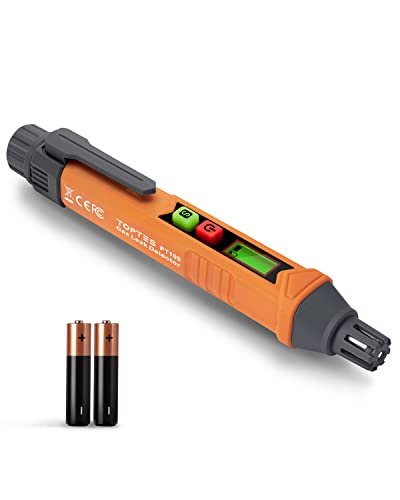
If you’re a homeowner, RV traveler, or DIYer with gas-powered appliances, the PT199 Natural Gas Leak Detector Portable is your best first line of defense against undetected gas leaks. It detects natural gas, methane, propane, butane, and LPG. I rely on it because it identifies combustible gases between 50–1,000 ppm, using methane as a reference. Its visual and audio alarms trigger within 0.5 seconds. Alarm intensity rises with gas concentration. The LCD turns red at dangerous levels. It runs on two AAA batteries, warms up in 30 seconds, and shuts off automatically after five minutes.
Best For: Homeowners, RV travelers, and DIYers with gas-powered appliances who need a fast, portable way to detect dangerous combustible gas leaks.
Pros:
- Detects a wide range of combustible gases including natural gas, methane, propane, butane, and LPG
- Fast 0.5-second response with visual, audio, and color-changing LCD alarms for immediate hazard awareness
- Compact, pocket-sized design with auto power-off and low-battery alert for convenience and energy efficiency
Cons:
- Short detection range of only 1–5 cm, requiring close proximity to potential leak sources
- Limited to 5-minute continuous use without detection, which may interrupt extended inspections
- Uses basic AAA batteries without rechargeable option, potentially increasing long-term operating costs
Klein Tools Gas Leak Detector (ET120)

I rely on the Klein Tools ET120 when I need a dependable, precision gas leak detector built for professionals who demand accuracy and durability. It detects methane, propane, and other combustible gases from 50 to 10,000 ppm. Dual sensitivity ranges cover low (1,000–10,000 ppm) and high (50–1,000 ppm) concentrations. The 18-inch flexible gooseneck reaches tight spaces, then clips flat for storage. Auto zero-point calibration at startup guarantees accuracy. Five red LEDs and an 85dB alarm deliver instant alerts. It runs on 4 AAA batteries-included-and powers down after 10 minutes of inactivity. Weighing 13 ounces, its over-molded body withstands tough job sites.
Best For: Professional technicians and contractors who need a reliable, durable, and accurate combustible gas leak detector for use in demanding environments.
Pros:
- Detects multiple combustible gases with dual sensitivity ranges for precise readings from 50 to 10,000 ppm
- Flexible 18-inch gooseneck sensor allows access to tight spaces, and the rugged over-molded design withstands job site conditions
- Auto zero-point calibration and auto power-off enhance accuracy and battery life, with clear visual and audible alarms for fast detection
Cons:
- Limited to detecting combustible gases only, not toxic or non-combustible gases like carbon monoxide
- Requires AAA batteries, which may need frequent replacement in high-use scenarios despite included set
- No data logging or connectivity features for recording or transmitting readings over time
NICGOL 4-in-1 Gas & CO Detector (Black)
The NICGOL 4-in-1 Gas & CO Detector (Black) is a reliable choice for homeowners, RV owners, and facility managers who demand continuous, accurate monitoring of natural gas and carbon monoxide levels. It uses dual sensors to detect CO (0–2000 PPM) and natural gas (0–10% LEL) in real time. Alarms trigger at ≥150 PPM CO or ≥5% LEL gas. A catalytic sensor guarantees stable, long-term performance. The loud 85+ dB alarm and flashing red light warn of danger instantly. Plug-in design works on 110V–220V AC, uses ≤2W power, and needs no batteries. Calibration takes 180 seconds. The LCD shows CO, gas, temperature, and humidity. After 30 minutes, readings stabilize. It operates in 0–99% humidity (±5%) and up to 176°F. Dimensions: 4.7D x 1.92W x 2.05H. ABS housing weighs 2.88 oz. Model KH158 from Shenzhen Kanghua Shengshi Industrial Co., Ltd. removes film before use. Test monthly. Works in homes, kitchens, hotels, RVs. ASIN: B0DY66NW4P. UPCs: 199284152014, 716035736127. Available Feb 22, 2025.
Best For: Homeowners, RV owners, and facility managers seeking a reliable, plug-in gas and carbon monoxide detector with real-time monitoring and dual alarm protection.
Pros:
- Detects both carbon monoxide and natural gas with dual sensors and catalytic technology for accurate, stable performance
- Features a loud 85+ dB alarm and flashing red light for immediate, clear warning in various indoor environments
- Plug-in design with low power consumption (≤2W) requires no batteries and supports wide voltage input (110V–220V AC)
Cons:
- Requires a 3-minute calibration period after plugging in, delaying full functionality
- Temperature and humidity readings need 30 minutes to stabilize, limiting immediate accuracy
- Limited to indoor use and may not be suitable for extremely high-temperature environments near or at 176°F
PT520A Natural Gas Detector with 17-Inch Gooseneck

A gooseneck gas detector like the PT520A is built for pros who need to sniff out leaks in cramped or hidden spaces where rigid probes simply won’t reach. My 17-inch flexible gooseneck bends easily into pipelines, behind appliances, or under floors. I detect methane, propane, natural gas, LPG, and butane from 50–10,000 ppm. I respond in 0.5 seconds with an electrochemical sensor. My LED bar and 75 dB alarm escalate with gas levels. I run on 3 AAA batteries (included) and warm up in 30 seconds. I’m built from durable ABS, measure 11.22 x 2.36 x 5.31 inches, and weigh just 9.2 ounces.
Best For: Professionals and homeowners needing a flexible, portable gas detector to find leaks in tight or hard-to-reach spaces.
Pros:
- 17-inch flexible gooseneck probe allows easy access to confined areas like pipelines and behind appliances
- Fast 0.5-second response time with clear visual (LED bar) and audible (75 dB) alarms for quick leak detection
- Battery-powered with included AAA batteries and short 30-second warm-up time for immediate, portable use
Cons:
- Limited to combustible gases with a minimum detection threshold of 50 ppm, missing very low-level leaks
- No data logging or wireless connectivity for monitoring over time or remote alerts
- ABS plastic housing may be less durable in harsh industrial environments compared to metal-bodied detectors
TopTes PT177 Natural Gas Detector (Orange)

When seconds count in detecting a gas leak, the TopTes PT177 Natural Gas Detector (Orange) delivers fast, reliable performance-making it ideal for RV owners, homeowners, and DIY technicians who need immediate, accurate results. It detects combustible gases like propane, methane, and LPG. The sensor responds within 0.5 to 3 seconds after a 30-second warm-up. A 75 dB alarm and five red LEDs activate, intensifying with gas concentration. It runs on two AAA batteries, with auto power-off after 5 minutes of inactivity. A low-voltage indicator flashes below 2.4 volts. Its pocket-sized body includes a clip and storage bag for portability.
Best For: RV owners, homeowners, and DIY technicians needing a fast, portable solution for detecting combustible gas leaks.
Pros:
- Detects multiple gases including propane, methane, and LPG with rapid response time (0.5 to 3 seconds)
- Clear visual (five red LEDs) and audible (75 dB) alarms that intensify with gas concentration
- Compact, pocket-sized design with clip and storage bag for easy portability and storage
Cons:
- Requires 30-second warm-up in gas-free environment before accurate use
- Auto power-off after 5 minutes may interrupt extended inspections
- 75 dB alarm may not be loud enough for high-noise environments
3-Pack Natural Gas Detector for Home & RV
You’ll want the Hembisen 3-Pack Natural Gas Detector if you need dependable, wide-coverage gas monitoring for both home and RV use. It detects natural gas, propane, methane, butane, LNG, and LPG with a high-sensitivity catalytic combustion sensor. The LCD display shows real-time gas concentrations, helping you spot leaks early. An 85dB alarm sounds when levels become dangerous. I plug it directly into standard outlets-no tools or wiring needed. Each unit powers on automatically, offering continuous protection. I rely on its precise sensor to reduce false alarms. It works in kitchens, hotels, gas stations, and campers. One pack covers multiple rooms or vehicles.
Best For: Homeowners, RV owners, and commercial property managers needing reliable, multi-location combustible gas detection with easy installation and minimal false alarms.
Pros:
- Detects multiple combustible gases including natural gas, propane, methane, butane, LNG, and LPG with high accuracy
- Easy plug-and-play setup with no wiring or tools required, ideal for quick deployment in homes, RVs, and commercial spaces
- Features an 85dB alarm and real-time LCD display for immediate leak detection and responsive action
Cons:
- Requires access to standard electrical outlets, limiting placement in areas without nearby power sources
- Does not detect non-combustible gases such as carbon monoxide or radon
- May need periodic sensor calibration to maintain long-term accuracy and sensitivity
TopTes PT-356 Rechargeable Natural Gas Detector

The TopTes PT-356 Rechargeable Natural Gas Detector suits professionals and homeowners who demand reliable, real-time monitoring of combustible gases. It detects methane, propane, butane, LPG, and other flammable gases from 0–10,000 ppm. I rely on its active sampling fan for fast, accurate readings with ±5% FS accuracy. The full-color screen shows live PPM values and a one-minute trend graph. Its triple alarm includes loud beeping, flashing lights, and vibration. A 2500mAh battery powers up to 7 hours. USB-C charging and a 10-inch gooseneck add practicality.
Best For: Professionals and homeowners needing reliable, real-time detection of combustible gases like methane, propane, and natural gas in residential, industrial, or field environments.
Pros:
- Triple-alarm system (audible, visual, and vibration) ensures high-alert awareness in various environments
- Full-color screen with real-time PPM readings and trend graph enables easy monitoring and data interpretation
- Rechargeable 2500mAh battery with USB-C charging and 10-inch flexible gooseneck enhances portability and usability
Cons:
- Limited operating time of up to 7 hours may require frequent recharging for extended use
- No explicit humidity specifications, which may affect performance in extreme conditions
- Calibration required before each use (25 seconds) could delay immediate deployment
Natural Gas Detector with Digital Display
A natural gas detector with digital display is ideal for homeowners who demand accurate, continuous monitoring of combustible gases like natural gas, propane, LPG, and LNG. I detect gas concentrations starting at 3% LEL, giving early warnings before levels become dangerous. My 85 dB alarm and pulsing red lights activate instantly, with warning intensity scaling as gas concentration increases. I run on 110V–220V AC, use under 2W of power, and install with a simple plug-in setup. My flame-retardant housing suits kitchens, bedrooms, or basements. After a 2–3 minute warm-up, I’m ready to protect your home reliably.
Best For: Homeowners seeking reliable, real-time detection of combustible gases like natural gas, propane, and LPG in residential settings.
Pros:
- Detects multiple combustible gases with 24/7 monitoring and dynamic alarm response
- Easy plug-and-play installation with low power consumption and wide voltage compatibility
- Features an 85 dB alarm and bright red flashing lights for clear, immediate alerts
Cons:
- Requires a 2–3 minute warm-up period before becoming fully operational
- Alarm triggers only at 3% LEL, which may not detect very low-level leaks
- Digital display functionality and gas concentration readings are not detailed in specifications
Kidde Carbon Monoxide Detector with Battery Backup
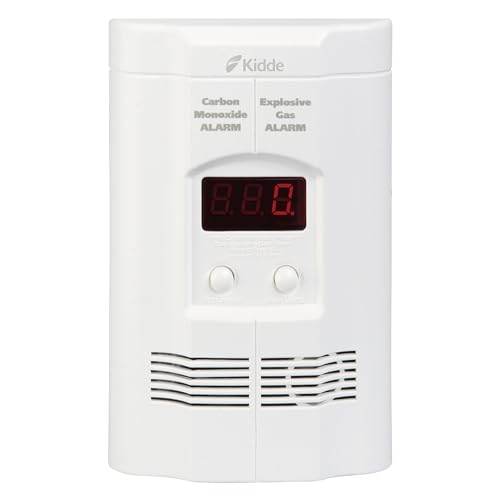
Kidde Carbon Monoxide Detector with Battery Backup stands out for homeowners who demand reliable, multi-gas detection without sacrificing ease of installation. It senses carbon monoxide, propane, natural gas, methane, and explosive gases using electrochemical sensor technology. The digital LED display updates CO levels every 15 seconds or shows GAS when flammable gases are present. An 85-decibel alarm sounds on detection. Plug-in design fits standard 120V outlets, with a 9V battery backup for power outages. Includes extension cord. UL certified to UL 2034 and UL 1484. Model KN-COEG-3. 6-year warranty.
Best For: Homeowners seeking a reliable, easy-to-install multi-gas detector with continuous monitoring and power outage protection.
Pros:
- Detects multiple gases including carbon monoxide, propane, natural gas, and explosive gases using electrochemical sensor technology
- Digital LED display shows real-time CO levels every 15 seconds and features an 85-decibel alarm for clear alerts
- Plug-in design with 9V battery backup and included extension cord allows flexible placement and uninterrupted protection
Cons:
- Limited to indoor use and requires a nearby 120V outlet for operation
- Only one unit per package, which may require purchasing multiple units for whole-home coverage
- Battery backup requires periodic replacement of the 9V battery to maintain functionality during outages
4-in-1 Gas & CO Detector for Home (2-Pack)
If you need thorough protection against multiple gas hazards in your home or mobile living space, this 4-in-1 Gas & CO Detector (2-Pack) delivers reliable, multi-threat detection. It senses natural gas, propane, carbon monoxide (CO), plus temperature and humidity. Dual-sensor tech analyzes your environment fast. It detects CO from 0–2000 PPM and gas at 0–10% LEL. Alarms sound at ≥85dB and flash crimson when CO hits ≥150PPM or gas reaches ≥5%LEL. The color LCD gives live readings. It runs on 110V–220V AC, uses ≤2W in standby. Setup needs a 180-second calibration and 30-minute warm-up.
Best For: Homeowners, RV dwellers, and hotel or cruise travelers seeking reliable, multi-hazard gas and CO detection with real-time monitoring and fast alert response.
Pros:
- Combines detection of natural gas, propane, carbon monoxide, temperature, and humidity in one compact unit for comprehensive safety
- Dual-sensor technology ensures rapid, accurate environmental analysis with visual and audible alarms (≥85dB) for immediate threat response
- Energy-efficient design with wide voltage compatibility (110V–220V AC) and low standby consumption (≤2W) supports long-term, sustainable use
Cons:
- Requires a 180-second calibration and 30-minute warm-up period after installation, which may delay full readiness
- Audible alarm triggers only at ≥150PPM CO, which is higher than some safety standards recommend for early warning
- Crimson flash alerts, while visible, may be less effective in brightly lit environments or for individuals with visual impairments
Factors to Consider When Choosing Gas Leak Detectors
You need a gas leak detector that’s accurate and reliable-look for models with electrochemical or semiconductor sensors, which typically offer detection accuracy within ±5% of the actual gas concentration. Sensor longevity matters too; quality units last 5 to 7 years before needing replacement, especially those with self-diagnostics and low-drift calibration. Your best pick balances power options (hardwired, battery, or dual), loud alarms (85 dB or higher), and simple controls so you can trust it without hassle.
Detection Accuracy
Precision matters when it comes to detecting dangerous gas leaks. You need a detector that identifies threats fast and accurately. Electrochemical and catalytic combustion sensors deliver high precision, reliably sensing specific gas concentrations. Look for models that detect as low as 50 ppm-this sensitivity guarantees early warnings for combustible gases. Response times as quick as 0.5 seconds let you act immediately, reducing exposure and risk. Automatic zero-point calibration at startup maintains accuracy without constant manual checks. This stability means fewer false alarms and trustworthy performance. But keep in mind: accuracy drops in extreme conditions. Operation above 80% humidity or in very high or low temperatures can compromise readings. Always use your detector within the manufacturer’s specified environmental range. A precise reading today means safety tomorrow. Choose a unit built for real-world reliability, not just lab ideals.
Sensor Longevity
A gas detector’s reliability depends heavily on how long its sensor remains effective. Most sensors last 3 to 5 years before sensitivity declines, requiring replacement or recalibration. Electrochemical sensors degrade over time because they consume internal chemicals while detecting gases, limiting their operational life. Catalytic bead sensors also wear down, especially when exposed to high gas levels or contaminants like silicones and sulfides, which poison the sensing element. You should calibrate your device every 6 to 12 months to maintain accuracy and extend sensor life. This regular check guarantees the detector responds correctly to gas leaks. Avoid placing units in extreme temperatures or humidity above 85%, as these conditions accelerate sensor failure. Prolonged exposure to detectable gases also shortens lifespan. Choosing a model with a long-rated sensor life and stable performance under household conditions guarantees years of dependable protection without unexpected degradation.
Power Source Options
Power source determines how long and how reliably a gas leak detector operates. You’ll find models powered by disposable AAA batteries, offering portability and easy setup without access to wall outlets. These let you use the detector anywhere, but require regular replacement. Other units plug into standard AC power between 110V and 220V, delivering continuous operation with no battery changes needed. Some advanced detectors use built-in rechargeable lithium-ion batteries, providing several hours of runtime and reducing long-term waste. Look for devices with auto power-off features-they shut down after 5 to 10 minutes of inactivity to save energy. Most include low battery indicators that trigger when voltage drops near 2.4V, so you’re alerted before performance fails. Choose based on your needs: constant plug-in monitoring or flexible, mobile detection with battery-powered convenience.
Alarm System Effectiveness
How quickly and clearly will you know if gas is present? You need an alarm that responds within 0.5 seconds to guarantee early warning and reduce exposure risk. Look for detectors with an 85 dB or louder audible alert-this volume cuts through household noise effectively. Pair this with a visual indicator, like flashing lights or color-changing displays, for added clarity. Multi-stage alerts escalate as gas levels rise, increasing beeping frequency or light intensity to communicate danger progression. In loud environments or for those with hearing impairments, vibration alerts provide essential backup. Choose models with a mute or hush function to silence false alarms temporarily-without turning off detection. These features work together to guarantee reliable, immediate notification, making your detector not just reactive, but intelligently responsive to real threats.
Ease Of Use
Why struggle with confusing interfaces when seconds count? You need a gas leak detector that’s fast and simple to operate. Pick models with clear digital displays showing real-time gas concentrations in parts per million-no guessing required. Choose units with intuitive controls and straightforward menu navigation, so you can respond quickly during emergencies. Opt for automatic calibration; it eliminates manual adjustments and cuts user error. Devices with visual, audible, and vibration alerts guarantee you notice warnings, whether you’re nearby or across the room. That triple-alert system works like a smoke alarm with extra senses. Prioritize plug-and-play models. They install in seconds, need no wiring, and start monitoring right away. These features mean you spend less time setting up and more time staying safe. Simplicity isn’t optional-it’s essential when every second matters.
Portability And Design
A compact, well-designed gas leak detector guarantees you can respond quickly and efficiently in any environment. Most pocket-sized models weigh under 10 ounces and measure less than 6 inches long, fitting easily in a tool bag or jacket pocket. You’ll appreciate the flexibility of gooseneck probes that extend 10 to 18 inches, letting you inspect behind appliances or inside cramped spaces without disassembly. An ergonomic, over-molded grip guarantees a secure hold, even with gloves on, and resists slipping in oily or damp conditions. These detectors run on common AAA batteries, and auto power-off shuts them down after 5 to 10 minutes of inactivity to save power. Some come with protective cases or pouches that shield the sensor and screen from impacts and dust during transport, preserving accuracy and extending device life.
Calibration Requirements
While quick deployment is critical in gas detection, you can’t skip proper calibration to guarantee accurate readings. Many detectors require a 25 to 180-second calibration at startup to stabilize sensors. Some models feature automatic zero-point calibration, adjusting baseline readings without user input. This guarantees precision, especially after power cycles. Warm-up times in clean air-typically 30 seconds to 3 minutes-let sensor elements reach ideal operating conditions. Skipping this phase risks false alarms or missed leaks. Continuous monitoring systems often include periodic self-calibration to correct sensor drift over time. These automated routines maintain long-term reliability. Environmental stabilization, though briefly needed, isn’t part of calibration but supports overall sensor accuracy. Choose devices with clear calibration indicators and predictable timing. Reliable performance hinges on these built-in routines, reducing guesswork and boosting trust when seconds count.
Environmental Compatibility
When selecting a gas leak detector, ensuring it operates reliably under real-world environmental conditions is essential. You need a device that functions in humidity up to 85% to prevent sensor drift and avoid condensation damage. Choose models rated for temperatures between 14°F and 131°F so they remain accurate in freezing basements or hot industrial spaces. Opt for units compatible with both 110V and 220V AC power, making them adaptable worldwide. Look for flame-retardant housing-this boosts safety in high-risk areas by resisting ignition. If you’re using a plug-in model, confirm it draws no more than 2W, allowing 24/7 monitoring without spiking energy costs. These specs aren’t just extras-they’re critical for consistent performance. A detector that can’t handle environmental stress fails when you need it most. Build resilience into your safety plan by prioritizing rugged, adaptable hardware.
Frequently Asked Questions
How Often Should I Replace My Gas Detector?
You should replace your gas detector every five to seven years. Manufacturers design sensors to remain accurate within this window. After that, sensitivity degrades, increasing false negatives. Check the label-most list a printed expiration or manufacture date. Some models chirp or display warnings at end-of-life. Don’t rely on detectors beyond their rated lifespan. A failing sensor won’t detect leaks, putting you at risk. Replace promptly.
Can Gas Detectors Work During a Power Outage?
Yes, you can rely on gas detectors during a power outage if they have battery backup or run on batteries. Most hardwired units include a 9V or AA backup battery that powers the sensor for up to 10 hours. Standalone battery-operated models work continuously as long as the battery has charge. Some detectors chirp when power is low, so you must check them monthly.
Are Gas Detectors Safe for Use in RVS?
Yes, you can safely use gas detectors in RVs if they’re designed for mobile use. Look for models with low power draw, like the Safe-T-Alert 35-741, which uses under 60 milliamps. Units must detect propane, CO, and combustible gases. Mount them near floors-propane pools low. Choose CSA-certified, RV-specific detectors with battery backup. They operate reliably in voltage fluctuations common in RVs, unlike household units.
Do Gas Detectors Detect Propane and Natural Gas?
Yes, you can rely on most gas detectors to sense both propane and natural gas. These devices use metal oxide semiconductor or electrochemical sensors calibrated to detect flammable gas concentrations. Propane triggers alarms at 10% LEL (lower explosive limit), while natural gas (methane) activates at similar thresholds. Dual-sensor models offer simultaneous detection. Units like the TIF 8800 measure down to 200 ppm, ensuring early warnings. Always verify sensor compatibility before purchase.
Where Is the Best Place to Install a Gas Detector?
Install your gas detector within one to three feet of the floor, as propane and natural gas sink and accumulate there. You place it near potential sources like furnaces, water heaters, or stoves. Avoid dead air spaces, such as corners or behind furniture, where airflow is limited. Make sure it’s at least five feet from humidity sources like bathrooms. Mount it on a solid wall using included hardware, and test it monthly to confirm the sensor and alarm function properly.