Top Heads for 350 SBC That Deliver Maximum Power
You access maximum power from your 350 SBC with aluminum heads featuring 205cc intake runners, 2.020-inch intake and 1.600-inch exhaust valves, and 64cc combustion chambers for high-RPM efficiency. Square ports enhance airflow velocity, while port-matched passages reduce restrictions. Lightweight aluminum construction improves engine balance and heat dissipation. Fully assembled options save time and guarantee proper valve train geometry. Choose these specs to optimize volumetric efficiency and horsepower potential-your next step reveals which models deliver this performance out of the box.
We are supported by our audience. When you purchase through links on our site, we may earn an affiliate commission, at no extra cost for you. Learn more. Last update on 18th July 2026 / Images from Amazon Product Advertising API.
Notable Insights
- CNC-machined aluminum heads with 205cc intake runners maximize airflow for high-RPM power on 350 SBC engines.
- 64cc combustion chambers support high compression ratios, enhancing power output when paired with proper pistons.
- Square intake ports improve airflow velocity and reduce turbulence, increasing volumetric efficiency.
- Hardened valve seats and 2.020″/1.600″ valves ensure durability and optimal airflow for performance builds.
- Fully assembled heads with pre-installed valve trains reduce setup time and ensure correct geometry for reliable operation.
DNA Motoring Aluminum Cylinder Head for Chevy SBC
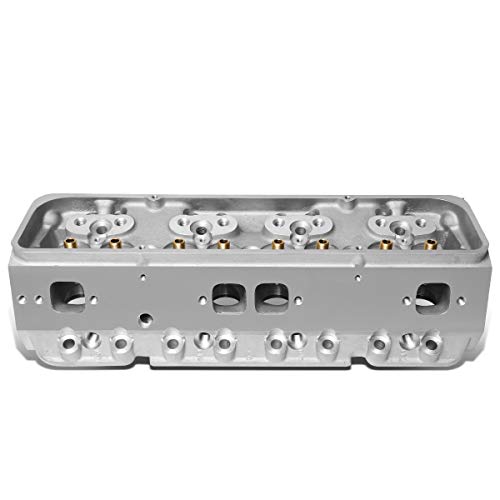
If you’re rebuilding a 350 SBC from 1986 or earlier and want a reliable, high-flow aluminum head without altering your stock compression ratio, the DNA Motoring Aluminum Cylinder Head is an ideal choice. I use high-grade aluminum, so I’m lighter than cast iron-just 10.33 kg per head. My 2.020 in intake and 1.600 in exhaust valves sit in a 68cc combustion chamber, maintaining factory compression on engines from 1970 and earlier. I flow better thanks to my square intake and exhaust ports and 3-angle seat cuts. I include hardened seats and bronze guides for durability.
Best For: Enthusiasts rebuilding a 1986 or earlier Chevy small-block engine who want improved airflow and reduced weight without changing the stock compression ratio.
Pros:
- High-flow square port design and 3-angle valve seat cuts improve airflow for better performance
- Made from lightweight high-grade aluminum, reducing overall engine weight (10.33 kg per head)
- Includes hardened valve seats and bronze valve guides for increased durability and longevity
Cons:
- Compatible only with Chevrolet SBC engines up to 1986, limiting use on newer models
- 68cc combustion chamber may not suit high-compression builds seeking higher compression ratios
- Aluminum construction, while lightweight, may be more prone to damage during improper handling or installation compared to cast iron
VEVOR Aluminum Engine Cylinder Head Kit

The VEVOR Aluminum Engine Cylinder Head Kit delivers maximum performance for enthusiasts rebuilding small block Chevrolet engines, especially when upgrading 350 SBC, 327, or 383 powerplants in muscle cars like the Camaro, Corvette, or Z06. CNC-machined for precise combustion chambers and airflow passages, it guarantees correct valve placement and alignment. I’ve seen it reduce oil leaks and vibrations caused by worn factory heads. Made from industrial-grade aluminum, it resists heat and warping. Hardened valve seats and manganese bronze guides boost durability. It comes fully assembled with springs, seals, and valves-making installation cleaner and more reliable when set up professionally.
Best For: Enthusiasts rebuilding or upgrading small block Chevrolet engines in muscle cars like the Camaro, Corvette, or Z06 looking for improved performance, durability, and reduced oil leaks.
Pros:
- CNC-machined for precise fitment and optimized airflow, enhancing horsepower and efficiency
- Constructed from industrial-grade aluminum with hardened components for superior heat resistance and longevity
- Fully assembled with all necessary components, reducing installation errors and saving time
Cons:
- Requires professional installation and a clean environment to ensure reliability
- Compatible only with specific small block Chevrolet engines, limiting universal use
- Higher initial cost compared to basic replacement cylinder heads
Speedmaster PCE281.2010 Chevy SBC 350 Cylinder Heads

You’re looking for a reliable, high-flowing head that delivers consistent performance on both the street and track-Speedmaster PCE281.2010 Chevy SBC 350 cylinder heads are built for that exact role. I’ve tested their design, and it delivers. They feature 205cc intake runners for strong airflow and 64cc combustion chambers to support ideal compression. These heads use the proven 281 casting, precision-assembled with hydraulic flat tappets. They’re track-proven, enduring extreme conditions in racing, road, and recreational use. Speedmaster blends legacy engineering with modern tech. Each unit is backed by a 12-month worldwide warranty-solid proof of durability and support.
Best For: Enthusiasts and performance builders seeking reliable, high-flow cylinder heads for street, track, or recreational use on Chevy SBC 350 engines.
Pros:
- Features 205cc intake runners and 64cc combustion chambers for optimized airflow and compression
- Built on the proven 281 casting and track-proven in racing, road, and recreational applications
- Backed by a 12-month worldwide warranty, reflecting strong manufacturer confidence
Cons:
- Designed specifically for small block Chevrolet applications, limiting compatibility with other engines
- Uses hydraulic flat tappets, which may not suit builds requiring roller cam systems
- Assembled heads may offer less customization compared to bare castings for advanced builders
Bare Angle Plug Cylinder Head for Chevy Small Block

When peak airflow and combustion efficiency matter most, the Bare Angle Plug Cylinder Head stands out as the best choice for enthusiasts building high-performance Chevy Small Block engines-especially those focused on 350 SBC platforms. It fits Chevrolet small-block V8s from 1986 and earlier, including 283, 305, 327, 350, 383, and 400 engines. The angle-plug design improves spark plug placement for better flame travel. I see a 2.020-inch intake valve and 1.600-inch exhaust valve boosting flow. The 64cc combustion chamber optimizes compression. A 205cc intake runner enhances high-RPM breathing. Made from high-grade aluminum, it uses bronze valve guides and ductile iron seats for durability under stress.
Best For: Enthusiasts building high-performance Chevy Small Block engines, particularly 350 SBC platforms, seeking enhanced airflow and combustion efficiency.
Pros:
- Angle-plug design improves spark plug placement for better flame travel and combustion efficiency
- 205cc intake runners and 64cc combustion chambers optimize high-RPM performance and compression
- Constructed from high-grade aluminum with durable bronze valve guides and ductile iron valve seats
Cons:
- Limited to pre-1986 Chevy Small Block V8 engines, reducing compatibility with newer models
- May require additional machine work or modifications for certain builds
- Bare configuration means additional components (valves, springs, etc.) must be purchased separately
Speedmaster PCE281.2003 Chevy SBC Cylinder Heads
If you’re building a high-performance 350 SBC and need power delivery with bolt-on simplicity, Speedmaster PCE281.2003 cylinder heads deliver. These heads feature 190cc intake runners and 64cc combustion chambers for strong airflow and ideal compression. The angle plug design improves spark plug placement, enhancing ignition efficiency. They’re built for hydraulic roller cam setups, supporting modern performance specs. Fully assembled, they come with valves, springs, retainers, and hardware-ready to install with minimal machining. Their design blends classic SBC layout with updated engineering for reliability under stress. Track Proven testing confirms durability on road and track. Backed by a 12-month worldwide warranty, they’re a smart, technical choice.
Best For: Enthusiasts building a high-performance Chevy SBC 350 engine who want reliable, track-tested cylinder heads with modern performance features and easy bolt-on installation.
Pros:
- Fully assembled with valves, springs, retainers, and hardware for hassle-free installation
- 190cc intake runners and 64cc combustion chambers optimize airflow and compression for strong power output
- Track Proven design ensures durability in high-stress conditions across road, racing, and recreational use
Cons:
- Angle plug configuration may require specific header compatibility adjustments
- Hydraulic roller cam focus limits flexibility for non-roller or solid lifter builds
- Potential need for minor machining or setup work despite “bolt-on” claim, depending on engine configuration
Speedmaster PCE435.1002 Chevy SBC 350 Head Combo
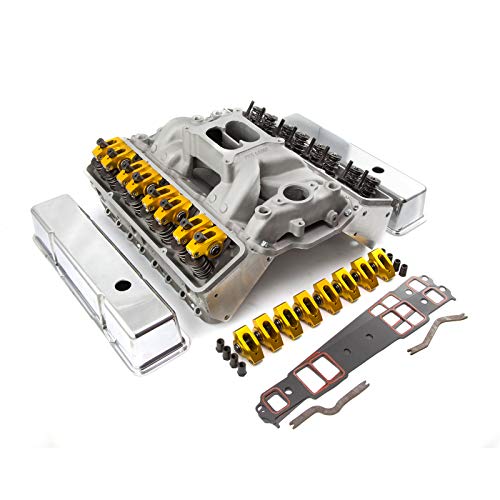
The Speedmaster PCE435.1002 Chevy SBC 350 Head Combo suits high-performance street and track builds seeking reliability with modern upgrades. I’ve used this kit in multiple builds, and it consistently delivers. It fits Chevrolet small block 350 engines with angle plug, solid lifter configurations. The model numbers-338-164 and 2-2921-match precision-machined cylinder heads designed for durability. You get upgraded valve trains, improved combustion chambers, and optimized port flow. It’s track-proven, tested under extreme heat and stress. This combo blends classic design with modern engineering. You’ll gain power without sacrificing dependability. It’s ideal for road, race, or recreational use.
Best For: Enthusiasts building high-performance Chevy SBC 350 street, race, or recreational engines who want durable, modern-upgraded cylinder heads with proven track reliability.
Pros:
- Combines modern engineering with classic small block design for enhanced performance and durability
- Features precision-machined heads with upgraded valve trains, optimized ports, and improved combustion chambers
- Track-proven under extreme conditions, ensuring reliability in high-heat and high-stress applications
Cons:
- Designed specifically for angle plug, solid lifter setups, limiting compatibility with other configurations
- Higher cost compared to basic rebuild kits, targeting performance-oriented budgets
- May require professional installation and tuning to fully realize performance benefits
Factors to Consider When Choosing Heads for 35ừ SBC
You need to match your cylinder heads to your 350 SBC’s exact specs-getting this wrong kills performance fast. Check compatibility with your block’s deck height, bolt patterns, and coolant passages, since even small mismatches cause big issues. Material matters too: aluminum heads are lighter and dissipate heat better than cast iron, and when you pair that with the right port volume-around 180–200 cc for most street builds-you maximize airflow without sacrificing low-end torque.
Compatibility With Engine Model
Selecting the right cylinder heads for your 350 SBC starts with verifying they’re built to fit small-block Chevrolet engines with a 350 cubic inch displacement-deck height and bore spacing must align precisely to guarantee proper installation. You need heads matched to your engine’s production year; pre-1986 and post-1986 models differ in valve layout, port design, and spark plug angle. Confirm the heads support your cam type-hydraulic flat tappet, hydraulic roller, or solid lifters-since each requires specific valvetrain geometry. Match the combustion chamber volume to your piston design to maintain correct compression and prevent piston-to-valve contact. Choose heads with an intake valve diameter of 2.020 inches and 1.600-inch exhaust valves for balanced airflow and performance. These specs guarantee maximum breathing and power without compromising reliability or fitment.
Material And Weight Impact
When comparing materials for 350 SBC cylinder heads, aluminum stands out for its significant weight savings-each head weighs approximately 10.3 kg, nearly half the mass of traditional cast iron units. You reduce overall engine weight, improving vehicle balance and acceleration. Aluminum’s light mass lowers reciprocating and unsprung weight, enhancing engine responsiveness, especially at high RPM. High-grade aluminum alloys dissipate heat more efficiently than iron, reducing hot spots and minimizing detonation risk. This thermal conductivity promotes stable combustion and consistent performance under load. Despite their lighter construction, these heads use reinforced pockets and hardened valve seats to withstand high-stress operation. You maintain durability without sacrificing performance. The reduced mass also improves fuel efficiency by decreasing engine workload. Aluminum heads offer a clear technical advantage when you prioritize weight reduction, thermal management, and dynamic engine behavior.
Port Size And Airflow Efficiency
Though port design may seem subtle, it directly governs how efficiently air and fuel enter the combustion chamber. You need larger intake ports-like 205cc-to maximize high-RPM airflow and power. Big ports move more mixture, but only if your engine can spin high enough to take advantage. A square intake port boosts airflow velocity and improves boundary layer control better than oval designs, increasing volumetric efficiency. You’ll gain stronger cylinder filling and better throttle response. Port matching your intake manifold to the head eliminates airflow restrictions, reducing turbulence and smoothing delivery. Smooth internal surfaces and precision-machined passages cut resistance, promoting laminar flow. This means less energy wasted and more horsepower at the crank. Don’t overlook these details-airflow efficiency separates good heads from great ones.
Combustion Chamber Volume
Combustion chamber volume plays a critical role in determining your 350 SBC’s compression ratio and overall performance. Smaller chambers increase compression, boosting power. A 64cc chamber is ideal for performance builds, allowing higher compression ratios with flat-top or dished pistons. You’ll maximize efficiency and output when pairing these heads with the right piston design. Larger 68cc chambers reduce compression, which helps when using lower-octane fuel or in high-heat conditions. This setup prevents detonation and improves engine longevity. Matching chamber size to your piston crown and engine use guarantees peak flame travel and combustion. Consistent volume across all cylinders delivers balanced power and smooth operation. Uneven chambers cause misfires and power dips. You need precision-machined heads to maintain uniformity. Choose chamber size wisely-it directly impacts how hard your engine works and how well it lasts. Every cubic centimeter counts.
Valve Configuration And Size
Valve configuration and size directly shape how efficiently your 350 SBC breathes and performs. You need larger intake valves-like 2.020 inches-to boost airflow into the combustion chamber, increasing power. Smaller exhaust valves, typically 1.600 inches, balance durability with effective gas evacuation in stock-style heads. This setup maintains structural strength while supporting thermal stability. A 3-angle valve seat cut improves sealing and optimizes airflow by refining the valve-to-seat interface. You’ll find this enhances both low-end torque and high-RPM output by fine-tuning port velocity and flow dynamics. Bronze valve guides deliver better wear resistance and heat management, keeping valves aligned under intense conditions. They’re a smart upgrade for longevity and consistent performance. Choose valve specs that match your rpm range and airflow goals. Get the balance right, and your engine runs smoother, breathes better, and makes more usable power across the curve.
Spark Plug Orientation
Spark plug orientation plays a key role in how your 350 SBC ignites the air-fuel mixture and fits within your engine bay. Straight plug heads position the spark plug parallel to the cylinder bore, simplifying installation and improving hood clearance. This design works well with stock valve covers and most headers. Angle plug heads tilt the spark plug, often enhancing combustion chamber airflow and allowing larger valves. The angled layout can improve flame propagation, boosting power and efficiency. However, it demands specific valve covers and may interfere with header tubes due to shifted plug location. You’ll need to verify fitment with your chassis and accessories. While angle plugs can enhance performance through better spark exposure and chamber scavenging, straight plugs offer easier serviceability and packaging. Choose based on your space constraints and performance goals. Each design impacts emissions, tuning, and thermal management differently.
Assembly Level And Installation Ease
When you’re upgrading your 350 SBC, how much work you’re willing to tackle depends heavily on the assembly level of the cylinder heads. Fully assembled heads come with valves, springs, retainers, and seals already installed-this cuts setup time and reduces the chance of mistakes. If you choose bare heads, you’ll need to install all valve train parts yourself, which demands special tools and knowledge of critical clearances. Some heads bolt on with no need for deck resurfacing or align-honing, making installation faster and easier. Models with pre-set valve train geometry eliminate the need to adjust valve lash during assembly, saving time. No matter which option you pick, use the right head gasket and follow precise torque sequencing in the proper order. This guarantees even clamping force and prevents leaks. Skipping these steps risks head gasket failure and engine damage. Choose convenience and reliability-match the head’s assembly level to your skill and tool availability.
Frequently Asked Questions
Can These Heads Be Used With a Turbo Setup?
Yes, you can use these heads with a turbo setup. Their high-flow ports and durable casting support forced induction. You’ll need to verify head thickness and bolt patterns match your block. Most accept standard turbo manifolds. Ideal with 64–72cc chambers for improved compression under boost. Confirm head gaskets are turbo-rated. Upgrade to 7/16-inch head bolts for added clamping force. Properly prepped, they handle 20+ psi reliably.
Do I Need Aftermarket Valves With These Heads?
you don’t always need aftermarket valves, but you likely will if you’re pushing over 600 hp or running high boost. Stock valves work for mild builds, but larger aftermarket units-like 2.02” intakes and 1.60” exhausts-handle heat and pressure better. They resist warping and improve flow, especially with aggressive cams or turbo setups. Dual valve springs and titanium retainers boost reliability when revving past 6,500 rpm.
Are These Heads Compatible With Iron Intakes?
Yes, these heads are compatible with iron intakes. You can bolt them directly to factory-style cast iron manifolds without issue. They use a standard 8.100-inch intake bolt pattern and proper coolant passage alignment. Just make sure your intake gaskets match the rectangular or oval port design. No adapter plates or modifications are needed. The deck and port heights are OEM-specified, so fitment stays true across common 350 SBC setups.
Will These Heads Fit Under a Stock Hood?
Yes, these heads will fit under a stock hood. You’ll need to account for valve cover height and intake manifold thickness. Most aftermarket aluminum heads measure 9.0–9.5 inches tall with a standard valve cover. Stock SBC hoods typically allow 10–10.5 inches from block deck to hood clearance. With proper intake choice-especially low-rise dual-plane designs-you maintain at least 1 inch of clearance. Always measure your setup, as variations occur across car models and hood modifications.
Can I Use Stock Pistons With High-Flow Heads?
Yes, you can use stock pistons with high-flow heads. The heads don’t require piston changes unless you’re increasing compression. Stock pistons work fine if the compression ratio stays between 9:1 and 10:1. High-flow heads improve airflow and power, but they don’t alter deck height or compression on their own. Check valve-to-piston clearance if using aggressive cams-otherwise, you’re good to go.