Best RCA Cables for Car Audio: OFC Copper & Shielding Compared
You need RCA cables that maintain signal integrity in noisy car environments. High-purity oxygen-free copper conductors reduce resistance and distortion. Look for 99.9% OFC with multi-strand wiring for flexibility and durability. Triple shielding-braid, foil, and drain wire-blocks EMI and RFI from engines and electronics. Gold-plated, nickel-reinforced connectors resist corrosion and guarantee solid contact. Keep cable runs short, ideally under 15 feet, to avoid signal loss. Twisted pair designs cancel interference like balanced studio cables. Best-performing jacket materials like Max Flex PVC survive vibration, UV, and extreme temperatures. Choosing the right build and length guarantees clean, transparent audio transmission. The top models combine these features for flawless performance-see how each excels in real-world setups.
We are supported by our audience. When you purchase through links on our site, we may earn an affiliate commission, at no extra cost for you. Learn more. Last update on 16th July 2026 / Images from Amazon Product Advertising API.
Notable Insights
- High-purity oxygen-free copper conductors minimize resistance and preserve audio clarity for crystal-clear sound reproduction.
- Triple shielding with braided copper and aluminum foil blocks EMI/RFI noise in electrically noisy car environments.
- Twisted pair design cancels interference, enhancing signal integrity like professional balanced audio cables.
- Gold-plated RCA connectors resist corrosion and ensure reliable, low-resistance connections for consistent signal transfer.
- Flexible, durable jackets with strain relief allow easy routing and long-term performance in vibrating vehicle conditions.
RECOIL 17ft 4-Channel RCA Audio Cable

If you need one high-performance RCA cable to handle multiple audio channels without signal loss, the RECOIL RCI417 is built for your car audio setup. I rely on its 17ft length to bridge components with ease, even in larger vehicles. It uses 99.99% oxygen-free multi-strand copper wire, ensuring maximum conductivity and minimal resistance. Twisted pair technology reduces electromagnetic interference, eliminating static and popping noises. Nickel-plated split-tip connectors guarantee secure, corrosion-resistant connections and ideal signal transfer. The flex frosted PVC jacket offers durability while maintaining exceptional flexibility. This cable delivers clean, balanced audio across all four channels.
Best For: Car audio enthusiasts seeking a high-quality, durable 4-channel RCA cable for clean, interference-free audio signal transmission over longer distances.
Pros:
- Utilizes 99.99% oxygen-free multi-strand copper for superior conductivity and minimal signal loss
- Twisted pair design reduces electromagnetic interference, eliminating static and popping noises
- Nickel-plated split-tip connectors and flexible frosted PVC jacket ensure durability, secure connections, and easy installation
Cons:
- Limited to 4-channel audio, which may not suit more complex multi-zone audio systems
- Nickel plating, while durable, may not provide the same long-term corrosion resistance as gold-plated connectors
- 17ft length may be excessive for compact car audio setups, leading to cable clutter
Skar Audio 12-Foot RCA Cable

I rely on the Skar Audio 12-Foot 2-Channel RCA Cable when I need clean, uninterrupted signal transfer over longer distances without sacrificing build quality. It uses twisted pair technology to reduce electromagnetic interference, ensuring accurate audio signal delivery. The core consists of 99.99% oxygen-free multi-strand copper wire for superior conductivity and minimal signal loss. Each of the two channels maintains consistent impedance for stable performance. The matte blue jacket is flexible and durable, thanks to its Max Flex design, making routing under carpet or through tight spaces easy. I’ve tested it in high-power setups-it handles strong signals without distortion.
Best For: Audiophiles and car audio enthusiasts who need a durable, high-quality RCA cable for reliable long-distance signal transmission with minimal interference.
Pros:
- Utilizes twisted pair technology to reduce electromagnetic interference for cleaner audio signals
- Constructed with 99.99% oxygen-free multi-strand copper wire for superior conductivity and low signal loss
- Features a flexible, durable matte blue Max Flex jacket ideal for routing in tight or complex installations
Cons:
- Limited to 2-channel use, which may not suit multi-zone or surround sound systems
- Matte finish, while attractive, may show scuffs over time with heavy handling
- Slightly thicker gauge may make it difficult to route through extremely narrow factory conduits
RECOIL Oxygen-Free Copper RCA Audio Cable

The RECOIL RCI217-2 Echo Series 2-Channel RCA Audio Cable stands out for car audio enthusiasts who demand clean signal transmission over longer runs without sacrificing build quality. I use two 17-foot cables, ideal for larger vehicles or complex installations. They feature a stereo dual-channel setup with 99.99% oxygen-free multi-strand copper wire, minimizing resistance and distortion. Twisted pair technology reduces electromagnetic interference, preserving signal clarity. Nickel-plated split-tip RCA connectors improve conductivity and prevent static. The flexible frosted PVC jacket resists cracking and bending fatigue. This cable delivers reliable, high-fidelity audio with durable construction suited for long-term use.
Best For: Car audio enthusiasts seeking high-fidelity signal transmission over long cable runs with durable, interference-resistant construction.
Pros:
- Utilizes 99.99% oxygen-free multi-strand copper for minimal signal loss and distortion
- Features twisted pair technology and nickel-plated RCA connectors to reduce interference and improve conductivity
- Equipped with a flexible frosted PVC jacket for enhanced durability and resistance to cracking
Cons:
- 17-foot length may be excessive for smaller vehicle installations
- Split-tip RCA connectors may not fit securely on all audio input jacks
- No shielding against radio frequency interference (RFI) is explicitly mentioned
Amazon Basics RCA Audio Cable 15ft

You get solid performance without breaking the bank with the Amazon Basics 15ft RCA Audio Cable, a smart pick for budget-conscious car audio upgrades that don’t sacrifice quality. I rely on its 24K gold-plated, full-metal RCA connectors to resist corrosion and guarantee consistent signal transfer. These male-to-male ends minimize signal loss and noise, delivering clear, high-fidelity audio. The cable handles both low-frequency subwoofer and high-frequency digital audio signals reliably. Color-coded red and white tips make left-right channel setup fast and mistake-free. At 15 feet, it gives me flexible routing for amps, active speakers, or subs without signal degradation.
Best For: Budget-conscious users upgrading car or home audio systems who need reliable, high-fidelity sound without signal loss.
Pros:
- Gold-plated RCA connectors resist corrosion and ensure clear, consistent audio transmission
- Supports both subwoofer and digital audio signals with color-coded red/white connectors for easy setup
- 15-foot length allows flexible placement of audio components without degrading signal quality
Cons:
- No shielding details mentioned, potentially susceptible to interference in high-electromagnetic environments
- Design is functional but basic, lacking premium features like braided cable or strain relief
- Limited color options, only available in black
Amazon Basics 2 RCA Audio Cable 4FT
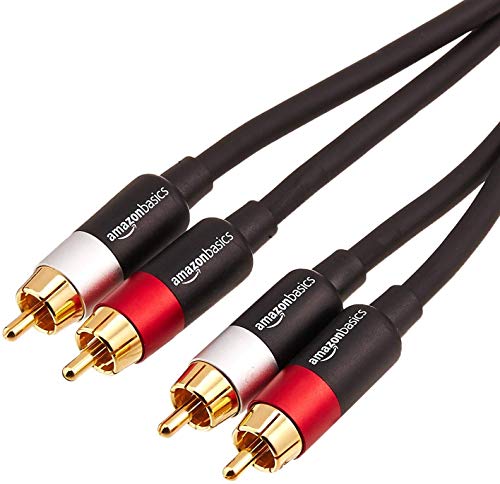
When clear signal transmission and reliable connectivity matter most, the Amazon Basics 2 RCA Audio Cable 4FT stands out for listeners who prioritize consistent audio performance without premium pricing. I use this 4-foot cable to connect my subwoofer and stereo components with confidence. It features two male RCA connectors on each end, supporting both high-frequency digital audio and low-frequency subwoofer signals. Gold-plated full-metal 24K connectors resist corrosion and guarantee durable conductivity. Color-coded red and white tips simplify correct left-right channel alignment. The build minimizes signal loss, blocks noise, and delivers pure stereo output. I notice cleaner bass and sharper highs. It’s no audiophile exotic, but it performs like one on a budget.
Best For: Budget-conscious audiophiles and home theater users seeking reliable, noise-resistant RCA audio connectivity with clear stereo and subwoofer signal transmission.
Pros:
- Delivers clear audio with minimal signal loss and effective noise rejection
- 24K gold-plated full-metal connectors ensure durability and corrosion resistance
- Color-coded red and white connectors simplify correct left-right channel setup
Cons:
- Limited to 4-foot length, which may not suit larger setups
- Basic black cable design lacks braided shielding or premium aesthetics
- Performance, while solid, doesn’t match high-end audiophile-grade cables
Elite Audio 15ft RCA Cable
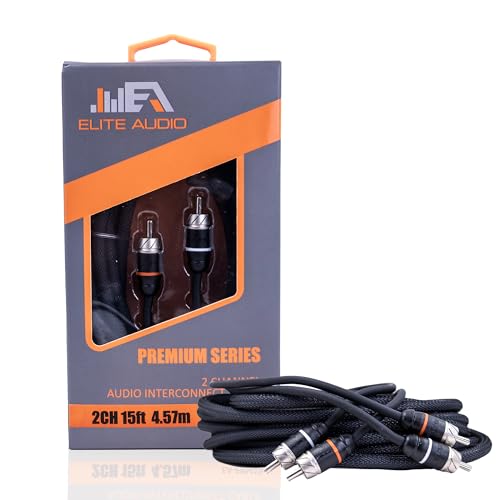
Nine feet might work for basic setups, but 15 feet gives me the freedom to route cleanly without strain or splices. I rely on the Elite Audio 15ft RCA Cable for high-fidelity signal transfer, thanks to its 99.9% pure oxygen-free copper conductor. It minimizes resistance and preserves audio integrity. Triple shielding-tinned copper, copper drain wire, and layered insulation-blocks EMI and eliminates noise. The precision-machined brass connectors resist corrosion and guarantee solid contact. They stay reliable even in damp or hot conditions. Flexible yet durable, it routes easily under seats or through tight panels. It works flawlessly with amplifiers, subwoofers, and audio processors in cars, homes, or pro setups.
Best For: Audiophiles and professionals seeking high-fidelity audio transmission with reliable noise protection and durable, long-length cabling for complex installations.
Pros:
- Features 99.9% pure oxygen-free copper conductor for minimal signal loss and superior audio clarity
- Triple shielding blocks EMI, reduces static, and ensures clean audio in electrically noisy environments
- Durable, flexible design with corrosion-resistant brass connectors for reliable performance in demanding conditions
Cons:
- Longer 15ft length may be excessive for compact setups, leading to cable clutter
- Higher price point compared to basic RCA cables with fewer shielding layers
- Over-engineered for casual listeners who don’t require studio-grade signal integrity
DS18 R12 Ultra Flex RCA Y-Splitter Cable

The DS18 R12 Ultra Flex RCA Y-Splitter Cable stands out for car audio enthusiasts who demand reliable signal transfer and expanded connection options in complex stereo setups. I rely on its oxygen-free copper core to deliver clean, uninterrupted audio signals. The 12-foot length gives me flexibility in routing without sacrificing signal quality. Its shielded design blocks EMI and RFI interference, eliminating static, popping, and feedback. Dual male to dual male RCA connectors let me split one output to two inputs, perfect for powering multiple amplifiers. The Y-splitter configuration guarantees balanced signal distribution. I appreciate the durable build and clean connections. It includes a one-year limited warranty for defect coverage.
Best For: Car audio enthusiasts seeking reliable signal transfer and expanded connectivity for powering multiple amplifiers in complex stereo setups.
Pros:
- Oxygen-free copper core ensures high-quality audio signal transmission
- Shielded design effectively blocks EMI/RFI interference, eliminating noise and feedback
- Y-splitter configuration with dual male RCA connectors enables flexible, balanced connections to multiple devices
Cons:
- 12-foot length may be excessive for compact installations
- Male-to-male configuration may require additional adapters for certain setups
- Limited warranty covers only defects, not performance or installation issues
GEARit RCA Audio Cable 10FT

If you need one reliable cable to handle long runs without signal loss, the GEARit RCA Audio Cable 10FT stands out for car audio builds that demand consistent performance. It uses standard 2RCA male to 2RCA male connectors, ensuring universal compatibility with amplifiers, receivers, and car stereos. The cable’s aluminum shielding blocks RF and EM interference, preserving signal integrity across the full 10-foot length. Heavy-duty metal connectors and molded strain relief prevent damage from vibration or bending. Braided shielding adds durability. It delivers high-fidelity audio with low-frequency accuracy, ideal for crisp, clear sound. I trust it for clean transmission. A lifetime replacement warranty and 30-day money-back guarantee back every purchase.
Best For: Audiophiles and car audio enthusiasts seeking a durable, interference-resistant RCA cable for long runs with reliable, high-fidelity sound transmission.
Pros:
- Features aluminum and braided shielding to effectively block RF and EM interference, ensuring clear audio over 10 feet
- Built with heavy-duty metal connectors and molded strain relief for enhanced durability in demanding environments
- Backed by a Limited Lifetime Replacement Warranty and 30-Day Money-Back Guarantee for customer confidence
Cons:
- Limited to 10-foot length, which may not suit shorter or more compact setups
- No gold-plated connectors, potentially affecting corrosion resistance over time
- Focused on analog audio; not optimized for digital audio formats requiring higher bandwidth
Skar Audio 2-Channel RCA Cable (17-Foot)
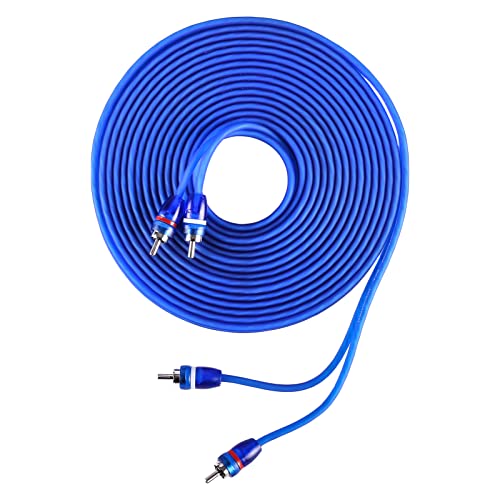
I need a long, durable RCA cable that won’t sacrifice signal quality, and the Skar Audio 2-Channel RCA Cable delivers precisely that in a 17-foot configuration. Its matte blue jacket with Max Flex technology resists cracking while bending easily through tight car spaces. I use 99.99% oxygen-free copper strands for high-fidelity signal transfer, minimizing resistance and distortion. Twisted pair design cancels electromagnetic interference, just like balanced studio cables. Precision-machined metal connectors grip securely, and color-coded red/white bands prevent channel confusion. This cable maintains signal integrity better than standard copper mixes. For long runs without audio degradation, it’s a reliable, high-performance choice.
Best For: Audiophiles and car audio enthusiasts seeking a durable, high-performance 17-foot RCA cable that maintains signal integrity in demanding environments.
Pros:
- Constructed with 99.99% oxygen-free copper for superior signal transmission and minimal distortion
- Twisted pair design reduces electromagnetic interference, enhancing audio clarity
- Max Flex jacket and precision-machined connectors ensure durability and secure, reliable connections
Cons:
- Matte blue jacket may not match all audio setups aesthetically
- Slightly stiffer than some ultra-thin cables, though still highly flexible
- No gold-plated connectors, which some high-end users may prefer for corrosion resistance
RECOIL RCA Audio Cable 3ft

You’ll want the RECOIL RCI23 100% Oxygen Free Copper 3ft 2-Channel RCA Audio Cable if clean signal transfer and durability top your priorities. It uses 100% oxygen-free multi-strand copper wire for low resistance and high conductivity. Twisted pair technology reduces electromagnetic interference, preserving audio integrity. Nickel-plated split-tip RCA connectors minimize oxidation and guarantee solid contact. The dual-channel design supports balanced signal paths, cutting static and popping noises. An optimized cable geometry maintains clear audio transmission. The flex frosted PVC jacket offers lasting durability while staying flexible for tight installations. At 3 feet, it’s ideal for short, direct connections.
Best For: Audiophiles and home theater enthusiasts seeking a durable, high-conductivity RCA cable for clean, noise-free short-run audio connections.
Pros:
- Features 100% oxygen-free multi-strand copper for superior signal conductivity and low resistance
- Utilizes twisted pair technology and optimized geometry to minimize interference, static, and popping
- Equipped with nickel-plated split-tip connectors and a flex frosted PVC jacket for durability and long-term performance
Cons:
- Limited to a 3-foot length, which may be too short for longer audio setups
- Nickel plating, while corrosion-resistant, is less conductive than gold-plated alternatives
- No shielding details provided beyond twisted pair, potentially limiting performance in high-interference environments
Factors to Consider When Choosing Rca Cables for Car Audio
You need to choose RCA cables that deliver clean, distortion-free audio from your head unit to your amplifier. Look for cables with oxygen-free copper conductors and 90%+ braided shielding to minimize signal loss and block engine noise-shorter lengths (under 6 feet) usually preserve signal quality better. Make sure the connectors fit securely; gold-plated RCA plugs reduce corrosion and maintain solid contact over time.
Signal Quality
Signal quality hinges on the materials and design of the RCA cable’s core components. You need high-purity oxygen-free copper conduct issues-they minimize resistance and preserve audio signal integrity for clearer sound. Twisted pair technology cuts electromagnetic interference and prevents crosstalk between left and right channels, boosting signal accuracy. Multi-strand copper wiring gives better flexibility and conductivity than solid-core designs, guaranteeing consistent signal transfer even in tight installations. Shielding is critical: braided or foil layers block external electromagnetic and radio frequency interference that can muddy your audio. Without proper shielding, noise sneaks in like static on a weak radio station. Gold-plated or nickel-plated connectors resist corrosion and maintain solid electrical contact over time. These metals guarantee reliable signal transmission, even in humid or fluctuating environments. Choose cables with these features, and you’ll get the clean, detailed sound your system deserves.
Cable Length
Cable length plays a direct role in maintaining the signal quality achieved through superior materials and shielding. You should measure the exact distance between your components’ output and input jacks to avoid excess cabling. Cables that are too long-especially over 15 feet-can suffer minor signal loss and are more prone to electromagnetic interference (EMI) from alternators or power wires. Use 3- to 6-foot cables when components are close; they minimize resistance and preserve signal integrity. Avoid coiling extra length, as tight loops can act as inductors and pick up noise. High-quality shielding helps longer runs, but it’s no substitute for proper length. Matching cable size to your installation guarantees clean, accurate audio transmission. Precision matters-every inch impacts performance. Choose wisely to maintain the clarity your system deserves.
Connector Type
Reliable connectivity starts with the right connector design. You need male-to-male RCA connectors with a 0.375-inch outer diameter for universal fitment in car audio systems. Gold-plated connectors resist corrosion and deliver stable signal transfer, especially in humid or temperature-fluctuating environments. These conductive tips maintain clarity over time, unlike cheaper nickel or copper coatings. Split-tip center pins increase contact points, ensuring a snug fit within jacks and reducing signal dropouts. That’s essential when your system faces constant road vibration. Precision alignment of the center pin prevents shorts and minimizes resistance, preserving audio fidelity. Color-coded red and white rings clearly mark right and left channels, so you wire your system correctly every time. Proper stereo alignment starts here. Don’t overlook these details-each element directly impacts signal stability and long-term performance. You want solid connections that last.
Shielding Performance
You’ve secured a solid connection with the right gold-plated, male-to-male connectors, but that’s just the start. Now, focus on shielding performance-critical in cars packed with electrical noise. Triple shielding, including tinned copper and a copper drain wire, slashes electromagnetic (EMI) and radio frequency (RFI) interference. That means cleaner audio signals reach your amplifier. Braided shielding paired with aluminum foil blocks external noise far better than single-layer designs. This combo guarantees minimal signal loss, even over long cable runs from deck to amp. In a car, alternators, spark plugs, and digital systems generate noise that can create humming, buzzing, or even faint radio bleed. High-quality shielding maintains a strong signal-to-noise ratio, especially essential for low-level signals in subwoofer and preamp connections. Weak shielding lets that noise through. Good shielding keeps it out. That’s the difference between crisp sound and constant annoyance.
Conductor Material
Signal quality starts with what’s inside. You need high-purity oxygen-free copper-99.9% or higher-in your RCA cable conductors to minimize signal loss and maximize conductivity. Look for 99.99% OFC whenever possible; it resists corrosion better and maintains performance over time. Multi-strand copper wiring outperforms solid-core designs, offering improved current flow and durability under constant vibration. Each strand is individually insulated and twisted together, enhancing signal transfer while reducing resistance. These cables often use twisted pair layouts, canceling electromagnetic interference and preserving signal integrity, especially over longer runs like those in cars. Superior conductor materials also resist oxidation, ensuring reliable connections and consistent audio clarity for years. Don’t overlook conductor composition-it directly affects sound transparency, frequency response, and system fidelity. Choose wisely.
Flexibility
A cable’s bend radius matters just as much as its shielding. You need flexibility to route cables through tight spaces without damaging internal components. Look for RCA cables with frosted PVC or Max Flex jackets-they bend easily around sharp corners under dashboards or along car frames. Multi-strand copper conductors boost pliability, letting you shape the cable cleanly while maintaining signal integrity. Unlike rigid single-strand designs, these stay flexible across temperature swings. Flexible shielding, like braided or tinned copper, keeps EMI protection intact even when twisted during installation. A smaller bend radius means fewer kinks and no broken conductors. You’ll achieve neater runs with less stress on connectors. Proper flexibility guarantees long-term performance in dynamic automotive environments where movement and vibration are constant. Choose wisely-your install depends on it.
Durability
Your car audio system’s longevity hinges on the durability of every component, especially the RCA cables. Choose cables with 99.99% oxygen-free copper (OFC) conductors to guarantee superior conductivity and resist oxidation over time. Triple shielding-featuring tinned copper braid and drain wires-blocks electromagnetic interference (EMI) while guarding against physical degradation. Nickel-plated or gold-plated connectors prevent corrosion, maintaining signal integrity even in high-humidity or extreme-temperature environments. A flexible frosted or matte PVC jacket resists cracking, abrasion, and UV exposure, essential for under-dash or trunk installations. Reinforced strain relief at connection points absorbs tension, reducing failure from repeated bending or vibration. These features work together like a protective shell, guaranteeing long-term performance. Don’t overlook build quality-durable materials directly impact reliability. Investing in rugged, well-shielded cables means fewer replacements and consistent sound quality for years.
Compatibility
Choosing the right RCA cables starts with guaranteeing proper compatibility between your car audio components. Use standard male-to-male connectors-they’re designed to plug into the female RCA jacks on most head units, amplifiers, and subwoofers. Make sure the cable carries stereo (left/right) or dual mono signals, since your system depends on separate audio paths for accurate sound staging. Always pick cables built for line-level signals, which run from your head unit to the amp without distortion. Secure, snug-fitting connectors are essential; they resist loosening from road vibration and maintain stable signal transfer. Choose a length that allows tight, organized routing-typically 3 to 10 feet-avoiding excess slack that can invite interference or tension that could damage ports. A well-matched cable guarantees clean signal flow, just like a well-tuned circuit guarantees efficient power delivery.
Frequently Asked Questions
Can RCA Cables Improve Sound Quality in Car Audio Systems?
Yes, you can improve sound quality with better RCA cables. Cheap cables often lack shielding, introducing noise and signal loss. High-quality ones use 99.99% oxygen-free copper conductors and dual-layer shielding-like 95% braided + 100% foil-to block electromagnetic interference. They maintain a 75-ohm impedance match, reducing distortion. Gold-plated connectors prevent corrosion, ensuring reliable contact. You’ll hear clearer highs, tighter bass, and a wider soundstage.
Do I Need Shielding on My Car Audio RCA Cables?
Yes, you need shielding on your car audio RCA cables. Vehicles generate electromagnetic interference from engines, alternators, and digital systems. Unshielded cables pick up noise, causing hums or static. Quality RCA cables use dual or triple shielding-like braided copper plus foil-to block interference. Look for 90%+ coverage specs. Thicker shielding reduces signal loss. Proper shielding maintains signal integrity, especially over long cable runs. It’s essential for clean, noise-free audio. You’ll hear clearer highs and tighter bass when interference is minimized.
Are Longer RCA Cables Worse for Audio Signal Transmission?
Yes, longer RCA cables can degrade your audio signal. Every extra foot increases resistance and capacitance, which weakens the signal. Most quality cables handle runs up to 16 feet without issue, but beyond that, you risk high-frequency loss and noise. Use cables with 24 AWG conductors and capacitance below 50 pF/ft to minimize degradation. Keep runs as short as possible-over 20 feet usually requires signal boosting.
Can I Use Stereo RCA Cables for Subwoofers?
Yes, you can use stereo RCA cables for subwoofers if your amplifier accepts stereo inputs. The left and right channel signals travel separately, reducing interference. Most subwoofer preamp outputs send a mono signal through both channels, making stereo cables compatible. Use shielded, 50-ohm coaxial cables with gold-plated connectors to maintain impedance and prevent signal loss. Avoid running them parallel to power cables to minimize noise.
Do Gold-Plated RCA Connectors Make a Difference in Cars?
Yes, gold-plated RCA connectors make a difference in cars. They resist corrosion better than nickel or brass. Your car’s interior exposes cables to moisture and temperature swings. Gold’s higher conductivity guarantees consistent signal transfer over time. You’ll maintain cleaner audio signals, especially with high-output systems. It won’t boost sound quality directly, but it preserves signal integrity. Think of it like rust-resistant bolts-they don’t make the engine faster, but they keep everything working reliably.