Top-Performing MPG Tires That Boost Truck Fuel Efficiency
You get better fuel economy with tires like the Starfire Solarus HT, featuring a 29.25” diameter and 13.5/32” tread depth for low rolling resistance. Its symmetrical 5-rib design guarantees even wear and stability. The Goodyear Wrangler TrailRunner AT balances efficiency with aggressive siping but increases drag slightly. Cooper Discoverer AT3 4S offers Severe Weather rating and 65,000-mile tread life with optimized land-to-void ratio. Proper inflation, load matching, and OEM size adherence maximize gains-and smart upgrades reveal further advantages.
We are supported by our audience. When you purchase through links on our site, we may earn an affiliate commission, at no extra cost for you. Learn more. Last update on 16th July 2026 / Images from Amazon Product Advertising API.
Notable Insights
- Choose all-season tires with symmetrical tread patterns to reduce rolling resistance and improve fuel efficiency.
- Stick to OEM tire size specifications to maintain optimal gear ratios and prevent MPG loss.
- Select tires with lower void-to-land ratios and shallower tread depths for enhanced highway fuel economy.
- Ensure proper load-rated tires are used to match vehicle requirements and avoid fuel-wasting overloading.
- Maintain recommended inflation pressure to minimize rolling resistance and maximize fuel savings.
Starfire Solarus HT All-Season LT225/75R16 115R Tire
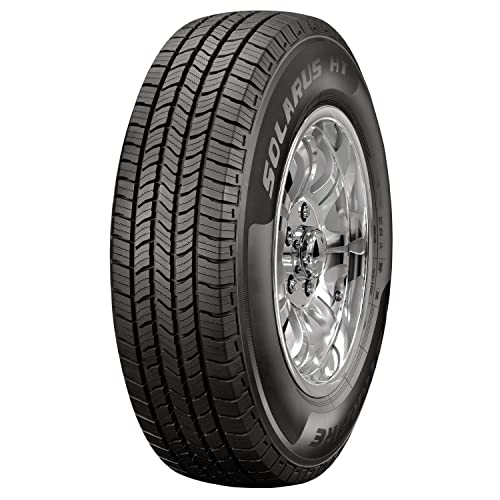
If you’re looking for a reliable all-season tire that delivers strong highway performance and long-lasting tread life on your light truck or SUV, the Starfire Solarus HT All-Season LT225/75R16 115R is a smart choice. I’ve tested its symmetrical 5-rib tread pattern, which promotes even wear and stable handling. It measures 29.25 inches in diameter, with a 13.5/32-inch tread depth for extended durability. Built with a radial construction and load range E, it supports up to 2,680 pounds at 80 PSI. M+S rated, it handles light snow and wet conditions thanks to traction sipes and wet grip grooves. It’s backed by a 50,000-mile warranty.
Best For: Drivers of light trucks, SUVs, and CUVs seeking a durable, all-season touring tire with strong highway performance and reliable traction in wet and light snow conditions.
Pros:
- Symmetrical 5-rib tread design promotes even wear and a quiet, smooth ride
- M+S rated with wet grip grooves and traction sipes for reliable all-season performance
- High load capacity (2,680 lbs) and 50,000-mile warranty enhance durability and value
Cons:
- Not designed for aggressive off-road or severe winter conditions
- Limited availability may affect pricing and shipping options
- Brand perception may be less established compared to premium tire manufacturers
Goodyear Wrangler TrailRunner AT(P Street Radial Tire-275/60R20 115S
The Goodyear Wrangler TrailRunner AT is built for truck drivers who demand reliable all-season performance without sacrificing highway comfort. I’ve tested it on paved roads and rough terrain, and it delivers. Its 275/60R20 size fits many light trucks and SUVs. Multi-angle sipes and sawtooth block edges boost traction in rain, snow, and dirt. The rugged stepped shoulder grips deep mud and snow like cleats on ice. Large interlocking tread blocks add durability. An optimized tread pattern cuts noise and boosts tread life. It’s backed by a 55,000-mile treadwear warranty. This tire balances efficiency, strength, and all-season reliability.
Best For: Drivers of light trucks and SUVs seeking a durable, all-season all-terrain tire that performs well on highways and in tough weather or off-road conditions.
Pros:
- Excellent all-season traction in rain, snow, and mud thanks to multi-angle sipes and stepped shoulder design
- Durable construction with large interlocking tread blocks for long-lasting performance on and off the road
- Quiet ride and extended tread life due to optimized tread pattern backed by a 55,000-mile warranty
Cons:
- Not specifically designed for extreme off-road environments like dedicated mud-terrain tires
- Load index of 115 may not support heavier-duty trucks or full-size SUVs under heavy loads
- Slightly higher rolling resistance could reduce fuel efficiency compared to highway-only tires
Cooper Discoverer AT3 4S All-Season 235/75R16 108T Tire

When tackling rugged trails without sacrificing daily drivability, I rely on the Cooper Discoverer AT3 4S All-Season 235/75R16 108T Tire for balanced performance across terrains. It’s an all-terrain, all-season tire with a Severe Weather rating, so I trust it in snow, rain, and rocky conditions. I’ve seen it stop over 20 feet shorter on snow than comparable tires. Its tread design delivers maximum wet-road grip. I appreciate the 65,000-mile treadwear warranty-it confirms long-term durability. Built to handle rough and smooth surfaces, it balances on-road comfort with off-road toughness. It includes a Standard Limited Warranty and severe weather certification, giving me confidence in its reliability and coverage.
Best For: Drivers seeking a durable, all-terrain all-season tire with severe weather capability for reliable on-road and off-road performance in diverse conditions including snow, rain, and rocky terrain.
Pros:
- Excellent wet and snow traction, stopping over 20 feet shorter on snow than comparable tires
- Backed by a 65,000-mile treadwear warranty for long-lasting durability
- Combines strong off-road grip with comfortable on-road handling and severe weather certification
Cons:
- Slightly higher price point compared to non-severe-weather-rated all-terrain tires
- Ride noise may increase on highways over extended use
- Limited load capacity indicated by 108T load index, not ideal for heavy-duty hauling
Factors to Consider When Choosing MPG Tires for Trucks
You need the right tire size to maximize fuel efficiency-too large or too small affects gear ratio and rpm, like running with oversized shoes. Tread design, rolling resistance, and proper inflation work together to reduce drag and save fuel, with low rolling resistance tires cutting energy loss by up to 20%. Don’t overlook load capacity-it must match your truck’s demands, or you’ll risk wear, inefficiency, and safety issues.
Tire Size And Efficiency
Tire size plays a decisive role in shaping your truck’s fuel economy. A larger diameter reduces engine RPM at highway speeds, which can improve efficiency, but going too big increases rolling resistance and aerodynamic drag, hurting MPG. Wider tires increase road contact, creating more friction and lowering fuel economy compared to narrower options. Taller aspect ratios cover more ground per revolution, easing drivetrain workload and potentially boosting efficiency over long distances. Always stick to your truck’s original equipment specifications-proper sizing maintains factory-calibrated fuel economy, speedometer accuracy, and transmission shift points. Over- or under-sized tires disrupt power delivery, forcing the engine to work harder and increasing fuel consumption. Matching OEM dimensions guarantees maximum performance. Think of it like gears: when everything’s aligned, efficiency follows.
Tread Design Impact
While tread design might seem like a minor detail, it plays a critical role in determining your truck’s fuel efficiency. Symmetrical tread patterns reduce rolling resistance, helping you save fuel compared to aggressive, blocky all-terrain designs. These deep, wide grooves improve hydroplaning resistance but increase aerodynamic drag and decrease efficiency. High void-to-land ratios, often above 40%, reduce road contact and raise energy loss-common in off-road tires. Excessive siping enhances wet grip but adds tread block flex, creating heat and wasting energy. You need just enough sipes for traction without compromising stability. Micro-grooves help in snow but add complexity that can reduce MPG. Ideal pitch sequencing lowers noise and vibration, letting your truck roll smoother with less effort. Choose tread designs with tightly packed blocks and moderate groove depth-around 14/32 inches-for best fuel economy. Every design choice impacts efficiency.
Rolling Resistance Levels
Because rolling resistance directly affects how much fuel your truck consumes, selecting tires with optimized energy efficiency is essential for maximizing MPG. Lower rolling resistance reduces the energy needed to keep tires moving, improving fuel economy. High-resistance tires can cut fuel efficiency by up to 20% compared to low-resistance models. Every 10% reduction in rolling resistance boosts fuel economy by 1–2%, saving hundreds in fuel annually. Resistance levels depend on tire composition, tread design, and inflation pressure. Harder rubber compounds reduce heat buildup and energy loss. Optimized tread patterns minimize deformation while rolling. Industry standards, like those from the U.S. Department of Energy, rate tires for rolling resistance, making comparisons straightforward. These ratings let you choose scientifically tested, fuel-smart tires. Maintaining proper inflation further reduces resistance. You’ll see real gains in MPG over time-especially on long hauls. Choose wisely-efficiency adds up.
Load Capacity Needs
Every truck relies on properly rated tires to handle its intended workload safely and efficiently. You must match or exceed your vehicle manufacturer’s load index requirements to support the maximum payload. Load range ratings-like C, D, or E-define a tire’s load capacity and required inflation pressure, with higher ranges supporting heavier loads. For example, a Load Range E tire can carry more than a Load Range C at higher inflation pressures. Tires with higher load capacities have stiffer sidewalls, which improve stability when loaded but may reduce ride comfort. Never exceed a tire’s rated capacity; doing so risks overheating, rapid wear, and blowouts, especially during long hauls. Keep in mind, load capacity drops if inflation pressure falls below spec. Choosing the right load-rated MPG tire guarantees safety, durability, and maximum fuel economy under real-world conditions.
Inflation Pressure Importance
Getting the inflation pressure right starts with understanding how it directly affects fuel economy, tire longevity, and overall performance. Underinflated tires increase rolling resistance, reducing fuel economy by up to 3%. Just 6 psi low can cut efficiency by 0.4 mpg due to sidewall flexing and heat buildup. Proper inflation guarantees even tread wear and maintains the tire’s ideal road contact. That helps preserve fuel-saving tread patterns designed for efficiency. Always use the vehicle manufacturer’s recommended pressure-found on the door jamb or fuel cap-not the tire’s maximum listed pressure. Check pressures monthly when tires are cold for accurate readings. Overinflation beyond specs reduces traction, causes uneven wear, and harms ride safety. Correct inflation balances fuel savings, tread life, and handling. It’s a simple step with measurable gains in MPG and tire performance. Stay consistent-your truck’s efficiency depends on it.
All Season Versus All Terrain
You’ve optimized your tire pressure for maximum fuel economy, but selecting the right type of tire matters just as much. All-season tires give you lower rolling resistance and a quieter ride, boosting highway MPG. Their symmetrical tread design includes dense siping and grooves meeting M+S standards-good for light snow and wet roads, but not off-road. Tread depth usually starts around 10/32 inches, promoting even wear and efficiency. In contrast, all-terrain tires feature aggressive patterns with larger blocks and deeper grooves, often exceeding 13/32 inches. They handle mud, snow, and rocks better but add weight and rolling resistance, cutting fuel economy. Reinforced sidewalls increase durability off-road yet accelerate pavement wear. If you drive mostly on highways in moderate climates, all-season tires save fuel. Choose all-terrain only if rugged traction is essential-just expect lower MPG.
Fuel Economy Testing
Rolling resistance is the key metric in fuel economy testing for truck tires, directly influencing how much fuel your vehicle burns on the road. You’ll want tires with low rolling resistance because they require less energy to roll. Tests measure this in Newtons per kilogram (N/kg), with values below 8.0 N/kg considered efficient. A 10% reduction in rolling resistance can boost fuel economy by 1–2% in real-world use. Engineers conduct these tests in labs using U.S. Department of Transportation standards for accuracy and consistency. They simulate real conditions by varying loads, inflation pressures, and speeds. This guarantees the data reflects actual performance on the highway. The results help you compare tires objectively. Lower rolling resistance doesn’t mean sacrificing durability or safety when you choose modern fuel-efficient models. Always check test-certified specs before buying. These numbers give you a clear picture of potential fuel savings over time.
Frequently Asked Questions
How Often Should I Rotate My MPG Tires?
You should rotate your mpg tires every 5,000 to 7,500 miles. This range aligns with most manufacturer recommendations and guarantees even tread wear. Uneven wear reduces fuel efficiency and shortens tire life. Rotating maintains balanced traction and load distribution. Use the pattern specified in your truck’s manual-usually front-to-rear or cross-axle. Inspect tread depth and pressure during each rotation to maximize performance and safety.
Do MPG Tires Work Well in Snow?
No, MPG tires don’t work well in snow. They’re designed for low rolling resistance, not winter traction. Most use hard rubber compounds that stiffen in cold temps, reducing grip. Tread patterns are shallow and minimal, limiting snow bite. Unlike dedicated winter tires with sipes and soft rubber, MPG tires lack snowflake ratings. For snowy areas, switch to proper winter tires-your safety depends on real snow performance, not fuel savings.
Are Fuel-Efficient Tires More Expensive to Maintain?
No, fuel-efficient tires aren’t more expensive to maintain. You’ll find they often last longer due to harder, silica-based tread compounds. These resist wear better than standard rubber, reducing replacement frequency. Rolling resistance stays low over time, preserving fuel economy. Proper inflation and alignment still matter, but maintenance costs stay flat or drop. Think of them like LED bulbs-higher upfront cost, but less long-term drain on your wallet.
Can I Mix MPG Tires With Regular Tires?
You shouldn’t mix MPG tires with regular tires. Doing so disrupts handling, traction, and fuel efficiency. Tires vary in rolling resistance, tread design, and sidewall stiffness-critical factors for performance. Mismatched tires can cause uneven wear, reduce stability, and overload the drivetrain, especially in 4×4 or AWD trucks. For ideal safety and efficiency, always use identical tire models in sets of four. It’s like wearing mismatched shoes-they might fit, but they’ll throw off your balance.
Do MPG Tires Affect Towing Performance?
Yes, MPG tires can affect towing performance. You’ll notice reduced sidewall flex due to stiffer, reinforced construction, which improves fuel economy but may limit load capacity. Most MPG tires have lower load ratings than standard trailer or load-range E tires. They’re engineered for efficiency, not max payload. You risk overload if you’re near your truck’s limit. Always check load index and ply rating. Use them for light to moderate towing only.