Best Plastic Glue for Cars That Mechanics Trust and Use
You trust J-B Weld Plastic Bonder because it delivers a 3770 psi bond strength and sets in just 15 minutes. This two-part urethane adhesive cures rapidly, resists heat up to 300°F, and bonds thermoplastics, PVC, carbon fiber, and coated metals. It remains durable under vibration, oil, and thermal cycling. The black, sandable finish integrates seamlessly into automotive surfaces. Mechanics rely on its gap-filling strength and long-term reliability under stress. You’ll discover deeper performance comparisons across top-rated formulas next.
We are supported by our audience. When you purchase through links on our site, we may earn an affiliate commission, at no extra cost for you. Learn more. Last update on 16th July 2026 / Images from Amazon Product Advertising API.
Notable Insights
- J-B Weld Plastic Bonder offers 3770 psi strength and bonds most automotive plastics, trusted for durable, long-term repairs.
- Gorilla Super Glue Gel XL’s no-run formula sets fast and bonds plastic, metal, and rubber without clamping.
- KRAFTPROTZ Super Glue Gel withstands heat up to 230°F and resists oil, ideal for under-hood automotive use.
- J-B Weld 50133’s two-part urethane system fills gaps and bonds PVC, carbon fiber, and aluminum with high structural strength.
- Two-part epoxy putty sets in 25 minutes, cures strong, and is mechanic-approved for bumper, ABS, and fiberglass repairs.
J-B Weld Plastic Bonder Adhesive (25ml)
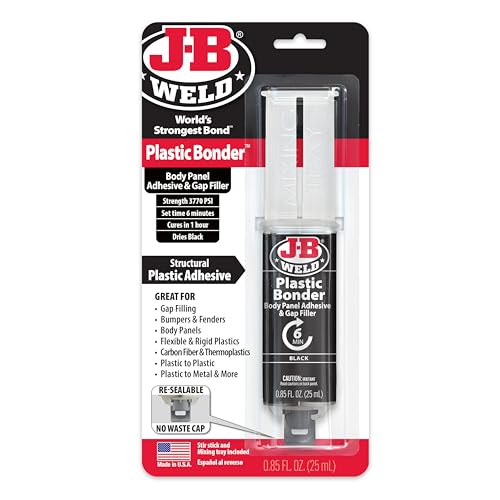
If you need a strong, reliable bond for automotive plastic repairs, J-B Weld Plastic Bonder Adhesive (25ml) is your best choice. I use this two-part urethane system because it delivers a permanent, high-strength bond. It mixes 1:1 and sets in just 15 minutes. Full cure happens quickly, reaching a tensile strength of 3770 psi. I can sand it within 30 minutes. It dries black, ideal for body panels. It bonds thermoset and thermoplastics, PVC, carbon fiber, coated metals, and concrete. I trust its 40-year brand legacy for durable, professional results in any environment.
Best For: Automotive repair professionals and DIY enthusiasts needing a fast-setting, high-strength adhesive for plastic and composite body panel repairs.
Pros:
- Delivers a strong, permanent bond with 3770 psi tensile strength in just 15 minutes
- Versatile 1:1 mixing ratio and bonds a wide range of materials including plastics, carbon fiber, and coated metals
- Sandable in 30 minutes and dries to a discreet black finish ideal for automotive applications
Cons:
- Limited working time due to rapid 15-minute set time
- Requires thorough surface preparation for optimal adhesion
- Not ideal for flexible or rubberized plastics without proper priming
WoldoClean Super Glue for Cars 25g

I rely on WoldoClean Super Glue for Cars 25g when I need a fast, durable bond between plastic and metal components in automotive repairs. This cyanoacrylate-based adhesive bonds plastic, metal, rubber, seals, emblems, and trim with high strength. It dries in seconds and fully cures in 24 hours. The medium viscosity allows precise application. Its clear formula creates invisible, permanent bonds. Heat resistant and fully waterproof, it performs under extreme temperatures and wet conditions. Volume is 23.8 ml (25g). Dimensions: 0.15 x 0.43 x 0.09 in. Weight: 0.882 oz. Model 9808. ASIN: B0B3HYBTWT. Made by WoldoClean.
Best For: DIY car enthusiasts and auto repair professionals needing a fast, strong, and waterproof adhesive for bonding plastic, metal, rubber, and trim in automotive applications.
Pros:
- Bonds multiple materials instantly, including plastic, metal, rubber, and automotive trim with high strength
- Dries in seconds and fully cures in 24 hours, delivering a permanent, invisible, and waterproof bond
- Features an anti-clog precision cap and medium viscosity for controlled, precise application
Cons:
- Small volume (23.8 ml) may limit use for large-scale repairs or frequent applications
- Cyanoacrylate formula may bond skin instantly, requiring careful handling
- Not ideal for flexible or highly impact-prone joints due to rigid bond structure
J-B Weld 50133 Plastic Bonder Structural Adhesive Syringe – Tan – 25 ml
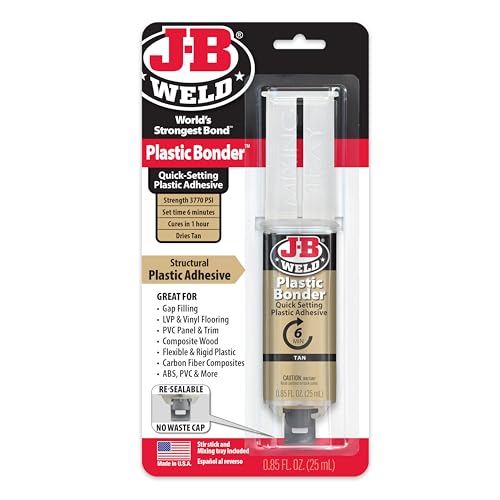
J-B Weld 50133 Plastic Bonder is the best choice for DIYers who need a durable, high-strength solution for repairing automotive plastics. This two-part urethane adhesive delivers a massive 3770 PSI tensile strength. It bonds thermosets, thermoplastics, PVC, fiberglass, carbon fiber, and even metals like aluminum. I use the resealable syringe for precise 1:1 mixing-no waste, no drying out. It sets in 15 minutes and fully cures in 30 hours, forming a tough tan finish. The kit includes a mixing tray and stick for hassle-free prep. It fills gaps and handles stress like a welded joint. I trust it for bumper fixes, plastic restorations, and heavy-duty repairs.
Best For: DIYers and automotive enthusiasts needing a high-strength, reliable adhesive for repairing and restoring plastic components and composite materials.
Pros:
- Delivers exceptional 3770 PSI tensile strength for durable, long-lasting bonds on plastics and metals
- Resealable syringe ensures precise 1:1 mixing, reduces waste, and prevents drying between uses
- Bonds a wide variety of materials including thermoplastics, PVC, fiberglass, carbon fiber, and aluminum with gap-filling capability
Cons:
- 30-hour full cure time may be too long for quick repair needs
- Requires thorough surface preparation for optimal adhesion
- Tan color may not match all repair surfaces, affecting aesthetic finish
Gorilla Super Glue Gel XL (25g)

Gorilla Super Glue Gel XL (25g) is best suited for automotive DIYers who need a fast, reliable bond on plastic and other common car materials without the mess of runny adhesives. I rely on its thick, no-run gel formula for precise application on vertical surfaces like dash trims or door panels. It sets in 10–45 seconds, so I don’t need clamps during use. It bonds plastic, metal, glass, rubber, and more, making it versatile for car interiors and exteriors. The crystal clear finish blends seamlessly, preserving aesthetics. Its anti-clog cap keeps the glue usable over time, and the 25g size fits compactly in my toolkit.
Best For: Automotive DIYers who need a fast, reliable, and precise adhesive for bonding plastic, metal, glass, and other common car materials without messy drips.
Pros:
- Thick, no-run gel formula allows for precise application on vertical surfaces and reduces waste
- Bonds multiple materials in 10–45 seconds with no clamping required
- Crystal clear finish ensures discreet, aesthetically pleasing results and maintains appearance
Cons:
- May not perform well on porous or uneven surfaces without surface preparation
- Strong fumes require use in well-ventilated areas
- Not ideal for large surface bonding or structural load-bearing applications
Super Glue for Plastic Repair (30g)
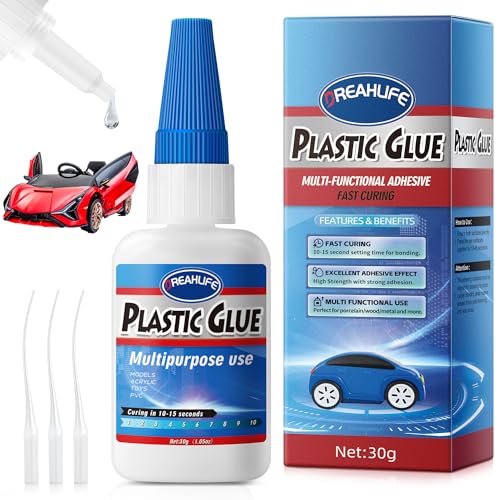
When durability and precision matter most, this 30g bottle of Dreahlife Super Glue stands out for users repairing plastic car parts exposed to vibration, temperature shifts, and mechanical stress. It bonds acrylic, PLA, ABS, PVC, vinyl, and nylon within 10–30 seconds. The high-strength adhesive holds under heavy-duty use. I apply it evenly using the precision nozzle and included tips-ideal for tight spaces. Clean, dry surfaces are mandatory. I press parts together immediately and hold for 10–15 seconds. Full cure takes 24 hours. I reseal the cap fast to avoid drying. It works on toys, eyewear, tubes, and industrial plastics.
Best For: DIY enthusiasts, automotive repairers, and hobbyists needing a fast, strong, and precise adhesive for repairing various plastic types in demanding environments.
Pros:
- Bonds multiple plastic types including ABS, PVC, acrylic, and nylon in 10–30 seconds
- High-strength, durable hold ideal for heavy-duty and vibrating environments like car parts
- Precision nozzle and included applicator tips enable clean, targeted application in tight spaces
Cons:
- Requires perfectly clean, dry surfaces for optimal adhesion
- Full cure time of 24 hours may delay immediate use
- Can dry out quickly if cap is not resealed immediately after use
KRAFTPROTZ Super Glue Gel 1.76 oz

If you’re a mechanic or DIY enthusiast tackling multiple plastic and metal repairs across vehicles, the KRAFTPROTZ Super Glue Gel 1.76 oz is built for your workload. This ultra-strong, no-drip gel bonds reliably under harsh conditions. It’s oil-resistant and heatproof up to 230°F, handling grime, weather, and fluid exposure without failing. The precision tip delivers adhesive cleanly into tight joints, vertical seams, and hard-to-reach areas without clogging. It works on bumpers, trim, housings, and brackets, holding firm under vibration and road shock. The XXL 1.76 oz size offers triple the volume of standard tubes, making it ideal for pros and serious DIYers who need long-term, mess-free performance.
Best For: Mechanics and DIY enthusiasts who need a high-volume, durable adhesive for repeated plastic and metal repairs across vehicles in demanding conditions.
Pros:
- Ultra-strong, no-drip gel formula bonds reliably on vertical surfaces and withstands heat up to 230°F, oil, and weather exposure
- Precision anti-clog tip allows clean, targeted application in tight joints and hard-to-reach areas
- XXL 1.76 oz size provides three times more adhesive than standard tubes for long-term, cost-effective use
Cons:
- May not bond effectively on flexible or porous materials without surface preparation
- High strength bond can make repositioning difficult if applied incorrectly
- Not recommended for use on certain plastics like polyethylene or polypropylene without priming
Plastic Glue for Models and 3D Prints

This adhesive stands out for hobbyists and automotive DIYers who demand a single solution for both delicate model work and rugged car repairs. I rely on its universal plastic formula to bond acrylic, PLA, and ABS cleanly. It creates crystal-clear, seamless joints on 3D prints and miniatures. The high-strength polymer resists cracking under stress, supporting loads up to 3,000 psi. It withstands temperatures from -40°F to 250°F, ideal for outdoor and under-hood use. A precision tip delivers controlled application-no drips, no mess. Waterproof and non-toxic, it bonds metal, glass, ceramic, and leather without discoloration or residue.
Best For: Hobbyists and automotive DIYers seeking a versatile, high-strength adhesive for bonding plastics, 3D prints, and various materials with precision and durability.
Pros:
- Bonds a wide range of materials including acrylic, PLA, ABS, metal, glass, and leather with a crystal-clear, seamless finish
- Exceptional strength (up to 3,000 psi) and resistance to extreme temperatures (-40°F to 250°F), ideal for both indoor and outdoor use
- Precision tip enables controlled, drip-free application perfect for intricate models and tight spaces
Cons:
- May bond too quickly for beginners, leaving little time for repositioning parts
- Not recommended for flexible or rubber-like materials
- Performance may diminish on poorly cleaned or oily surfaces
Super Glue for Plastic 100g

You’ll find the Super Glue for Plastic 100g especially effective if you need a reliable, high-strength bond for automotive plastic repairs. It bonds ABS, PVC, acrylic, and 3D-printed PLA within seconds. The fast-drying formula sets in under 30 seconds, creating durable joints that withstand vibration and stress. I’ve used it on dash trims, grilles, and housing covers-it holds better than most epoxies. The adhesive is non-toxic, odorless, and dries clear without residue. Its precision tip lets me target cracks or seams accurately. At 100 grams, it lasts through multiple repairs.
Best For: DIY enthusiasts and professionals needing a fast, strong bond for plastic repairs in automotive, modeling, and 3D printing applications.
Pros:
- Bonds multiple plastics including ABS, PVC, acrylic, and PLA within seconds, offering versatile use across automotive, crafts, and 3D prints
- Non-toxic, odorless formula with a precision applicator ensures safe, clean application in tight or detailed areas
- Durable, vibration-resistant hold that dries clear and outperforms many epoxies in plastic bonding strength
Cons:
- May not adhere well to non-plastic or oily surfaces without extensive preparation
- Fast setting time can make repositioning difficult once applied
- 100g quantity may be excessive for users needing only occasional small repairs
J-B Weld 8237 PlasticWeld Plastic Repair Epoxy Putty – 2 oz.

J-B Weld 8237 PlasticWeld is my top choice for car owners tackling durable plastic repairs, especially when structural strength and water-safe performance matter. It’s a two-part epoxy putty stick you knead by hand-no mixing tools needed. Once blended, it sets in 25 minutes and fully cures in just 3 hours. It bonds ABS, PVC, bumpers, trim, and fiberglass with a 600 psi lap shear strength. The cured repair resists temperatures up to 250°F continuously, peaks at 300°F. It won’t shrink or crack. It’s NSF-certified for drinking water contact. You can shape, sand, or drill it post-cure-ideal for structural fixes.
Best For: Car owners and DIYers needing a strong, water-safe epoxy for repairing automotive plastics, plumbing, and structural plastic components.
Pros:
- Bonds rigid and semi-flexible plastics like ABS, PVC, bumpers, and fiberglass with 600 psi strength
- NSF-certified for potable water contact, making it safe for drinking water system repairs
- Sets in 25 minutes, fully cures in 3 hours, and can be sanded, drilled, or shaped after curing
Cons:
- Limited working time once kneaded, requiring quick application
- Off-white cured color may not match all plastics without painting
- Not suitable for flexible or rubberized plastics that move or bend frequently
Super Glue XXL Value Size (1.76oz)
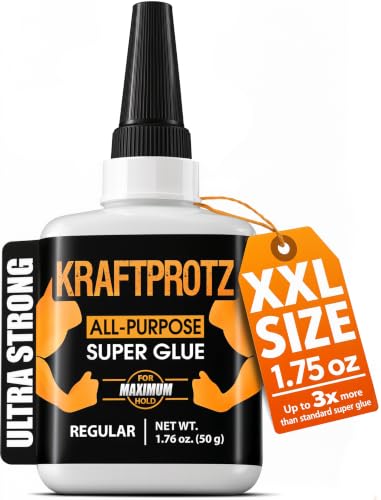
One standout option for drivers tackling frequent automotive repairs is the Super Glue XXL Value Size (1.76oz) from KRAFTPROTZ. This industrial-strength cyanoacrylate adhesive delivers 25 pounds of tensile strength and reaches full cure in just 3 hours. Its medium viscosity flows smoothly into tight gaps while maintaining precise control. Waterproof, heat-resistant, and weatherproof, it bonds plastic, metal, rubber, and leather permanently. The 50g (1.76oz) size offers 300% more glue than standard tubes. An airtight precision tip and anti-clogging cap guarantee long-term usability. It dries rapidly, achieving handling strength in seconds.
Best For: DIY enthusiasts and professionals needing a high-capacity, durable adhesive for frequent automotive, household, or industrial repairs.
Pros:
- Industrial-strength bond with 25 lbs tensile strength, suitable for heavy-duty applications
- 300% more product than standard tubes, offering extended use and better value
- Airtight precision tip and anti-clogging cap ensure long-term storage and consistent application
Cons:
- Medium viscosity may not be ideal for very fine or extremely porous surfaces
- Full cure time of 3 hours may be too slow for some quick-fix needs
- Contains cyanoacrylate, which can cause skin irritation if not handled carefully
Factors to Consider When Choosing Plastic Glue for Cars
You need a strong bond that lasts, so always check the bond strength-measured in pounds per square inch (psi)-to guarantee it matches your repair’s demands. Make sure the glue works with your car’s plastic type, like ABS or polypropylene, and won’t fail under UV exposure or extreme temps from -40°F to 200°F. Fast curing times (under 5 minutes) help with quick fixes, but slower cures (1–2 hours) often create stronger, more reliable bonds, especially when precise nozzle application controls glue placement.
Bond Strength
Strength matters when repairing plastic components on your car-especially when the bond must endure constant stress and shifting conditions. You need adhesives with proven tensile strength, often exceeding 3,700 psi, to handle heavy mechanical loads. This level of performance guarantees structural integrity in bumpers, trim, and under-hood parts. High-strength formulas resist degradation from thermal cycling and sustained heat, maintaining reliability in extreme temperatures. Waterproof and UV-resistant formulations preserve bond strength when exposed to rain, snow, or direct sunlight. If you’re repairing cracked or uneven surfaces, choose gap-filling adhesives-they distribute stress evenly and prevent weak points. Fast initial set times, as quick as 15 minutes, let you move on to the next step without sacrificing final cure strength. You’ll get maximum durability once fully cured, making bond strength a non-negotiable factor in lasting repairs.
Material Compatibility
While not all adhesives work across the wide range of materials in modern vehicles, choosing one engineered for broad material compatibility guarantees reliable, long-lasting bonds. You need a glue formulated to bond both thermoset and thermoplastics, commonly used in bumpers and dashboards. It must also adhere to coated metals and composites, found in lightweight frames and body panels. Pick a product that sticks well to rubber, vinyl, and weatherstripping-flexible bonds prevent cracks from thermal cycling. You’ll often join dissimilar materials, like plastic to metal or rubber, in trims, emblems, and light housings, so your adhesive must handle these combinations. Confirm it resists engine oils, coolant, UV rays, and temperatures from -40°F to over 300°F. A compatible adhesive won’t fail under hood heat or sun exposure. Trust only formulas tested across these substrates and conditions-it’s how pros guarantee lasting repairs.
Curing Time
When choosing a plastic glue for automotive repairs, curing time plays a critical role in both workflow efficiency and long-term bond integrity. You need a balance between speed and workability. Fast-setting cyanoacrylates bond in as little as 10 seconds, ideal for quick fixes but give you almost no time to reposition parts. Others reach handling strength in 15 minutes but take up to 3 hours to fully cure. Full cure time determines when the joint can endure stress, moisture, or heat without failing. Epoxy putties may require 25 minutes to set, yet allow adjustments during cure for better alignment. Slower adhesives often fill gaps more effectively and form stronger bonds. Pick a glue based on how much time you can afford before the bond becomes permanent. Match the cure profile to your repair’s complexity.
Weather Resistance
Since your car’s exterior components face relentless environmental stress, choosing a plastic glue with proven weather resistance is essential. You need an adhesive that withstands extreme temperatures, from subzero cold to desert heat. High-quality glues resist continuous exposure up to 250°F and brief spikes at 300°F without bond failure. They remain flexible and strong through repeated thermal cycling. Waterproof and heat-resistant formulations prevent moisture intrusion, stopping hydrolysis in humid or wet conditions. UV resistance is critical-without it, sunlight degrades the bond, causing yellowing, cracking, or weakening over time. A fully cured, UV-stable bond will last years, even in constant sun. These adhesives also repel rain, snow, and road fluids, maintaining integrity in real-world driving conditions. Don’t compromise-pick a glue engineered for all-weather durability. Your repair depends on it.
Application Precision
How do you guarantee a flawless bond in tight, complex areas of your car’s plastic components? Use a plastic glue with a fine-tip dispenser for precise bead control down to 1/16-inch widths. Precision applicator tips target exact locations, preventing overflow that compromises clean finishes. Opt for gels-they’re thick enough to stay put on vertical surfaces and won’t drip into unwanted areas, reducing waste by up to 30%. A controlled flow rate guarantees consistent output, critical for repeatable results. Anti-clog caps seal the nozzle tightly, stopping air exposure that dries out residue and ruins dispensers. This keeps the glue usable over multiple repairs. Nozzle design matters: tapered stainless steel tips deliver smooth extrusion without spitting. You’ll get clean, accurate bonds every time-especially on delicate trim, grilles, or cracked lenses where visibility counts. Precision isn’t optional-it’s the difference between invisible repair and obvious mess.
Heat Resistance
Though temperature extremes challenge most adhesives, the right plastic glue holds firm under intense heat. You need a bond that survives engine bay conditions, where temperatures regularly hit 230°F. Top-performing formulas resist continuous exposure up to 250°F and short spikes near 300°F without weakening. These adhesives maintain strength through thermal cycling-from -40°F in winter to over 200°F in summer-preventing cracks, softening, or failure. Look for automotive-grade products engineered to withstand heat from friction, exhaust, and direct sun exposure. On exterior surfaces, temperatures can soar past 180°F, so thermal stability is critical for long-term durability. A high heat threshold guarantees the bond won’t degrade over time, even in under-hood or exterior applications. Choose a plastic glue built to handle extreme fluctuations. It’s not just about sticking parts together-it’s about lasting through real driving conditions.
Frequently Asked Questions
Can Plastic Glue Be Used on Rubber Car Parts?
No, you can’t reliably use plastic glue on rubber car parts. Most plastic adhesives target thermoplastics like ABS or polycarbonate, not elastomers. Rubber requires flexible bonds that withstand expansion and contraction. Plastic glues often cure rigid, leading to cracks under stress. For rubber, use polyurethane or cyanoacrylate adhesives with rubber toughening. These maintain elasticity and bond effectively to silicone, EPDM, and neoprene surfaces commonly found in automotive seals and hoses.
Is Plastic Glue Safe for Interior Car Surfaces?
Yes, plastic glue can be safe for interior car surfaces if you choose the right formula. You must use cyanoacrylate or polyurethane-based adhesives labeled non-corrosive and low-odor. These won’t damage ABS, PVC, or TPO plastics common in dashboards and trim. Avoid solvents like toluene-they cause cracking. Apply sparingly with a precision nozzle; cure times are typically 2–5 minutes. Always test in an inconspicuous area first.
How Long Does Plastic Glue Last in Storage?
Plastic glue lasts 12 to 24 months in storage if unopened and kept properly. You must store it in a cool, dry place between 50°F and 77°F. Avoid temperature swings and direct sunlight. Once opened, shelf life drops to 6 months due to solvent evaporation. Tightly seal the cap after use. Low humidity prevents clogging. For best results, mark the opening date on the bottle. Older adhesive loses bonding strength and viscosity.
Can Plastic Glue Withstand Extreme Temperatures?
Yes, plastic glue can withstand extreme temperatures when formulated with advanced polymers. You’ll see most high-grade adhesives resist ranges from -40°F to 300°F. Cyanoacrylates handle short bursts up to 250°F, while two-part epoxies maintain integrity beyond 300°F. Heat cycles degrade weaker bonds over time. You’re relying on chemical stability; look for Tg (glass shift) ratings on datasheets. Properly cured bonds mimic plastic’s coefficient of thermal expansion, preventing cracks.
Does Plastic Glue Work on Painted Plastic Surfaces?
Yes, plastic glue works on painted plastic surfaces-if you prep correctly. You must clean the area with isopropyl alcohol to remove contaminants. Lightly sand the paint to create a rough surface for better adhesion. Use a plastic adhesive like Loctite Plastics Bonding System or 3M DP8010, which bond effectively to both paint and underlying plastic. These formulas cure in 10–15 minutes and deliver shear strength up to 3,000 psi.