Understanding the Function of the Mass Airflow Sensor (MAF): How It Measures Incoming Air Volume to Optimize Fuel Injection Timing
You rely on your MAF sensor to measure the mass of incoming air using a heated wire cooled by airflow, with current changes indicating air volume. It sends real-time data to the ECU, which adjusts fuel injection timing and pulse width to maintain a 14.7:1 air-fuel ratio. This guarantees efficient combustion across temperatures and altitudes. Modern hot-wire sensors achieve ±2% accuracy. Issues arise when contamination disrupts readings. Further details reveal how to maintain peak sensor performance.
Notable Insights
- The MAF sensor measures the mass of incoming air using a heated wire cooled by airflow.
- It sends real-time air volume data to the ECU for precise fuel delivery calculations.
- The ECU uses MAF data to adjust injector pulse width and maintain a 14.7:1 air-fuel ratio.
- Air density changes due to temperature or altitude are compensated using MAF sensor input.
- A faulty MAF sensor disrupts fuel injection timing, causing poor performance and reduced efficiency.
What a MAF Sensor Is and Why It Matters
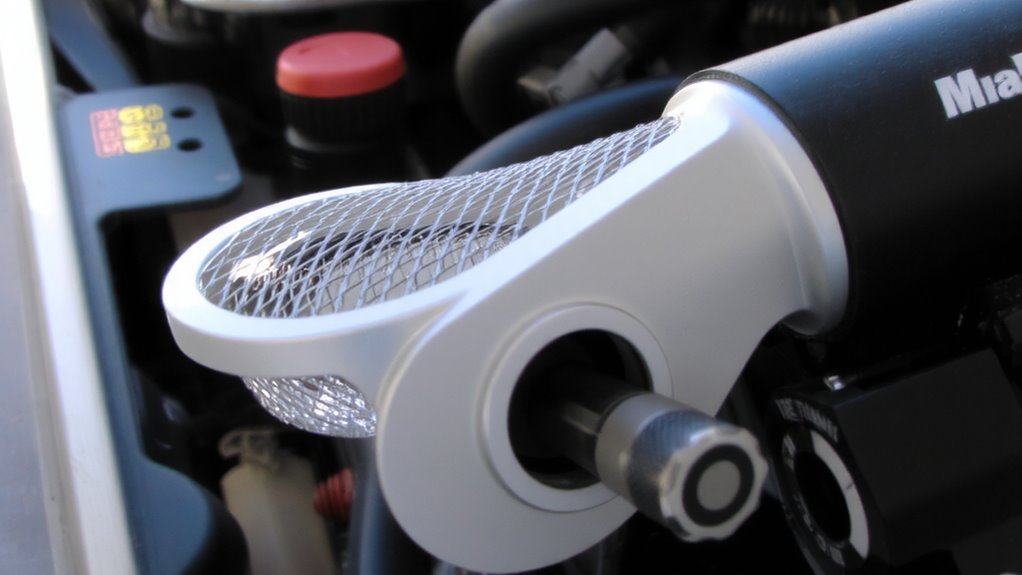
While your engine can’t “breathe” like you do, it still needs precise measurements of incoming air to run efficiently-and that’s where the mass airflow (MAF) sensor comes in. This sensor monitors the volume and density of air entering the engine, directly influencing fuel injection and ignition timing. Proper air intake management guarantees ideal air-fuel ratio, usually 14.7:1 in gasoline engines. The MAF sensor’s accuracy is critical-modern hot-wire sensors measure airflow within ±2% of true values. Even minor deviations compromise performance and emissions. Mounted between the air filter and throttle body, it responds instantly to driver input. Without reliable sensor accuracy, your engine risks poor fuel economy, rough idling, or stalling. Over time, contamination degrades readings, necessitating cleaning or replacement. Maintaining MAF function preserves engine efficiency and longevity.
How a MAF Sensor Works
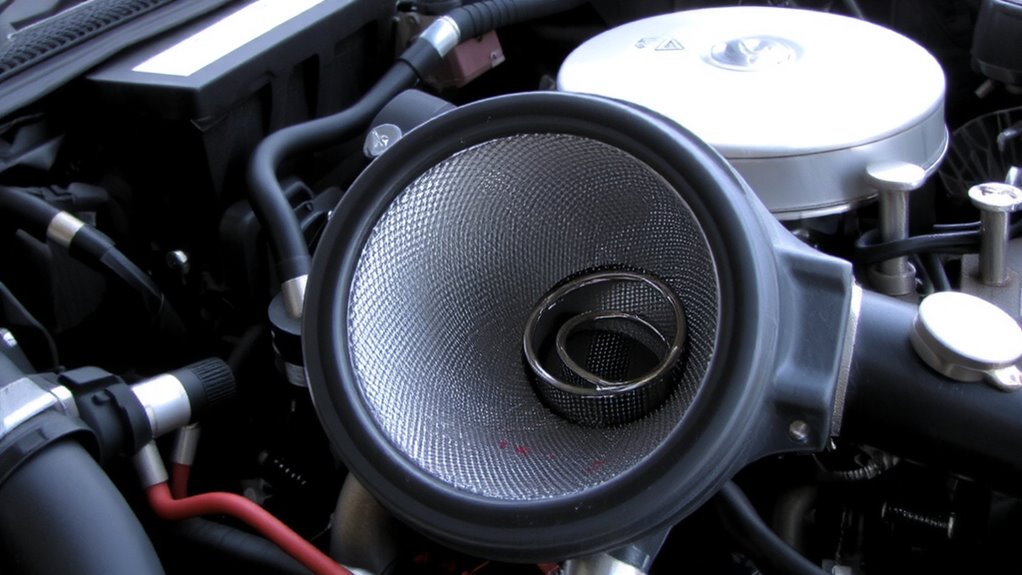
Since the engine relies on consistent air intake data to maintain performance, the MAF sensor plays a key role by using a thin, electrically heated wire suspended in the intake airstream. You’ll find this wire maintained at a fixed temperature above ambient. As air flows past, it cools the wire, and the sensor measures the electrical current needed to keep it hot. This current correlates directly to the mass of air entering-cooler, denser air contains more oxygen molecules. Air density varies with temperature, so the temperature correlation is essential for accuracy. The sensor’s internal circuitry converts this data into a voltage or frequency signal. It sends this real-time input to the ECU, reflecting actual airflow conditions. No moving parts mean high reliability, while precise calibration guarantees consistent readings across operating ranges.
How It Controls Fuel Delivery
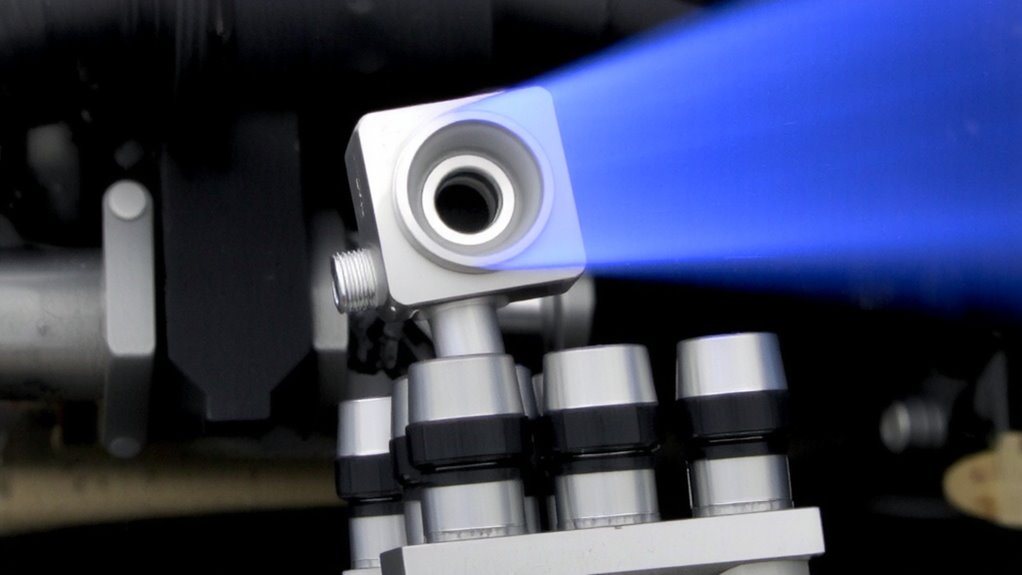
When the MAF sensor sends real-time airflow data to the engine control unit (ECU), the ECU uses that information to calculate the precise amount of fuel needed for ideal combustion. You rely on this process every time the engine runs. The ECU adjusts fuel delivery based on measured air volume and air density, which changes with temperature and altitude. Cold air is denser, so it contains more oxygen per volume-requiring more fuel for a balanced air-fuel ratio. The ECU references pre-programmed fuel mapping to determine injection duration and timing. This fuel mapping uses the MAF’s data to modify injector pulse width down to the millisecond. Without accurate airflow input, fuel delivery becomes inefficient. Proper coordination maintains peak performance, fuel economy, and emissions. The system continuously adapts, maintaining stoichiometry at 14.7:1 for gasoline under normal conditions. Precise control depends entirely on the MAF’s real-time signal.
Common Signs of a Failing MAF Sensor
If your engine starts acting up for no obvious reason, a failing mass airflow (MAF) sensor might be to blame. You’ll notice rough idling, where engine speed fluctuates unpredictably at a stop. This happens because the sensor sends incorrect air volume data to the ECU, disrupting the air-fuel ratio. Poor acceleration follows, as the engine doesn’t receive enough fuel during throttle input. The vehicle may hesitate, jerk, or feel sluggish, especially under load. Fuel economy drops due to incorrect injector pulse width. The check engine light often appears, with common codes like P0101 or P0171. Some drivers report stalling during warm-up or difficulty starting the engine. Unlike mechanical failures, MAF issues develop gradually. The sensor’s delicate hot-wire element degrades over time, losing calibration. Contamination from dirt or oil further skews readings. These symptoms aren’t always consistent, making diagnosis tricky without proper tools.
How to Test and Clean a MAF Sensor
Why might your engine still run poorly after replacing spark plugs or fuel filters? The issue could be a dirty or malfunctioning MAF sensor. Over time, oil and debris coat the sensing wire, skewing readings. To test it, disconnect the sensor and measure electrical resistance across its terminals using a multimeter. Compare results to manufacturer specs-typically 3–5 ohms at room temperature. Deviations suggest internal damage. Then, inspect for physical harm and guarantee wiring harnesses are intact. To clean, use only MAF-safe cleaner-never touch the wire. Spray gently, let it dry completely. Contamination affects sensor calibration, leading to incorrect air volume signals. A clean sensor restores accurate data to the ECU, improving fuel delivery. Always reinstall securely and reset error codes. Proper maintenance preserves sensitivity and extends service life without premature replacement.
When to Replace a MAF Sensor: Cost and Options
A clean and properly functioning MAF sensor keeps your engine running efficiently, but even the best maintenance can’t fix internal failure. When diagnostics confirm sensor failure, replacement is necessary. Most MAF sensors last 100,000 to 150,000 miles, but contamination or wear can shorten lifespan. Consider the MAF warranty when purchasing-many top replacement brands offer 1- to 3-year coverage. Aftermarket units from Bosch, Denso, and Airtex provide reliable performance at varying price points.
| Brand | Avg. Price | Warranty Period |
|---|---|---|
| OEM | $180–$350 | 12 months |
| Bosch | $100–$200 | 24 months |
| Denso | $90–$190 | 24 months |
| Airtex | $80–$160 | 18 months |
| Standard | $75–$150 | 12 months |
Choose based on budget, compatibility, and MAF warranty length.
On a final note
You rely on your MAF sensor for precise air volume measurement. It uses a heated wire or film to detect incoming air mass, sending frequency or voltage signals (typically 0–5V or 1–7 kHz) to the ECU. This data fine-tunes fuel injection timing and air-fuel ratio. A faulty sensor disrupts combustion efficiency, increasing emissions and reducing performance. Regular cleaning and timely replacement guarantee peak engine operation.