Maximizing Electrical System Efficiency Through Regular Maintenance and Upgrades: Tips for Keeping Alternators, Batteries, and Other Key Components in Optimal Condition
Keep your battery terminals clean monthly using a baking soda solution to prevent corrosion and maintain conductivity. Test battery voltage every three months; a resting charge below 12.4V indicates weakening performance. Check alternator output regularly-it should stay between 13.5 and 14.8 volts. Replace corroded connectors and use 4–6 AWG tin-plated copper cables tightened to 5–8 ft-lbs. Upgrade to LiFePO4 batteries for longer cycle life and stable voltage under load. There’s more to optimizing your system’s reliability and performance.
Notable Insights
- Clean battery terminals monthly with a baking soda solution to prevent corrosion and maintain strong electrical conductivity.
- Test battery voltage and cold cranking amps every three months to catch degradation before failure occurs.
- Inspect alternator output regularly, ensuring voltage stays between 13.5 and 14.8 volts for optimal charging performance.
- Replace corroded or worn connectors with proper-gauge, tin-plated terminals to reduce resistance and prevent voltage drops.
- Upgrade wiring and battery systems, using LiFePO4 batteries and appropriately sized cables, to enhance efficiency and longevity.
Clean Battery Terminals Monthly

Regularly cleaning your battery terminals helps maintain ideal electrical conductivity and prevents voltage drops that can disrupt system performance. Battery corrosion, caused by chemical reactions from battery acid vapors, creates resistive buildup that impedes current flow. Left unchecked, terminal oxidation forms a dull, ashy layer-often white, green, or blue-reducing connection efficiency by up to 30%. Use a wire brush or terminal cleaner tool to remove deposits. A solution of baking soda and water (one tablespoon per cup) neutralizes acid residue. Disconnect the negative terminal first, then the positive, to avoid shorts. Clean both terminal and cable ends thoroughly. Reconnect in reverse order. Apply a thin coat of dielectric grease or petroleum jelly to inhibit future corrosion. This monthly maintenance prevents voltage loss, guarantees reliable starting, and extends battery life by minimizing parasitic drain from poor connections. Upgrading to high-quality battery terminals ensures a more durable and consistent electrical connection over time.
Test Your Battery’s Charge and Health
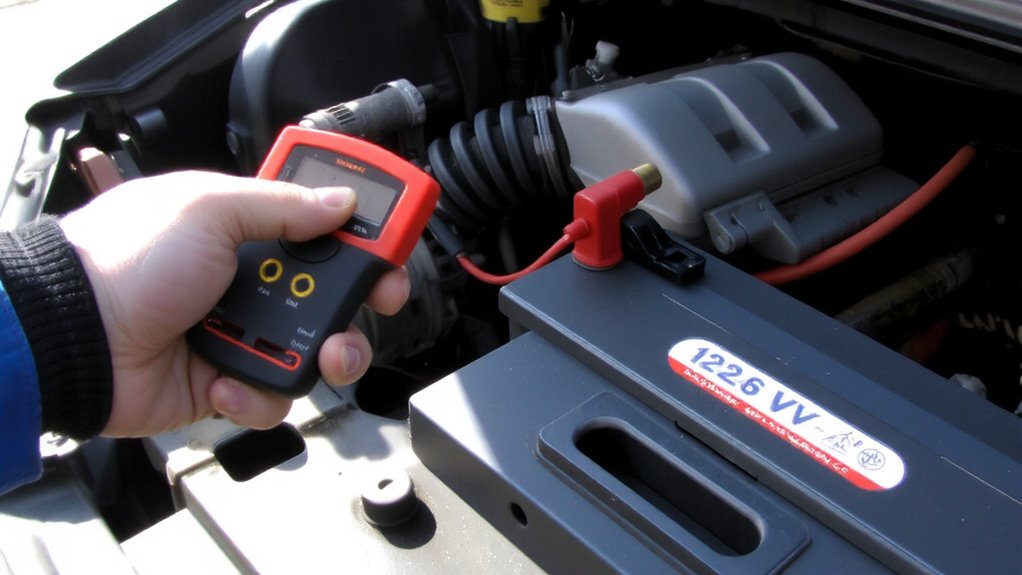
How do you know if your battery will start the engine when temperatures drop? Test its charge and health regularly. A fully charged battery should read 12.6 volts or higher at rest. Below 12.4 volts indicates a weak charge, increasing the risk of failure in cold weather. Use a multimeter or battery tester to check voltage and cold cranking amps (CCA). As battery age increases, its ability to hold a charge declines-most last 3–5 years. Each charge cycle degrades internal plates and reduces capacity. After 300–500 charge cycles, even well-maintained batteries lose efficiency. Sulfation builds up on plates over time, hindering performance. Test every three months, especially in extreme climates. Don’t wait for slow cranking-by then, failure is near. Monitoring charge and condition helps avoid unexpected breakdowns and keeps your electrical system running efficiently. When heading out on outdoor adventures, consider packing essential gear organizers like a best car organizer for beach trips to protect your equipment and maintain a clutter-free vehicle.
Check Your Alternator Before It Fails
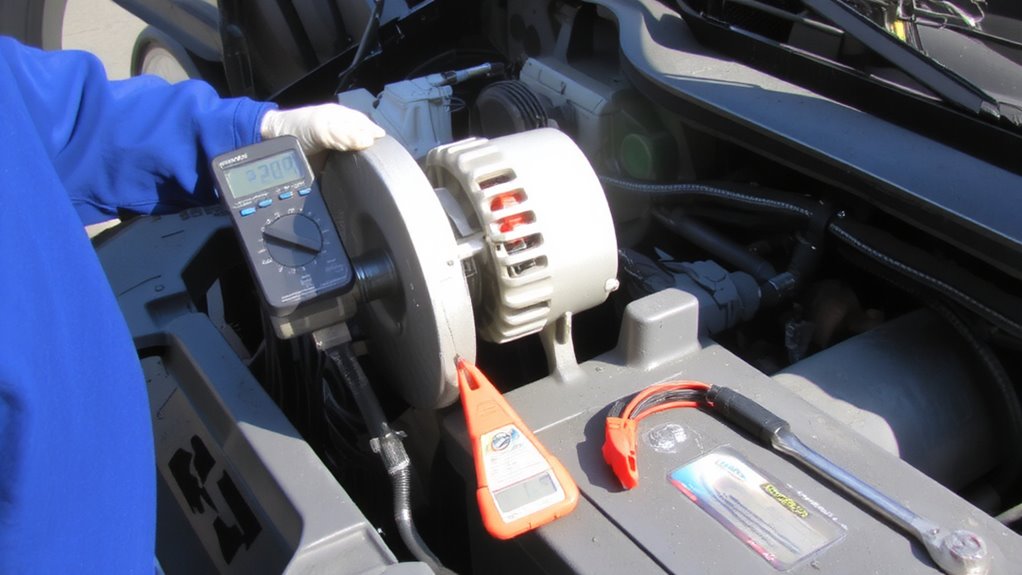
What keeps your battery charged and your electrical systems powered while the engine runs? Your alternator does. It converts mechanical energy into electrical energy, maintaining a voltage output between 13.5 and 14.8 volts under normal conditions. When it begins to fail, you’ll notice voltage fluctuations, dimming lights, or slow accessories. Left unchecked, a weak alternator can’t recharge the battery, leading to unexpected shutdowns. Worse, failing units may allow power surges that damage sensitive electronics like ECUs or infotainment systems. Test output with a digital multimeter while the engine runs: steady 14.2V means it’s healthy. Consistent deviations-either above 15V or below 13V-signal trouble. Modern vehicles demand reliable alternators because electrical loads have tripled over the past two decades. Catch issues early. Prevent cascading failures. Protect your system’s integrity by verifying alternator performance every six months, especially in high-heat or stop-and-go environments.
Replace Worn or Corroded Connectors Immediately
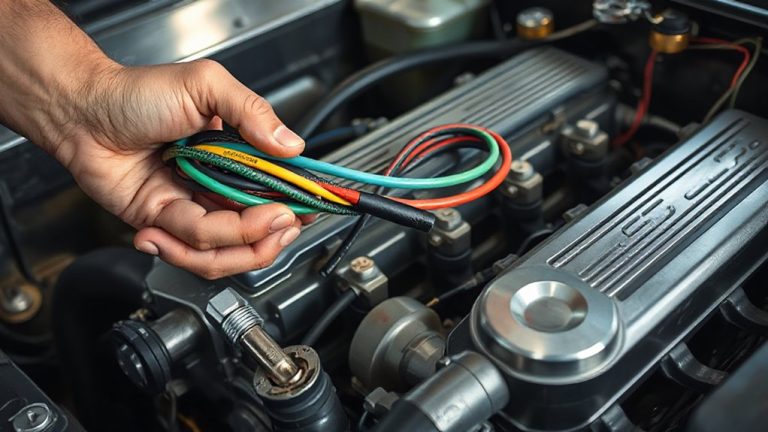
A single faulty connector can compromise your entire electrical system. Corroded connectors increase resistance, reducing current flow and efficiency. Even minor corrosion on battery terminals or ground lugs can cause voltage instability, affecting sensitive electronics. You should inspect all electrical connections at least every six months. Look for green or white buildup on terminals-classic signs of corrosion. Worn cables, especially those with frayed insulation or loose crimps, can’t maintain proper conductivity. Replace them immediately with UL-listed 6 AWG or 4 AWG copper cables, depending on amperage load. Use tin-plated terminals to resist future corrosion. Torque connections to manufacturer specs-typically 5–8 ft-lbs for battery posts. A clean, tight connection guarantees maximum power transfer. Don’t overlook ground connections; poor grounding causes system-wide issues. Replacing corroded connectors and worn cables takes little time but prevents costly failures down the road.
Fix Wiring Issues That Cause Voltage Drops
Voltage drops steal performance and generate unnecessary heat-don’t let undersized or damaged wiring sabotage your system. Use at least 8-gauge cables for high-current circuits to minimize resistance and maintain voltage under load. Poor cable routing increases wire length unnecessarily, raising resistance and reducing efficiency. Always follow the shortest, most direct path possible while avoiding sharp bends or pinching. Check insulation integrity regularly; cracked or frayed insulation risks shorts, leakage, and fire. Replace any wiring showing brittleness, discoloration, or abrasion. Secure wires away from heat sources and moving parts using non-conductive clamps. Proper cable routing also prevents electromagnetic interference with sensitive electronics. Confirm connections at both ends are tight and corrosion-free. Test voltage drop across the circuit: a difference exceeding 0.5 volts indicates trouble. Fix issues promptly to preserve system performance and protect components downstream.
Upgrade to High-Efficiency Batteries Proactively
While older lead-acid batteries may still power your system, they’re often inefficient and prone to energy loss under load. Upgrading to high-efficiency batteries gives you better performance and longer service life. Modern battery chemistry, like lithium-iron-phosphate (LiFePO4), offers far superior energy density than traditional lead-acid. That means more storage in less space and weight. A typical 100Ah LiFePO4 battery weighs around 25 pounds, versus 60+ pounds for lead-acid. It also delivers over 2,000 charge cycles with 80% depth of discharge. Lead-acid batteries usually manage 300–500 cycles and lose capacity faster. High-efficiency batteries maintain stable voltage under load, reducing strain on connected devices. Their low internal resistance minimizes heat buildup and energy waste. You’ll see faster charging and less downtime. Proactively switching to advanced battery chemistry isn’t just an upgrade-it’s a smart investment in system reliability, efficiency, and sustained power output.
Schedule Seasonal Electrical System Checkups
When you skip seasonal checkups, small electrical issues can grow into system failures. Battery corrosion increases resistance, reducing voltage delivery and stressing components. You must inspect terminals, cables, and grounding points every season. Load testing reveals weak batteries before they fail under electrical load. Check alternator output at 13.8–14.4 volts to guarantee proper charging. Use a multimeter for accuracy. Address worn belts or loose connections promptly to maintain efficiency. For reliable measurements, consider using one of the best multimeters recommended for precision and durability.
| Season | Task | Purpose |
|---|---|---|
| Spring | Test battery, inspect for corrosion | Prevent summer failure |
| Fall | Measure alternator output, check electrical load | Prepare for winter demands |
| Both | Tighten connections, clean terminals | Maintain peak conductivity |
Schedule these steps yearly to extend component life and guarantee consistent performance across temperature extremes.
On a final note
You keep your system running efficiently by staying proactive. Clean terminals monthly to prevent resistance buildup. Test battery voltage regularly; a healthy lead-acid unit reads 12.6V at rest. Check alternator output; it should maintain 13.8–14.4V under load. Replace corroded connectors to avoid 0.5V+ drops. Upgrade to AGM batteries for 20% longer life. Seasonal inspections prevent 80% of electrical failures. Precision maintenance guarantees peak efficiency.