DIY Guide to Replacing Spark Plugs Wires: A Basic but Important Task That Can Improve Electrical Connectivity Within Your Engine’s Ignition System for Better Combustion Efficiency
You should replace worn spark plug wires to restore proper ignition and improve combustion efficiency. Cracked insulation or resistance outside 6,000–15,000 ohms per foot means they’re failing. Choose the right type-standard, low-resistance, or spiral core-and match factory lengths. Remove old wires carefully, label them, and follow factory routing. Install with firm boot connections and secure clips. There’s more you need to know about avoiding common mistakes and testing performance.
Notable Insights
- Inspect old spark plug wires for cracks, burns, or corrosion to identify misfires and electrical leakage.
- Choose correct replacement wires by matching type, resistance, and insulation to your ignition system specifications.
- Disconnect the battery and label wires during removal to maintain firing order and prevent electrical hazards.
- Install new wires by following factory routing, ensuring secure boot connections and proper bend radius.
- Test the engine after replacement and perform periodic inspections to maintain optimal ignition performance.
Diagnose Failing Spark Plug Wires
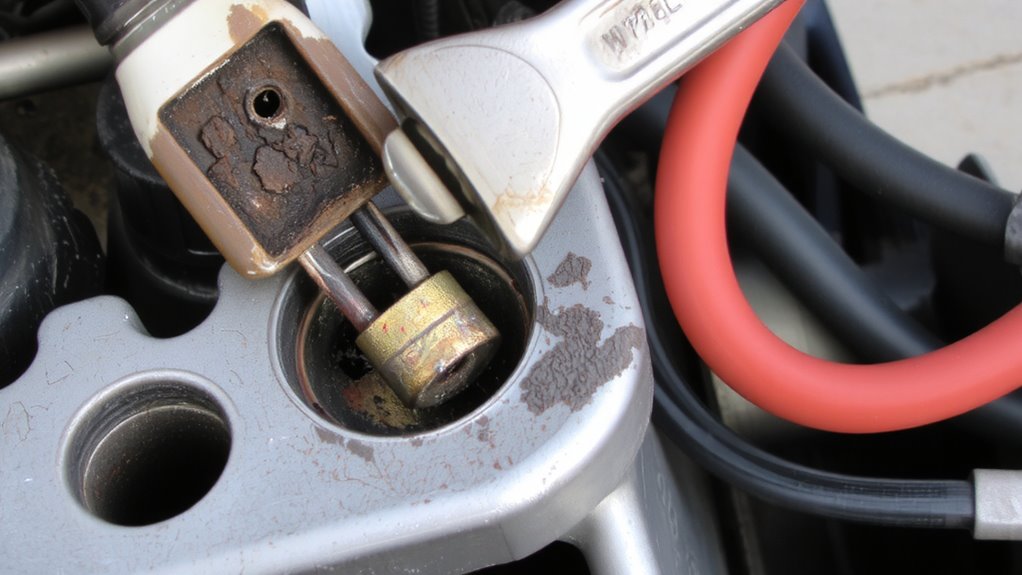
How can you tell when spark plug wires are failing? You’ll notice misfires, rough idling, or declining fuel economy. Start with a visual inspection: look for cracked insulation, burnt spots, or corrosion on the boots. Damaged wiring often shows fraying or melted areas near the spark plugs or distributor. Physical wear compromises electrical insulation, increasing the risk of misfires. Next, perform resistance testing using a digital multimeter. Set it to ohms and measure each wire’s resistance-typical values range from 6,000 to 15,000 ohms per foot, depending on wire type. Compare readings to manufacturer specs; a significant deviation indicates internal conductor degradation. Consistently high resistance reduces spark energy, weakening combustion. Poor conductivity mimics fuel or ignition problems. Accurate resistance testing and thorough visual inspection guarantee targeted diagnosis, preventing unnecessary part replacements. Using the correct spark plug gap tool ensures optimal spark plug performance after wire replacement.
Choose the Correct Wires for Your Engine
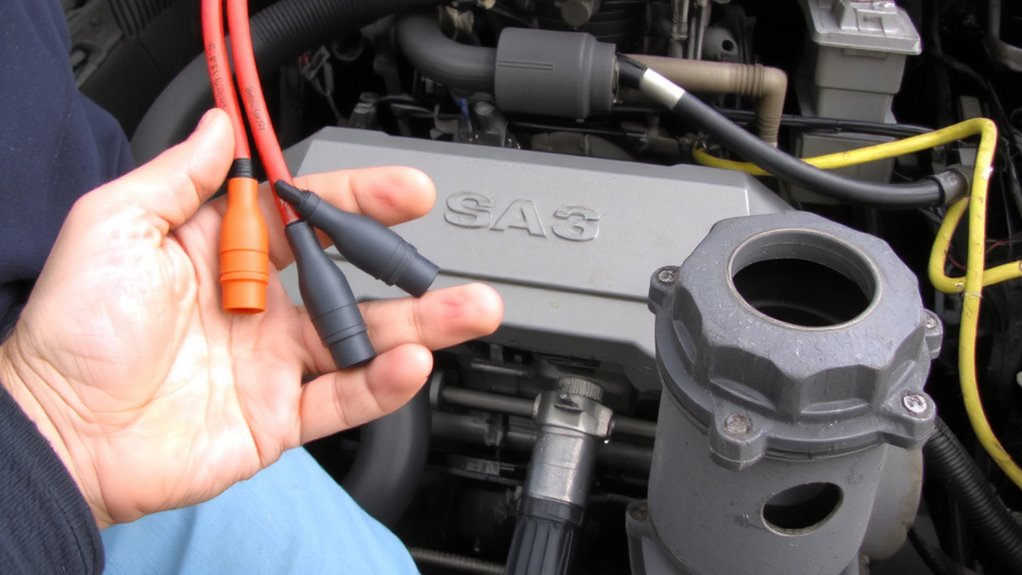
Start by identifying your engine’s ignition system type-this determines whether you need standard resistance, low-resistance, or spiral core spark plug wires. Each type has a specific resistance rating that affects signal strength and ignition efficiency. Standard wires usually have a resistance rating of 10,000 to 15,000 ohms per foot, suitable for most stock engines. Low-resistance wires, often made with a solid copper core, deliver faster spark transmission but can cause radio interference. Spiral core wires, with a coiled metal alloy conductor, offer balanced EMI suppression and reliable performance. The wire material impacts durability and conductivity-silicone insulation resists heat and moisture better than EPDM rubber. Always match the wire set to your distributor or coil-on-plug configuration. Using incorrect resistance ratings or wire material can disrupt spark timing and reduce combustion efficiency. For Chevy 350 engines, selecting the best spark plug wires for Chevy 350 ensures optimal fit, performance, and longevity.
Remove Old Spark Plug Wires Safely
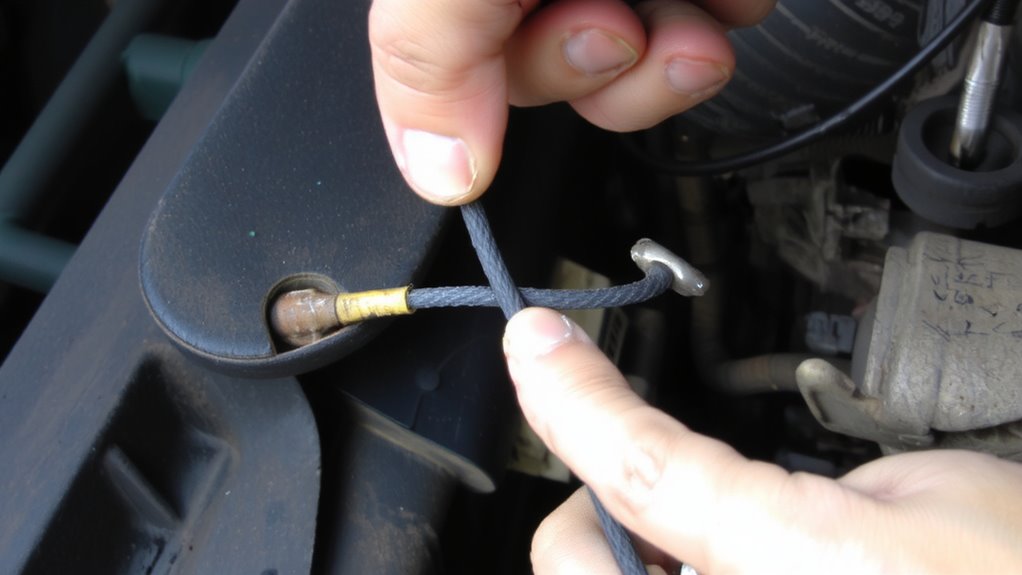
You’ve selected the correct spark plug wires for your engine’s ignition system, guaranteeing proper resistance ratings and insulation materials match your vehicle’s specifications. Now, prioritize safety precautions before removal. Disconnect the battery’s negative terminal to eliminate electrical hazards. Work on a cool engine to prevent burns and damage to components. Use wire labeling to maintain proper firing order-mislabeled wires cause misfires. Start with the longest wire or label each at distributor and spark plug ends using numbered tags. Pull from the boot, not the wire, to avoid internal conductor damage. Inspect for carbon tracking or cracked insulation as you remove each wire. Keep wires separated to prevent cross-connection. Maintain organization throughout. Proper handling guarantees no unintended stress on the distributor cap or spark plugs.
Install New Spark Plug Wires Correctly
Each new spark plug wire must be routed precisely to guarantee peak ignition performance and prevent electrical interference. Use proven routing techniques to follow the original factory path, maintaining proper separation between wires. This guarantees consistent spark delivery and reduces crosstalk risk. Secure each wire with insulated clips to stabilize positioning and support interference prevention. Never force a wire into place-gentle bends preserve internal conductor integrity. Maintain minimum bend radiuses of 1.5 inches to avoid damaging the core. Match wire lengths exactly to factory specs; incorrect lengths disrupt timing synchronization. High-quality silicone insulation resists heat up to 600°F and prevents voltage leakage. Each boot should click firmly onto the spark plug and distributor terminal, guaranteeing solid electrical contact. Proper routing techniques also simplify future maintenance. Correct installation supports maximum combustion efficiency by delivering full ignition voltage exactly when needed.
Avoid Common Installation Mistakes
Missteps during installation can compromise even the best spark plug wires, undermining engine performance and long-term reliability. Proper routing and secure connections are essential for peak ignition system function. Neglecting routing refinement increases resistance and susceptibility to electrical interference. Maintain adequate separation between wires to guarantee crossfire prevention, especially in high-output ignition systems. Use factory routing guides or looms to preserve correct wire paths. Upgrading to high-quality Best Spark Plugs for Mercedes C300 can further enhance ignition efficiency and overall engine performance.
| Mistake | Solution |
|---|---|
| Incorrect wire routing | Follow firing order and use looms |
| Ignoring crossfire prevention | Separate adjacent cylinder wires |
| Loose boot connections | Push until audible snap |
| Poor routing refinement | Maintain factory bend radius |
Always verify wire placement matches your engine’s firing order. Misrouting causes misfires and long-term component wear. Proper installation guarantees signal integrity and durable performance.
Test Engine Performance After Replacement
How does your engine respond after swapping out the old wires? Start the car and listen for smooth idle-no misfires or hesitation. You’ve just completed a critical step in engine tuning, so verify results with performance testing. Use an OBD2 scanner to check for misfire codes and monitor live data like fuel trims and RPM stability. A properly firing engine should hold idle within ±50 RPM of factory specs. Accelerate gently; power delivery should feel consistent across all cylinders. If your vehicle has a dynamometer-rated output, compare pre- and post-replacement data-expect up to a 2% improvement in combustion efficiency. No visible sparks or static leaks mean the wires are routing correctly and maintaining insulation integrity. Performance testing confirms whether the new wires restored lost voltage transfer, ensuring peak spark energy reaches each plug.
Improve Ignition With Proper Wire Maintenance
While replacing spark plug wires restores ignition efficiency, keeping them in top condition guarantees long-term performance. Regular inspection prevents voltage leaks and misfires. Check for cracks, carbon tracking, or boot deterioration every 30,000 miles. Damaged insulation compromises conductivity optimization, reducing spark intensity. Use a dielectric grease on boot connections to prevent moisture ingress and guarantee consistent contact. Proper routing and secure clamping prevent abrasion and electromagnetic interference. High-quality wires with suppressed resistance (typically 5,000–15,000 ohms per foot) support an effective ignition upgrade. Spiral-core designs outperform solid-core by minimizing radio frequency interference. Verify resistance with a digital multimeter; replace any wire exceeding manufacturer specs. Clean ceramic insulation with electrical contact cleaner. Correct maintenance sustains peak voltage transfer, guaranteeing complete combustion. Treat wire care as critical as replacement-ongoing conductivity optimization directly influences fuel economy, emissions, and engine longevity.
On a final note
You’ve completed a critical maintenance task that directly impacts ignition efficiency. Properly installed spark plug wires reduce electrical resistance, ensuring ideal spark delivery to each cylinder. Correct routing prevents cross-firing; dielectric grease improves conductivity and ease of future removal. Most modern wires have silicone insulation, rated for over 50,000 miles and temperatures exceeding 600°F. Regular inspection maintains performance. Your engine now runs smoother, with improved fuel economy and reduced emissions.