How to Choose Applicator Pads Based on Product Type for Optimal Outcomes
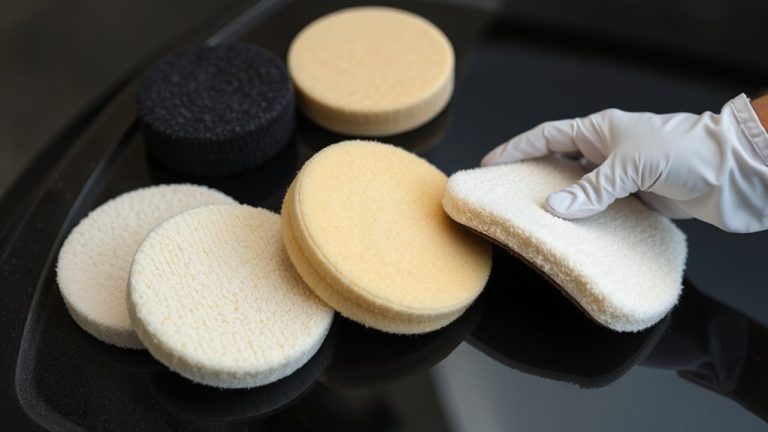
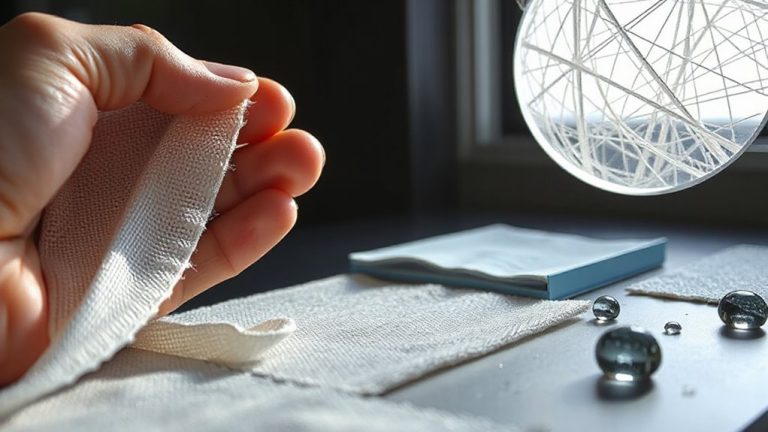
Choose foam pads for liquid stains and sealers-they’re non-linting, 3–5 mm thick, and resist water-based solutions but avoid aggressive solvents. Use microfiber pads (70% polyester, 30% polyamide) for thick polishes; their 2–4 mm pile height guarantees even distribution and durability. Opt for flocked pads on delicate finishes to prevent marring. Match pore density-80–100 PPI-to surface texture for uniform results. The wrong pad causes waste, uneven coats, or damage. You’ll see how proper selection improves finish quality and efficiency.
Notable Insights
- Match foam pads to liquid stains and sealers for even application and minimal waste.
- Use microfiber pads for thick polishes to ensure consistent distribution and abrasion control.
- Select flocked pads for delicate surfaces to prevent marring while maintaining uniform coverage.
- Ensure material compatibility to avoid pad degradation from solvents or adhesive residues.
- Choose pad density and thickness based on product viscosity and surface texture requirements.
Choose The Right Applicator Pad For Your Product
Many applicator pads are available, but not all suit your product’s needs. You must assess material compatibility before selecting a pad. Some materials degrade when exposed to solvents or adhesives, leading to linting or breakdown. For instance, polyurethane foams resist water-based solutions but fail with aggressive solvents. Surface texture directly influences coverage and absorption rates. A smooth surface demands a fine-cell pad to prevent streaking; coarse textures require open-cell structures for even saturation. Pads with 80–100 pores per inch work best for medium textures, guaranteeing uniform transfer without pooling. Material compatibility guarantees longevity, while surface texture alignment improves application precision. Using mismatched pads causes uneven coats, product waste, and rework. You’ll achieve best results only when both factors align with your product’s chemical composition and target substrate. Choose wisely-performance hinges on these details.
Foam Pads: Best For Liquid Stains And Sealers
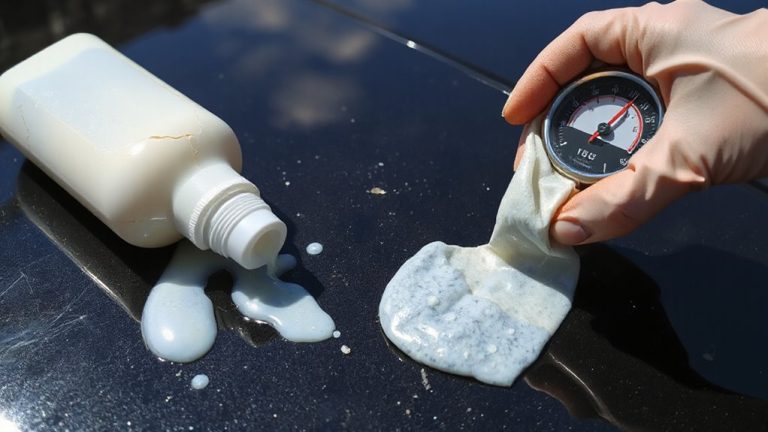
One of the most effective choices for applying liquid stains and sealers is a high-density foam pad. Foam density determines how evenly you apply product and how much it holds. High-density foam resists tearing and delivers a consistent coat without streaks. Liquid absorption is critical-too much, and you waste product; too little, and coverage suffers. A balanced foam pad absorbs just enough to spread smoothly while minimizing runoff. For best results, consider using a complete car wax applicator kit that includes high-density foam pads designed for precision and durability.
| Feature | Benefit |
|---|---|
| High foam density | Guarantees even application and durability |
| Moderate liquid absorption | Prevents pooling and waste |
| Non-linting surface | Leaves no residue behind |
| 3–5 mm thickness | Optimized for control and smooth finish |
Use these pads with water- or solvent-based sealers and liquid wood stains. They’re not suited for thick polishes-save those for microfiber.
Microfiber Pads: Ideal For Thick Polishes
Think of microfiber pads as the precision tools for handling thick, viscous polishes that demand controlled application. These pads feature densely woven synthetic fibers, typically 70% polyester and 30% polyamide, creating a uniform surface for even product distribution. You’ll find their absorption capacity superior to foam, retaining more polish without dripping or wasting product. This retention allows fewer reapplications and smoother finishes. Microfiber pads maintain pad durability through multiple uses, especially when cleaned properly after each use. They resist fraying and compression set, even under firm pressure. With a typical pile height of 2–4 mm, they balance aggressiveness and finesse on hard surfaces. You can use them effectively on paint, metal, and glass. Their construction enables consistent shear force, breaking down abrasive particles in heavy polishes efficiently. Choose microfiber when precision, efficiency, and reusability matter most. For best results, pair microfiber pads with a car wax applicator designed for maximum control and even pressure distribution.
Flocked Pads: Gentle Touch For Delicate Finishes
When you’re working with sensitive surfaces, flocked pads deliver a soft yet effective solution for applying polishes and sealants without marring the finish. Their soft touch prevents micro-marring on delicate clear coats, trim, and matte finishes. The vertical fiber alignment guarantees even distribution of product across the surface. Flocked pads are typically 3 inches in diameter with a 3/4-inch thickness, compatible with most dual-action polishers.
| Material | Density | Best For |
|---|---|---|
| Nylon flock | Medium | Wax application |
| Polyester blend | Low | Sealants |
| Microflock | High | Matte finishes |
They compress uniformly under light pressure, preventing pooling. You’ll achieve consistent spread rates at 1,200–1,800 orbital RPM. Unlike foam, flocked pads resist shredding and hold shape after multiple uses. Their precision makes them ideal for detailed zones like mirrors or emblems.
Avoid These Applicator Pad Mistakes
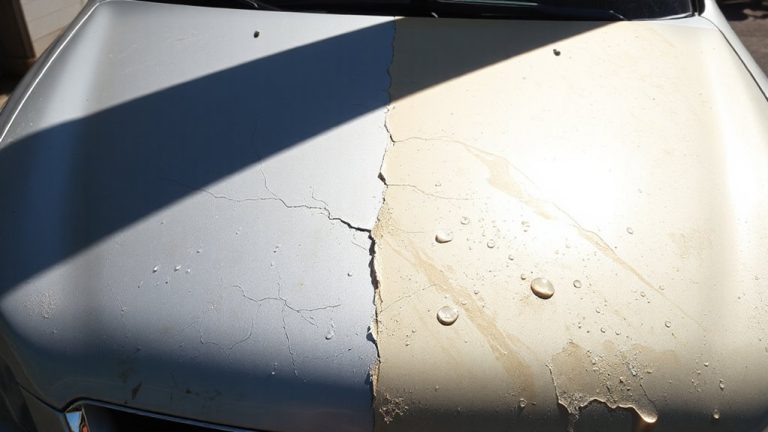
While selecting the right applicator pad matters, using it incorrectly can undo even the best product choices. Applying too much application pressure deforms the pad material, leading to uneven product distribution and premature wear. Most pads perform ideally under 1.5 to 2.5 pounds of force-exceeding this range risks streaking and material fatigue. You should also match pad material to the product viscosity; microfiber works well with thin sealants, while foam handles thicker waxes. Using a worn or contaminated pad introduces abrasives, causing surface marring. Clean pads after every three to five applications to maintain integrity. Never soak pads in solvent-this breaks down binder resins. Instead, use enzyme-based cleaners. Rotate pads regularly to avoid localized compression set. Choosing the right durometer matters: 25–35 Shore A is ideal for most finishes. Poor handling cuts pad life by up to 60%. For consistent results, consider using one of the best car wax applicators designed to balance grip and foam density for even spreading. best car wax applicators
How Your Pad Choice Affects Finish Quality
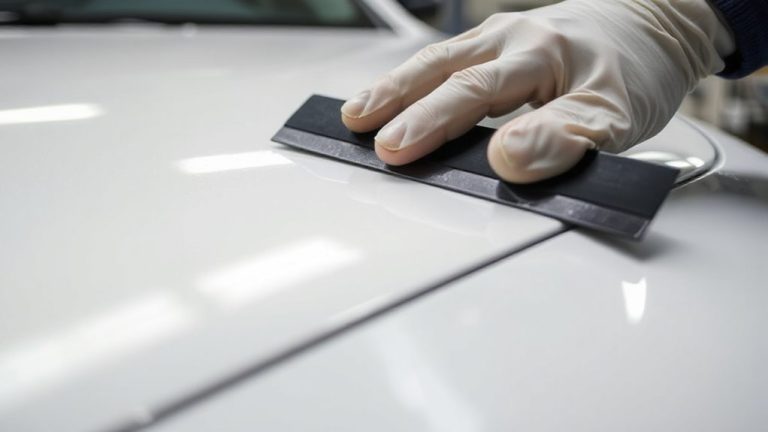
Finish quality hinges on pad selection-your choice directly impacts gloss levels, surface flatness, and product consistency. Pad texture determines how evenly material deposits on the surface. A coarse texture spreads thick films, often leaving streaks; a fine texture enables smooth, uniform application ideal for high-gloss finishes. Material density affects control and absorption. High-density pads resist saturation, offering precision with heavy-bodied products. Low-density pads absorb more but may release product inconsistently, compromising flatness.
| Pad Texture | Recommended Use |
|---|---|
| Fine | High-gloss, clear coatings |
| Coarse | Textured surfaces, primers |
Choose firm, medium-density foam for consistent release and minimal stippling. Soft pads compress too easily, creating thin spots. Matching pad texture and material density to your product guarantees peak finish quality-think of it as pairing the right tool to the job.
On a final note
Choose the right applicator pad to match your product type and achieve flawless results. Foam pads, 5 mm thick with closed-cell structure, spread liquid stains evenly without absorbing excess. Microfiber pads, with 200,000 fibers per square inch, hold thick polishes and reduce wiping time. Flocked pads use vertically aligned nylon fibers for delicate surfaces, preventing marring. Using the wrong pad risks streaks, hazing, or swirls. Match pad to product-precision matters.