Using Uv-Blocking Car Covers With Reflective Inner Linings
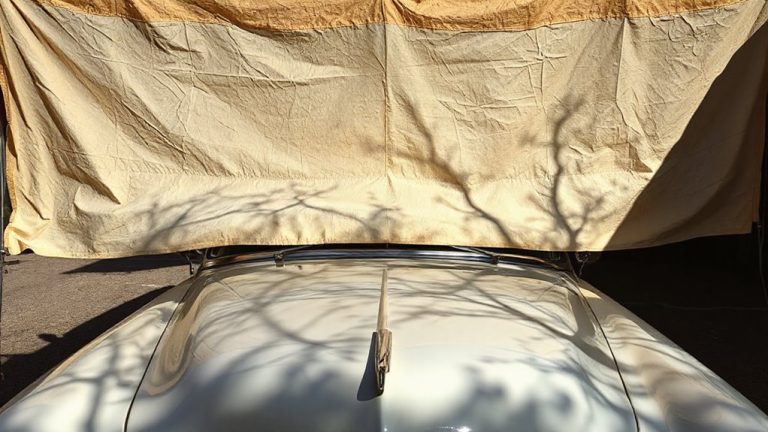
You shield your car from UV and heat damage using covers with reflective inner linings that block up to 98% of solar radiation. These multi-layer covers use aluminized polyester to reflect sunlight, reducing interior temperatures by 30–45°F. High-quality models use 180–220 g/m² UV-stabilized polypropylene, resist degradation for over 3,000 hours, and fit precisely within ±0.5 inches. They prevent fading, cracking, and glue breakdown. Proper care guarantees long-term protection. There’s more to optimizing your cover choice based on climate and vehicle type.
Notable Insights
- UV-blocking car covers with reflective linings deflect solar radiation, reducing interior heat by 30–45°F.
- Reflective aluminized polyester layers block up to 98% of harmful UV rays, preventing dashboard and upholstery damage.
- Proper fit with elastic hems and gusseted corners ensures full coverage and prevents wind flap or abrasion.
- Clean covers every 2–3 months with mild soap to maintain UV protection and prevent dirt buildup.
- Store covers folded in a cool, dry place to preserve elasticity and prevent long-term material degradation.
Why UV and Heat Damage Your Car
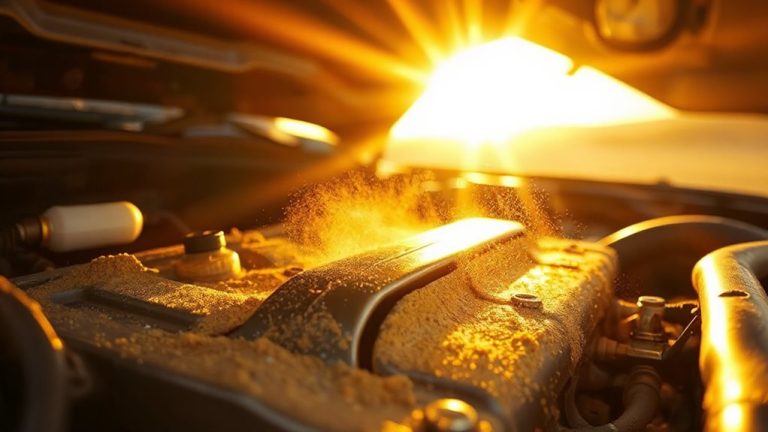
Sunlight isn’t just light-it’s a mix of visible rays, infrared radiation, and ultraviolet (UV) energy, all of which contribute to long-term vehicle wear. UV radiation penetrates surfaces, breaking down chemical bonds in materials. This causes fading paint, especially in dark or metallic finishes exposed to peak solar intensity (up to 1,000 W/m²). Prolonged exposure degrades clear coat layers, thinning their protective barrier by as much as 10% annually. Infrared radiation increases surface temperature. Dashboard materials can absorb heat, reaching over 180°F (82°C) in direct sun. This thermal cycling-repeated expansion and contraction-leads to interior cracking in vinyl, plastic, and leather. UV and heat together reduce material elasticity by up to 40%, accelerating wear. Even glass components are affected, with seals weakening under sustained thermal stress. Protection begins with understanding these forces, not just blocking light, but managing energy absorption and surface temperature to preserve structural and cosmetic integrity. A highly effective way to combat these damaging effects is by using a cover with a reflective inner lining that minimizes heat retention and enhances UV protection.
How Uv-Blocking Covers With Reflective Linings Work
You can stop UV and heat damage before it starts with the right protection in place. Uv-blocking covers with reflective linings use advanced material composition to deflect solar radiation. These covers typically combine polyester or polypropylene outer layers with a metallized inner coating, creating a barrier against infrared and ultraviolet rays. The reflective lining increases light diffusion, scattering incoming radiation instead of absorbing it. This reduces surface temperatures by up to 30°F compared to unprotected vehicles. The multilayer design includes UV-inhibiting additives embedded during manufacturing, ensuring long-term resistance without degradation. Material composition determines durability, with 180–220 g/m² fabric weights offering ideal balance between weight and protection. Microfibers in the weave enhance light diffusion, preventing concentrated hot spots. These technical features work together to minimize thermal buildup and block over 90% of harmful UV rays, maintaining your car’s exterior and interior integrity under direct sunlight. For reliable long-term protection, consider covers specifically rated for both sun and rain protection.
Key Benefits of Reflective Interior Car Covers
While your vehicle sits parked under a blazing afternoon sun, a reflective interior car cover actively defends against thermal and UV damage. It delivers exceptional interior protection by blocking up to 98% of harmful ultraviolet radiation, preventing dashboard cracking, fading upholstery, and glue degradation in trim components. The reflective layer, typically made of aluminized polyester, repels solar radiation rather than absorbing it. This design enables effective temperature regulation, reducing interior cabin heat by as much as 30–45°F compared to uncovered vehicles. Temperatures inside an unprotected car can exceed 150°F; with a reflective cover, they typically remain under 110°F. The cover’s multilayer construction includes a UV-stable outer fabric and a non-abrasive lining to avoid surface scratches. It installs quickly, conforms to most vehicle shapes, and is reusable for over five years with proper care. This solution offers measurable performance for long-term vehicle preservation.
What Makes a Great UV-Blocking Cover?
A high-performance UV-blocking car cover does more than simply shield your vehicle-it’s engineered to maximize solar reflectance and minimize degradation from prolonged sun exposure. You need material durability that withstands UV radiation, temperature swings, and abrasion. Look for multi-layer fabrics with UV-stabilized polypropylene or polyester, tested to block 98% of UV rays. These materials resist yellowing and fiber breakdown over 3,000+ hours of accelerated weathering. Coverage fit is equally critical. A precision fit with elastic hems and gusseted corners guarantees a snug, secure seal around mirrors and bumpers. Poor fit leads to flapping, which causes micro-abrasions and reduces protection. Dimensional accuracy within ±0.5 inches across length, width, and mirror-to-mirror span guarantees peak performance. Reinforced seams and double-stitched edges enhance longevity. Together, material durability and exact coverage fit define what makes a great UV-blocking cover-engineering that combines science with precision for your car’s defense.
How to Use and Care for Your UV-Blocking Cover
Before sliding on your UV-blocking cover, always make certain the vehicle’s surface is clean and dry to prevent trapped moisture from promoting mold or surface etching. Apply the cover gently to avoid scratching the paint, guaranteeing full coverage from windshield to rear bumper. Clean your cover every two to three months, or more frequently in dusty environments, using mild soap and lukewarm water to preserve fabric integrity. Avoid harsh detergents that degrade UV-resistant coatings. Repair minor tears immediately with manufacturer-approved patches to maintain protective performance. When not in use, practice proper storage methods-fold the cover neatly and store it in a cool, dry place away from direct sunlight to prevent material fatigue. Do not compress it long-term, as this weakens elastic hems and seam seals. Reflective linings retain effectiveness for up to five years with regular maintenance. Proper care extends service life and guarantees consistent UV blockage above 98%. For optimal protection, choose a cover designed specifically for indoor use, as these often feature best indoor car covers construction for enhanced breathability and paint safety.
When You Should Use a UV-Blocking Cover
When your vehicle sits parked under open skies, a UV-blocking cover should be in place-especially during peak sun hours between 10 a.m. and 4 p.m., when ultraviolet radiation reaches its highest intensity. Prolonged exposure accelerates car color fading, as UV rays break down paint’s clear coat layer, typically 1.5 to 2.0 mils thick. A UV-blocking cover with a reflective inner lining deflects up to 98% of solar radiation, greatly reducing surface temperatures. Interior material cracking occurs when cabin temperatures exceed 160°F; a quality cover lowers interior heat by 30–50°F. Use the cover daily if parked outdoors, in high-altitude areas, or near reflective surfaces like concrete or water. Covers with UPF 50+ ratings provide maximum protection. Guarantee a snug fit using elastic hems or built-in mirrors to prevent abrasion. Deploy it consistently to preserve finish integrity and extend material lifespan.
On a final note
Your car faces daily UV and heat damage, degrading paint and interiors. A UV-blocking cover with a reflective inner lining reduces surface temperatures by up to 40°F. The outer layer blocks 99% of UV rays; the aluminized underside reflects infrared radiation. Dual-ply polypropylene fabric resists tearing, with a 230 g/m² density. Use it whenever parked long-term. Secure with elasticized edges for a snug fit. Proper care extends service life beyond five years.