Why Heat-Resistant Adhesives Improve Driver Durability
Heat damages standard adhesives by degrading them above 200°F, weakening bonds through expansion and chemical breakdown. You need heat-resistant adhesives because they withstand temperatures over 500°F using cross-linked silicone or epoxy matrices. These retain over 90% shear strength after 1,000 hours at 300°F and handle thermal cycling from -40°C to 250°C. Their stable polymer backbones resist oxidation and accommodate differing expansion rates in metals like aluminum and steel. There’s more to reflect upon about material compatibility and long-term reliability.
Notable Insights
- Standard adhesives degrade above 200°F, weakening bonds and reducing driver durability under high heat.
- Heat-resistant adhesives withstand temperatures over 500°F, maintaining structural integrity in extreme thermal environments.
- Their cross-linked polymers and ceramic additives resist thermal expansion stress and prevent bond line failure.
- These adhesives retain over 90% shear strength after prolonged exposure to 300°F, ensuring long-term reliability.
- They accommodate differential expansion between materials, preventing cracks and joint failure in thermal cycling conditions.
How Heat Damages Standard Adhesives in Drivers
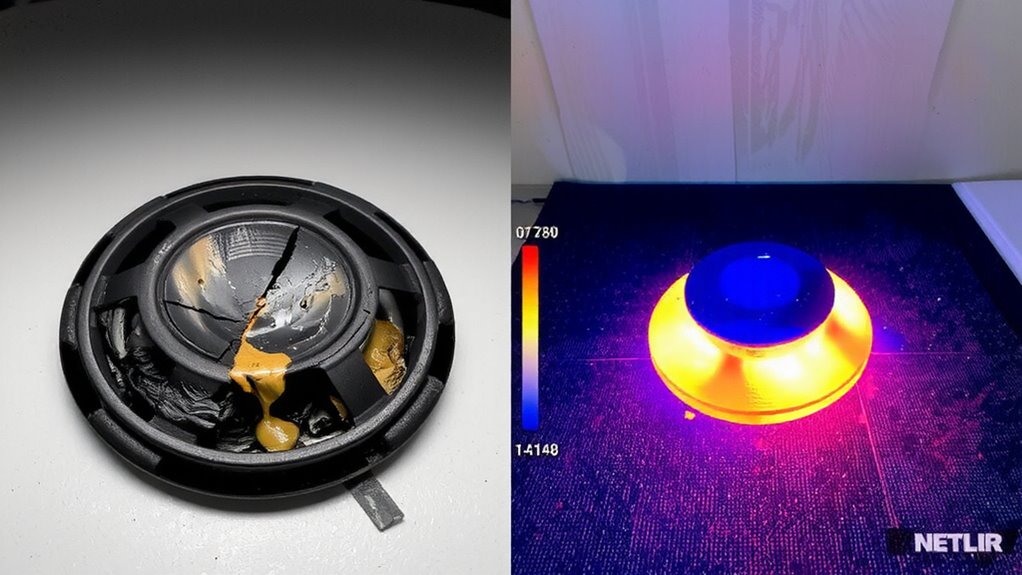
While most drivers operate under intense thermal conditions, standard adhesives often fail because they aren’t engineered to handle prolonged heat exposure. You rely on adhesives to secure critical components, but most begin degrading above 200°F (93°C). Thermal expansion causes substrates to shift slightly, weakening the bond line as the adhesive softens. Unlike metals, polymers in standard glues expand unevenly, creating internal stress. Over time, this leads to cracking or delamination. Simultaneously, chemical degradation breaks down adhesive polymers, especially when exposed to engine oils or moisture. The molecular backbone fragments, reducing tensile strength by up to 70%. You’ll notice joint slippage or complete bond failure. These adhesives weren’t built for sustained thermal cycling. Without heat-resistant formulations, performance drops quickly. Standard bonds may hold initially, but they can’t endure repeated expansion and chemical exposure long-term.
What Makes Heat-Resistant Adhesives Hold Up Under High Heat
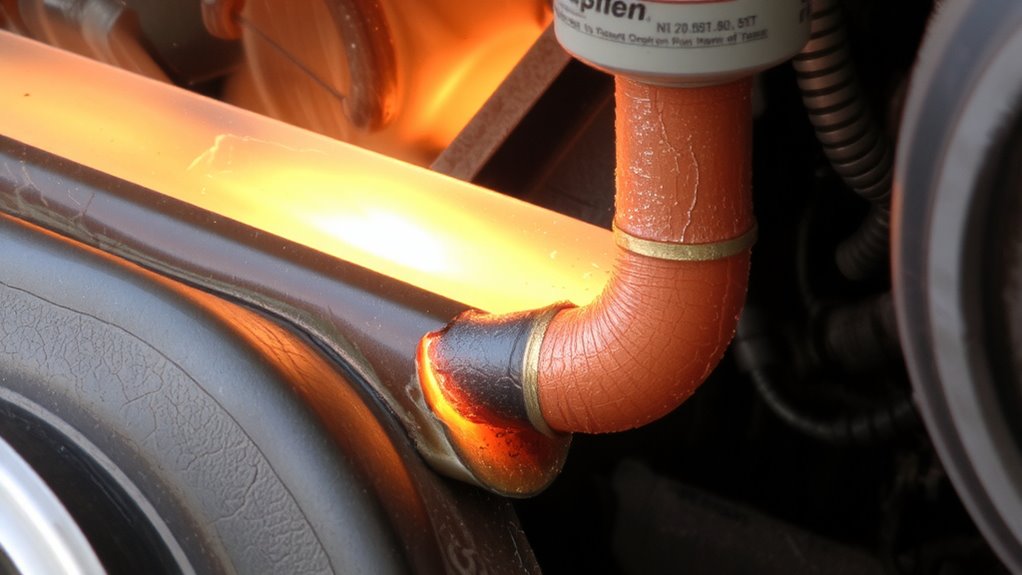
Heat-resistant adhesives outperform standard formulations by maintaining structural integrity at temperatures exceeding 500°F (260°C). You rely on their ability to resist degradation where ordinary glues fail. These adhesives control thermal expansion, minimizing stress between bonded materials during temperature swings. Unlike standard polymers, they’re built with cross-linked molecular structures that lock into place, preventing softening or flow. Their chemical stability guarantees they won’t break down when exposed to high heat or harsh byproducts of combustion. This stability comes from inorganic fillers and silicone or epoxy matrices that retain strength and adhesion. The tight bond resists micro-cracking, even after repeated heating cycles. You’ll find them formulated with ceramic additives or metal oxides for enhanced performance. These materials work together to maintain load-bearing capacity and seal integrity under extreme thermal loads-critical for high-performance applications.
How Heat-Resistant Adhesives Extend Driver Lifespan
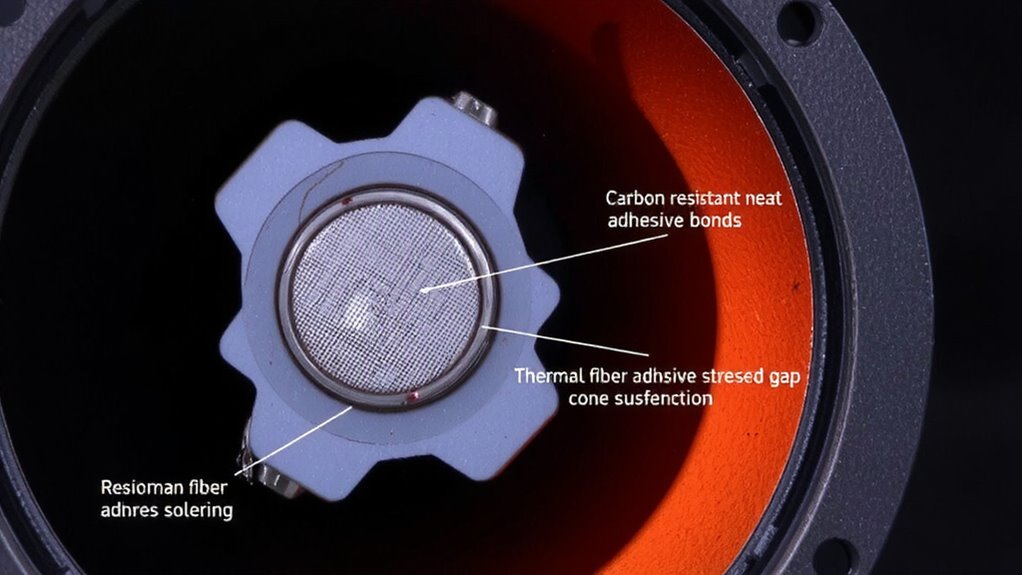
Every major component in a high-performance driver faces thermal stress, and that’s where your adhesive choice makes a difference. Heat-resistant adhesives withstand temperatures up to 350°F, far exceeding standard adhesives that degrade above 250°F. This resistance directly combats material fatigue by maintaining structural integrity under repeated thermal cycling. When components expand and contract, weak adhesives crack, but high-temp formulations absorb stress through elastic recovery. Bond oxidation is minimized because these adhesives contain antioxidant additives and stable polymer backbones. Oxidation weakens bonds over time, leading to delamination and failure. With a shear strength retention of over 90% after 1,000 hours at 300°F, heat-resistant adhesives guarantee lasting performance. You’re not just assembling parts-you’re locking in reliability. These adhesives reduce microcracking, support consistent energy transfer, and extend operational life by countering degradation at the molecular level.
Where Heat-Resistant Adhesives Outperform in Practice
Where do standard adhesives fail, and what makes high-temperature formulations stand out? They crack under thermal cycling-rapid shifts from extreme heat to cold. You’re dealing with under-hood temps that hit 250°C during operation, then drop to -40°C overnight. Standard glues can’t handle that. High-temp adhesives resist degradation across these swings, maintaining bond integrity. They manage material expansion too. Components like aluminum and steel expand at different rates-up to 22 micrometers per meter per °C for aluminum versus 12 for steel. Without flexibility, joints stress and fail. These advanced adhesives absorb those forces, offering shear strength above 3,000 psi even after 1,000 thermal cycles. You get lasting performance in exhaust systems, turbo housings, and powertrain mounts-places where failure isn’t an option. Reliability isn’t accidental. It’s engineered.
Choosing the Right High-Temp Adhesive for Long-Lasting Drivers
How do you guarantee your adhesive won’t fail when heat and stress pile on? You start with material compatibility-matching the adhesive’s chemical profile to substrates like aluminum, copper, or high-temp plastics guarantees long-term bonding under thermal cycling. Epoxies and silicone-based adhesives often perform best above 200°C, but only if they align with your materials’ coefficients of thermal expansion. Next, application precision is critical. Too much adhesive causes outgassing; too little reduces bond strength. Use automated dispensing systems when possible-tolerances within ±0.05 mm guarantee uniform layer thickness. High-temp adhesives with extended open times, like cyanoacrylates with 2-5 minute workability, allow repositioning without sacrificing cure integrity. Always verify performance with peel tests and shear strength checks-minimum 2,500 psi under continuous thermal load. Choose wisely: the right adhesive doesn’t just stick-it endures.
On a final note
You extend driver life by resisting thermal degradation. Standard adhesives fail above 120°C; heat-resistant variants withstand 200–300°C. They maintain bond strength under continuous thermal cycling. These adhesives use silicone, epoxy, or ceramic fillers for stability. Shear strength remains above 2,000 psi even after 1,000 hours at 250°C. You reduce maintenance costs and downtime. Their performance in voice coils and magnet assemblies proves reliability. You guarantee consistent operation in demanding thermal environments.