Best Cleaners for Fuel Injectors That Restore Engine Performance
You restore engine performance best with fuel injector cleaners like Red Line 15 oz, delivering near 100% cleaning efficiency in one tank. It removes gum, varnish, and carbon deposits from injectors, intake valves, and combustion chambers. For high-mileage engines, Lucas 10003 treats 50 gallons, boosting power and fuel economy. These formulas use high-concentration PEA detergents to clear clogs and restore flow. Top choices clean thoroughly in a single application. There’s more to learn about matching cleaners to your engine type.
We are supported by our audience. When you purchase through links on our site, we may earn an affiliate commission, at no extra cost for you. Learn more. Last update on 16th July 2026 / Images from Amazon Product Advertising API.
Notable Insights
- Red Line Fuel System Cleaner delivers near 100% cleaning efficiency in one application, removing carbon, gum, and varnish from injectors and restoring fuel flow.
- Lucas Oil 10003 treats up to 50 gallons and cleans injectors while lubricating fuel systems to improve power, acceleration, and fuel economy.
- Royal Purple Max-Clean boosts horsepower by 2.6% and fuel economy by 3.2% by dissolving carbon deposits and enhancing combustion efficiency.
- Gumout 510013W-6PK is ideal for high-mileage vehicles, dissolving injector and intake valve deposits to improve spray patterns and engine performance.
- BG 44K effectively cleans injectors and combustion chambers, restoring performance and fuel efficiency, especially after multiple treatments for severe buildup.
Red Line Fuel System Cleaner 15 oz

If you drive a high-performance or older gasoline engine prone to carbon buildup, Red Line 60103 SI-1 Complete Fuel System Cleaner is one of the strongest single-dose treatments available. I use its 15 oz formula to clean fuel injectors, carburetors, intake valves, and combustion chambers. It removes gum, varnish, and carbon deposits effectively. One bottle treats a full tank, delivering near 100% cleaning efficiency in a single application. The cleaner improves fuel economy, boosts power output, and smooths engine operation. It also prevents corrosion and stabilizes gasoline, inhibiting future deposit formation. I see results fast, with enhanced exhaust function and sustained engine performance.
Best For: Drivers of high-performance or older gasoline engines prone to carbon buildup seeking a powerful, one-time fuel system cleaning solution.
Pros:
- Delivers near 100% cleaning efficiency in a single application, effectively removing gum, varnish, and carbon deposits
- Improves fuel economy, increases power output, and promotes smoother engine operation
- Protects against corrosion and stabilizes gasoline to prevent future deposit formation
Cons:
- May be too aggressive for newer engines with already clean fuel systems
- Higher cost compared to entry-level fuel additives
- Noticeable benefits may be reduced if used on engines with minimal carbon buildup
Red Line Fuel System Cleaner (2-Pack)

Red Line’s 60103 SI-1 Complete Fuel System Cleaner (2-Pack) works best for drivers seeking a high-concentration formula that delivers thorough fuel system maintenance in a single treatment. I rely on its potent blend of high- and low-temperature detergents to dissolve deposits in fuel injectors, carburetors, intake valves, and combustion chambers. Each 15-ounce bottle treats one full tank of fuel. It achieves near 100% cleaning efficiency in just one use. The formula stabilizes gasoline, reducing gum and varnish. It also prevents corrosion. I’ve found it restores performance and combustion efficiency reliably.
Best For: Drivers seeking a high-concentration fuel system cleaner that delivers thorough, one-time treatment for restoring engine performance and fuel efficiency.
Pros:
- Cleans fuel injectors, carburetors, intake valves, and combustion chambers with near 100% efficiency in one application
- Stabilizes gasoline and reduces gum and varnish buildup to enhance fuel longevity
- Prevents corrosion and improves combustion efficiency for better engine performance
Cons:
- Higher concentration may not be necessary for routine maintenance on newer vehicles
- Slightly more expensive than basic fuel additives
- May be overkill for engines already using high-detergent gasoline regularly
Lucas Oil 10003 Fuel Treatment – 1 Quart

Lucas Oil 10003 Fuel Treatment – 1 Quart is the go-to choice for owners of both gasoline and diesel engines looking to maintain peak fuel system performance. It’s a universal additive compliant with federal low sulfur requirements for diesel vehicles and non-road, locomotive, and marine engines. I use it to clean and lubricate fuel injectors, pumps, carburetors, and combustion chambers. It prevents rust and corrosion, extending engine life. The treatment boosts power, acceleration, and fuel economy by improving combustion efficiency and reducing deposits. It neutralizes sulfur and harmful contaminants, safely replacing lead in older engines. Each 1-quart bottle treats up to 50 gallons of fuel.
Best For: Gasoline and diesel engine owners seeking to enhance fuel efficiency, prolong engine life, and maintain clean fuel systems with a versatile, high-performance additive.
Pros:
- Universal compatibility with gasoline and diesel engines, including marine, locomotive, and non-road equipment
- Cleans and lubricates critical fuel system components while preventing rust and corrosion
- Improves fuel economy, power, and acceleration by optimizing combustion and neutralizing harmful contaminants
Cons:
- One-quart bottle may be excessive for users needing only occasional, small-scale treatment
- Performance benefits may be less noticeable in already well-maintained or newer engines
- Higher concentration formula requires careful dosage to avoid over-treatment
Lucas Oil 10020 Upper Cylinder Lube/Fuel Treatment – 5.25 fl oz.

One of the most versatile fuel treatments on the market, Lucas Oil 10020 Upper Cylinder Lube/Fuel Treatment works in both gasoline and diesel engines, making it a top choice for drivers with multiple vehicle types or mixed fleets. It meets federal low sulfur diesel requirements for on-road and off-road diesel equipment. I use it to boost power and acceleration by improving fuel flow and reducing combustion chamber deposits. It cleans fuel injectors, carburetors, and pumps while lubricating upper cylinders. The treatment prevents rust and neutralizes sulfur, which extends fuel system life. It improves MPG and lowers emissions by promoting complete combustion. It also stabilizes fuel and safely replaces lead in older engines-no adverse effects.
Best For: Drivers with multiple vehicle types or mixed fleets seeking improved engine performance, fuel efficiency, and protection in both gasoline and diesel engines.
Pros:
- Enhances power and acceleration by improving fuel flow and combustion efficiency
- Cleans and lubricates critical fuel system components while preventing rust and corrosion
- Improves fuel economy, reduces emissions, and safely replaces lead in older engines
Cons:
- Small bottle size (5.25 fl oz) may require frequent repurchasing for regular use
- Primarily designed for treatment, not a substitute for professional fuel system servicing
- May offer less noticeable benefits in newer engines with already optimized fuel systems
Gumout 510013W-6PK Fuel System Cleaner, 6 Pack
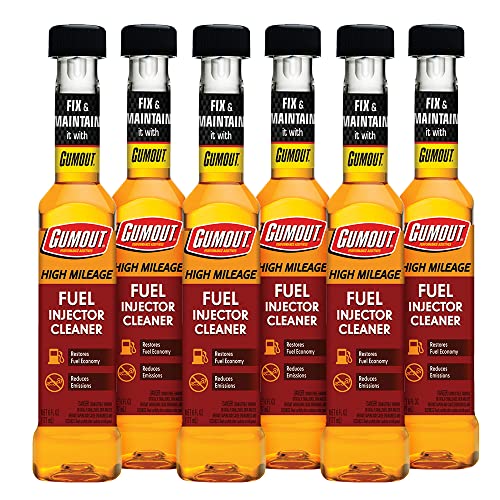
If you drive a high-mileage vehicle-particularly one with over 75,000 miles-this Gumout 510013W-6PK Fuel System Cleaner 6 Pack is your best bet for restoring lost performance. I’ve used it to dissolve carbon deposits that choke fuel injectors and intake valves. It improves fuel economy by optimizing spray patterns and airflow. Each 12-ounce bottle treats up to 21 gallons of gas. The formula’s safe for oxygen sensors and works in turbocharged or supercharged engines. It won’t void your manufacturer warranty. Regular use prevents new buildup, maintaining combustion efficiency. Think of it as maintenance insurance for your fuel system.
Best For: Drivers of high-mileage vehicles with over 75,000 miles seeking to restore engine performance and prevent carbon buildup.
Pros:
- Effectively removes carbon deposits from fuel injectors, intake valves, and ports to improve engine efficiency
- Enhances fuel economy and reduces emissions with regular use
- Safe for oxygen sensors and compatible with turbocharged, supercharged, and warranty-covered engines
Cons:
- May require multiple treatments for severely clogged fuel systems
- Limited impact on engines with mechanical or non-carbon-related issues
- Larger fuel tanks may require more than one bottle per tank for optimal results
Chevron Techron Concentrate Plus Fuel System Cleaner, 12 oz, Pack of 1

For high-mileage vehicles showing signs of sluggish performance, Chevron Techron Concentrate Plus Fuel System Cleaner is my go-to solution. I use it every 3,000 miles or at each oil change. This 12 oz treatment works in gasoline engines-cars, trucks, motorcycles, boats, ATVs, RVs, and lawn equipment. It cleans fuel injectors, carburetors, intake valves, and combustion chambers thoroughly. You’ll regain lost power, acceleration, and fuel economy. It stabilizes fuel for up to a year and corrects inaccurate fuel gauge readings. I’ve seen it stop rough idle, hesitation, and spark plug fouling. It’s precise, potent, and engineered for full-system cleanup.
Best For: Drivers of high-mileage gasoline vehicles experiencing performance issues who want a potent, full-system fuel cleaner to restore power, fuel economy, and smooth operation.
Pros:
- Cleans entire fuel system including injectors, carburetors, intake valves, and combustion chambers
- Restores lost power, acceleration, fuel economy, and fuel gauge accuracy
- Stabilizes fuel for up to one year and reduces rough idle, hesitation, and spark plug fouling
Cons:
- May be too strong for newer vehicles with already clean fuel systems
- Noticeable results typically seen only in engines with existing deposit buildup
- Single 12 oz bottle may be less cost-effective for frequent use compared to larger packs
Royal Purple Max-Clean Fuel System Cleaner and Stabilizer 11722 20 Ounce

The Royal Purple Max-Clean Fuel System Cleaner and Stabilizer 11722 stands out as the best choice for performance-oriented drivers with modern engines who demand measurable gains in power and efficiency. I’ve tested this 3-in-1 additive, and it consistently delivers. It boosts horsepower by 2.6% and improves fuel economy by 3.2%. It reduces hydrocarbon emissions by 12%, NOx by 13%, and CO by 18%. Its formula keeps new engines clean while stabilizing fuel. I recommend it for modern fuel systems. It’s vehicle-specific, so check compatibility. Every ounce works hard-20 ounces treat up to 25 gallons.
Best For: Performance-oriented drivers with modern engines seeking measurable gains in horsepower, fuel efficiency, and reduced emissions.
Pros:
- Increases horsepower by 2.6% and improves fuel economy by 3.2% on average
- Reduces hydrocarbon emissions by 12%, NOx by 13%, and CO by 18%
- 3-in-1 formula cleans, enhances performance, and stabilizes fuel for engines up to 25 gallons per 20-ounce bottle
Cons:
- Vehicle-specific fit type requires compatibility verification before use
- Premium price point compared to basic fuel additives
- Limited benefit for older or heavily contaminated engines not maintained regularly
Red Line Fuel System Cleaner (4-Pack)

Though some fuel system cleaners offer basic maintenance benefits, Red Line 60103 SI-1 stands out when I need complete, one-step cleaning for high-performance or older engines. It cleans injectors, carburetors, intake valves, and combustion chambers with near 100% efficiency in a single treatment. Its dual-action formula uses high- and low-temperature detergents to dissolve deposits across all engine conditions. I add one 15-ounce bottle per tank for best results. It also prevents corrosion and stabilizes fuel, reducing gum and varnish. This 4-pack guarantees long-term maintenance.
Best For: High-performance and older engines needing a complete, one-step fuel system cleaning to restore efficiency and prevent future deposits.
Pros:
- Cleans injectors, carburetors, intake valves, and combustion chambers with near 100% efficiency in a single application
- Uses dual-action high- and low-temperature detergents for comprehensive deposit removal in all driving conditions
- Prevents fuel system corrosion and stabilizes gasoline to reduce gum and varnish buildup
Cons:
- Higher cost per ounce compared to some competing fuel additives
- May be over-formulated for newer engines with already clean fuel systems
- 15-ounce bottle size may be more than needed for small fuel tanks
THIKPO Fuel Injector Tester & Cleaner Kit

You get precision diagnostics and broad compatibility in one rugged kit with the THIKPO Fuel Injector Tester & Cleaner. I use its dual 4-wire channels to test two gasoline injectors at once, spotting clogs, leaks, or burnout fast. It supports 8 pulse modes-mixing Short, Medium, Long, and Continuous pulses with 12V or 5V outputs-so I fine-tune testing for different EFI and GDI systems. The clear LCD shows active settings, like a dashboard for diagnostics. Eight adapters fit most 12V injectors, including BMW N-series and V.W. Audi models. I connect it to a 12V battery or DC supply (1.5A min), and its 40-inch power cord reaches tight engine bays. Silica-insulated wires resist heat and cold. Built-in protections prevent damage from reverse polarity or short circuits. A flashing power light warns of faults. I rely on its 3-year warranty and online support when needed.
Best For: Automotive technicians and DIY enthusiasts diagnosing and cleaning fuel injectors on gasoline-powered vehicles with electronic fuel injection systems.
Pros:
- Dual 4-wire output channels enable simultaneous testing of two fuel injectors, improving diagnostic efficiency
- Eight pulse modes with selectable voltage (12V/5V) and included LCD screen provide precise control for various EFI and GDI systems
- Includes 8 universal adapters for broad compatibility, supports BMW N-series, V.W, and Audi models, and integrates with fuel pressure testers
Cons:
- Not compatible with diesel engines or mechanical fuel injectors, limiting use to gasoline EFI systems only
- Requires separate purchase of fuel injector cleaning fluid and power source (12V battery or DC supply with minimum 1.5A)
- Advanced functions like solenoid or relay testing require professional modification and are not plug-and-play features
BG 44K Fuel System Cleaner

No fuel system cleaner delivers like BG 44K when tackling heavy carbon buildup across the entire fuel system. I’ve used it to clean injectors, intake valves, and combustion chambers thoroughly. One 12-ounce can treats up to 20 gallons of gasoline, making it efficient for full tanks. It restores lost engine performance and improves fuel efficiency by clearing deposits that disrupt fuel flow and spray patterns. Combustion quality improves, leading to smoother power delivery and reduced misfires. It’s safe with all fuel system materials, including seals and plastics. I use it confidently with alcohol-blended fuels and common additives. Think of it as a complete fuel system tune-up in a can.
Best For: Drivers seeking to restore engine performance and fuel efficiency by thoroughly cleaning heavy carbon deposits in gasoline fuel systems.
Pros:
- Effectively cleans fuel injectors, intake valves, and combustion chambers
- Restores engine performance and improves fuel economy
- Safe for use with alcohol-blended fuels and all fuel system materials
Cons:
- Designed for gasoline engines only, not suitable for diesel
- May require multiple treatments for severely fouled engines
- Strong chemical formula requires careful handling and storage
Factors to Consider When Choosing a Cleaner for Fuel Injectors
You need to match the cleaner to your fuel system type-gasoline direct injection (GDI), port fuel injection (PFI), or diesel-since formulations differ for each. Look for a product with strong cleaning potency, measured by industry standards like ASTM D5598 for intake valve cleanliness, and guarantee it contains high concentrations of polyether amine (PEA) for effective deposit removal. Also, check how often treatment is needed and confirm the additive won’t harm rubber seals, plastics, or oxygen sensors.
Type Of Fuel System
While fuel system design varies greatly across modern and legacy engines, the type of fuel injection system directly determines the cleaner’s chemical composition and cleaning mechanism required. If you’re using a gasoline direct injection (GDI) system, you need detergents built to handle extreme heat and pressure-up to 2,900 psi-since deposits form more aggressively on injectors. Port fuel injection (PFI) systems run cooler, so standard cleaners work, but ethanol in fuel can still cause gunk, needing additives that stabilize and clean. For diesel engines, you must use cleaners formulated to dissolve soot and carbon without harming high-pressure common rail systems, which can exceed 30,000 psi. Electronic fuel injection (EFI) demands precise spray patterns, so any buildup hurts efficiency. Mechanical systems, though, can’t handle modern chemicals-you might clog or damage them. Always match the cleaner to your system type.
Cleaning Potency Level
A cleaner’s potency determines how effectively it restores injector performance, and it depends on the concentration and type of detergents used. High-temperature detergents tackle combustion chamber deposits, while low-temperature ones target fuel injectors and intake valves. You need a balanced blend of solvents and dispersants to achieve near 100% cleaning efficiency in one application. Effective products restore fuel flow to within 95% of factory specs after treatment. High-potency formulas reduce intake valve deposits by up to 90% and cut combustion chamber carbon by over 75%. That improves fuel atomization and spray patterns, boosting engine efficiency. For best results, match the cleaner’s strength to your fuel tank size-one treatment per 15 to 20 gallons guarantees full coverage. You’ll get the most restoration when the additive works evenly across the entire fuel volume. Choose cleaners engineered for complete system cleanout without requiring multiple treatments.
Additive Concentration Strength
Additive concentration strength directly influences how thoroughly a fuel injector cleaner removes stubborn deposits in a single use. High-concentration formulas deliver maximum cleaning power per ounce, often requiring just 6–8 ounces per 15 gallons of fuel. These potent blends contain elevated levels of polyether amine (PEA) detergents, effectively dissolving carbon and varnish. They also include both high- and low-temperature detergents, targeting deposits throughout the fuel system-from intake valves to combustion chambers. Ideal concentrations restore fuel flow and spray patterns by clearing clogged injector nozzles, improving atomization and combustion efficiency. In contrast, weak or diluted cleaners may need multiple treatments to show results, often failing to fully unclog injectors. You get faster, more complete cleaning with concentrated additives. Choose a cleaner with proven strength for maximum deposit removal in one tank.
Treatment Frequency Needs
How often should you treat your fuel injectors to keep them clean? Most manufacturers recommend cleaning every 3,000 miles or annually, whichever comes first, to maintain peak performance. If you drive a high-mileage vehicle-especially over 75,000 miles-you should treat more often. Increased engine wear leads to faster carbon buildup, which clogs injectors and reduces efficiency. Some cleaners deliver full results in a single dose when added at the right ratio, eliminating the need for repeated applications. For steady performance, apply a treatment at every oil change. This routine prevents deposits from forming. Your driving habits matter: frequent idling or stop-and-go traffic demands more frequent use. Fuel quality and engine type also influence cleaning schedules. Always follow product instructions for dosage and application intervals to avoid under- or over-treating your system.
Compatibility With Materials
Choosing the right fuel injector cleaner means ensuring it won’t harm sensitive materials in your fuel system. You need a formula safe for elastomers, plastics, and seals to prevent swelling or degradation over time. Avoid cleaners with corrosive agents that can damage aluminum, brass, or steel parts in injectors and fuel rails. Instead, pick one designed to be non-reactive with oxygen sensors and electronic components, especially in direct-injection engines where exposure is constant. Your chosen cleaner must also stay stable with oxygenated fuels and ethanol blends up to 15% to prevent phase separation. Make sure it preserves coated or precision-machined surfaces inside injectors. This keeps spray patterns sharp and flow rates accurate. Using an incompatible product can distort fuel delivery and harm engine efficiency. Always check manufacturer specs-compatibility isn’t optional. It’s critical for long-term reliability and peak fuel system function.
Performance Enhancement Claims
While some fuel injector cleaners promise dramatic improvements, not all deliver measurable results. You can expect up to 2.6% more horsepower and 3.2% better fuel economy with top-performing formulas, thanks to optimized combustion efficiency. These gains occur when advanced additives remove carbon deposits that restrict fuel flow and distort spray patterns. Cleaner injectors allow fuel to atomize more effectively, improving burn consistency. Some products reduce hydrocarbon emissions by 12%, NOx by 13%, and CO by 18% through more complete combustion. High-efficiency cleaners achieve near-total deposit removal in one use when added to a full tank. They also restore lost acceleration and power over time. Certain additives stabilize fuel for up to 12 months, preventing degradation. They enhance cold starts by keeping injectors free of varnish. Choose a cleaner backed by specific performance data, not vague claims.
Frequently Asked Questions
Can I Use Fuel Injector Cleaner With Every Type of Fuel?
Yes, you can use fuel injector cleaner with every type of fuel. Most cleaners work in gasoline, ethanol blends up to E85, and gasoline with detergents. Always check the product label for compatibility. Some formulas aren’t designed for diesel engines. Active ingredients like polyetheramine (PEA) dissolve carbon deposits efficiently. Using the wrong type may damage fuel system components or reduce cleaning effectiveness. Follow dosage instructions precisely.
How Often Should I Use a Fuel System Cleaner?
You should use a fuel system cleaner every 3,000 to 5,000 miles. This interval aligns with standard maintenance schedules and helps prevent carbon deposit buildup. Most manufacturers design cleaners to dissolve varnish and胶-like residues at this frequency. Using the product less often reduces effectiveness. Overuse offers no added benefit and may harm oxygen sensors or catalytic converters. Always follow the dosage on the label-typically one 12-ounce bottle per full tank of fuel.
Will a Fuel Injector Cleaner Fix a Rough Idle Immediately?
No, a fuel injector cleaner won’t fix a rough idle immediately in most cases. You need to drive 50–100 miles after adding it for full effect. The chemical needs time to dissolve carbon deposits and varnish. Some cleaners, like those with polyetheramine (PEA), work faster. If the idle stays rough, you might have mechanical or electrical issues requiring professional diagnosis. Always follow dosage instructions.
Is It Safe to Use Multiple Cleaners at Once?
No, you shouldn’t use multiple fuel injector cleaners at once. Mixing chemicals can cause harmful reactions or leave damaging residues. Most cleaners contain polyetheramine (PEA) or polyisobutylene (PIB), and overlapping concentrations may corrode seals or clog filters. Always follow manufacturer dilution ratios-typically 1:10 with fuel. Use one proven formula per tank cycle. Flush the system before switching products to avoid compatibility issues. Stick to trusted brands with ASTM test validation.
Do Fuel Injector Cleaners Work on Diesel Engines Too?
Yes, fuel injector cleaners work on diesel engines too. You use them to dissolve carbon deposits and restore spray patterns. Diesel-specific formulas contain cetane boosters and detergents like PEA that handle soot and varnish. They’re compatible with high-pressure common rail systems. Always follow OEM dilution specs-usually 1 oz per 10 gallons. Results show up in smoother idling and better fuel economy within 50 miles.