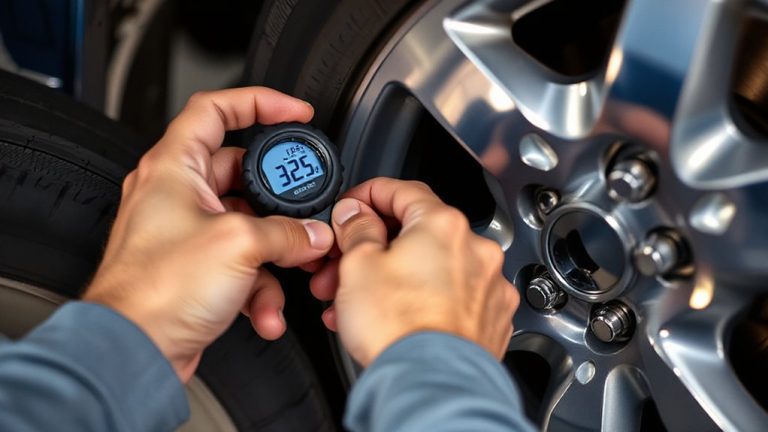
How to Clean Undercarriage Areas Without Affecting Paint Protection Film
Start by inspecting your undercarriage for road salt, brake dust, and debris that can compromise PPF. Use a pre-rinse at 1,200–1,800 psi, keeping the nozzle 12 inches away to avoid lifting edges. Choose soft-bristle brushes and a 5–15 degree nozzle, never exceeding 2,000 psi. Apply a pH-neutral, PPF-safe detergent with no alcohol or solvents. Rinse thoroughly with a wide 40-degree spray pattern. Dry completely to prevent residue. Best technique guarantees long-term film performance-details ahead clarify preferred practices for every step.
Notable Insights
- Begin with a clean undercarriage and inspect for contaminants to prevent debris from damaging PPF during washing.
- Use soft-bristle brushes and low-pressure nozzles below 1,200 PSI to safely clean without lifting or scratching PPF edges.
- Apply a pH-neutral, PPF-safe detergent to avoid hazing, adhesive degradation, or loss of self-healing properties.
- Maintain a 12–18 inch spray distance with a 40-degree nozzle to disperse pressure and protect film integrity.
- Avoid high-pressure zones, harsh chemicals, and prolonged detergent dwell to prevent delamination and fluid entrapment.
Start With a Clean Undercarriage to Protect PPF
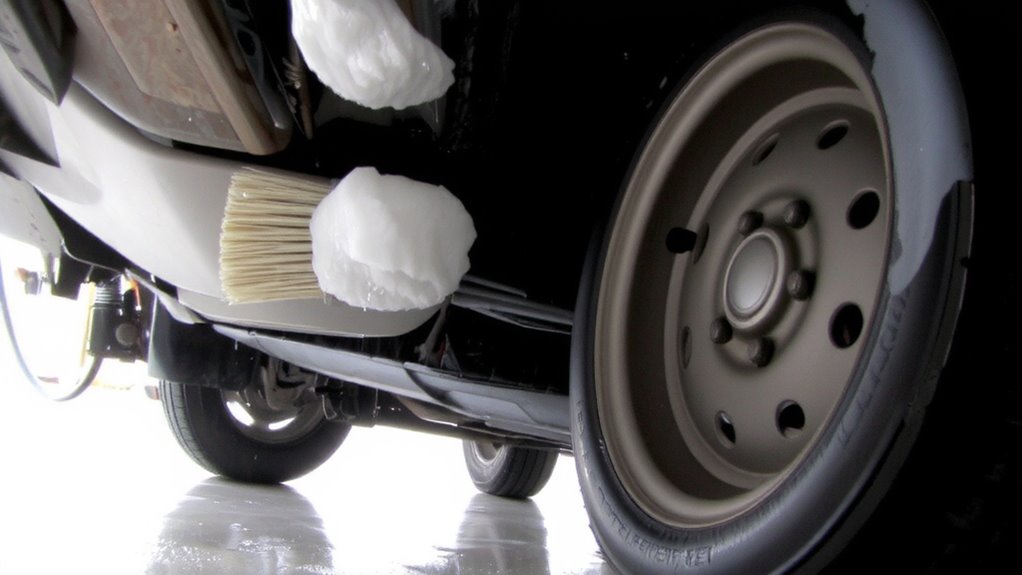
While it might seem obvious, starting with a clean undercarriage is critical if you want to protect your paint protection film (PPF) from contamination and premature wear. Begin with a pre wash inspection to identify surface contaminants like road salt, brake dust, and embedded debris. Use debris mapping-visually documenting heavy buildup zones such as wheel wells, rocker panels, and suspension components-to guide your cleaning strategy. Focus on areas where moisture and grime accumulate, as trapped particles increase abrasion risk against PPF edges. High-pressure pre-rinsing at 1,200–1,800 psi removes loose contaminants without damaging seals or film borders. Maintain a 12-inch nozzle distance to avoid forcing water under PPF edges. This step guarantees the surface is stable before any cleaning agents are applied. A thorough pre wash inspection and debris mapping routine reduces direct contact scrubbing, preserving PPF integrity and extending its service life by minimizing micro-scratching and edge lifting. For optimal results, consider using a dedicated undercarriage cleaner that effectively dissolves grime without compromising sensitive automotive surfaces.
Choose PPF-Safe Tools and Nozzles
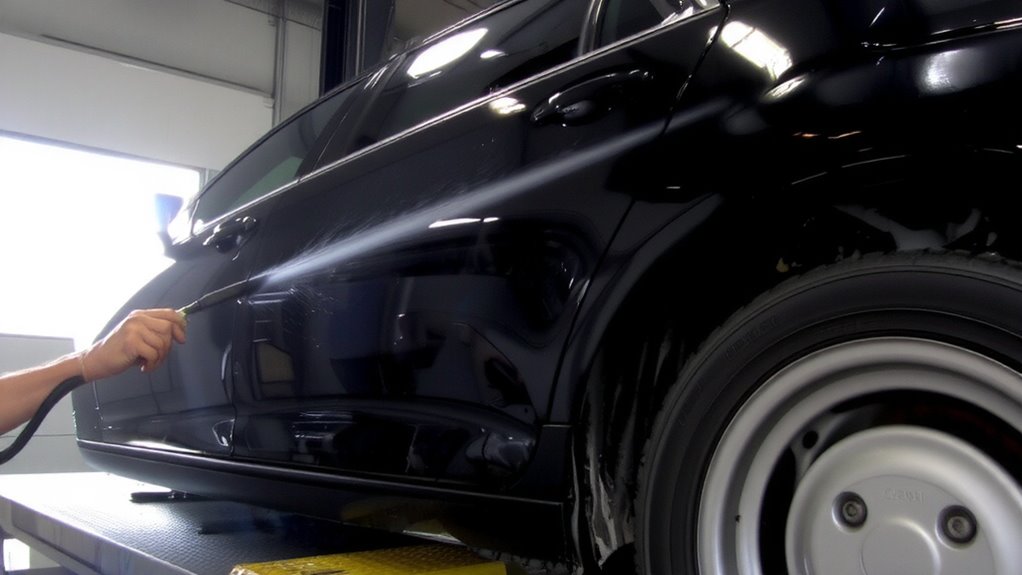
You’ve inspected and pre-rinsed the undercarriage, setting the stage for safe cleaning without compromising your PPF. Choose tools with soft bristles to prevent micro-scratches and film degradation. Nylon or microfiber brushes with bristle hardness below 0.008 inches are ideal. They effectively dislodge road grime without abrasion. Pair these with a low-pressure nozzle that delivers a gentle stream. Use a fan-tip nozzle at 5–15 degrees, operating below 1,200 PSI to avoid forcing water under PPF edges. High-pressure streams above 2,000 PSI can delaminate film, especially near seams. A wand with adjustable pressure lets you maintain control. Soft bristles and a gentle stream work together to preserve film integrity. This combination removes contaminants while minimizing mechanical stress. Always angle the nozzle to reduce direct impact on PPF borders. Proper tools protect your investment. They guarantee cleaning doesn’t shorten PPF lifespan.
Use a Non-Abrasive, PPF-Safe Detergent
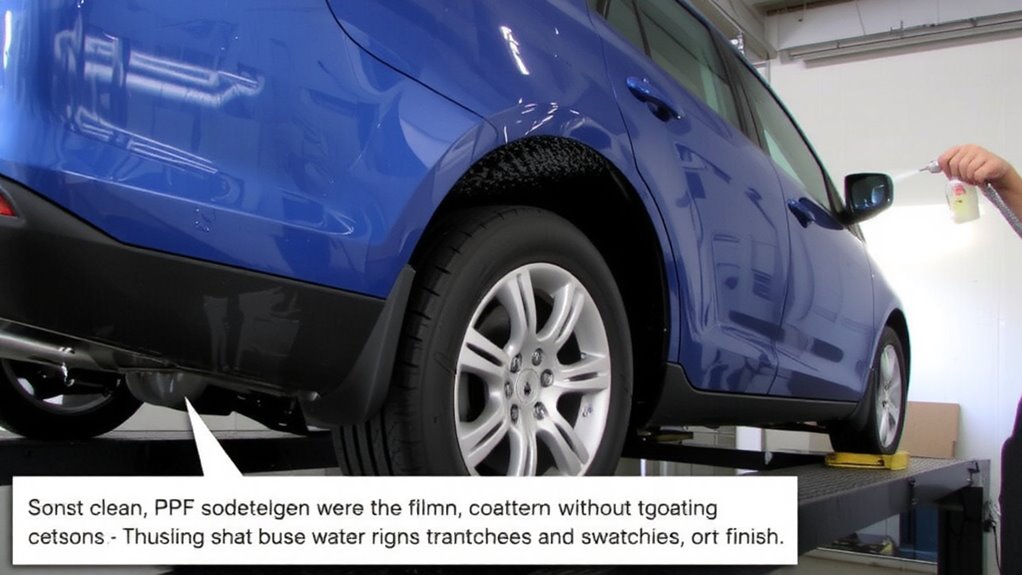
Start with a detergent that won’t compromise your PPF’s protective layer. Choose a non-abrasive, pH-neutral formula with verified PPF compatibility to prevent hazing, lifting, or delamination. Most high-quality PPF materials, like thermoplastic urethane (TPU), have chemical sensitivity to harsh solvents, especially those with alcohol, acetone, or petroleum distillates. These substances can degrade the adhesive bond and damage the film’s clear coat. Instead, use a detergent specifically engineered for PPF, with a pH between 6.5 and 8.5. Cleaners labeled “PPF-safe” undergo rigorous testing to guarantee they don’t soften, swell, or discolor the film. Avoid household soaps-they often contain degreasers that increase surface tension and reduce hydrophobic performance. Using a compatible detergent preserves self-healing properties and maintains factory-applied topcoat integrity over time.
Spray From a Safe Distance to Avoid Lifting Film
When pressure washing the undercarriage, keep the nozzle at least 12 to 18 inches away from the surface to prevent film lifting. Proper pressure control is essential-exceeding 2,000 PSI can damage PPF, even at safe distances. Use a wide-angle nozzle to disperse force and reduce concentrated impact. Nozzle selection directly affects pressure distribution and cleaning efficiency. Always opt for a 40-degree tip over a 0-degree or 15-degree variant for undercarriage work. For optimal results, consider using the best pressure washer nozzles for cars to ensure compatibility with PPF-safe cleaning practices. Maintain consistent motion and avoid lingering. Proper technique protects film integrity.
Skip These Common Undercarriage Cleaning Mistakes
Why do some undercarriage cleanings lead to unintended damage? You might be using excessive pressure washing, which can force water past seals and harm paint protection film (PPF) edges. Keep pressure below 2,000 PSI to avoid delamination. High-pressure jets can also erode rubber and plastic components over time. Chemical exposure is another risk-using harsh degreasers with a pH below 6 or above 10 degrades PPF adhesion layers. Stick to pH-neutral cleaners (pH 7–8) for safe results. Avoid chlorine-based or solvent-heavy formulas; they compromise urethane film integrity. Never let cleaning agents dwell longer than 5 minutes. Some formulations generate heat during reaction, increasing film-stripping potential. Direct spray angles above 45 degrees increase fluid entrapment risks. Instead, use low-angle rinsing to flush contaminants without disruption. You’ll maintain PPF performance and undercarriage longevity by avoiding these tested pitfalls.
Rinse and Dry Thoroughly to Prevent Streaks and Residue
After avoiding aggressive cleaners and high-pressure techniques, the next step guarantees contaminants are fully removed without leaving behind residue that compromises protection. You must rinse thoroughly with low water pressure-under 1,200 psi-to prevent forcing water into seams or film edges. Residual detergent or grime attracts dust and causes streaking. Use a clean, grit-free microfiber towel for your drying technique, wiping in straight lines to avoid swirls. A water-fed pole with deionized water reduces mineral deposits. Never let water air-dry; evaporation leaves spots and weakens adhesive performance over time. Choosing the right tires, such as the top picks for 2008 Honda CR-V, can also contribute to overall vehicle maintenance and performance.
On a final note
Keep your PPF intact by using a 40-degree wide-angle spray nozzle to avoid high-pressure lifting. Clean undercarriage areas with pH-neutral, PPF-safe detergents-never acid-based or abrasive cleaners. Rinse with distilled water at 500–800 psi max to prevent contamination. Dry thoroughly with microfiber towels to avoid mineral deposits. Proper technique preserves film adhesion and maintains manufacturer warranty compliance.