Installing Heat-Detecting Alarms Instead of Smoke Sensors Near Hot Engines
You should install heat-detecting alarms near hot engines because smoke sensors trigger false alarms from oil mist, dust, and steam. Heat detectors ignore airborne particles, using fixed-temperature triggers (135°F–200°F) or rate-of-rise sensors that detect 12°F–15°F increases per minute. They use bimetallic strips or fusible links, resisting corrosion and airflow interference. Proper placement-ceiling-mounted, 4 inches from walls, away from vents-ensures rapid heat detection. Their sealed design outperforms smoke alarms in dirty, high-airflow areas. More details on ideal sensor selection follow.
Notable Insights
- Heat-detecting alarms prevent false alarms caused by oil mist, dust, and steam near engines.
- They activate at fixed temperatures (135°F–200°F) or rapid rise rates (15°F/minute).
- Unlike smoke sensors, heat alarms ignore particulates and airflow interference in engine rooms.
- Use fixed-temperature detectors in steadily hot areas; rate-of-rise for fast-flame risks.
- Install on ceilings, 4 inches from walls, away from vents and direct heat sources.
Why Heat Alarms Beat Smoke Detectors Near Engines
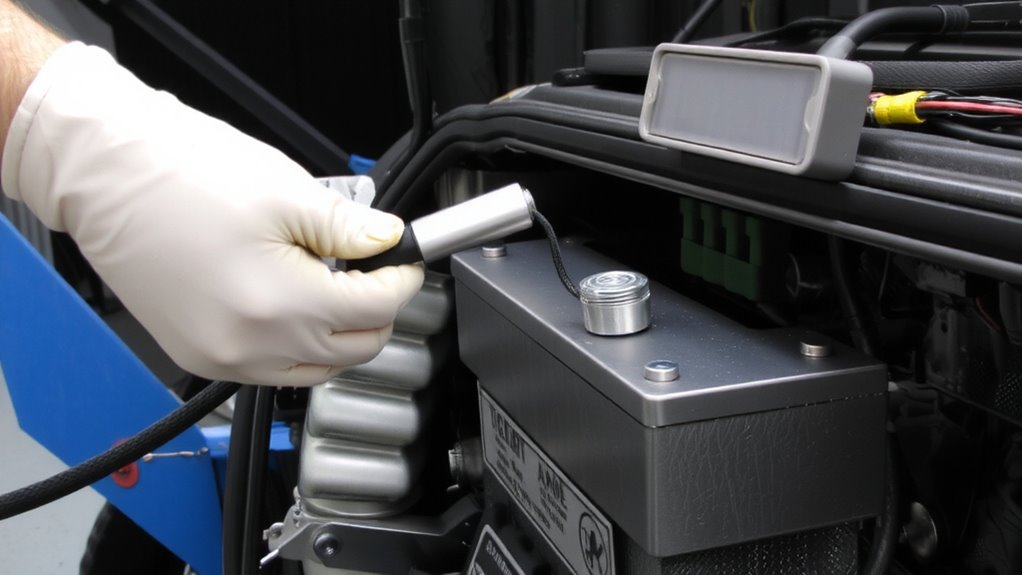
While smoke detectors rely on airborne particles to trigger an alarm, they often fail in engine compartments where oil mist, dust, and steam mimic smoke-leading to false alarms or delayed responses. You need a system with true thermal sensitivity, not particle confusion. Heat-detecting alarms activate based on fixed temperature thresholds or rapid rise rates, typically at 135°F to 200°F, avoiding nuisance triggers. Unlike smoke sensors, they ignore non-combustion aerosols. Thermal detectors respond reliably to actual fire conditions by sensing combustion byproducts indirectly through temperature change. They use bimetallic strips or fusible links calibrated to open circuits at precise heat levels. This guarantees fast, consistent detection when real fires emerge. In high-airflow or dirty environments, thermal sensors outperform optical or ionization types. Their design suits hot, vibration-heavy zones. You’re not just adding a sensor-you’re installing accuracy where it matters most.
Stop False Alarms in Engine Rooms With Heat Detection
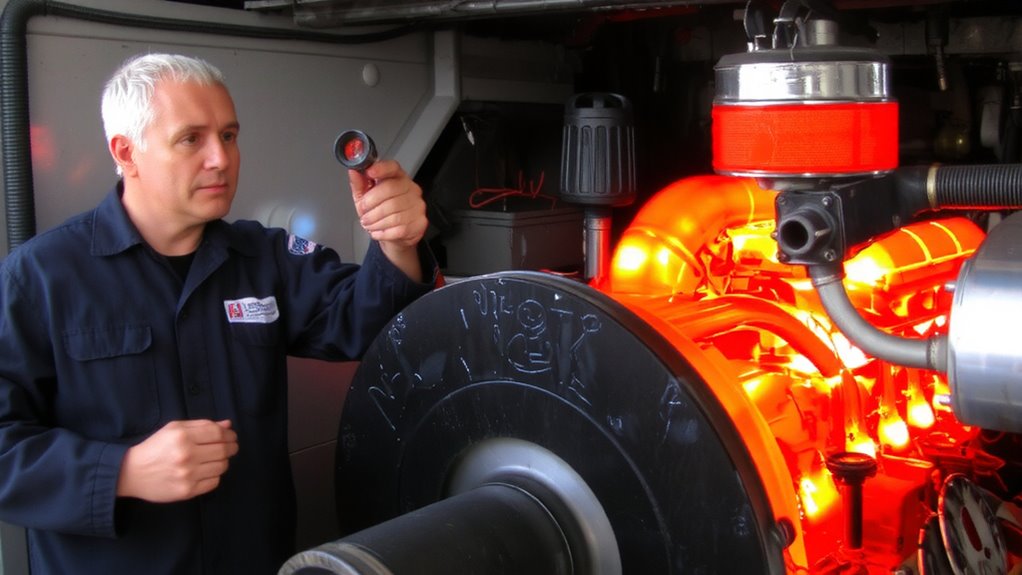
Since engine rooms generate constant heat, dust, and vapor, traditional smoke detectors often sound off without a real fire-these false alarms can waste time and erode trust in your safety systems. You need a solution that ignores non-threatening conditions while catching real dangers. Heat-detecting alarms are built to respond only to abrupt temperature spikes, not particles or fumes. They trigger at precise thresholds-typically 135°F or 225°F-avoiding false triggers from oil mist or exhaust. Fixed-temperature and rate-of-rise sensors combine to detect rapid increases of 15°F per minute. Unlike smoke detectors, they don’t rely on air samples, so dust buildup won’t affect performance. Installed at ceiling level, they cover 30-foot diameters per unit. These detectors reduce nuisance alarms by over 70% in high-heat zones. You maintain compliance with NFPA 72 while ensuring alerts mean action is truly needed.
How Heat and Smoke Detectors Differ Near Hot Equipment
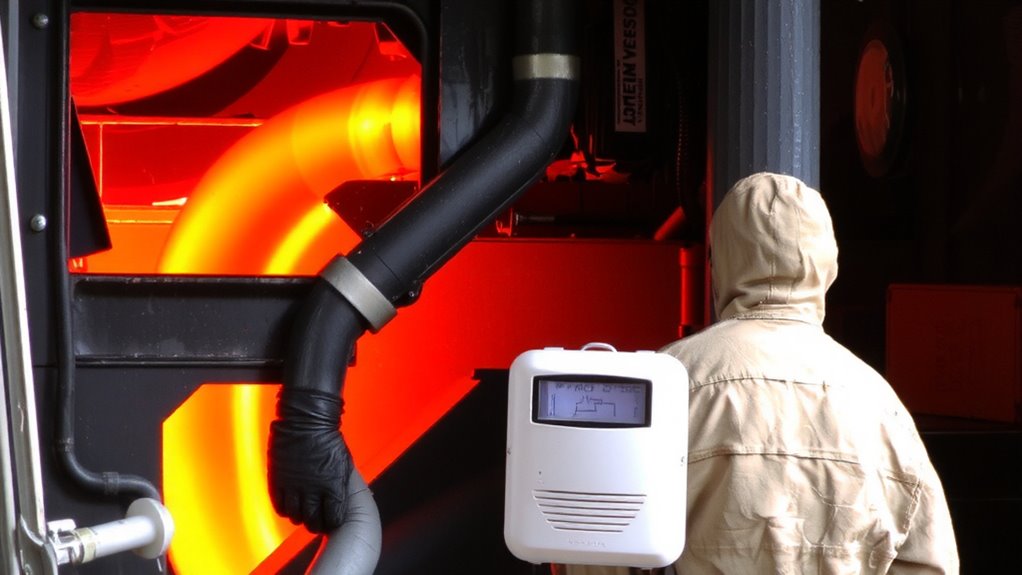
When you’re monitoring high-heat environments like engine rooms, choosing the right fire detection method matters. Smoke detectors rely on sensing airborne particles, but near hot equipment, dust accumulation can trigger false alarms. Even minimal debris scatters light in optical sensors, causing nuisance alerts. Airflow interference from fans or exhaust distorts smoke dispersion, delaying detection. Heat detectors, however, respond to temperature changes, ignoring particulates and air movement. They operate using fixed-temperature sensors, typically activating at 135°F or 200°F. Unlike smoke models needing clean air, heat detectors function reliably in dirty, turbulent spaces. Their sealed mechanisms resist corrosion and dust buildup. You’ll find them ideal for areas where airflow interference and dust accumulation compromise smoke sensors. Correct placement above or adjacent to heat sources guarantees rapid response. Heat detection isn’t about replacing smoke alarms everywhere-it’s about using the right tool where engine heat and grime make smoke sensing impractical.
Rate-of-Rise vs Fixed-Temp: Which Heat Detector to Choose?
How do you decide between rate-of-rise and fixed-temperature heat detectors in high-heat areas like engine compartments? Rate-of-rise detectors trigger when temperatures rise 12°F to 15°F per minute, making them ideal for fast-flame events. They offer high thermal sensitivity, responding quickly to sudden changes, but may false alarm during rapid, non-fire heating. Fixed-temperature detectors activate at a set point, typically 135°F or 194°F, depending on calibration accuracy. These provide stability in consistently warm environments. Fixed types won’t trip unless the ambient temperature reaches the threshold, reducing nuisance alarms. For engines, fixed-temp units often perform better due to predictable heat patterns. Rate-of-rise excels where rapid combustion risk exists, such as fuel leaks near hot surfaces. Choose based on environment and fire risk type. Both require precise calibration accuracy to maintain reliability and safety compliance over time.
Where to Install Heat Alarms in Mechanical Spaces
Where should you place heat alarms in mechanical spaces to guarantee maximum protection without triggering false alerts? Mount detectors on the ceiling, at least 4 inches from any wall, to guarantee peak airflow and thermal response. Maintain proper clearance distances-minimum 18 inches from supply vents and 36 inches from exhausts-to minimize ventilation impact that could block heat from reaching the sensor. Position units away from direct airflow, machinery surfaces, or radiant heat sources that might delay activation. For large rooms, space alarms no more than 30 feet apart, following NFPA 72 guidelines. Avoid placing detectors above 30 feet high; stratification can trap heat, delaying response. Each alarm must be in an unobstructed area, allowing free movement of hot air. Proper placement guarantees accurate detection during rapid temperature rises without nuisance tripping.
How to Install Heat Detectors Near Hot Engines Safely
Though hot engines pose a significant thermal challenge, proper installation of heat detectors guarantees reliable fire detection without false alarms. Mount detectors at least 3 feet from exhaust manifolds to avoid exposure beyond their 135°F to 575°F operational range. Use models with certified vibration resistance to withstand engine movement and prevent internal damage. Secure with stainless steel brackets to reduce shock transmission. Follow electrical safety guidelines: disconnect power before wiring and use conduit-rated cabling to protect connections. Connect to a Class A fire circuit to maintain signal integrity during faults. Position units on overhead supports or adjacent walls, angled slightly downward for maximum heat capture. Avoid dead air spaces where airflow is restricted. Test monthly using listed thermal test procedures. Detectors should trigger at 50°F above ambient, within their fixed-temperature limit. Choose units with UL 521 certification for accurate performance.
On a final note
You should use heat-detecting alarms near hot engines because they avoid false triggers from combustion particles. Smoke detectors react unpredictably in high-heat, dirty environments. Heat alarms activate at set temperatures-typically 135°F (57°C) or 200°F (93°C)-or with a rate-of-rise of 15°F per minute. Fixed-temperature models suit stable environments; rate-of-rise responds faster to sudden fires. Install detectors at least 3 ft from exhausts. They’re reliable, with a 10-year lifespan and minimal maintenance.