How to Identify Misalignment Through Tire Wear Patterns
If your tires show uneven wear, misalignment is likely. Inner edge wear means negative camber-check if angles are below -0.5°. Outer edge wear suggests positive camber, often from bent parts or worn bushings. Feathered tread indicates toe misalignment; even 0.16° off causes sawtooth patterns over 10,000 miles. Center wear may stem from overinflation or incorrect caster. Proper alignment keeps camber within ±0.3° and toe at 0.05–0.20°. You’ll discover how to confirm these issues with a simple inspection.
Notable Insights
- Outer edge wear may indicate positive camber misalignment, often caused by worn bushings or bent suspension components.
- Inner edge wear suggests negative camber, where the wheel tilts inward beyond the -0.5° tolerance.
- Feathered tread with a sawtooth pattern typically signals toe misalignment, even with small angular errors.
- Vehicle pulling to one side combined with uneven shoulder wear often points to toe or camber misalignment.
- Persistent center wear after proper inflation adjustment may indicate underlying caster or camber alignment issues.
How Tire Wear Points to Alignment Problems
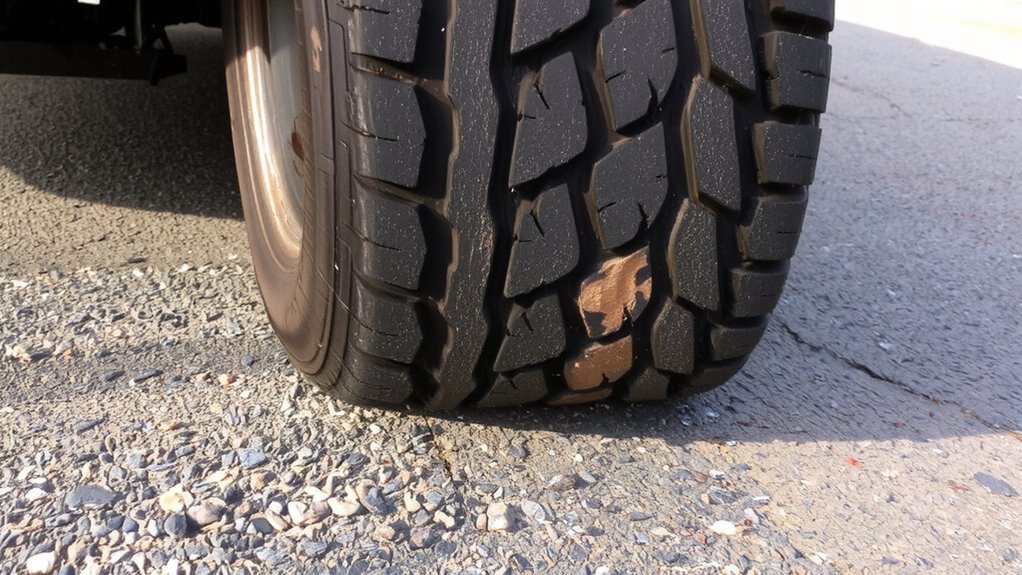
Why does your car pull to one side or your tires wear unevenly? Misalignment is often the culprit. Your vehicle’s front end relies on precise specifications-typically within ±0.5 degrees of camber and toe settings. Uneven shoulder wear suggests toe misalignment, where tires scrub against the road. Excessive toe-in wears the outer edges; toe-out wears the inner edges. Tire age affects rubber hardness, reducing grip and wear resistance over time. Even with proper inflation, tires older than six years degrade internally, masking alignment symptoms. Aggressive driving habits-like hard cornering or frequent curb strikes-accelerate wear and knock suspension components out of spec. These habits amplify minor misalignments, creating rapid, irregular tread damage. Manufacturers recommend alignment checks every 6,000 miles or annually. Inspecting tread patterns early reveals issues before tire age or driving habits compromise safety. Regular checks maintain handling precision, fuel efficiency, and tire lifespan.
Worn Inner Edges? That’s Negative Camber
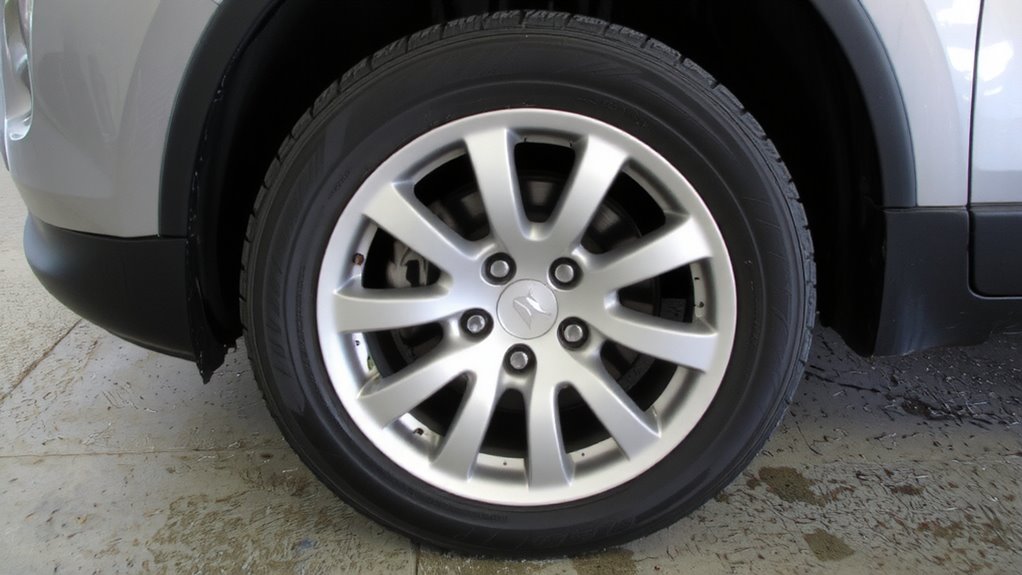
Worn inner edges on your tires point directly to negative camber misalignment. That means the top of the tire tilts inward, putting excess pressure on the inside edge. Your camber angle-the vertical tilt of the tire when viewed from the front-is negative when it falls below manufacturer specifications, often below -0.5 degrees. This misalignment commonly stems from damaged or worn suspension components, altering the suspension geometry. Uneven wear patterns develop quickly, especially on front tires, reducing tread life by up to 40%. You’ll notice decreased cornering grip and premature tire degradation. A proper alignment check measures camber angle precisely, adjusting it back within factory tolerances-usually between -0.3° and +0.3°. Correcting suspension geometry prevents further wear. Regular inspections catch issues early, maintaining handling and fuel efficiency. Left uncorrected, negative camber leads to unsafe driving conditions and costly tire replacement.
Outer Edge Wear? Your Camber Is Off
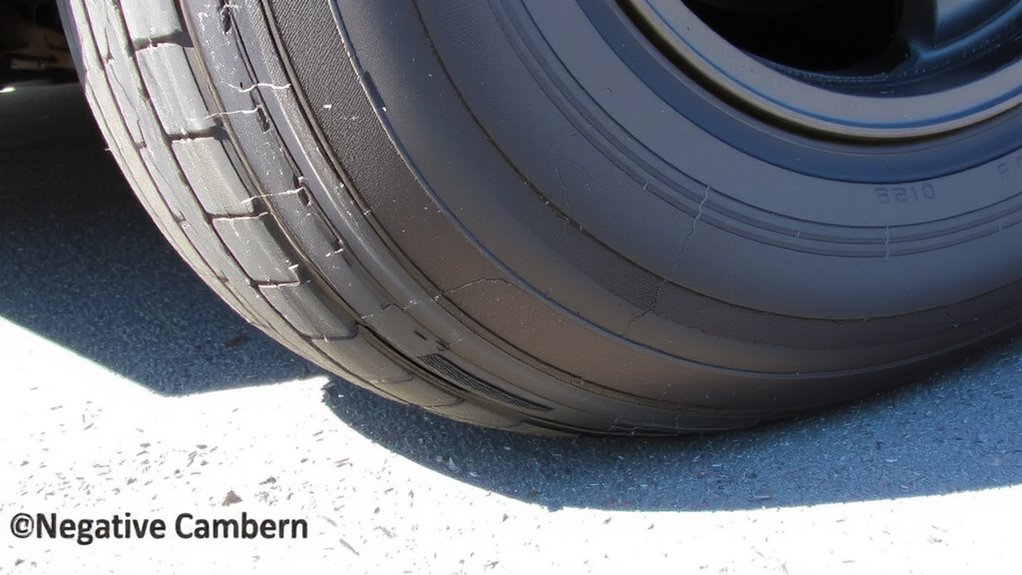
Excessive wear on the outer edge of your tire means your camber alignment is off-specifically, you’re dealing with positive camber. That’s when the top of the tire tilts outward, putting extra pressure on the outside tread. Normal camber values typically range from -0.5 to +0.5 degrees; beyond that, uneven wear starts in as little as 3,000 miles. Positive camber often results from worn control arm bushings, bent spindles, or suspension damage after hitting potholes or curbs. It reduces grip during cornering and shortens tire life by up to 40%. You’ll need a professional alignment rack to measure the exact angle. A proper camber adjustment requires recalibrating the strut or control arm mounts using eccentric bolts or aftermarket camber kits. Ignoring it worsens handling and accelerates wear. Fixing the root cause-like damaged struts or mounts-is essential before any camber adjustment.
Feathered Tread? Check Your Toe Alignment
Feathering across your tire tread suggests a misalignment in toe, even if camber issues from previous damage appear resolved. This wear pattern shows tread blocks worn lower on one side and higher on the other, forming a sawtooth shape across the tire. The feathering cause is usually incorrect toe settings, where wheels point slightly inward (toe-in) or outward (toe-out) instead of running parallel. Excessive toe misalignment as little as 0.16 degrees can generate noticeable feathering over 10,000 miles. Front tires typically wear this way due to steering forces. You’ll feel slight vibration or hear road noise increase. Adjusting toe to the vehicle’s factory specification-often between 0.05 and 0.20 degrees-corrects the issue. Realignment with a digital alignment system guarantees accuracy. Left uncorrected, uneven tread wear worsens and reduces tire life by up to 30%.
Center Wear? It Might Be Pressure or Alignment
Why is the center of your tire wearing faster than the edges? Center wear often stems from overinflation or misalignment. When you overinflate your tires, the center bulges outward, creating excessive contact with the road. Most manufacturers specify a cold inflation pressure between 32–35 psi-exceeding this accelerates center tread wear. Misaligned front-end geometry, particularly excessive caster or camber, can also concentrate stress on the tire’s center. Unlike edge wear from underinflation, center wear reduces tread life by up to 30% if uncorrected. Your inflation habits directly impact tread longevity. Regular tire rotation every 5,000–7,500 miles helps detect patterns early and promotes even wear. Rotate tires front-to-back on same axles for non-directional tread designs. Persistent center wear after rotation signals an alignment issue, not just poor inflation habits. Address both factors to maximize tire performance and safety. Upgrading to high-quality best street tires can further enhance wear resistance and overall driving stability.
How to Inspect Your Tires for Alignment Issues
How can you tell if your vehicle’s alignment is off before serious tire damage occurs? Inspect each tire monthly. Look for uneven tread wear patterns like feathering or one-sided wear, which signal misalignment. Check tread depth with a gauge; tires should have at least 4/32” for safe handling. Lower tread depth reduces grip, especially in wet conditions. Measure tread across the tire’s surface-differences of more than 2/32” between inner and outer edges indicate alignment issues. Consider tire age; even with sufficient tread depth, tires older than six years degrade in performance. Rubber compounds harden over time, reducing traction and responsiveness. Inspect sidewalls for cracks or bulges. Use a level or straight edge against the tire to spot camber misalignment. Early detection prevents premature wear and maintains fuel efficiency.
Get an Alignment Check and Rotate Your Tires
Regular inspections help you catch alignment problems early, but they don’t fix them. You need a professional alignment check to correct camber, caster, and toe angles. Proper alignment check timing is every 6,000 miles or after hitting a curb or pothole. Misaligned wheels cause uneven wear, reducing tire life by up to 30%. You also lose fuel efficiency-misalignment increases rolling resistance by up to 10%. Tire rotation benefits include even wear distribution and extended tread life. Rotate your tires every 5,000 to 7,500 miles using the pattern specified in your owner’s manual-front-wheel drive vehicles typically use a front-to-rear pattern. Combining alignment checks with rotation maximizes tire lifespan. Always perform an alignment after installing new tires. Use precise torque specs when reinstalling wheels-typically 80–100 lb-ft, depending on the vehicle. This routine guarantees safety, performance, and cost efficiency. High-performance driving demands tires that can handle increased stress, making best sports car tires essential for maintaining optimal grip and handling.
On a final note
You can spot alignment issues by reading tire wear patterns. Inner edge wear indicates negative camber, where the wheel tilts inward-common in lowered vehicles. Outer wear signals positive camber, often from suspension damage. Feathering means incorrect toe alignment; even 0.16° off causes rapid wear. Center tread wear may point to overinflation or excessive caster. Inspect tires monthly. If uneven wear appears, get a digital alignment check within 2mm tolerance. Rotate tires every 5,000–7,500 miles to even out wear.