Why GPS Trackers Are Worth Installing Before Placing a Car in Remote Storage
Storing your car remotely increases theft risk due to poor lighting, minimal surveillance, and low foot traffic. GPS trackers counter this with real-time location updates every 10 seconds via LTE-M or NB-IoT networks, offering ≤5 meter accuracy. Devices use GPS + GLONASS for reliable positioning and last 3+ years on battery, drawing less than 8 mA in sleep mode. Motion alerts and geofencing notify you instantly of tampering. Install it before storage to guarantee protection from day one-you’ll soon see how setup impacts performance.
Notable Insights
- Remote storage increases theft risk due to limited supervision and minimal surveillance.
- GPS trackers provide real-time location updates every 10 seconds via LTE-M or NB-IoT networks.
- Motion-triggered alerts notify owners of unauthorized movement or geofence breaches instantly.
- Devices with 3+ year battery life operate maintenance-free while hidden in the vehicle.
- Dual-satellite GPS + GLONASS tracking ensures accuracy within 5 meters, even in obstructed areas.
Why Storing Your Car Remotely Raises Theft Risk

While storing your car far from home might seem like a practical solution for saving space or protecting it from weather, it often increases the risk of theft due to reduced supervision. Increased isolation makes your vehicle a quieter target, away from routine checks or neighborhood activity. Thieves favor remote storage units precisely because of limited surveillance and fewer witnesses. Most self-storage facilities lack 24/7 security patrols or motion-activated lighting, creating exploitable gaps. Even those with cameras often record at low resolution-typically below 720p-limiting image clarity. Cellular dead zones in rural storage areas further weaken signal-based monitoring. Without real-time alerts, unauthorized movement goes undetected for hours. These conditions markedly raise vulnerability. Remote storage may protect against hail or humidity, but it trades physical protection for security exposure. You’re exchanging one risk for a potentially costlier one-permanent vehicle loss.
How GPS Trackers Prevent Theft and Speed Recovery
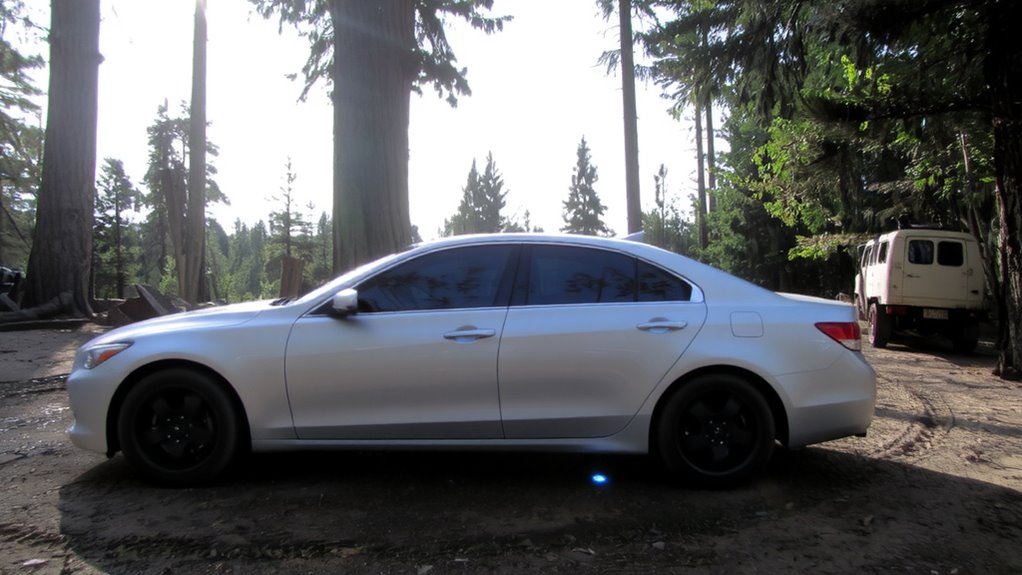
Because GPS trackers give you real-time visibility into your vehicle’s location, they turn passive storage into active protection. These devices use cellular and satellite networks to transmit position data, making theft recovery fast and precise. Modern GPS units draw minimal power, avoiding battery drainage-many operate on less than 8 mA in sleep mode. They’re designed to wake on motion, triggering instant alerts. While signal interference can occur in underground garages or dense terrain, dual-frequency models reduce dropouts. With triangulation from multiple satellites, location accuracy stays within 2.5 meters.
| Feature | Benefit | Tech Spec |
|---|---|---|
| Low-power mode | Prevents battery drainage | <10 mA draw |
| GPS + Cellular | Reduces signal interference | 4G LTE-M support |
| Geofence alerts | Immediate theft detection | Custom zone triggers |
See Your Car’s Location Anytime With Real-Time Tracking
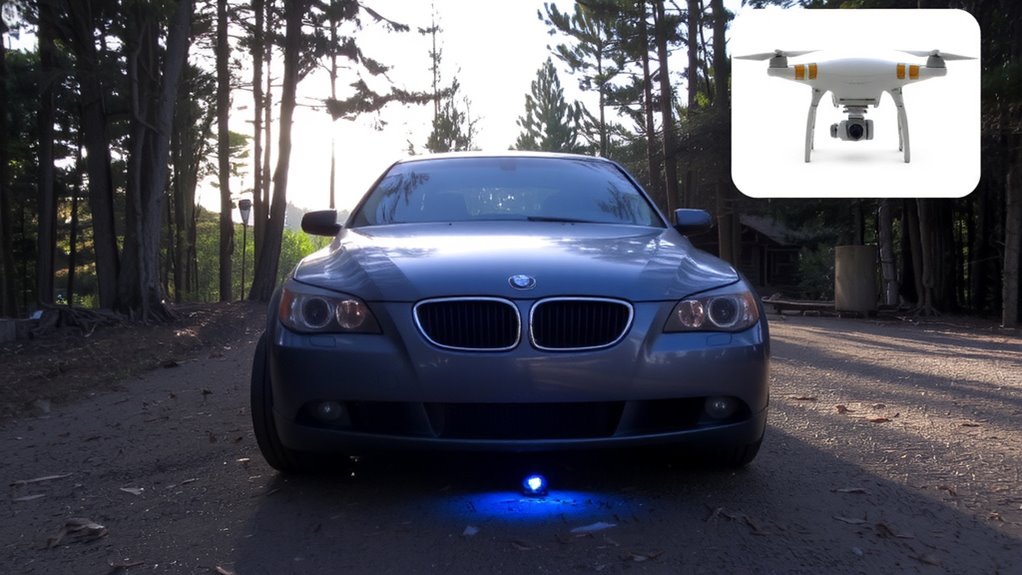
When you need to know where your stored car is, real-time tracking puts that information in your pocket. Using GPS satellite signals, the device updates your car’s position as frequently as every 10 seconds. You can view this data instantly through a smartphone app or web portal. Real time alerts notify you instantly if the vehicle moves unexpectedly, breaches a geofenced boundary, or experiences sudden acceleration. These alerts help detect unauthorized use early. The system also maintains a detailed location history, logging timestamps and coordinates for up to 90 days. This history lets you review past movements with precision, useful for verifying storage facility activity or transport routes. Units typically operate on LTE-M or NB-IoT networks, ensuring stable connectivity with low power draw. With accuracy within 5 meters, you get reliable, continuous visibility of your vehicle’s exact whereabouts.
Pick the Best GPS Tracker for Long-Term Storage
Choosing the right GPS tracker for long-term car storage means balancing battery life, signal reliability, and stealth installation. You need a device that lasts months without charging while maintaining constant signal strength. Look for low-power modes, wide-area network (LTE-M or NB-IoT) support, and GPS + GLONASS dual-satellite tracking.
| Feature | Why It Matters |
|---|---|
| 3+ year battery life | Guarantees tracking without maintenance |
| Strong signal strength | Maintains connection in rural or enclosed areas |
| Compact, hidden design | Prevents tampering and theft |
Some models use geofencing and motion sensors to conserve power. Battery life varies by transmission interval-every 30 minutes prolongs charge versus constant pinging. Signal strength depends on network coverage and device sensitivity. Pick one with a proven uptime record in remote locations.
Install Your GPS Tracker Before Storage
A well-placed GPS tracker maximizes security and functionality during long-term car storage. You should install your device before storing the vehicle to guarantee consistent monitoring. Proper placement near the windshield or under the dashboard improves signal strength by reducing interference from metal components. This positioning allows the tracker to maintain a strong connection with GPS satellites and cellular networks. Most modern trackers use low-power modes to extend battery life, some lasting up to five years on a single charge. For hardwired models, connect to a fuse that remains active during storage but draws minimal current-typically less than 2 milliamps. Avoid locations exposed to extreme heat or moisture, which degrade performance. Confirm installation success by testing real-time location updates and geofence alerts through the companion app. A secure, well-tested setup guarantees reliable tracking throughout storage.
On a final note
You protect your investment by installing a GPS tracker before remote storage. Units like the LandAirSea 54 operate for up to 3 years on a single battery, drawing only 0.5mA in sleep mode. Real-time updates occur every 30 seconds when motion is detected. The device logs location using GPS, GLONASS, and cellular triangulation, achieving 5-meter accuracy. Waterproof and magnetically mounted, it withstands harsh conditions.